



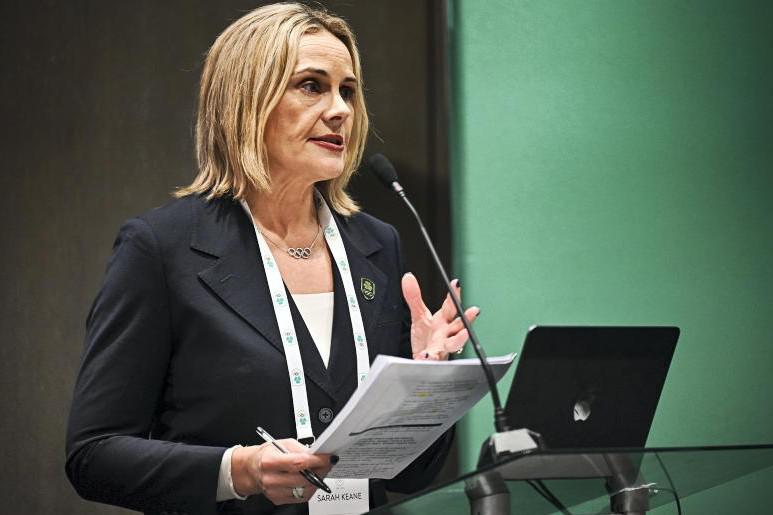
Perhaps unsurprisingly, Sarah Keane did not grow up dreaming of becoming the first female CEO of an International Cricket Council full-member nation.
A career in sports administration rarely ranks very high on the wishlists of teenagers and, indeed, it was not until well into her adult life that Sarah considered the possibility of such a path.
After a long tenure as the head of Swim Ireland – a period encompassing a stint as president of the Olympic Federation of Ireland – she has recently begun her role as CEO of Cricket Ireland.
While Sarah played basketball in her youth, swimming took over – she represented Ireland in water polo, too – and then a chance conversation led to a change in role.
“I’m a commercial lawyer by trade,” she says, “and two decades ago there wasn’t a lot of opportunities for people to work full-time in sports, certainly not on the administrative side of the house.
“The sports council had only been set up a couple of years at that point and there was a push towards making governing bodies more fit for purpose and modernising them.
“I’d been working in one of Ireland’s top law firms as an associate partner there. One of our better swimmers reached out to me and asked for help with a funding application – then, not long after, they reached out again and said, ‘By the way, Swim Ireland’s looking for its first chief executive officer.’
Interview process
“What I found particularly interesting was that I was handed, as part of the interview process, a Swim Ireland strategic plan – the concept that a sport would have one was something you don’t consider when you’re on the athlete side.
“You don’t really understand or see that other side, you take for granted the coaches, the referees, the, the officials, the people who kind of put the structure on things to make everything else possible.
“I went from a big law firm with five or six hundred employees, to me and one-and-a-half others in a not-for-profit sector, but I’ve loved every minute of it.”
And so, in moving from a chief executive job in one sport to another, is there a lot that is tranferrable?
“I think yes and no would be answer to that,” Sarah says.
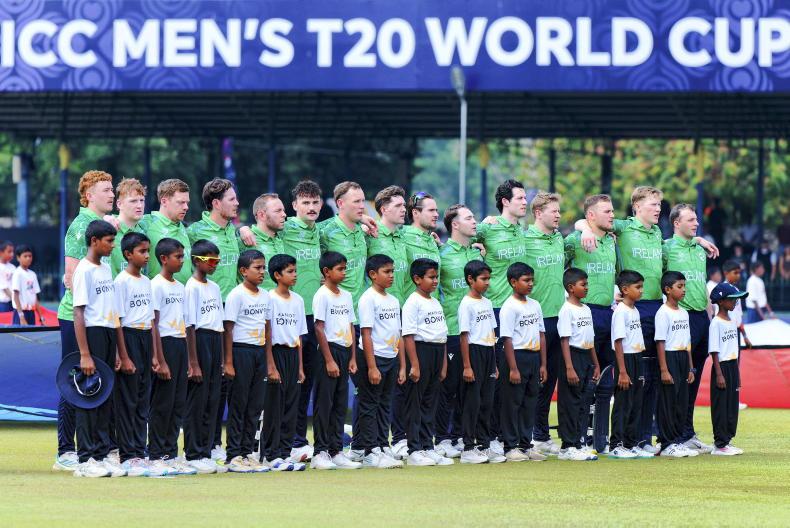
“On the no side, one of the reasons I was interested in the role is that it’s a professional team sport – we’re a full-member nation, we’re in with India, Australia, England, and there’s a massive broadcast side, so it’s very commercial in that regard.
Cricket is the second-biggest sport in the world and the Government launched a sports diplomacy policy a couple of months ago – Asia is going to be a big part of that, so cricket will be a really important part of those relationships, too.
“We’re also working with the Government to build a stadium at the Sport Ireland Campus in Abbotstown and the ICC is an unusual beast in that it works in four-year cycles.
“The women’s calendar is clear but there’ll be a new men’s future tours programme from 2027-2031 and we don’t know what that looks like yet, so it’s incredibly challenging to plan and the whole business model of it is complex.
“On the yes side, a lot of the other skills are, I’d like to think, definitely transferable – understanding governance of an organisation, understanding people, understanding sport.
“It’s great, because I feel I can add value straight away, I have certain skills that I can transfer across, and at the same time, there’s a lot of learning and I love that, too.
“People are so interested and so welcoming and really willing to answer any of my questions.
“I’m finding that really interesting and that’s giving me a little bit more confidence that I’ll be able to hold my own at the [ICC] table when I actually get there in the next month or two.”
In tandem with helping Ireland to make more of a mark on the international stage is the quest to grow the game’s footprint at home at grassroots level.
“I think we’re running into a time of terrific opportunity,” Sarah says, “but a lot of challenge as well.
“The business model is really challenging, and it means, at the moment, we’re not putting enough money into our pathways, so that’s one big challenge that we’re trying to address.
“Hopefully, with a bit more certainty around what the programme looks like over the next couple of years, that’ll help.
“Getting a national stadium is a game-changer, because at the moment, when we host events, whether that’s in Stormont or Malahide or Clontarf or wherever, you have to bring temporary infrastructure in, you’ve got to bring in the seating, you’ve got to bring in the toilets, you’ve got to bring in everything, because they’re not set up for it and again, those are massive costs.
“Infrastructure is a challenge because there’s a lot of demand, particularly with what we might describe as ‘new Ireland’, but that’s a great opportunity, too.
“You have people coming here, making Ireland their home, they love the sport and we don’t have enough infrastructure for them and that’s across the country, not just in urban areas.
“I think that’s something that I would see as a priority, to satisfy the demand – the girls’ and youths’ games are growing but clubs might only have one pitch and not be able to help them develop.
“It is great to be part of a sport whereby there’s a natural diversity, you’re working with people from a variety of different backgrounds and you have people coming here from countries where cricket is traditionally strong and it’s a great way to become involved in a community.
“It’s a really nice opportunity to reflect Irish society now and there is a very important social aspect to it, too,” she concludes.


SHARING OPTIONS