



My job involves a lot of travelling home after games on Saturday and Sunday evenings. Thankfully, at this time of year, with the club season in full flow, the distances are shorter than they are during the inter-county campaign. In any case, I enjoy the solitude of travel.
Generally, RTÉ Radio 1 provides the company and, recently, I enjoyed the edition of Céilí House that came from Tullamore.
Among those featured was Attracta Ní Bhrádaigh, current president of Comhaltas Ceoltórí Éireann, who told presenter Tristan Rosenstock that traditional music from Offaly is characterised by a fast tempo with a soft rhythm. It felt like the perfect parallel to draw with the county’s hurling glory days of the 1980s and 1990s.
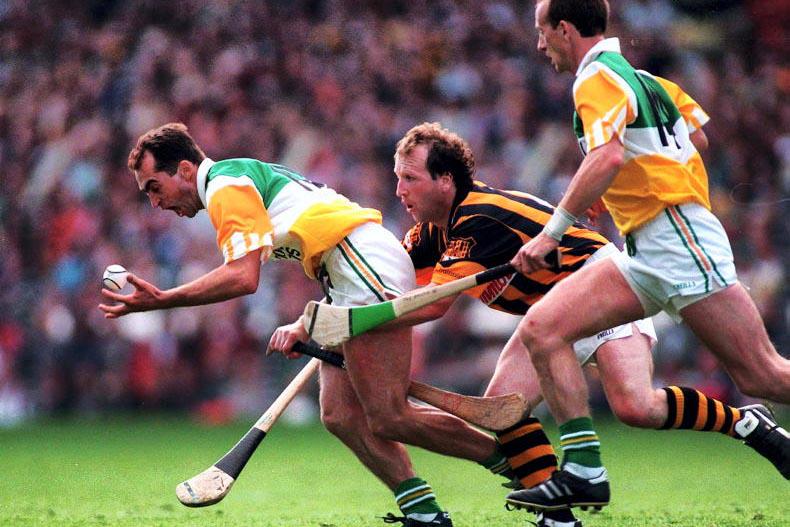
Offaly’s 1981 All-Ireland win remains the last time that a ‘new’ county claimed the Liam MacCarthy Cup. That was 45 years ago and they were bridging a 33-year gap back to Waterford in 1948 – when the next first-time winners will be added to the roll of honour is anybody’s guess.
Having dropped to the third-tier Christy Ring Cup before a recent renaissance, built on the generosity of Shane Lowry and the Faithful Fields centre of excellence, Offaly are back among the top stratum of counties, but their All-Ireland quarter-final defeat to Cork this year showed there are levels within the levels.
In order to deepen hurling’s quality base, proposals have been put forward whereby the Leinster senior championship would, from 2028, become integrated with the Joe McDonagh Cup, which currently houses those counties outside the top grade.
Essentially, there will be two four-team groups, one featuring the previous year’s semi-finalists and the other acting as a mezzanine between Leinster and the Joe McDonagh. It’s a laudable attempt to give a greater number of counties exposure to playing at a higher standard but we can’t help but feel that it won’t necessarily extend the number of chairs at the top table.
In any case, such is the push-pull nature of elite sport that, in order for a gatecrasher to establish themselves, a traditional power must suffer and then we’re treated to the raft of ‘county X in crisis’ media content.
Another change in format could also generate a fatigue of sorts, a weary why-can’t they leave things alone response that regularly follows proposed changes to playing rules. The thing to remember, however, is that there was never a period in any sport where everything was perfect – alterations always come about because of a perceived need to improve the product or the experience or the revenues.
Offaly’s most recent hurling All-Ireland was of course the victory by a team through the ‘back door’, as a captain Hubert Rigney memorably proclaimed, but the idea of a minimum of just two games for a county seems very quaint. Their first three were in the straight-knockout day.
Finding balance
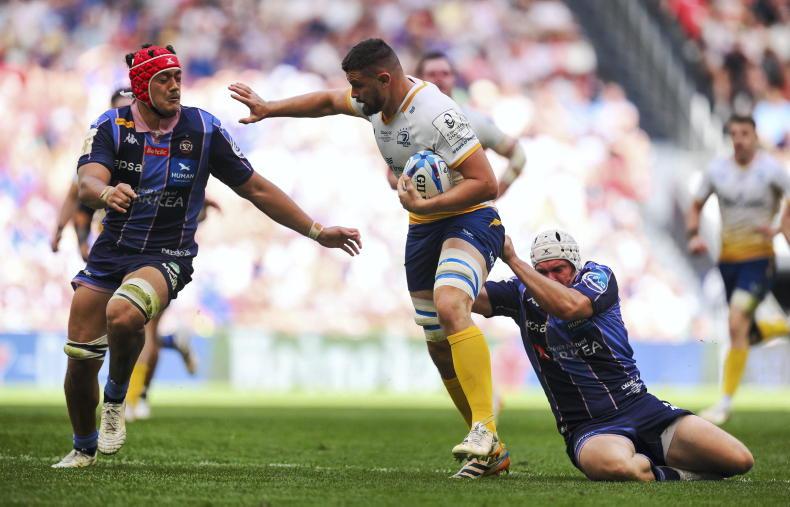
Trying to find the balance between being fair to teams and giving spectators something compelling is the permanent puzzle for competition organisers, one that is never fully complete. Which brings us to the Investec Champions’ Cup, which begins this weekend.
Back when Europe’s premier tournament was known as the Heineken Cup, the 24 entrants were in six groups of four, with only two of the runners-up making the quarter-finals. It was cut-throat, in that you could win four of your six games and still not qualify.
Many Irish fans recall that period fondly as it was a high point for Munster and then Leinster began to emerge as a continental force – but it’s worth noting that a smaller avenue to the knockout stages made for more than a few dead rubbers, too.
Nowadays, there are still 24 clubs on the starting grid, but the addition of South African sides means just one each from Scotland and Wales and no Italian teams. The group phase – now four sixes, with the home-and-away element removed – gets rid of just eight clubs.
This season, reaching the round of 16 is theoretically a bit more tricky as only three, rather than four, teams are guaranteed to progress from each group and a competition-wide ranking will then decide the last four spots. As well, a bonus point is now awarded for scoring three tries more than the opposition rather than simply getting four over the 80 minutes.
The measures are intended to keep games exciting for longer and to make progression to the knockouts slightly more demanding, but as with any such tweaks to a structure, there is a risk of worsening rather than improving matters.
Here’s a bold prediction: Leinster will be fine and Connacht and Munster will be in a battle. We’ll reconvene here again when the last 16 starts.


SHARING OPTIONS