




Sales of electric vehicles, or EVs, are rising in Ireland, leading many people to seriously question the future of their diesel and petrol-powered vehicles, even in rural Ireland.
With the backdrop of what seems like a never-ending fuel price crisis, better EV technology/range and improving infrastructure and grants, more people are opting to get plugged in.
In August, it was confirmed that more than 9,600 new electric vehicles (EVs) were registered the previous month, the highest monthly figure ever recorded, according to the Society of the Irish Motor Industry (SIMI).
Over the first seven months of this year, 29,840 new electric cars were registered – a 61% increase on the same time in 2025.
Mayo native Derek Reilly, content and PR director at Nevo, says the main driver in interest is the high price of fuel and the fluctuations and volatility associated with it.
“We see it immediately – when the price goes up at the pump – the traffic goes up on nevo.ie,” he remarks, adding that running costs of an electric vehicle are around 25% of a petrol or diesel.
Back in 2018, he drove his first EV, a BMW i3 GoCar that was rented by the hour and bought an electric car a year later.
Writing for a technology website at the time, Derek also started doing reviews of electric vehicles. This in turn led to him launching a YouTube channel as a “pandemic hobby”, and over 950 videos later, it boasts close to 100,000 followers and 3.5m views per year.
“What I find is that the people who come to the channel (@NevoEVReview) are just about to buy, and they want to reduce the number of times they have to go to the showroom.”
The big change since he bought his first EV is increased range.
“You’re getting an average of 450km now with an average electric vehicle. The world record now is about 1,200km.
“I’m living in north Co Dublin and I’m from Belmullet in Co Mayo. Coast to coast, you can’t get much further if you want to drive – that’s 320km. What’s happening regularly is that I’m landing home with 100km to spare,” he explains.
Here are Derek’s top considerations before you go electric.
Charging
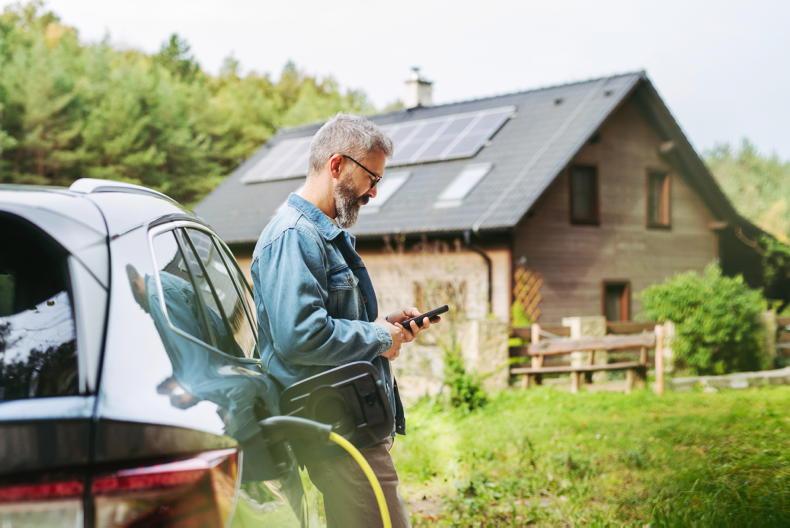
“The first thing to think about, whether you are living in rural or urban Ireland, is where you are going to charge the car. This is where rural Ireland will win because the vast majority of people have somewhere to park the car and be able to put in a charger.
“What we are finding is that people are able to put up solar panels on farmhouses and outbuildings, and there are grants for that. If the car is parked during the day, it can be charged with solar.
“If it’s overnight, it can be plugged in and you can use an EV tariff at an overnight rate to charge up that car much cheaper than petrol or diesel. Between €2 and €3 will get you 100km range.”
Range needs
“What actual range do you need? That’s the difference between urban and rural. For me, living in a more urban environment, I don’t do a lot of miles during the day, but if I was living in Belmullet, I might be doing 100km a day easily.”
Every car will have a standardised range figure, or what’s called a WLTP, according to Derek, but each dealer will know the “real-world range for Ireland”, taking account of our weather and type of driving.
“A car is advertised as having a 500km range, but the real-world range on it is 400km, and you know you only need 200km. An EV is going to be no problem to you. It’s about knowing what range you need for 99% of the days.”
He acknowledges there will be days you have to travel from Belmullet to Donegal, but because the charging infrastructure is so much better, you’re “buying a car for the everyday rather than the once-off”.
Towing capacity
“In a rural environment I get a lot more questions – can it tow? What’s the weight capacity? Is there a 4x4 option? It’s about researching whether you need those types of functionality. If you’re living on the top of a hill, you need a 4x4 because in the winter you’ve got icy roads, etc. Yes, you can get some models in 4x4, and there are more vehicles that have the capability for towing as well.”
Total cost of ownership
Sit down and crunch the numbers. While an electric vehicle may cost more than it’s diesel counterpart, Derek advises to do your homework and look at the entire outgoings of the car purchase.
“It’s understanding that you might be paying €200 a month on diesel currently, but OK, if I went electric, I’m paying a bit more for a car, but I’m actually saving on the running costs overall. It’s not just the diesel; it’s the servicing. It’s that total cost of ownership. It’s much cheaper to service, with less servicing required, much less on parts versus a combustion engine.”
Keep it local
“Know what is local to you, and if something goes wrong, can you get it to a local dealer? Appreciate the value of that local network,” advises Derek.
A useful comparison tool on nevo.ie or on seai.ie allows consumers to compare vehicle costs, range, grant eligibility and journey planners.
The Nevo Electric Vehicle Show takes place on 7 and 8 November in the RDS, Dublin. Free admission. See nevo.ie


SHARING OPTIONS