Small cars are an obvious choice for starter drivers, but improved economy and performance makes them increasingly popular with other drivers too. These small cars are now also more fun to drive, as well as being safer, so you’ll feel more confident letting your younger family members learn to drive in one of them.
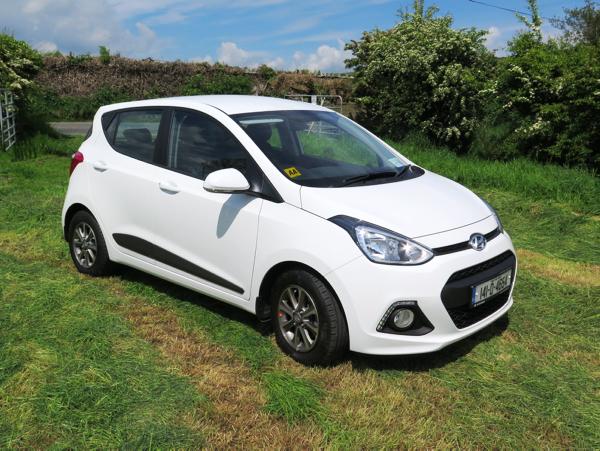
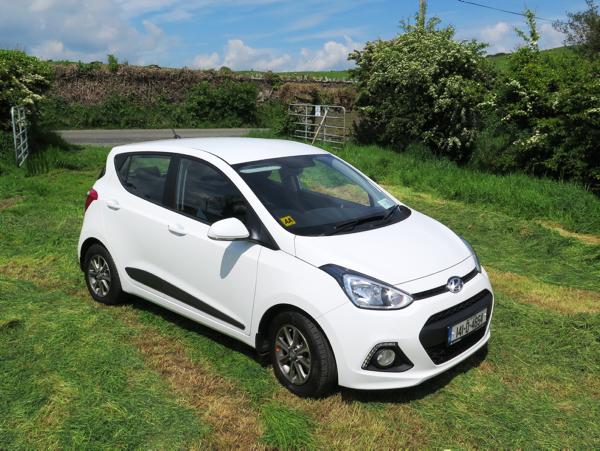
The Hyundai brand is making strong inroads into this sector and, with cars like the i10, it’s no wonder. This car has been upgraded in recent months with more features, including an increased level of safety. So does the car live up to its running cost claims?
This is a well kitted-out small car that has a lively and impressive three-cylinder petrol engine. Petrol engines make more sense in a car as small as the i10. It’s nippy in and around town, while it can still can hold its own on the open road.
The engine could cope with hilly conditions, while a little extra gear changing allowed the steeper inclines to be mastered.
This Hyundai engine is also fitted to the Kia Picanto and it’s among the smoothest three-cylinder engine that I’ve driven. In the beginning, I almost doubted that it was a three-cylinder, it was that smooth.
Against the competition (and I’ve compared it with 17 other cars) the i10 is not the best performer in acceleration terms. It does have plenty of engine power though and is reasonably acceptable in terms of pace, coming out faster than equivalent cars such as the Toyota Yaris and Volkswagen Polo. And, most of all, it felt smoother to drive.
The official economy figures of 21.3km/litre (4.7l/100km or 60 mpg) are good on paper, although in practice they were a little poorer, but I did drive it across less than typical roads. Overall, I achieved a range of almost 650km from a full tank – that’s a good result for such a small petrol-powered car.
The economy part leads to lower CO2 ratings and lower annual road tax bills. While most cars in this segment of the market are fuel-efficient, they all range in annual road tax costs of between €180 and €190, so there’s really not that much of a difference.
In Britain, the new generation Hyundai i10 was judged to be the most cost-effective car to live with. Vehicle valuation company CAP Automotive took into account depreciation, fuel consumption, service and maintenance, and road tax to discover how buyers would fare financially over a three-year ownership period.
As well as being smooth and easy to drive, the clutch and gearbox were effortless, making this an easy car for younger drivers in which to learn in. That’s helped by the good wing mirrors that are bigger than on some of the competition.
On the inside, Hyundai claims that the new i10 is marginally bigger than the older model. It’s not easy to spot the differences though. A 40mm extra legroom reach and 16mm extra shoulder space might satisfy the engineers, but, in reality, it’s difficult to feel that the car is more spacious.
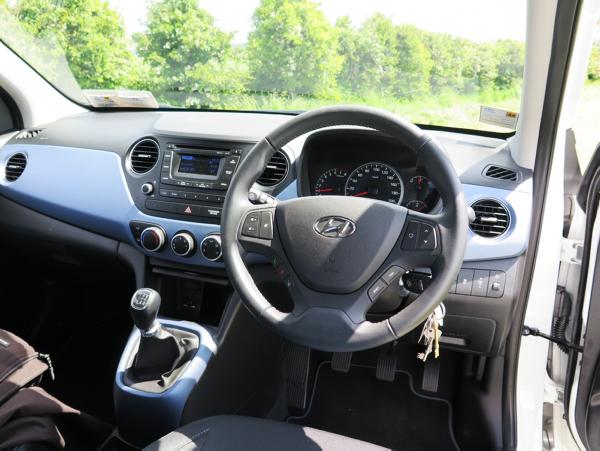
The car’s other controls were easy to use. The radio was easy to set up and there is a USB connection for iPods and phones. I found the ventilation easy to use as well.
Despite the size of the car, the glove box is deep and there are lots of handy storage areas. That might surprise, especially as the car is so small.
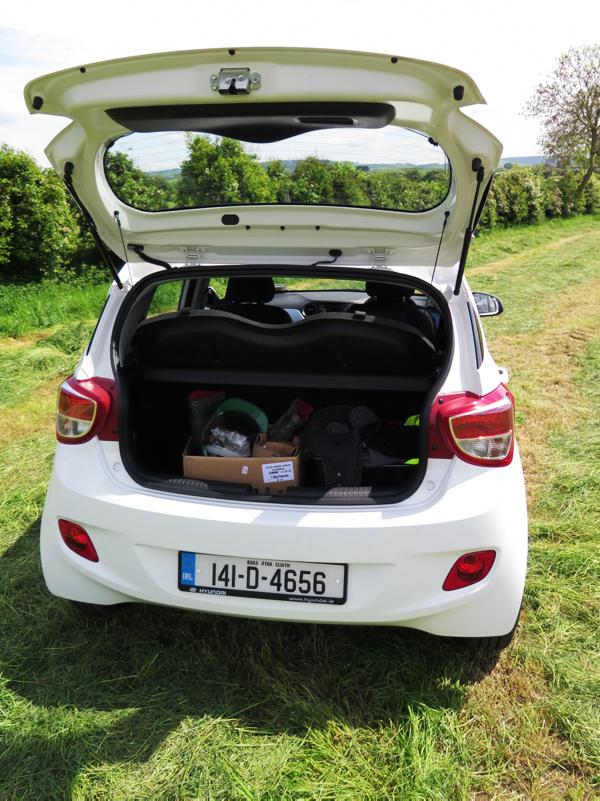
The boot is small, as you would expect, but I was happy to see a space-saver spare wheel tucked in there. The boot door is light to use and opens up to a good height – no banging heads there. The basic car comes with ABS brakes, the ESP stability system and a tyre pressure monitoring system that was easy to use. The extra safety features include a seatbelt reminder for all passengers. Yet, despite all of that, the i10 only achieved a four-star Euro NCAP safety rating.
The entry price for the i10, at €11,995 or £8,345 in Northern Ireland, is almost a match for the related Kia Picanto, which is a similar car with a seven-year limited mileage warranty, compared with five years’ unlimited at Hyundai. The Seat Mii and Škoda Citigo, with their three-cylinder engines, are marginally keener in price, but I still much prefer the smoother power of the Hyundai engine.
Hyundai i10 petrol
Engine 0.9-litre petrolEngine power 66bhp 0-100km/hr 14.9 secondsEconomy 21.3km/litreFuel tank capacity 40 litresCO2 emissions 109g/kmRoad tax band A3 (€190)Main service 20,000km Euro NCAP rating Four starsWarranty Five years Entry price €11,995NI price £8,345
Small cars are an obvious choice for starter drivers, but improved economy and performance makes them increasingly popular with other drivers too. These small cars are now also more fun to drive, as well as being safer, so you’ll feel more confident letting your younger family members learn to drive in one of them.
The Hyundai brand is making strong inroads into this sector and, with cars like the i10, it’s no wonder. This car has been upgraded in recent months with more features, including an increased level of safety. So does the car live up to its running cost claims?
This is a well kitted-out small car that has a lively and impressive three-cylinder petrol engine. Petrol engines make more sense in a car as small as the i10. It’s nippy in and around town, while it can still can hold its own on the open road.
The engine could cope with hilly conditions, while a little extra gear changing allowed the steeper inclines to be mastered.
This Hyundai engine is also fitted to the Kia Picanto and it’s among the smoothest three-cylinder engine that I’ve driven. In the beginning, I almost doubted that it was a three-cylinder, it was that smooth.
Against the competition (and I’ve compared it with 17 other cars) the i10 is not the best performer in acceleration terms. It does have plenty of engine power though and is reasonably acceptable in terms of pace, coming out faster than equivalent cars such as the Toyota Yaris and Volkswagen Polo. And, most of all, it felt smoother to drive.
The official economy figures of 21.3km/litre (4.7l/100km or 60 mpg) are good on paper, although in practice they were a little poorer, but I did drive it across less than typical roads. Overall, I achieved a range of almost 650km from a full tank – that’s a good result for such a small petrol-powered car.
The economy part leads to lower CO2 ratings and lower annual road tax bills. While most cars in this segment of the market are fuel-efficient, they all range in annual road tax costs of between €180 and €190, so there’s really not that much of a difference.
In Britain, the new generation Hyundai i10 was judged to be the most cost-effective car to live with. Vehicle valuation company CAP Automotive took into account depreciation, fuel consumption, service and maintenance, and road tax to discover how buyers would fare financially over a three-year ownership period.
As well as being smooth and easy to drive, the clutch and gearbox were effortless, making this an easy car for younger drivers in which to learn in. That’s helped by the good wing mirrors that are bigger than on some of the competition.
On the inside, Hyundai claims that the new i10 is marginally bigger than the older model. It’s not easy to spot the differences though. A 40mm extra legroom reach and 16mm extra shoulder space might satisfy the engineers, but, in reality, it’s difficult to feel that the car is more spacious.
The car’s other controls were easy to use. The radio was easy to set up and there is a USB connection for iPods and phones. I found the ventilation easy to use as well.
Despite the size of the car, the glove box is deep and there are lots of handy storage areas. That might surprise, especially as the car is so small.
The boot is small, as you would expect, but I was happy to see a space-saver spare wheel tucked in there. The boot door is light to use and opens up to a good height – no banging heads there. The basic car comes with ABS brakes, the ESP stability system and a tyre pressure monitoring system that was easy to use. The extra safety features include a seatbelt reminder for all passengers. Yet, despite all of that, the i10 only achieved a four-star Euro NCAP safety rating.
The entry price for the i10, at €11,995 or £8,345 in Northern Ireland, is almost a match for the related Kia Picanto, which is a similar car with a seven-year limited mileage warranty, compared with five years’ unlimited at Hyundai. The Seat Mii and Škoda Citigo, with their three-cylinder engines, are marginally keener in price, but I still much prefer the smoother power of the Hyundai engine.
Hyundai i10 petrol
Engine 0.9-litre petrolEngine power 66bhp 0-100km/hr 14.9 secondsEconomy 21.3km/litreFuel tank capacity 40 litresCO2 emissions 109g/kmRoad tax band A3 (€190)Main service 20,000km Euro NCAP rating Four starsWarranty Five years Entry price €11,995NI price £8,345 




SHARING OPTIONS