


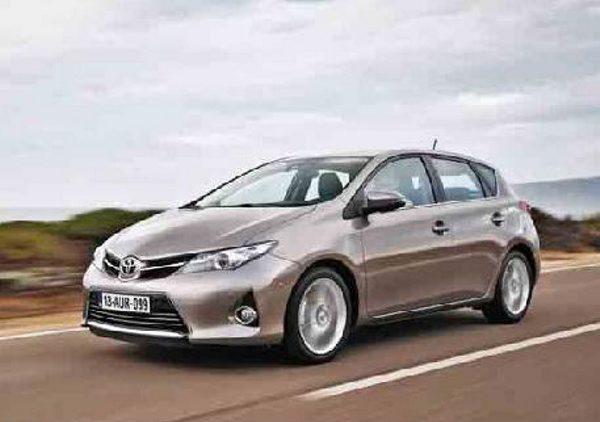
Toyota has, in my view, done a stunning job on the design of the new Auris. This has brought the Toyota hatchback right up to the 21st century with style and impressive driving.
On first impressions, the Auris looks well, it feels and is lower than the previous model, is 30mm longer and drives very well. The overall styling package is very impressive, both inside and out.
That's why the new Auris, with its economic performance, is giving the new Volkswagen Golf a challenging run.
The car is claimed to be 40kg lighter than the model that it replaces and that, coupled with engine improvements and a more aerodynamic design, has helped the new Auris to achieve an impressive economy level. While the rated fuel economy level was 25.6km/litre (3.9l/100km or 72 mpg), I didn't achieve that figure during my test drive. My performance was about 30% less across 900km, which was a mix of typical Irish driving conditions using a lot of the cruising sixth gear to enhance the economy.
Despite that, the car was rated to achieve a range of 800km on the full 60-litre fuel tank; my performance was closer to 700km. That's still a good enough performance in actual driving conditions; perhaps if I were a little lighter on the accelerator, the performance could be better.
When it comes to economy, on paper at least, this new Auris is a match for the 1.6-litre diesel Golf. Both lead the field in terms of fuel economy, where the average economy figure of the 14 cars that I included in a comparison was 24km/litre (68mpg). The 1.4-litre Toyota engine was smooth and adequate for the car.
The 0 to 100km acceleration rating at 12.5 seconds is just about average for this sector of the market. The Volkswagen Golf and BMW 116 are both faster. The new Auris comes with a stop start system to help fuel economy. It was smooth to use and I found it easy to get comfortable with.
There's a good reversing camera fitted to the higher-priced Luna grade models, but they cost €2,000 more. This feature is part of a 6.1 inch full colour touchscreen system that's modern and easy to use.
There is also easy to use Bluetooth mobile phone connectivity, with a music streaming facility, and an AUX jack and a USB port for the connection of portable music players, with the facility to display iPod album cover art. The car also has lots of safety kit, including ABS with EBD, brake assist, Vehicle Stability Control (VSC) and an emergency brake signal function. It is fitted with driver and front passenger, knee, side and curtain shield SRS airbags and isofix seating attachments.
Toyota claims that the new front seat design increases rear seat knee room by 20 mm (one inch) and the rear door opening width has been enlarged.
The rear legroom stills feels tight, as does the headroom. Toyota claim that the boot is bigger than on the older model, but it seemed a little smaller than some of the competition. That said, at least it contained a proper space-saving spare wheel. There are lots of practical features in the new Auris, including loads of storage areas, plus three 12-volt accessory sockets and an AUX external input plug, a removable package tray and deck hooks.
The entry price for the Auris diesel starts at €20,995 or £15,845 in Northern Ireland. That's competitive in comparison to the 14 other cars that I examined, and only about €300 more expensive than the car that it replaces. The more economical and bigger Volkswagen Golf and BMW 116d engines are also much more expensive to buy.
The new Toyota Auris matches them when it comes to running costs. And I reckon that this good looking car will hold its value, if that's ever a truism in today's car market.


SHARING OPTIONS