


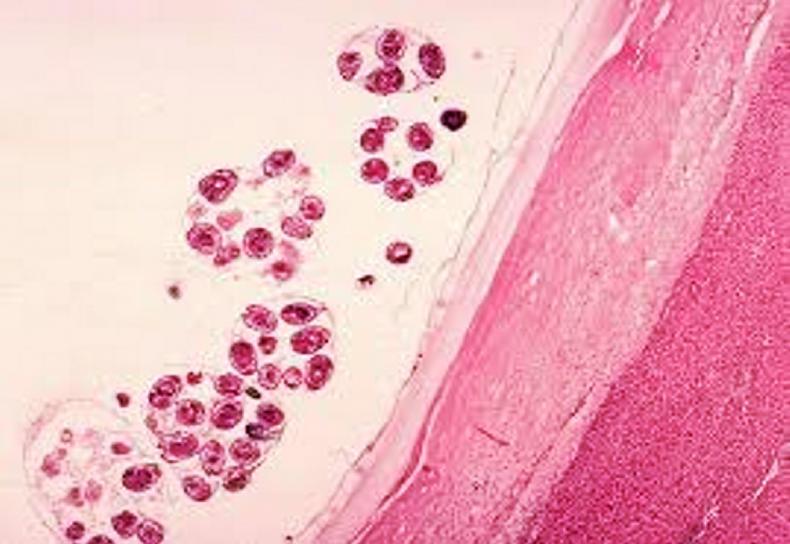
Cryptosporidiosis is caused by a microscopic protozoan parasite known as cryptosporidium parvum. With a life cycle of just four days, it can spread rapidly throughout the herd, both on its own or alongside other agents such as rotavirus, coronavirus or E coli. The initial source of infection is from faeces of adult cows and ewes that shed small quantities of oocysts (eggs) intermittently which reside in the environment in bedding, pasture, soil and drinking water. These oocysts are very infectious, with only 10 oocysts required to cause disease in susceptible calves. The calf takes in the agent and multiplies it rapidly and to an enormous degree so that the principal source of infection for young calves is other calves that have contaminated the environment before their arrival. In other words, disease usually worsens as the calving season progresses due to a build-up of contamination of the calf pens.
Symptoms
The main symptom is diarrhoea. However, calves will also suffer from dehydration, loss of appetite, fever and abdominal pain.
Treatment
Rehydration of calves is key for survival, therefore feeding one to two litres of oral electrolytes two to four times a day is recommended.
Halofuginone Base products are licensed for the prevention and treatment of cryptosporidiosis in calves. Administered at a dose rate of 8ml for calves 35kg to 45kg and 12ml for larger calves, it is available as a prescription-only medicine. Treatment is continued for seven consecutive days starting on the first day after birth. It is best used as a preventative in all animals subsequently born on a farm where diagnosis has been confirmed.
Halocur is only used as a treatment for cryptosporidiosis for calves suffering from diarrhoea for less than 24 hours. If calves have diarrhoea longer than 24 hours, stopping parasite multiplication will not improve the damage to the bowel lining which has already occurred. Complementary therapy such as electrolytes etc should still be used. Overdosing with the product or feeding anorexic calves on an empty stomach should be avoided - it is recommended to feed with electrolytes in anorexic calves.
Prevention and control
Currently there is no vaccine available and treatment options are limited. It is important calves suffering from the disease are isolated and remain so for at least one week after scouring has stopped. This should prevent the spread of eggs to other animals.
Preventing build-up of contamination is key to preventing a breakout of cryptosporidiosis, especially in calving pens. Thorough cleaning of calving pens is vital as the oocysts are very resistant to standard disinfection with a 5% ammonia, 10% formalin disinfectant or steam cleaning, with 10 minutes contact time required to be effective.
Newborn calves should receive 10% of their bodyweight of colostrum within two hours of birth. For a Holstein Friesian calf (35-45kg), this is approximately three litres; for a heavier continental calf (60kg), up to six litres would be required. This will ensure the calf has a strong immune system to fight disease. Absorption of antibodies from colostrum drops off dramatically by 24 hours of age, so ideally a 12-hour-old dairy calf should have received five to six litres while a large continental calf should have received 10 litres.
Avoid overcrowding and mixing calves of different ages, particularly those that are a few weeks older that are likely to be shedding the parasite which causes the disease. Ensure the calf has a clean dry bed, and avoid run-off from areas in which older cattle are housed.




SHARING OPTIONS