Navel ill
What is it?
A bacterial infection of the navel in newborn calves and lambs. If untreated, the infection can spread via the bloodstream to one or more joints where it causes a bacterial arthritis.
What causes it?
A wide variety of environmental bacteria such as Treperella pyogenes and streptococci.
What are the predisposing factors?
Wet dirty bedding in the early days of life.Insufficient consumption of colostrum (biestings).An overly concentrated navel dip can lead to chemical damage to the navel, facilitating the entry of bacteria.How is the animal affected?
Where there is navel ill, there will be a swelling of the navel, and the calf/lamb will be dull, depressed and listless.
Where there is joint ill, one or more joints will be swollen and the calf/lamb will be lame. Usually it is the joints of either the front or hind lower legs that are affected.
Possible complications
Liver abscesses and peritonitis are common complications of navel infections. These occur in longstanding cases and are often fatal.
Treatment
Antibiotics are effective in the early stages of the condition.
More advanced cases of navel infections may need to be drained. Infected joints may be flushed with saline to clear the infection. If the case is too far advanced the prognosis for the joint is poor. Both procedures need to be carried out by veterinary practitioners.
Prevention
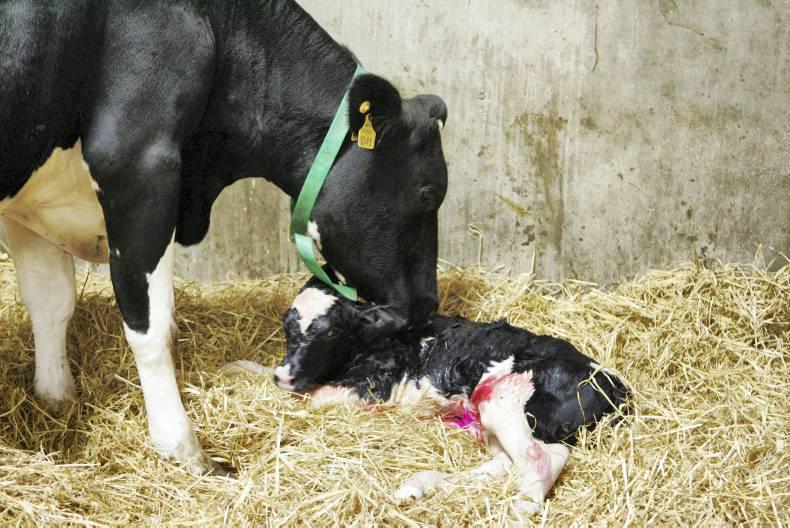
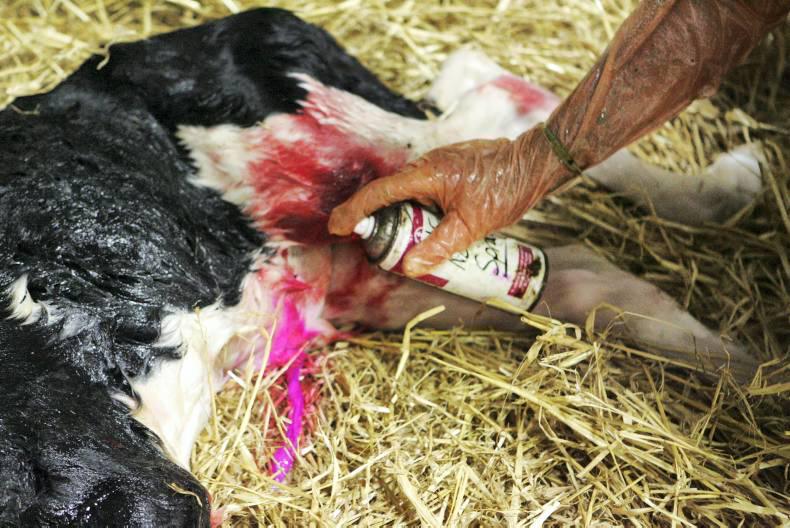
Navel dipping is important for disinfecting the navel, but is of little benefit if the calf is returning to a dirty environment. Therefore it is critical that there are clean dry straw beds in newborn calf accommodation. From a safety perspective, the cow and calf should be separated when you disinfect the navel, as cows can be quite unpredictable in the hours after calving.
Be especially cautious that concentrated navel dips are properly diluted prior to use to avoid chemical damage to the navel, which in itself could lead to navel infections. Many disinfectants which are sold for the purposes of navel disinfection are already diluted. However, where a general disinfectant is used for teat disinfection purposes, in most cases it needs to be diluted prior to use. Iodine-based teat disinfectants must be diluted to 5% solutions or less.
Milk fever (hypocalcaemia)
What is it?
Milk fever is a flaccid muscle paralysis as a result of low levels of calcium in the blood, leading to cows becoming recumbent (going down). In its subclinical form it can lead to delays in cows getting on with calving and delays in cows passing their afterbirths (cleanings) properly.
When does it occur?
Milk fever normally occurs in freshly calved cows. It sometimes occurs in cows before calving, and on occasion oxalates in the diet (from beet) can bind up calcium, leading to signs of milk fever.
Predisposing factors
High milk yield (therefore more common in dairy cows).Old fat cows.Low dietary magnesium and phosphorous (P) pre-calving.High dietary potassium (K). This is a feature of grass silage taken off land which has had a lot of slurry spread on it, and this has a negative impact on magnesium availability.High dietary calcium pre-calving, which leads to cows not able to mobilise calcium off their bones when calving approaches.What does milk fever look like?
The cow goes down normally within 48 hours of calving.
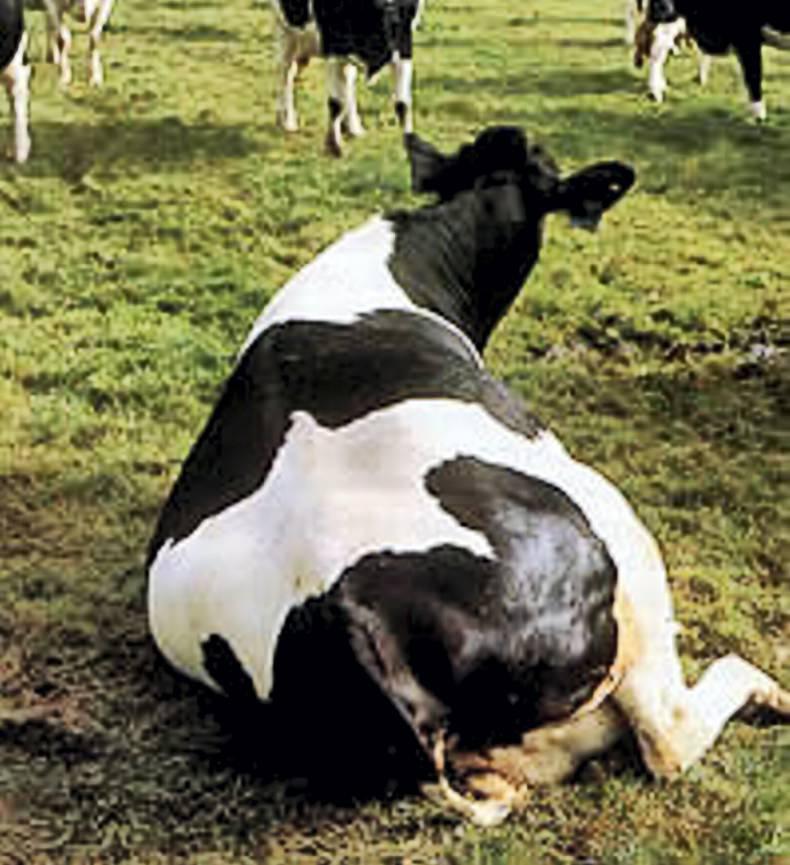
The cow is initially lying up in sternal recumbency, but as the condition advances will lie out on her side (lateral recumbency).
How is it treated?
Intravenous calcium injection is required for treatment, to get calcium back up to adequate levels. In straightforward cases, there is usually a good response to calcium on its own.
However, where there is an underlying magnesium or phosphorous deficiency, these minerals also need to be supplemented.
Possible complications
Cows lying out on their sides are highly susceptible to bloating. As well as that, when blood calcium levels are low, the muscles of the rumen do not function properly thereby prohibiting normal eructation (belching), also leading to bloat. The longer a cow is down, the more damage is done to her muscles and the muscle damage can cause the cow to stay down although calcium levels may have normalised.
Recumbent cows are more susceptible to environmental (E. coli) mastitis.
Prevention
Pre-calving mineral supplementation low in calcium and high in magnesium and phosphorous will address the issue in most herds.
Navel ill
What is it?
A bacterial infection of the navel in newborn calves and lambs. If untreated, the infection can spread via the bloodstream to one or more joints where it causes a bacterial arthritis.
What causes it?
A wide variety of environmental bacteria such as Treperella pyogenes and streptococci.
What are the predisposing factors?
Wet dirty bedding in the early days of life.Insufficient consumption of colostrum (biestings).An overly concentrated navel dip can lead to chemical damage to the navel, facilitating the entry of bacteria.How is the animal affected?
Where there is navel ill, there will be a swelling of the navel, and the calf/lamb will be dull, depressed and listless.
Where there is joint ill, one or more joints will be swollen and the calf/lamb will be lame. Usually it is the joints of either the front or hind lower legs that are affected.
Possible complications
Liver abscesses and peritonitis are common complications of navel infections. These occur in longstanding cases and are often fatal.
Treatment
Antibiotics are effective in the early stages of the condition.
More advanced cases of navel infections may need to be drained. Infected joints may be flushed with saline to clear the infection. If the case is too far advanced the prognosis for the joint is poor. Both procedures need to be carried out by veterinary practitioners.
Prevention
Navel dipping is important for disinfecting the navel, but is of little benefit if the calf is returning to a dirty environment. Therefore it is critical that there are clean dry straw beds in newborn calf accommodation. From a safety perspective, the cow and calf should be separated when you disinfect the navel, as cows can be quite unpredictable in the hours after calving.
Be especially cautious that concentrated navel dips are properly diluted prior to use to avoid chemical damage to the navel, which in itself could lead to navel infections. Many disinfectants which are sold for the purposes of navel disinfection are already diluted. However, where a general disinfectant is used for teat disinfection purposes, in most cases it needs to be diluted prior to use. Iodine-based teat disinfectants must be diluted to 5% solutions or less.
Milk fever (hypocalcaemia)
What is it?
Milk fever is a flaccid muscle paralysis as a result of low levels of calcium in the blood, leading to cows becoming recumbent (going down). In its subclinical form it can lead to delays in cows getting on with calving and delays in cows passing their afterbirths (cleanings) properly.
When does it occur?
Milk fever normally occurs in freshly calved cows. It sometimes occurs in cows before calving, and on occasion oxalates in the diet (from beet) can bind up calcium, leading to signs of milk fever.
Predisposing factors
High milk yield (therefore more common in dairy cows).Old fat cows.Low dietary magnesium and phosphorous (P) pre-calving.High dietary potassium (K). This is a feature of grass silage taken off land which has had a lot of slurry spread on it, and this has a negative impact on magnesium availability.High dietary calcium pre-calving, which leads to cows not able to mobilise calcium off their bones when calving approaches.What does milk fever look like?
The cow goes down normally within 48 hours of calving.
The cow is initially lying up in sternal recumbency, but as the condition advances will lie out on her side (lateral recumbency).
How is it treated?
Intravenous calcium injection is required for treatment, to get calcium back up to adequate levels. In straightforward cases, there is usually a good response to calcium on its own.
However, where there is an underlying magnesium or phosphorous deficiency, these minerals also need to be supplemented.
Possible complications
Cows lying out on their sides are highly susceptible to bloating. As well as that, when blood calcium levels are low, the muscles of the rumen do not function properly thereby prohibiting normal eructation (belching), also leading to bloat. The longer a cow is down, the more damage is done to her muscles and the muscle damage can cause the cow to stay down although calcium levels may have normalised.
Recumbent cows are more susceptible to environmental (E. coli) mastitis.
Prevention
Pre-calving mineral supplementation low in calcium and high in magnesium and phosphorous will address the issue in most herds.







SHARING OPTIONS