Emerging global research and policy agendas are now based on sustainable management of agricultural land, ie there is a need to increase production to cope with increasing food demands, but without compromising the environment and ecosystem processes and services.
Greening proposals in the recent reform of the Common Agricultural Policy (CAP) require farmers with over 15ha of arable land to allocate at least 5% of their arable area as Ecological Focus Areas (EFA). EFAs include landscape features and other semi-natural habitat types which help to improve and maintain biodiversity on farms, in turn helping to achieve ecological and environmental targets and the goals of sustainable expansion. Incorporation of EFAs and additional biodiversity measures could provide an important and much-overlooked branding and marketing opportunity to Irish farmers and retailers in terms of capitalising on Ireland’s clean, green image.
Some of the eligible EFAs more relevant to biodiversity under Irish conditions include the following.
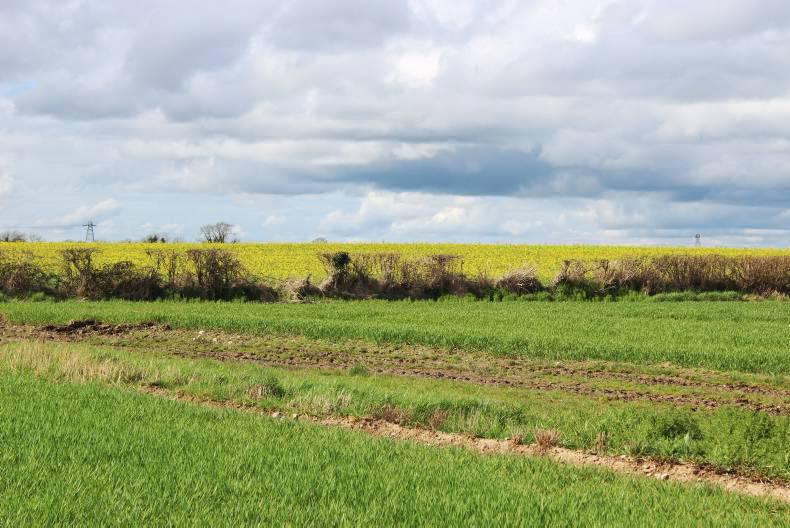
Hedgerow management
Appropriately managed hedgerows can have multiple benefits, including intercepting overland flow and improving water quality, sequestering carbon and acting as a refuge for biodiversity. Ensure appropriate management is undertaken outside the closed period from 1 March to 31 August.
• Leave occasional trees or bushes to mature. Mature trees and bushes provide feeding and nesting habitats for birds, pollinators and other beneficial insects.• The sides of hedges should be trimmed, with the top allowed to grow taller. This approach provides greater shelter, but also improves the diversity of habitats for wildlife.• Replant gappy hedgerows with native species (eg hawthorn). Native species support a greater abundance and diversity than non-native.Ditches and buffer strips
Riparian buffer strips are strips of permanent vegetation adjacent to watercourses that are typically excluded from intensive farming practices. Appropriately managed buffer strips play an important role in maintaining water quality, ensuring bank stability and reducing erosion, providing a habitat for biodiversity and acting as a wildlife corridor. To optimally manage these strips:
• Avoid getting nutrients (fertiliser or slurry) or herbicides into the strip.• Allow vegetation in the strip to develop, but avoid the strips becoming dominated by scrub. Periodic cutting (or grazing) can improve the buffering capacity and habitat quality of the strip.• In-stream work should be targeted from July to September to avoid disruption to spawning fish. When cleaning the channel bed, the spoil should be deposited away from the buffer strip.Fallow Land
Fallow land is where a portion of land has been removed from more intensive crop production. Appropriately managed fallow land can deliver environmental benefits such as a reduction in nutrient losses, reduction in greenhouse gas emissions and enhancement of farmland biodiversity, which in turn can play an important role in crop pollination and pest control.
• Natural vegetation should be allowed to become established on fallow land. Periodic cutting can prevent dense vegetation dominating, thus facilitating the use of these areas as foraging and breeding habitats for farmland birds and other ecology.• Naturally regenerated fallow land, combined with bird cover crops (GLAS) provides an increased winter food source for farmland birds.Short-rotation coppice
Short-rotation coppice (SRC) consists of fast-growing tree species such as willow and poplar, which are harvested after a short rotation period for bioenergy. Appropriately managed SRC and small woodland copses (trees in a group) can provide new habitat opportunities for farmland ecology, thus having a positive impact on biodiversity.
• Control the use of fertiliser and pesticide in SRC.• Avoid establishing SRC on existing semi-natural habitats.• Native tree species support a greater abundance and diversity than non-native species.• Natural vegetation should be allowed to become established on the ground layer.• Install bird and bat boxes on suitable trees within the copse.• Standing and fallen dead wood can be left on site as a habitat for a variety of species.Biodiversity is a primary environmental indicator of sustainable agricultural systems. There is a need for effective methods for biodiversity conservation, as part of the development of sustainable agri-production systems. This provides important branding and marketing opportunities for farmers and retailers.
Emerging global research and policy agendas are now based on sustainable management of agricultural land, ie there is a need to increase production to cope with increasing food demands, but without compromising the environment and ecosystem processes and services.
Greening proposals in the recent reform of the Common Agricultural Policy (CAP) require farmers with over 15ha of arable land to allocate at least 5% of their arable area as Ecological Focus Areas (EFA). EFAs include landscape features and other semi-natural habitat types which help to improve and maintain biodiversity on farms, in turn helping to achieve ecological and environmental targets and the goals of sustainable expansion. Incorporation of EFAs and additional biodiversity measures could provide an important and much-overlooked branding and marketing opportunity to Irish farmers and retailers in terms of capitalising on Ireland’s clean, green image.
Some of the eligible EFAs more relevant to biodiversity under Irish conditions include the following.
Hedgerow management
Appropriately managed hedgerows can have multiple benefits, including intercepting overland flow and improving water quality, sequestering carbon and acting as a refuge for biodiversity. Ensure appropriate management is undertaken outside the closed period from 1 March to 31 August.
• Leave occasional trees or bushes to mature. Mature trees and bushes provide feeding and nesting habitats for birds, pollinators and other beneficial insects.• The sides of hedges should be trimmed, with the top allowed to grow taller. This approach provides greater shelter, but also improves the diversity of habitats for wildlife.• Replant gappy hedgerows with native species (eg hawthorn). Native species support a greater abundance and diversity than non-native.Ditches and buffer strips
Riparian buffer strips are strips of permanent vegetation adjacent to watercourses that are typically excluded from intensive farming practices. Appropriately managed buffer strips play an important role in maintaining water quality, ensuring bank stability and reducing erosion, providing a habitat for biodiversity and acting as a wildlife corridor. To optimally manage these strips:
• Avoid getting nutrients (fertiliser or slurry) or herbicides into the strip.• Allow vegetation in the strip to develop, but avoid the strips becoming dominated by scrub. Periodic cutting (or grazing) can improve the buffering capacity and habitat quality of the strip.• In-stream work should be targeted from July to September to avoid disruption to spawning fish. When cleaning the channel bed, the spoil should be deposited away from the buffer strip.Fallow Land
Fallow land is where a portion of land has been removed from more intensive crop production. Appropriately managed fallow land can deliver environmental benefits such as a reduction in nutrient losses, reduction in greenhouse gas emissions and enhancement of farmland biodiversity, which in turn can play an important role in crop pollination and pest control.
• Natural vegetation should be allowed to become established on fallow land. Periodic cutting can prevent dense vegetation dominating, thus facilitating the use of these areas as foraging and breeding habitats for farmland birds and other ecology.• Naturally regenerated fallow land, combined with bird cover crops (GLAS) provides an increased winter food source for farmland birds.Short-rotation coppice
Short-rotation coppice (SRC) consists of fast-growing tree species such as willow and poplar, which are harvested after a short rotation period for bioenergy. Appropriately managed SRC and small woodland copses (trees in a group) can provide new habitat opportunities for farmland ecology, thus having a positive impact on biodiversity.
• Control the use of fertiliser and pesticide in SRC.• Avoid establishing SRC on existing semi-natural habitats.• Native tree species support a greater abundance and diversity than non-native species.• Natural vegetation should be allowed to become established on the ground layer.• Install bird and bat boxes on suitable trees within the copse.• Standing and fallen dead wood can be left on site as a habitat for a variety of species.Biodiversity is a primary environmental indicator of sustainable agricultural systems. There is a need for effective methods for biodiversity conservation, as part of the development of sustainable agri-production systems. This provides important branding and marketing opportunities for farmers and retailers.





SHARING OPTIONS