

Technology is everywhere you look in agriculture. There are apps to help with farm management and sensors on cows, tractors and equipment. However, this is nothing compared with the next wave that is being developed.
The agricultural tech sector is one of the fastest growing when it comes to raising private equity funds. So far in 2015, $2.06bn has been invested in farm startups, an increase of 132% on the same period in 2014, according to AgFunder, a major innovation platform for fundraising in the sector.
With populations rising and the need for food increasing, investors are buying into the story that farmers need new technologies to take the next step forward. The main areas include:
Precision agriculture: With satellite imagery and advanced sensors, farmers can optimise returns on inputs while preserving resources on ever larger scales. Precision technology has huge potential for livestock farmers.
Agricultural robots: Also known as agbots. Most farmers know of milking robots, but they are now being developed to carry out a range of agricultural processes, such as harvesting, fruit picking, ploughing, soil maintenance, weeding, planting and irrigation.
Livestock biometrics: Collars initially developed for heat detection are moving into the area of animal health. The next move is GPS and RFID and additional biometrics that will automatically identify and relay vital information about livestock in real time.
Equipment telematics: Allows mechanical devices such as tractors to warn mechanics that a failure is likely to occur soon.
Crop sensors: Instead of prescribing field fertilisation before application, high-resolution crop sensors inform application equipment of correct amounts needed. Optical sensors or drones are able to identify crop health across the field by using, for example, infra-red light.
Variable rate application: Building on existing geolocation technologies, variable rate control could save on seed, minerals, fertiliser and herbicides by reducing overlapping inputs. By pre-computing the shape of the field where the inputs are to be used, and by understanding the relative productivity of different areas of the field, you can apply inputs at variable rates.
Robotic farm swarms: Probably the furthest away, but this is a hypothetical combination of dozens or hundreds of agricultural robots with thousands of microscopic sensors, which together would monitor, predict, cultivate and extract crops from the land with practically no human intervention.
Despite all the current and envisaged technology, the limiting factor is going to be the uptake by farmers themselves.
Many new tractors and combines have high levels of technology already included. In many cases the data collected is not used. I remember one farmer telling me that he hasn’t worked out the yield in each field from the monitor on the combine because he hadn’t the time to download them on to his PC.
Compatibility and ease of use will be the two key drivers in how farmers take to agri-technology in the next five years.
Developers are realising that there is no use in generating data if it is not analysed and presented in a simple way so farmers can make decisions. In this supplement ICBF gives a great example how this is being developed for farmers’ benefit.
Technology will without doubt allow farmers to be more efficient – achieving more with less. The benefits of improved disease levels, reduced labour, and reduced feed costs per kg milk should be weighed against the investment costs.
Each technology can give a good return on the farm. The more important question is how will they integrate into what will be an increasingly technological farming system.
Mobile phone
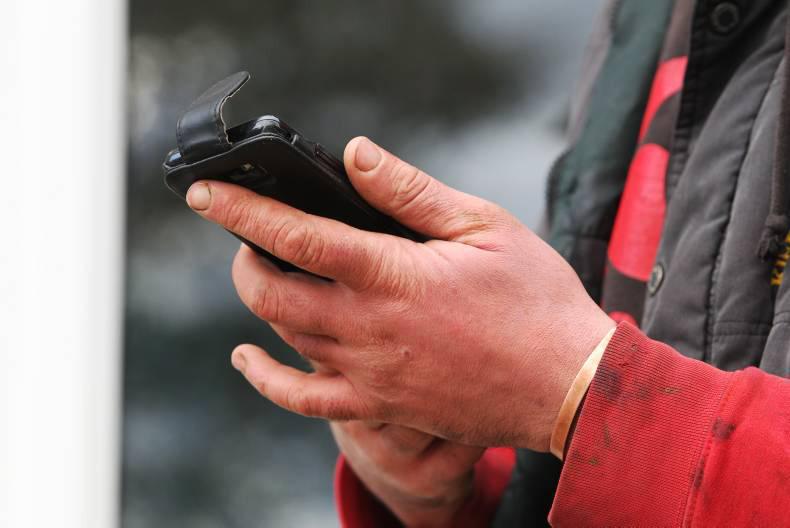
The mobile phone in many cases is the key – the interface through which farmers will be happy to receive information and interact with the different technologies.
A key question is who is the owner of the data that has been gathered? With all the gathering of data, there are a number of concerns emerging about the role of giant companies such as DuPont, John Deere and Monsanto.
Does the company that supplied the sensors and the service to the farmer or the farmer own the data? There is no doubt that the data can be valuable, but only if it is analysed correctly – a skill that will be one of the biggest technologies to develop.
For example, access to real time information about harvesting, planting and yields. This could help companies predict prices more accurately and give companies insight into the commodities market.
Read more
Farm 2030 puts focus on agricultural technology
Peter Varley looks at how farmers can guage the risks on their farms and carry out an assessment using technology
Technology is everywhere you look in agriculture. There are apps to help with farm management and sensors on cows, tractors and equipment. However, this is nothing compared with the next wave that is being developed.
The agricultural tech sector is one of the fastest growing when it comes to raising private equity funds. So far in 2015, $2.06bn has been invested in farm startups, an increase of 132% on the same period in 2014, according to AgFunder, a major innovation platform for fundraising in the sector.
With populations rising and the need for food increasing, investors are buying into the story that farmers need new technologies to take the next step forward. The main areas include:
Precision agriculture: With satellite imagery and advanced sensors, farmers can optimise returns on inputs while preserving resources on ever larger scales. Precision technology has huge potential for livestock farmers.
Agricultural robots: Also known as agbots. Most farmers know of milking robots, but they are now being developed to carry out a range of agricultural processes, such as harvesting, fruit picking, ploughing, soil maintenance, weeding, planting and irrigation.
Livestock biometrics: Collars initially developed for heat detection are moving into the area of animal health. The next move is GPS and RFID and additional biometrics that will automatically identify and relay vital information about livestock in real time.
Equipment telematics: Allows mechanical devices such as tractors to warn mechanics that a failure is likely to occur soon.
Crop sensors: Instead of prescribing field fertilisation before application, high-resolution crop sensors inform application equipment of correct amounts needed. Optical sensors or drones are able to identify crop health across the field by using, for example, infra-red light.
Variable rate application: Building on existing geolocation technologies, variable rate control could save on seed, minerals, fertiliser and herbicides by reducing overlapping inputs. By pre-computing the shape of the field where the inputs are to be used, and by understanding the relative productivity of different areas of the field, you can apply inputs at variable rates.
Robotic farm swarms: Probably the furthest away, but this is a hypothetical combination of dozens or hundreds of agricultural robots with thousands of microscopic sensors, which together would monitor, predict, cultivate and extract crops from the land with practically no human intervention.
Despite all the current and envisaged technology, the limiting factor is going to be the uptake by farmers themselves.
Many new tractors and combines have high levels of technology already included. In many cases the data collected is not used. I remember one farmer telling me that he hasn’t worked out the yield in each field from the monitor on the combine because he hadn’t the time to download them on to his PC.
Compatibility and ease of use will be the two key drivers in how farmers take to agri-technology in the next five years.
Developers are realising that there is no use in generating data if it is not analysed and presented in a simple way so farmers can make decisions. In this supplement ICBF gives a great example how this is being developed for farmers’ benefit.
Technology will without doubt allow farmers to be more efficient – achieving more with less. The benefits of improved disease levels, reduced labour, and reduced feed costs per kg milk should be weighed against the investment costs.
Each technology can give a good return on the farm. The more important question is how will they integrate into what will be an increasingly technological farming system.
Mobile phone
The mobile phone in many cases is the key – the interface through which farmers will be happy to receive information and interact with the different technologies.
A key question is who is the owner of the data that has been gathered? With all the gathering of data, there are a number of concerns emerging about the role of giant companies such as DuPont, John Deere and Monsanto.
Does the company that supplied the sensors and the service to the farmer or the farmer own the data? There is no doubt that the data can be valuable, but only if it is analysed correctly – a skill that will be one of the biggest technologies to develop.
For example, access to real time information about harvesting, planting and yields. This could help companies predict prices more accurately and give companies insight into the commodities market.
Read more
Farm 2030 puts focus on agricultural technology
Peter Varley looks at how farmers can guage the risks on their farms and carry out an assessment using technology
SHARING OPTIONS