


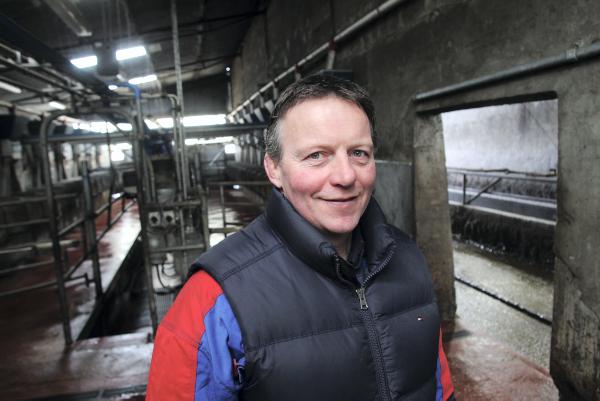
John Forde, Ballinadee, Bandon, Co Cork
Glenn Forde delivers 30-35% of his total annual milk supply to Bandon Co-op during the winter months. On each litre supplied he gets a bonus of between 5c and 7c/litre.
Glenn’s view is that the bonus should be paid on the kilo of milk solids rather than the litre of milk. He also is not going to produce any more milk during the winter if the total bonus is capped, which will be the case for the next three years at least. Glenn explained: “The margin I have left from producing milk during the winter is very small once I take into the account the extra feed costs. The bonus just about covers the cost of the extra feed, but that’s all. It means in effect the only impact of producing winter milk on my farm is that it allows me carry a slightly higher stocking rate.”
Glenn was clear that he needs a cow which is able to deliver for winter or spring. He supplies almost 32% of his quota from mainly October and November calving. He explained the benefit of the tight period of autumn calving is that it allows some normality during Christmas. His due date for start of calving was 1 October but by 30 September he already had 11 cows calved.
Glenn supplies the Bandon Winter Milk scheme which originally was supplying cream for the Baileys contract. The bonus for the Forde farm last year for producing 35% of its milk during the winter months was €19,751, which was 2.3 c/litre on the total farm supply. To attain the winter bonus there is a minimum requirement of 30% of supply between October and February, with at least 6% in November and December. The base milk price is calculated on milk solids (A+B-C).
Looking into the future, Glenn expects that he will only keep enough replacements for what he needs himself on the farm. Currently he fattens about 52 cull cows each year but if cow numbers expand from 140 to 160 milking cows then he won’t fatten the cull cows anymore and cows not in calf will be sold out of the parlour. Current annual milk yield is 6,200 litres delivered per cow at 4.18% fat and 3.52% protein (493kg MS/cow).
The labour involved in this unit is Glenn and his father with casual labour as required and machinery contractor for the major machinery work. Glenn also said he would not continue to grow barley, on an outside block, and instead he would return this to grass because if he increased to 160 cows then his stocking rate would increase to 3.5 cows/ha. His plan for feeding the extra cows is built on growing more grass and improving soil fertility. He will continue to breed for fertility and milk composition. Previously during the winter Glenn used to feed a base diet to allow for 28 to 30 litres of milk. Once he established over 40% of the herd were not doing that yield he reduced the base feed to deliver 22 litres and now those producing more than that are topped up with more meal.
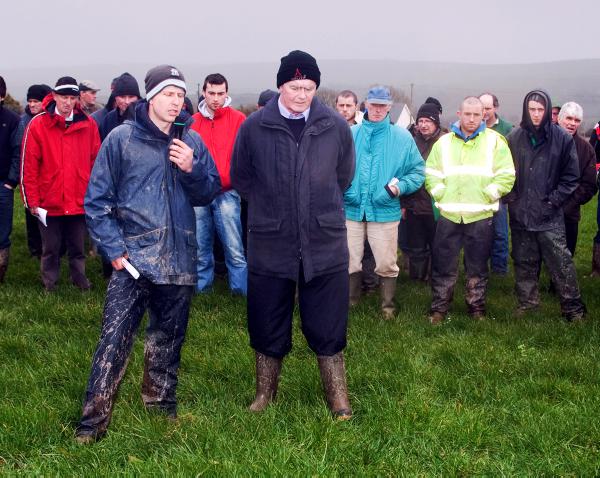
Glenn Forde was speaking at the winter milk conference last week and is supplying Bandon Co-op which in turn supplies milk to Carbery. He and his wife Pamela farm with Glenn’s parents at Horsehill, Ballinadee, Bandon, Co Cork. They are milking 140 cows with one third of the herd (45 cows) autumn calving. Glenn took over the family farm in 2006 and farms 46 hectares of a milking platform and another 37 hectares in three different rented blocks between 14 and 2 km away from the home owned block.
Larry Hannon, Ballitore, Co Kildare
LARRY HANNON farms beside the Glanbia bottling plant in Ballitore, Co Kildare. Larry intends to increase the number of cows milked from 125 to 160 cows by 2020 by increasing stocking rate from 2.3 to 2.5 LU/ha. To allow for the increase in cow numbers, he intends to reduce the number of replacements reared from 51 to 40 livestock units and get out of any drystock he has on the farm. The higher cow numbers will increase the milk delivered from 1,400 to 1,600 litres per day.
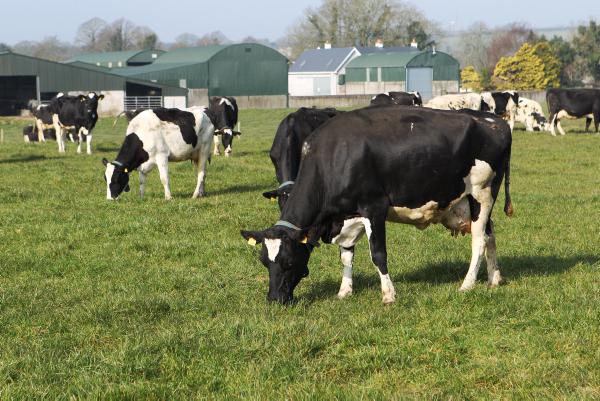
Larry is aiming to produce a good bit of this extra milk from grazed grass because he has a good free-draining block of land and cows can get out to grass from mid-February, and can stay out until mid-November. Larry’s autumn cows start calving in mid-October so most of them are calved two or three weeks and then they come indoors full-time. He said: “I like to keep them out as long as I can because I want to keep the diet feeder turned off as long as possible because once it starts I’m working for everybody else except myself.”
Larry said he is committed to staying in liquid milk but said he needs liquid milk to commit to his business if he wants to grow and develop the business further. A great believer in the discussion group he said he has taken on board a lot of advice gained at group meetings. He has a black and white Holstein Friesian herd and has no intention of crossbreeding. He said: “Since I started farming I am nearly calving twice the number of cows in half the time so the cow I have is delivering enough for me. In 2002 we only had 71 cows calving in a longer period. Heifers calve for the first time at two years of age.”
Larry Hannon supplies liquid milk from his farm near Ballitore in Kildare. He farms 79ha (65ha owned) with a milking platform of 55ha. He grows some maize (some of which is part of the milking platform) but intends to switch this to wholecrop wheat instead. Milk produced is 6,300 litres at 7.55% solids which is 490kg of milk solids per cow (1,150kg MS/ha). He has a part-time workman and his herd EBI is €140 (€40 milk/€69 fertility).
Questions & answers
Q. Both farmers said the winter bonus is just about paying for winter feed – where is the margin for farmers? Is the farmer not getting paid for work put in – clarify that?
A. “Yes I agree if it’s down around 1 c/litre left over for that it is a marginal game. If we can keep are system simple and carry a slightly heavier stocking rate and get bonus then we can justify it. The minute the bonus is pulled it’s hard to justify. All we can aim to do is cut quality grass and reduce feed coming in to help feed costs” – Glenn Forde.
Q: Where does zero grazed grass fit if anywhere with a winter milk scenario?
A: “The costings we have done suggest the cost of the dry matter is 15 c/kg DM, the same as grass silage, depending on the farm situation. [This is] because you have to buy a machine, run it, drive it and grow the grass. Some that have it try to justify it but often they are better parking it for as long as they can.” – Joe Patton
Q: Could someone explain if banks are looking at longer terms of loans or different structures for money to fund expansion?
A: “Great question and we in AIB always want to structure debt correctly – we have our land loans over 20 years where many others will only fund for 15 years and I would say an investment like a parlour should be borrowed over 15 years.” – Liam Phelan, AIB (conference sponsors)


SHARING OPTIONS