


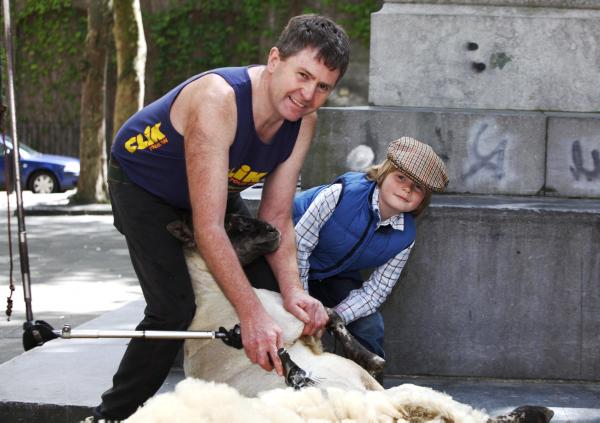
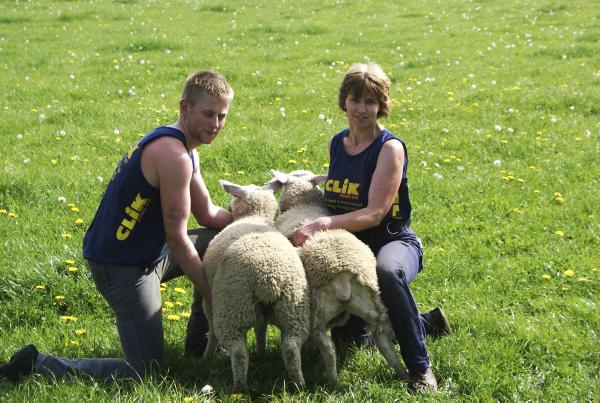
The first Golden Shears competition was held in 1961. The idea of a shearing competition was born three years earlier when a group of farming and shearing enthusiasts from the Wairarapa District Young Farmers Club (in the Wairarapa region of New Zealand) held a shearing competition.
The competition was a huge success, providing the platform and demand for repeat competitions.
The club was approached by a wider group asking if their competition could be used as a template to stage an annual shearing competition. The club agreed, and in 1960 the plans were set in motion to hold the inaugural Golden Shears in 1961.
The Golden Shears was an immediate hit. Records on the show’s history tell how the local army was called to control the crowds at the first event.
Huge attendances were witnessed throughout the 1960s and 1970s, with the introduction of televised sport the only obstacle in slowing down its growth.
Even with this, the shearing retained its appeal, aided by competitions between Australia and New Zealand. In 1980, it went a step further with a World Shearing Championship.
All eyes on Gorey
The 2014 Golden Shears World Sheep Shearing & Wool Handling Championships is the 16th world event. It is also among the largest sheep championships held, with 102 competitors from 27 countries. The list of countries competing is shown in Table 1.
Each country can enter competitors in all three disciplines – machine shearing, blades shearing and wool handling. Each class has an individual and team component, meaning there are two titles up for grabs in each discipline, or six world titles in total as shown in Table 2.
The disciplines can be explained as follows:
Machine shearing: Machine shearing is the modern form of shearing sheep using an electric handpiece.
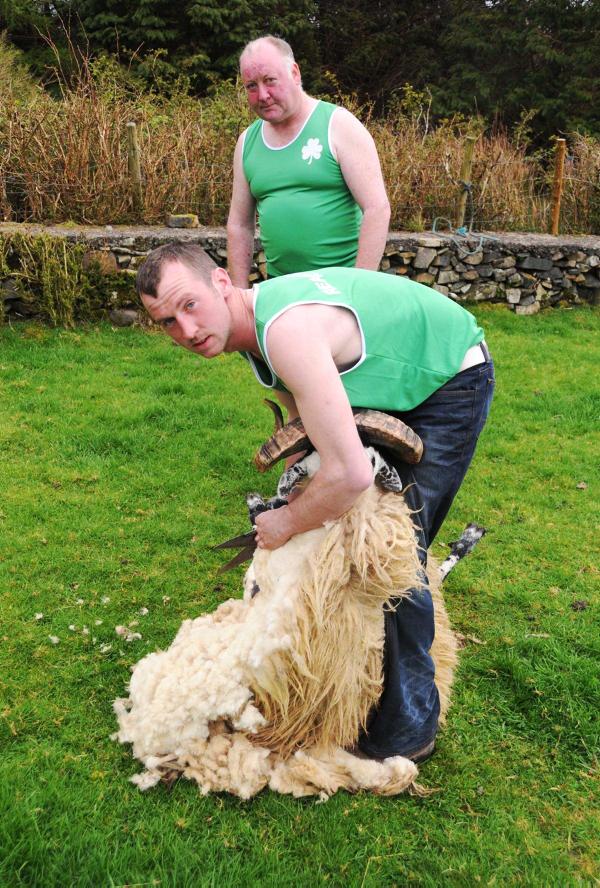
Blades shearing: Blades shearing is essentially hand shearing, or what is more commonly known in some areas as hand clipping. It is carried out most often where there is no electricity available, but is also used in cooler climates to retain a greater level of wool cover on sheep than machine shearing.
Wool handling: Wool handling has become a forgotten feature of shearing on the majority of farms in Ireland and Britain. However, it holds great prominence in New Zealand and Australia, with a team of wool handlers working hand in hand with shearers to remove wool from the shearing board, roll it and pack it into wool packs for further processing.
Precision and speed
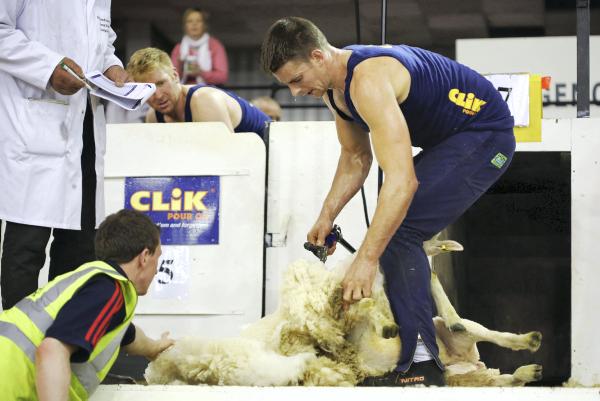
It is important to note that the competitor who shears his sheep first is not automatically the winner. The winner is selected from a line-up of six competitors on a combination of speed and quality of shearing.
This is the case irrespective of heats, semi-finals and finals. A number of judges score each competitor as they shear, with points received for the time taken to shear and also for any faults identified during shearing or in assessing ewes post shearing (assessed for small cuts, quality of the shear and any wool left uncut).
The machine, or what is commonly known as the open final, is generally seen as the most prestigious event, with competitors required to shear 20 sheep in the final.
The level of skill demonstrated is quite phenomenal, with the top shearers capable of shearing their 20 hoggets in less than 20 minutes. It is this level of skill that is behind the shearing continually being described an Olympic sport – a comparison frequently made by chairman of the Wexford Golden Shears committee, Irish team manager and wool handling participant George Graham.
Wool handling competitions generally comprise of up to three handlers competing against each other. They are judged on their ability to sort and roll wool and how long it takes to complete the task.
Irish hopes for Golden Shears glory
Mayo blade shearers Peter Heraty and Seamus Joyce make up the two-man team representing Ireland in the World Blade Shearing Championship. Both shearers are carrying good form into the competition.
Peter, a 24-year-old farmer from Owenwee, Westport, farms a flock of 300 ewes near Croagh Patrick. He has represented Ireland in the last two World Blade Shearing Championships (New Zealand 2012 and Wales in 2010).
Seamus Joyce farms a flock of 700 at Kilbride, Finny, Co Mayo, and is married with three children. He secured his position on the Irish team by winning the Irish Blade Shearing Championship in Millstreet in 2013.
The event, sponsored by Novartis Animal Health, will see competitors from Australia, New Zealand, Wales, Scotland, England, Germany, France, Slovenia, Sweden, USA and Isle of Man. The line-up also includes the competition favourite and reigning world champion Zweliwile Hans from South Africa.
Father and son, George and Brendan Graham, team up to represent Ireland in the Wool Sheep Handling Championships.
George is well accustomed to the world stage, having represented Ireland several times in wool handling and machine shearing. Brendan is following in his footsteps, having already represented Ireland in the World Championships in 2010.
They will need to be on top of their game to beat defending wool handling champion and favourite for the competition, Joel Hendre. At just 22, he is taking the discipline by storm, having won New Zealand’s Wool Handler of the Year five times before the age of 20. The skill and speed he demonstrates has left many commentators already discussing giving Joel the title of Master Wool Handler, a title generally not received until shearers have 20 to 30 years experience.
Machine position still up for grabs
Irish spectators have seen Donegal native and the first member of the Irish machine shearing team, Ivan Scott, rise to prominence in recent years.
Scott has won the Irish Sheep Shearing Championship or open championship for the last three years and is tipped as having an excellent chance to be Ireland’s first ever finalist to compete in the six-man Golden Shears World Sheep Shearing final, sponsored by Irish Country Meats/Slaney Foods.
He narrowly missed out on making the final in Masterton, New Zealand, in 2012 and will have to overcome at least one shearer in the heats from an impressive competitors’ list, including defending champion Gavin Mutch from Scotland and his teammate Hamish Mitchell, New Zealand shearers John Kirkpatrick and Rowland Smith, and Welshmen Gareth Daniel and Richard Jones.
Scott is well regarded as one of the top shearers on a worldwide platform, having twice broken the world record for shearing the most strong-wool lambs in an eight-hour day. He currently holds the record after shearing a remarkable 744 lambs in eight hours in January 2012.
The second position on the Irish machine shearing team is still up for grabs and will be decided at the Connacht Spring Show next Sunday in Ballinrobe. The favourite for the second position in many shearing commentators’ eyes is Galway shearer Tom Kennedy. There is no doubting the Galway man’s shearing pedigree, having won 11 All-Ireland Shearing championships.
Kennedy, however, will need to be on top of his game to ward off the challenges of up-and-coming shearers like Stanley Allingham from Fermanagh and Mark McGeown.


SHARING OPTIONS