Modern agricultural pesticide products are offering more and more flexibility when it comes to spray timing. Despite this there are only a few days in most spray seasons, when all the factors to success come right:
The crop is at the right growth stage.The target weed pest or disease is at its most vulnerable.The weather conditions are right – neither too wet, windy, or sunny.Always carry out a risk assessment and put appropriate control measures in place before starting any job. Wear appropriate good-quality personal protective equipment – Nitrile gloves, coverall and rubber boots are a minimum requirement when working with parts that may be contaminated with chemical. Always check the condition of personal protective equipment before using it and replace it if damaged or dirty.
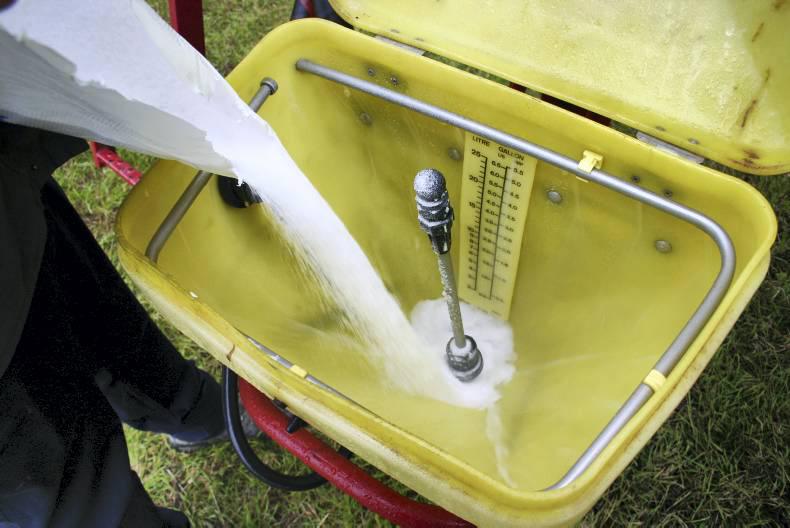
Filling the tank
For this you need:
Chemical cover-all suit.Rubber boots.Rubber nitrile glovesFace shield.Before beginning to fill the tank, read the label, reminding yourself of the safety information. Check to see that the chemical is approved for use and that it has a PCS number.
If you intend to use a tank mix, make sure that the products are compatible. If they are not, the mix can quickly clog the nozzles. Also remind yourself of the chemical quantities required per tankful.
Only handle pesticides in a well-ventilated area to avoid possible build-up of vapours. Immediately clean splashes or spillages.
Remember the water, chemical, water sequence.
This helps to ensure should a splash occur that it is diluted, and makes for easier mixing of the water and chemicals. Ensure that you are steady on your feet. Use low-level induction bowls or other appropriate filling devices where fitted on the sprayer, ensure that empty containers are washed out thoroughly and that the washings of the container are put into the sprayer. If a measuring jug or any other equipment that has come into contact with the pesticide was used, rinse them to reduce any chemical residue and include the rinsings in the sprayer mix.
Mixing and filling should only be carried out well away from watercourses, ditches or drains, and preferably in a specific area in the yard where possible. Reseal partially used containers and place in a secure area for storage or return immediately to the chemical store. Now you are ready to go spraying. Remember to thoroughly rinse your gloves before entering the tractor.
When transporting chemicals, never transport them in the tractor cab. Use a secure leak-proof chest to prevent spillages, puncturing of pesticide containers and vapours escaping.
Ensure that the public or neighbours have been adequately warned that you intend to spray where required.
If you feel unwell, follow the safety information on the label. Typically stop work, leave the area where the pesticide is, remove contaminated clothing, wash contaminated skin, seek help and medical advice and remember to bring the pesticide label with you.
A decontamination kit should be available at all times while handling pesticides.
Drift
Drift occurs when droplets from the sprayer do not land on their target. This not only means that the correct rate of spray may not be applied to the crop, but that the spray drift might land on unintended areas, thereby causing environmental damage.
Disposal of pesticide containers
Empty pesticide containers must be triple-rinsed – do not forget the top, the foil seal and the cap of the chemical container. Triple-rinsed containers should then be punctured and squashed and stored in a suitable way for proper disposal later. Large bags are available from recycling specialists especially for this purpose.
Unused chemical must be returned to the chemical store and stored correctly – powders above liquids. Always keep partially used chemical in its original container.
Personal Protective equipment is often called PPE. Cleaning and storing of PPE is vital for personal safety.
Firstly wash down PPE (boots, gloves and waterproof coverall) ensuring that the washings do not flow to any water course. If wearing an apron, wash it down and remove it.
Next, thoroughly wash the outside of the gloves and take them off inside out.
Remove coverall inside out – pushing it over the boots and step out of the boots and into suitable footwear.
Finally remove your mask. Ensure any exposed skin is thoroughly washed.
PPE should be cleaned according to the manufacturer’s instructions and non-reusable be disposed of. Highly contaminated PPE should not be placed in domestic waste.
PPE should be washed and stored separately from personal clothing and should only be used for pesticide application. Respirator filters and damaged PPE must be replaced as required.
Sprayer and chemical store logs
Sprayer logs and chemical store logs must be completed after spraying and the logs should be readily available for inspection when required.
Finally, wash your hands again.
Safe, responsible pesticide application using best practice will protect the environment, ensure efficient use of expensive chemicals, and protect everyone.
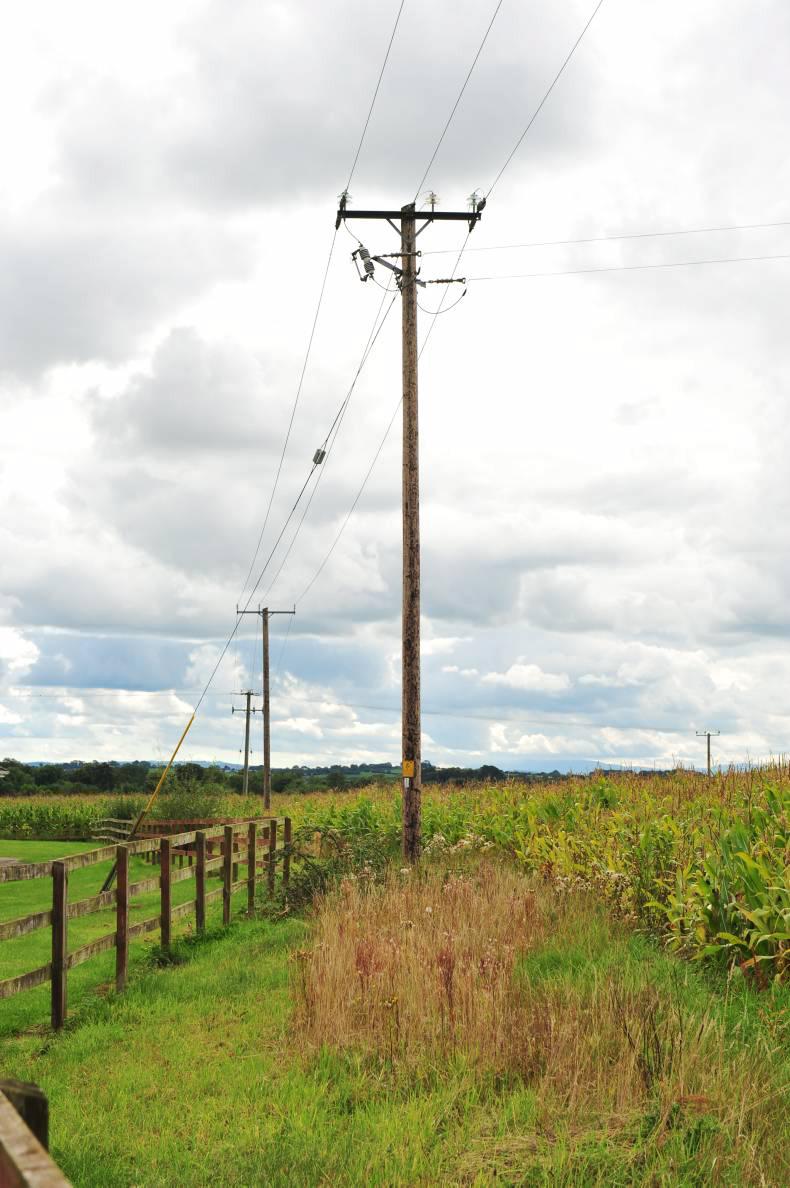
Every farmer is familiar with electricity poles and overhead wires. In fact, that same familiarity is often the cause for complacency. That is why ESB Networks is highlighting to farmers to always steer clear of electricity poles. If a tractor or attachment strikes a pole, or even gives it a glancing blow, then danger inevitably follows and lives are put at risk. The reason the pole breaks is due to the shock loading caused by the impact; the combination of the mechanical power of the tractor and the tension force in the pole, which is close to one tonne.
There have been numerous examples of collisions resulting in the pole breaking in two. When this happens, the top half of the pole will either end up near to the ground or else actually resting on the cab of the tractor.
In either of these situations, people are in imminent danger. The person in the tractor is in danger unless they follow a safe evacuation procedure. The advice from ESB Networks is (1) Stay in the cab and phone the emergency number 1850 372 999; (2) Keep others away; (3) Jump clear without touching anything, and take short steps until well clear.
Electricity poles often require a stay wire, and ESB Networks public safety manager Arthur Byrne explains that the importance of the stay is not fully appreciated. There are very significant forces necessary to maintain the tension in the overhead wires; it can be as high as 1t or 1,000kg of force. This tension is essential to ensure proper ground clearance for the wires; this is especially important in the middle of the span where the sag is greatest and, therefore, the ground clearance is at its minimum.
The trouble starts when a stay wire becomes loose or is damaged then the consequence is that the pole is weakened and the overhead wires will not have the necessary clearance. Damage is usually caused when driving too near to the stay wire.
One such case occurred recently where the tractor was driven between the pole and stay wire. The result was that the shock load to the stay caused the pole to break and one of the live electricity wires broke and whipped up into the other wires. Not alone was there a safety issue for the driver but neighbours lost their electricity supply while ESB Networks emergency crews made the situation safe before repairing the fault.
Arthur adds that when accidents or near misses happen, it is important that ESB Networks is made aware so that the damage can be repaired quickly.
Advice from ESB Networks
Fallen wires are always live and dangerous; never handle electricity wires.
Think safety first, no matter what the pressure and always farm safely with electricity.
Modern agricultural pesticide products are offering more and more flexibility when it comes to spray timing. Despite this there are only a few days in most spray seasons, when all the factors to success come right:
The crop is at the right growth stage.The target weed pest or disease is at its most vulnerable.The weather conditions are right – neither too wet, windy, or sunny.Always carry out a risk assessment and put appropriate control measures in place before starting any job. Wear appropriate good-quality personal protective equipment – Nitrile gloves, coverall and rubber boots are a minimum requirement when working with parts that may be contaminated with chemical. Always check the condition of personal protective equipment before using it and replace it if damaged or dirty.
Filling the tank
For this you need:
Chemical cover-all suit.Rubber boots.Rubber nitrile glovesFace shield.Before beginning to fill the tank, read the label, reminding yourself of the safety information. Check to see that the chemical is approved for use and that it has a PCS number.
If you intend to use a tank mix, make sure that the products are compatible. If they are not, the mix can quickly clog the nozzles. Also remind yourself of the chemical quantities required per tankful.
Only handle pesticides in a well-ventilated area to avoid possible build-up of vapours. Immediately clean splashes or spillages.
Remember the water, chemical, water sequence.
This helps to ensure should a splash occur that it is diluted, and makes for easier mixing of the water and chemicals. Ensure that you are steady on your feet. Use low-level induction bowls or other appropriate filling devices where fitted on the sprayer, ensure that empty containers are washed out thoroughly and that the washings of the container are put into the sprayer. If a measuring jug or any other equipment that has come into contact with the pesticide was used, rinse them to reduce any chemical residue and include the rinsings in the sprayer mix.
Mixing and filling should only be carried out well away from watercourses, ditches or drains, and preferably in a specific area in the yard where possible. Reseal partially used containers and place in a secure area for storage or return immediately to the chemical store. Now you are ready to go spraying. Remember to thoroughly rinse your gloves before entering the tractor.
When transporting chemicals, never transport them in the tractor cab. Use a secure leak-proof chest to prevent spillages, puncturing of pesticide containers and vapours escaping.
Ensure that the public or neighbours have been adequately warned that you intend to spray where required.
If you feel unwell, follow the safety information on the label. Typically stop work, leave the area where the pesticide is, remove contaminated clothing, wash contaminated skin, seek help and medical advice and remember to bring the pesticide label with you.
A decontamination kit should be available at all times while handling pesticides.
Drift
Drift occurs when droplets from the sprayer do not land on their target. This not only means that the correct rate of spray may not be applied to the crop, but that the spray drift might land on unintended areas, thereby causing environmental damage.
Disposal of pesticide containers
Empty pesticide containers must be triple-rinsed – do not forget the top, the foil seal and the cap of the chemical container. Triple-rinsed containers should then be punctured and squashed and stored in a suitable way for proper disposal later. Large bags are available from recycling specialists especially for this purpose.
Unused chemical must be returned to the chemical store and stored correctly – powders above liquids. Always keep partially used chemical in its original container.
Personal Protective equipment is often called PPE. Cleaning and storing of PPE is vital for personal safety.
Firstly wash down PPE (boots, gloves and waterproof coverall) ensuring that the washings do not flow to any water course. If wearing an apron, wash it down and remove it.
Next, thoroughly wash the outside of the gloves and take them off inside out.
Remove coverall inside out – pushing it over the boots and step out of the boots and into suitable footwear.
Finally remove your mask. Ensure any exposed skin is thoroughly washed.
PPE should be cleaned according to the manufacturer’s instructions and non-reusable be disposed of. Highly contaminated PPE should not be placed in domestic waste.
PPE should be washed and stored separately from personal clothing and should only be used for pesticide application. Respirator filters and damaged PPE must be replaced as required.
Sprayer and chemical store logs
Sprayer logs and chemical store logs must be completed after spraying and the logs should be readily available for inspection when required.
Finally, wash your hands again.
Safe, responsible pesticide application using best practice will protect the environment, ensure efficient use of expensive chemicals, and protect everyone.
Every farmer is familiar with electricity poles and overhead wires. In fact, that same familiarity is often the cause for complacency. That is why ESB Networks is highlighting to farmers to always steer clear of electricity poles. If a tractor or attachment strikes a pole, or even gives it a glancing blow, then danger inevitably follows and lives are put at risk. The reason the pole breaks is due to the shock loading caused by the impact; the combination of the mechanical power of the tractor and the tension force in the pole, which is close to one tonne.
There have been numerous examples of collisions resulting in the pole breaking in two. When this happens, the top half of the pole will either end up near to the ground or else actually resting on the cab of the tractor.
In either of these situations, people are in imminent danger. The person in the tractor is in danger unless they follow a safe evacuation procedure. The advice from ESB Networks is (1) Stay in the cab and phone the emergency number 1850 372 999; (2) Keep others away; (3) Jump clear without touching anything, and take short steps until well clear.
Electricity poles often require a stay wire, and ESB Networks public safety manager Arthur Byrne explains that the importance of the stay is not fully appreciated. There are very significant forces necessary to maintain the tension in the overhead wires; it can be as high as 1t or 1,000kg of force. This tension is essential to ensure proper ground clearance for the wires; this is especially important in the middle of the span where the sag is greatest and, therefore, the ground clearance is at its minimum.
The trouble starts when a stay wire becomes loose or is damaged then the consequence is that the pole is weakened and the overhead wires will not have the necessary clearance. Damage is usually caused when driving too near to the stay wire.
One such case occurred recently where the tractor was driven between the pole and stay wire. The result was that the shock load to the stay caused the pole to break and one of the live electricity wires broke and whipped up into the other wires. Not alone was there a safety issue for the driver but neighbours lost their electricity supply while ESB Networks emergency crews made the situation safe before repairing the fault.
Arthur adds that when accidents or near misses happen, it is important that ESB Networks is made aware so that the damage can be repaired quickly.
Advice from ESB Networks
Fallen wires are always live and dangerous; never handle electricity wires.
Think safety first, no matter what the pressure and always farm safely with electricity.





SHARING OPTIONS