


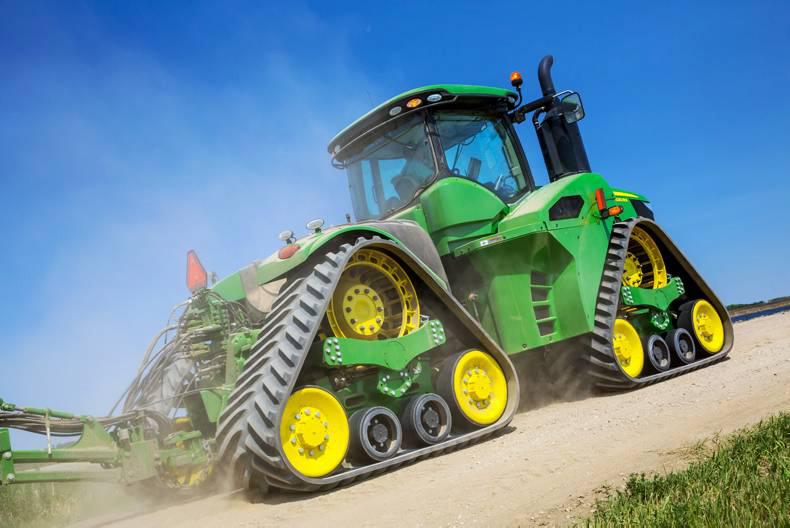
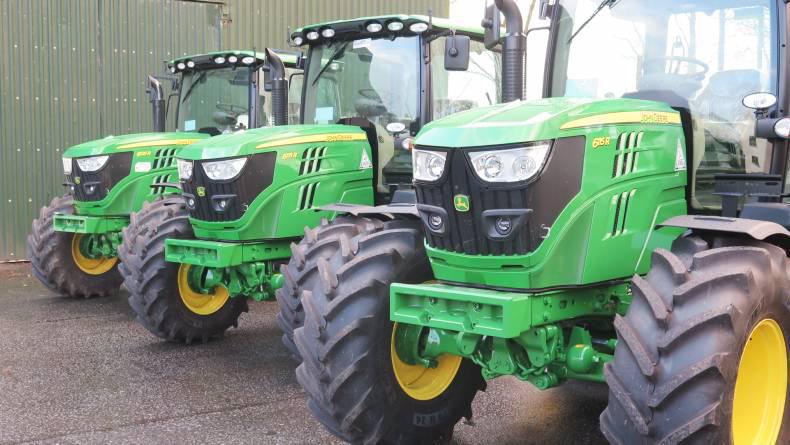
The four new John Deere 9RX tractor models range from 470hp to 620hp. According to the company, the tractors feature a large undercarriage and track system engineered to provide durability and improved ride quality, especially when handling large implements in the field.
The 9RX undercarriage features a positive-drive track system that effectively delivers more power to the ground. John Deere claims that this is ideal for heavy draft applications such as cultivating, ploughing, discing, subsoiling and large-scale drilling applications.
The new 9470RX and 9520RX tractors are powered by 13.5-litre John Deere PowerTech PSS engines, whereas the 9570RX and 9620RX use 15-litre Cummins QSX engines. Featuring cooled exhaust gas recirculation (EGR), turbocharger technology, diesel particulate filter (DPF) and selective catalytic reduction (SCR) technology, both engine makes are compliant with Stage IV/Final Tier 4 emission regulations
The engines power a large diameter drive sprocket and drive lugs that, along with placed idlers and mid-rollers, work to deliver exceptional horsepower to the ground with less track slippage.
Durability
The new 9RX tractors are equipped with rugged, puncture-resistant Camso Durabuilt 3500 and 6500 Series belts with Duradrive Technology. The 76cm wide-track belts are designed for increased durability and remain within the overall machine width limit of 3m, according to John Deere. Extra-wide 91cm tracks are also an option.
Like its 9R and 9RT siblings, the new four-track 9RX tractors are available with the responsive, e18 transmission with efficiency manager for automated control of the engine and transmission. John Deere claims that this transmission responds quickly and automatically in the field for improved performance and increased fuel savings. The new tractors also feature an articulated steering system and optional active command steering (ACS), which improves manoeuvrability in the field and line-holding ability, and at transport speeds of up to 40kph.
The 9RX CommandView III cab features a new cab suspension system that improves the tractor’s ride quality by allowing up to 10cm of vertical travel. This helps to control movement and isolates the cab and operator from sudden impacts and vibration. In addition, to meet the speed and high hydraulic power demands of large implements, the hydraulic system has been redesigned and now includes up to eight SCVs, delivering a standard flow of 220 litres/min, or an optional 435 litres/min.
John Deere ready for new Stage V engine emissions
John Deere says it is prepared to lead European customers seamlessly through the upcoming transition from Stage IV to anticipated Stage V regulations with proven experience and expertise.
According to John Deere, the current lineup of Deere engines equipped with DPF technology are Stage V capable, which will make the transition easy for John Deere customers.
Reducing operating costs
One of the significant impacts of Stage V will be the introduction of a particle number (PN) limit for engines in the 19kW to 560kW power band, which will necessitate the use of DPF technology by manufacturers. John Deere has been employing DPF technology since Stage IIIB, with more than 150m DPF hours logged in the field.
“The existing John Deere emissions path offers customers a Stage V-capable solution that continues to deliver outstanding performance, fluid economy, operator convenience and overall value without the need for any additional technology,” says Chris Wigger, John Deere Region 2 vice president, sales and marketing for ag and turf.
All John Deere PowerTech PSS engines feature series turbochargers plus DPF and diesel exhaust fluid (DEF) systems to comply with Stage IV/final Tier 4 emission regulations. These are designed to keep running costs at low levels and provide maximum responsiveness to load changes, according to John Deere. To further reduce operating costs, the new Stage IV/Final Tier 4 engines are equipped with a lifetime DPF, and the 6145R and 6155R tractor models also now feature a 750-hour engine oil interval increased by 150 hours.
To read the full Machinery Focus, click here.


SHARING OPTIONS