


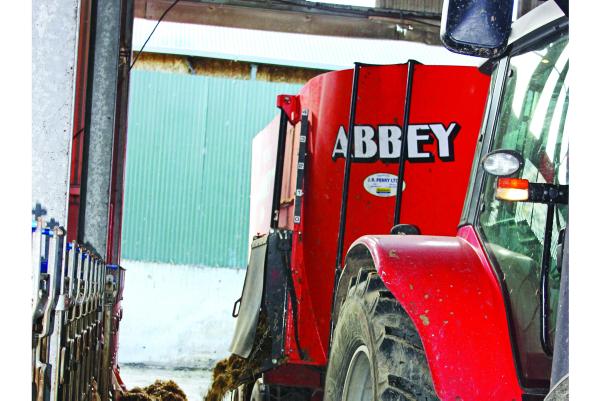
The efficiency of a feed mixer wagon is determined by its construction, the characteristics of the feed, the filling level, maintenance of the cutting tools and the speed of the mixing system.
Manufacturers will claim that running the feed mixer wagon at the recommended mixing system speed is essential for the mixing quality and they will specify working time requirement for proper mixing.
Many farmers are using bigger and more powerful tractors than are actually needed. When using a more powerful tractor to drive a trailed feed mixer wagon, you can reach the recommended mixing speed at a relatively low engine speed by using the 1,000 or ECO power take-off settings.
The effect of reduced engine speed was tested in Austria with an 8m3 feed mixer wagon driven by a tractor 120hp (92kW) on a dairy farm with 50 dairy cows and 60 calves and heifers. The mixtures consisted of maize silage, grass silage, straw, malt spent grain and concentrates.
The manufacturer of the feed mixer wagon recommended a power take-off speed of 540rpm. Originally, this speed was achieved by using the 540 power take-off at a tractor engine speed of 1,960rpm. The average fuel consumption amounted to 2.6 litres per batch mixed.
Then the ECO power take-off was tested with the engine speed of 1,560rpm, while still achieving 540rpm at the power take-off. This caused an average fuel consumption decrease of 0.4 litres, or 18% per batch mixed.
Overall, the reduction of the engine speed for preparing total mixed rations saved about 220 litres of diesel per year on the pilot farm. At Irish prices, this accounts for a fuel saving worth more than €200 per year without any change in the quality of the mix achieved in the wagon.
K. Haslauer, member of the Austrian group who carried out the on-farm measurements, said that he was surprised that the effect was so large. “I can reduce the fuel consumption without additional expenses and at the same quality of the work,” he said.
The test was carried out as part of the Efficient 20 programme. This is an Intelligent Energy Project, designed to encourage farmers and foresters to contribute to reaching the target set by the European Union of 20% energy savings compared with the projections by 2020. The focus is on reducing fuel oil used in farm machinery.


SHARING OPTIONS