Naturalising bulbs for a spring display is a feature that keeps giving colour and enjoyment. Successful gardening is about forward planning, and right now you need to plan for the spring season.
Spring flowering bulbs are for sale at this time of year in your local garden centres, so shop now for the best available choice. They should be planted from September onward until mid-November allowing strong roots to develop while soil is still warm.
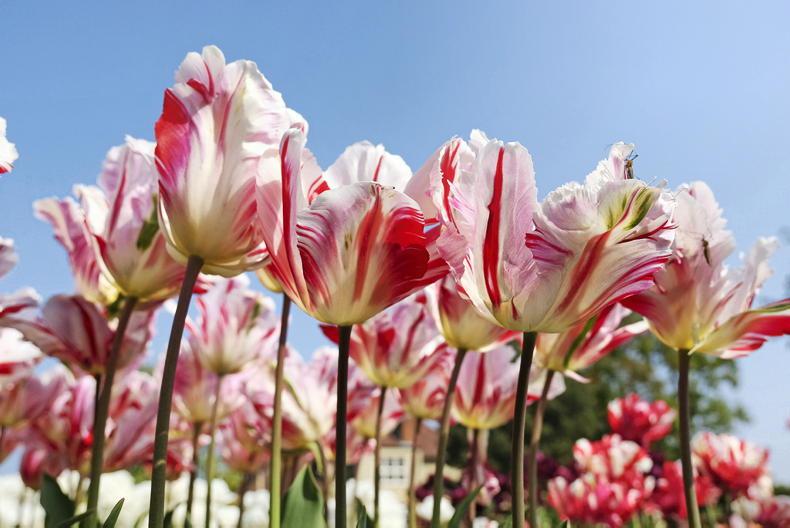
For value, choose a range of bulbs that will naturalise and regrow every year, here are some to consider. Tulipa acuminatahas curious shaped narrow yellow petals with red stripes. It is commonly called ‘The Flame Tulip’ and does resemble flames. It grows to a height of 40cm. T. bakeri ‘Lilac Wonder’ is like sunshine in a cup, it has pink flowers with bright yellow centres. It attains a height of 15cm which is perfect for pots, troughs or window boxes.
Tulipa batalinii ‘Bright Gem’ has beautiful lemon-yellow almond shaped flower buds. Growing to a height of 15cm it naturalises well, enlarging its display over the years. T.chrysantha ‘Tubergen’s Gem’ is taller growing to 20cm and more like traditional tulips. It is yellow on the inside of the petal and dark red on the outside, a beautiful combination.
Tulipa clusiana ‘Cynthia’ has flowers which are deep pink on the outside and a creamy white interior. They are a wonderful sight, growing to 20cm with narrow grey-green leaves. T. clusiana ‘Peppermint Stick’ is very similar but taller. It is cerise pink outside and the inside of the petal is pure white. Both of these naturalise well.
Tulipa linifolia is a rich red colour heralding spring. Growing to 15cm, it has a striking black blotch in the centre of the flowers which nestle nicely in the narrow grey-green wavy edged foliage. T. tarda is a true species native to Central Asia growing to 13cm high.
Each stem carries up to six flowers in a mix of yellow and white. It naturalises well and self-seeds too, so plant it where you can allow it to spread.
Spring daffodils
Don’t forget the joy of spring daffodils.There are also some low growing daffodils for spring gardens. Narcissus ‘Angels Breath’ will grow to a height of 30cm with 3-5 lemon yellow flowers held on strong stems. Its foliage appears in late winter ahead of flowering, so you need to watch out for slug activity in the interim. N. ‘Baby Boomer’ is slightly smaller achieving 20cm in height with a stem holding 6-8 bright yellow blooms and darker trumpets with hints of orange. N. ‘Quail’ also carries that typical daffodil colour of rich golden yellow on petal and trumpet, it is slightly taller growing to 40cm with up to three flowers per stem and a magnificent scent.
Narcissus canaliculatus is native to the Iberian Peninsula. It appreciates full sun and dry sandy soil as it would have in its native range. It performs well in raised beds or troughs and grows to 15 cm with four to seven pure white flowers and small yellow trumpets on each stem. N. ‘Pueblo’ is also white but with paler yellow trumpets attaining 25cm in height. It is very fragrant. N. fernandesii var. cordubensis is a big name for a small plant but well worth growing. It grows to 25 cm with up to five flowers on each stem and sweet scent.
Narcissus ‘Pipit’ is really beautiful with pale yellow petals and creamy white trumpets, three to four flowers per stem, lightly scented, growing to a height of 30cm.
N. ‘Rip van Winkle’ is a double flowering daffodil packed with petals. At first sight, it looks like a miniature dahlia. It only grows to 15cm but always a talking point.
Cultivation
All bulbs included here will last many years in the garden with careful management.
Take time to cultivate ground before planting, removing any perennial weeds. Always label your bulbs as you plant because this will enable you to understand and manage their requirements.
Planting depth is the key to success, and traditionally, we say plant the bulb at least twice its own size at the very minimum. You need to consider the height of the bulb also and the lower it grows from the bulb the better its stability.
After flowering, remove faded flowers taking off the top of the flower spike where seed is produced. This saves energy within the bulb. Many too will naturalise in lawns, though mowing needs to be delayed for six weeks after flowering to allow stems and foliage to photosynthesise nourishing the bulb for the next season. For larger planting projects check out bulbs.ie, who can undertake mechanical planting of large areas. Their machinery can plant 10,000 narcissus in one hour, imagine the beauty of that!
Propagation: Now is a good time to take cuttings of sage, rosemary and lavender, to establish good bushy plants for next year. Check status of cuttings of tender perennials taken earlier. Continue to collect seed on dry days.
Lawns: The ground is still dry and all lawns will have brown patches, raise the height of the mower while cutting.
Vegetable garden: Harvest any tomatoes. They are now coming to the end of their season. Sow spinach for autumn winter harvesting.
Perennial planting: Remove spent flowers from dahlias and other perennials. You can recognise spent dahlia flowers by the pointed buds, whereas those still to flower are rounded.
Q&A: How do I grow new potatoes for the Christmas dinner table?

Grow potatoes for Christmas dinner.
I hear talk about growing new potatoes for the Christmas dinner table. How do I go about that and is it worth it? –Tommy, Co Sligo
Yes, it’s possible and worthwhile. Now is a good time to do this, but move quickly as seed potato stocks are being snapped up. Choose well recognised varieties such as Maris Peer, Nicola or Charlotte. Take time and allow the tubers to chit, in other words, develop greenish buds. An empty egg carton will stabilise these. Keep them in a brightly lit area but not in full sun. Grow these in large pots or containers a minimum of 60cm in diameter. Use soil-based compost putting 30cm in the bottom of the pot, then place three or four tubers pushing them gently into the soil. As they grow, keep topping up the compost.
Keep in a conservatory or a brightly lit shed. Protect them by covering with fleece in cold weather.
Naturalising bulbs for a spring display is a feature that keeps giving colour and enjoyment. Successful gardening is about forward planning, and right now you need to plan for the spring season.
Spring flowering bulbs are for sale at this time of year in your local garden centres, so shop now for the best available choice. They should be planted from September onward until mid-November allowing strong roots to develop while soil is still warm.
For value, choose a range of bulbs that will naturalise and regrow every year, here are some to consider. Tulipa acuminatahas curious shaped narrow yellow petals with red stripes. It is commonly called ‘The Flame Tulip’ and does resemble flames. It grows to a height of 40cm. T. bakeri ‘Lilac Wonder’ is like sunshine in a cup, it has pink flowers with bright yellow centres. It attains a height of 15cm which is perfect for pots, troughs or window boxes.
Tulipa batalinii ‘Bright Gem’ has beautiful lemon-yellow almond shaped flower buds. Growing to a height of 15cm it naturalises well, enlarging its display over the years. T.chrysantha ‘Tubergen’s Gem’ is taller growing to 20cm and more like traditional tulips. It is yellow on the inside of the petal and dark red on the outside, a beautiful combination.
Tulipa clusiana ‘Cynthia’ has flowers which are deep pink on the outside and a creamy white interior. They are a wonderful sight, growing to 20cm with narrow grey-green leaves. T. clusiana ‘Peppermint Stick’ is very similar but taller. It is cerise pink outside and the inside of the petal is pure white. Both of these naturalise well.
Tulipa linifolia is a rich red colour heralding spring. Growing to 15cm, it has a striking black blotch in the centre of the flowers which nestle nicely in the narrow grey-green wavy edged foliage. T. tarda is a true species native to Central Asia growing to 13cm high.
Each stem carries up to six flowers in a mix of yellow and white. It naturalises well and self-seeds too, so plant it where you can allow it to spread.
Spring daffodils
Don’t forget the joy of spring daffodils.There are also some low growing daffodils for spring gardens. Narcissus ‘Angels Breath’ will grow to a height of 30cm with 3-5 lemon yellow flowers held on strong stems. Its foliage appears in late winter ahead of flowering, so you need to watch out for slug activity in the interim. N. ‘Baby Boomer’ is slightly smaller achieving 20cm in height with a stem holding 6-8 bright yellow blooms and darker trumpets with hints of orange. N. ‘Quail’ also carries that typical daffodil colour of rich golden yellow on petal and trumpet, it is slightly taller growing to 40cm with up to three flowers per stem and a magnificent scent.
Narcissus canaliculatus is native to the Iberian Peninsula. It appreciates full sun and dry sandy soil as it would have in its native range. It performs well in raised beds or troughs and grows to 15 cm with four to seven pure white flowers and small yellow trumpets on each stem. N. ‘Pueblo’ is also white but with paler yellow trumpets attaining 25cm in height. It is very fragrant. N. fernandesii var. cordubensis is a big name for a small plant but well worth growing. It grows to 25 cm with up to five flowers on each stem and sweet scent.
Narcissus ‘Pipit’ is really beautiful with pale yellow petals and creamy white trumpets, three to four flowers per stem, lightly scented, growing to a height of 30cm.
N. ‘Rip van Winkle’ is a double flowering daffodil packed with petals. At first sight, it looks like a miniature dahlia. It only grows to 15cm but always a talking point.
Cultivation
All bulbs included here will last many years in the garden with careful management.
Take time to cultivate ground before planting, removing any perennial weeds. Always label your bulbs as you plant because this will enable you to understand and manage their requirements.
Planting depth is the key to success, and traditionally, we say plant the bulb at least twice its own size at the very minimum. You need to consider the height of the bulb also and the lower it grows from the bulb the better its stability.
After flowering, remove faded flowers taking off the top of the flower spike where seed is produced. This saves energy within the bulb. Many too will naturalise in lawns, though mowing needs to be delayed for six weeks after flowering to allow stems and foliage to photosynthesise nourishing the bulb for the next season. For larger planting projects check out bulbs.ie, who can undertake mechanical planting of large areas. Their machinery can plant 10,000 narcissus in one hour, imagine the beauty of that!
Propagation: Now is a good time to take cuttings of sage, rosemary and lavender, to establish good bushy plants for next year. Check status of cuttings of tender perennials taken earlier. Continue to collect seed on dry days.
Lawns: The ground is still dry and all lawns will have brown patches, raise the height of the mower while cutting.
Vegetable garden: Harvest any tomatoes. They are now coming to the end of their season. Sow spinach for autumn winter harvesting.
Perennial planting: Remove spent flowers from dahlias and other perennials. You can recognise spent dahlia flowers by the pointed buds, whereas those still to flower are rounded.
Q&A: How do I grow new potatoes for the Christmas dinner table?
Grow potatoes for Christmas dinner.
I hear talk about growing new potatoes for the Christmas dinner table. How do I go about that and is it worth it? –Tommy, Co Sligo
Yes, it’s possible and worthwhile. Now is a good time to do this, but move quickly as seed potato stocks are being snapped up. Choose well recognised varieties such as Maris Peer, Nicola or Charlotte. Take time and allow the tubers to chit, in other words, develop greenish buds. An empty egg carton will stabilise these. Keep them in a brightly lit area but not in full sun. Grow these in large pots or containers a minimum of 60cm in diameter. Use soil-based compost putting 30cm in the bottom of the pot, then place three or four tubers pushing them gently into the soil. As they grow, keep topping up the compost.
Keep in a conservatory or a brightly lit shed. Protect them by covering with fleece in cold weather.







SHARING OPTIONS