



All the ingredients that have made Ireland a centre of excellence for thoroughbred horses – good grass, limestone land and good horsemen and women with passion and enthusiasm – are the same for sport horses. So there is no reason why Ireland cannot become a global centre for sourcing sport horses for all levels of riders,” says Professor Pat Wall, Horse Sport Ireland’s chairman of 14 months.
“There is a market for many types of horses – happy-hackers for beginners and nervous riders and leisure horses to horses that compete at the highest international level.”
As we all know, all horses cost roughly the same to produce and as the saying goes: ‘The bad one eats as much as the good one’.
There is no problem selling the exceptional horse in any category and there is no price ceiling for the showjumping machine, with international showjumping horses selling regularly for six-figure sums.
“The current challenge we face is that the economic return for leisure horses and horses with moderate ability, often doesn’t cover the cost of production,” says Pat.
“Just like with other livestock, the market for horses is cyclical and prices won’t stay poor forever, however, future demand will be for quality animals bred for a particular purpose. One big lesson we have learnt since the demise of the Celtic Tiger is that when supply exceeds demand prices fall through the floor, so in the current market we require fewer horses but better quality horses in every category.”
“Both the sport of eventing and the sport of showjumping have changed in the past 10 years and the type of horse needed is different and breeders have to respond to the needs of competitive riders.
“Historically, many of our event horses were not deliberately bred to be event horses, but if we are to retain our position at the top of the world rankings we need to breed horses for the modified eventing discipline; whilst continuing to celebrate the current crop of eventers flying the flag for Ireland on many international teams at the highest level. For example, Mr Cruise Control (New Zealand), Ballynoe Castle RM (USA), High Kingdom, Cambalda (Canada) and Fernhill Eagle (Ireland).
“To maximise the chance of breeders getting an economic return for their efforts we have to aim for the lucrative end of the eventing and showjumping markets. The horses that don’t make it, if properly produced, can be diverted into the leisure and hobby trade,” says Pat.
The influence of the dam over the offspring cannot be underestimated. Breeding from a mare that has not performed herself, or who has no performers in her immediate family, dramatically reduces the likelihood of success.
“There are no guarantees in this business and horses will always make liars out of you, but breeders need to consider, when they are making their breeding plans this season, what discipline they are targeting with the offspring,” stresses Pat.
“I would encourage breeders to look their mares up on the HSI CapallOir database, to see if there are stars in their mare’s pedigrees. If there is nothing of consequence then you may have to make a tough decision or be forewarned that you may not get sufficient economic return for your efforts.
“Some breeders don’t have the quality of mare to breed an elite performer and at HorseCare Ireland meetings HSI is considered to have forgotten these breeders. It is possible to upgrade your mare by buying a filly foal with a good pedigree or several friends could club together to buy a good mare.
“However, many breeders are in the business of breeding riding cobs or are happy to breed hunters or breed directly for the leisure market. If they are, they must ensure their mare has good conformation, is sound, has a good step and temperament. Breed less but better quality and produce them as best you can, is the best advice I can give,” says Pat.
“Selection of the right stallion for your mare is a crucial decision as you will only breed her once this season. Whether you decide to use Irish or foreign genetics, AI or natural covering, is a personal choice, but it must be based on some rationale with the end game for the offspring in sight.
“Looking at the stallion’s track record and his progeny, and the type of mares he compliments, will help you make your decision. Putting an expensive elite stallion on a poor mare is foolhardy and often a costly gamble.”
Our competitor studbooks have adopted the widespread publication of genetic evaluations for showjumping and eventing stallions and mares and have educated breeders about this objective type of selection criteria.
“In Ireland, we have made phenomenal progress in the breeding of dairy cows using this breeding value approach (EBI) and we have to adopt the same mindset in Ireland for breeding sport horses. The breeding value for horses is an all encompassing figure that considers the animal’s own performance and the performance of all relatives in the family. It discounts the effect of rider and the environment, to give you the true genetic worth of the animal.
“Ask your neighboring dairy farmers about the EBI of their cows and heifers and they will explain how this works. If we are going to get serious about breeding elite sport horses and catch up on our competitors, we are going to have to go aggressively down this road. It would be great if every time a mare or a stallion went into the ring to compete in Ireland the commentator was able to call out the breeding value,” says Pat.
HSI provides information on breeding values for stallions in their stallion book and Pat encourages every breeder to study them (See page 24).
A recent UCD report published by Dr Alan Fahey, estimated the value of the sport horse sector to be in excess of €708 million, with breeding accounting for €226 million. The Government has published ambitious targets for other agricultural sectors in Food Harvest 2020 and currently the RDS/Teagasc and HSI are in the process of developing a strategy for the sport horse sector.
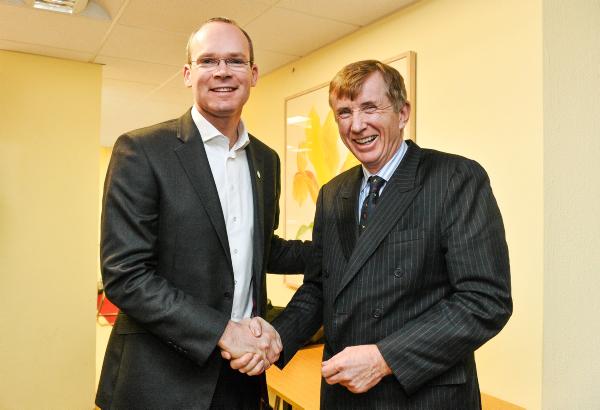
“Minister Coveney is supportive of this approach. We are optimistic that if all the stakeholders are aligned with a road map to a better place, that Government assistance will be forthcoming,” concludes Pat.
“For the coming season, breeders have to play their part and focus on quality to produce the ammunition that will drive the sector onwards and upwards.”



SHARING OPTIONS