



A successful stud farm depends on far more than quality bloodlines, modern facilities, and skilled management. One of the most overlooked yet fundamental drivers of equine development, performance, and long-term welfare is soil health.
Healthy soil underpins pasture quality, forage nutritional value, land resilience, and the overall sustainability of farm operations. For stud farms in particular, where broodmares, foals, youngstock, and performance horses require consistent, balanced nutrition, soil health is not merely an environmental consideration but a central business and animal development priority.
Soil is not an inert growing medium; it is a dynamic, living ecosystem composed of minerals, organic matter, water, air, plant roots, bacteria, fungi, insects, and earthworms. When properly managed, this system supports strong pasture growth, efficient nutrient cycling, effective drainage, sustained mineral uptake, and resistance to compaction and erosion.
A living system
When neglected, soil health declines, leading to reduced pasture productivity and increasing reliance on external inputs such as chemical fertilisers, herbicides, reseeding, drainage correction, and supplementary feed.
Over time, poor soil health has consequences that extend well beyond grass yield. Suboptimal mineral balance in pasture can contribute to reduced bone density in youngstock, increasing susceptibility to fractures and developmental orthopaedic disease (DOD).
There is also growing evidence that excessive chemical inputs may disrupt beneficial soil microbial populations while favouring the persistence of certain pathogenic organisms. Disturbed soil environments can increase exposure to soil-borne scour, causing pathogens affecting young foals.
Research further highlights the importance of early-life health management. A recent UK study reported that thoroughbred foals treated with antibiotics within their first 28 days earned significantly lower average prize money by the age of three compared to untreated counterparts.
While multifactorial, such findings emphasise the importance of optimising natural resilience from the ground up. If stud farms aim for consistent, long-term success in the horses they produce, soil health must be viewed as foundational.
The most immediate connection between soil health and stud farm performance is pasture productivity. Horses, particularly broodmares and growing youngstock, require continuous access to high-quality forage.
On many stud farms, grass represents the primary feed source. The land’s ability to grow dense, nutritious mineral rich pasture depends directly on soil structure, nutrient availability, and biological activity.
Healthy soil contains stable aggregates that allow air and water to move freely. This structure supports deep root growth and improves grass resilience during both drought and heavy rainfall.
In contrast, compacted or poorly structured soil restricts root penetration, reduces nutrient uptake, and limits grass growth. Pastures become patchy, prone to poaching, vulnerable to weed invasion, and slower to recover after grazing.
Pasture productivity
Stud farms operating on poorly structured soils frequently experience chronic pasture shortages. This often results in increased concentrate feeding, higher feed bills, reduced grazing time, and elevated disease risk linked to soil disturbance.
In contrast, farms with healthy soil can maintain productive paddocks for years, rotate grazing effectively between mares, foals, weanlings, and stores, and retain greater flexibility in grassland management.
Soil health directly influences the mineral composition and nutritional value of pasture.
Grass grown in balanced, fertile soils typically contains appropriate levels of essential minerals such as calcium, phosphorus, magnesium, copper, zinc, and selenium. These nutrients are critical for bone development, reproductive efficiency, immune function, and overall growth.
Conversely, soils that are chemically imbalanced or degraded may produce forage with deficiencies in essential minerals and excessive levels of antagonistic elements such as iron, aluminium, or lead. These antagonistic minerals can interfere with nutrient absorption, compounding deficiencies even when total mineral content appears adequate.
In stud farm settings, mineral balance is particularly important. Young, growing horses are highly sensitive to nutritional imbalances. Inadequate mineral supply can contribute to DOD, poor bone density, suboptimal growth rates, and long-term performance limitations. Broodmares require sufficient nutrient intake to support pregnancy, lactation, and efficient return to oestrus. Where soil deficiencies compromise pasture quality, mares may struggle to maintain condition or produce optimal milk yield.
While supplementation can address some deficits, it is rarely as economical, or as physiologically ideal, as producing nutrient-dense grass naturally. Horses are adapted to continuous grazing, and high-quality pasture remains the foundation of digestive and metabolic health.
Nutrient cycling
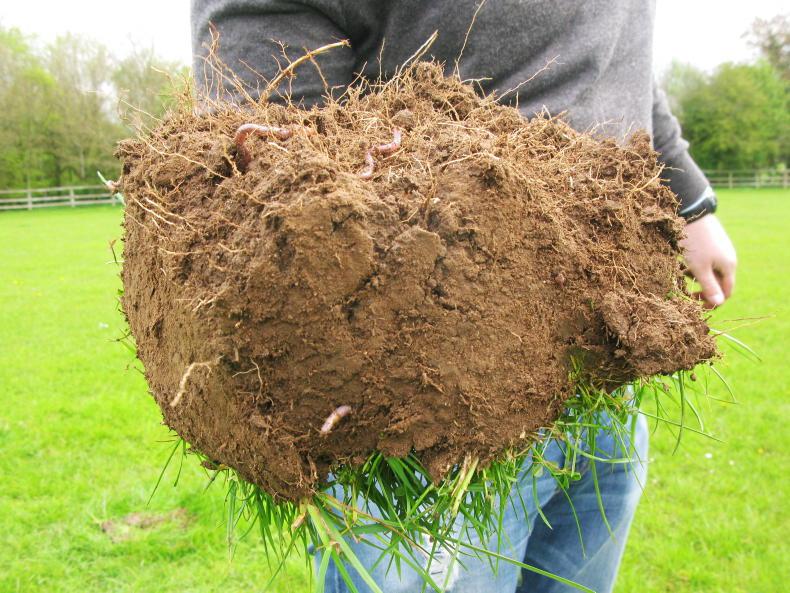
Biological activity is central to soil health. A thriving soil contains diverse microbial populations; bacteria, fungi, protozoa, along with macro-organisms such as earthworms. These organisms decompose organic matter and convert nutrients into plant-available forms.
On stud farms, nutrients constantly cycle through grazing, manure deposition, and forage removal. In biologically active soils, manure and plant residues are efficiently broken down, returning nitrogen, phosphorus, potassium, and trace elements to the root zone. This natural recycling reduces dependence on synthetic fertilisers and supports long-term fertility.
When soil biology is compromised, through overgrazing, compaction, excessive chemical use, or insufficient organic matter, nutrient cycling becomes inefficient. Nutrients may leach into waterways, remain chemically locked in the soil, or fail to support adequate plant growth. This creates a cycle of declining pasture performance and increasing input costs.
Encouraging biological activity through rotational grazing, organic matter management, and responsible fertiliser use represents a long-term investment in productivity and sustainability. Organic matter levels can be improved using well-rotted manures, solid digestates, organic composts and biological soil conditioners.
Injury risk and disease
Stud farms often experience intense paddock traffic, particularly around gateways, water troughs, shelters, and feeding areas. During wet winter months, repeated trampling rapidly compacts soil. Compaction reduces water infiltration, leading to standing water, heavily poached ground, and suppressed grass growth.
These conditions have direct implications for equine safety and health. Wet, churned ground increases the risk of slips and soft tissue injuries. Foals and youngstock are especially vulnerable to uneven or unstable footing. Poorly structured soil can therefore translate into higher veterinary costs and lost development time.
Disturbed or exposed soil also increases disease risk.
Poached paddocks may elevate exposure to soil-borne pathogens such as Clostridia species, associated with enteric disease in foals. Dry, dusty conditions created by damaged pasture may increase exposure to Rhodococcus equi, a significant respiratory pathogen in young horses.
Healthy soil with adequate organic matter drains more effectively and resists both waterlogging and excessive drying. Improved structure reduces poaching, enhances footing stability, and contributes directly to safer paddocks and lower disease pressure.
Pasture composition
Healthy soil supports dense, competitive swards that naturally suppress weeds. Vigorous grass growth limits the opportunity for invasive species to establish.
In contrast, overgrazed or nutrient-deficient paddocks develop open patches where weeds can thrive.
Common weeds such as docks, thistles, buttercups, and ragwort reduce grazing quality and increase management costs.
Ragwort poses a particular risk, as it is highly toxic and capable of causing irreversible liver damage.
Poor soil fertility, compaction, and overgrazing create the conditions in which weeds flourish. Maintaining balanced nutrient levels, correct pH, and strong pasture growth is therefore one of the most effective preventative weed control strategies.
Regular soil testing and informed nutrient planning allows stud farms to sustain balanced grazing systems that protect both pasture productivity and horse health.
Financial resilience
Stud farms are long-term enterprises, often spanning generations. Soil health plays a central role in financial sustainability and operational resilience. Farms with healthy soils typically require fewer corrective inputs, maintain higher carrying capacity, and show resilience to extreme weather.
Soils rich in organic matter retain moisture during dry periods and allow effective drainage during heavy rainfall. As climate variability increases, this resilience becomes increasingly valuable. Investing in soil health is therefore an investment in future-proofing the business.
In addition to economic benefits, healthy soils support carbon sequestration, biodiversity, and reduced nutrient runoff.
These environmental advantages contribute to regulatory compliance and reinforce the reputation of responsible equine enterprises.
Practical soil health
Improving soil health requires consistent monitoring and informed management.
Regular soil testing is essential to assess pH, phosphorus (P), potassium (K), and organic matter levels. Correct pH is fundamental, as it determines nutrient availability. Without appropriate pH, fertiliser efficiency declines and nutrient uptake is compromised.
The Irish Equine Centre (IEC) has identified optimised target ranges for pH, P, K, and organic matter that maximise mineral availability to pasture. When these conditions are met, nutrient uptake is significantly improved, supporting both grass production and equine health.
Grazing management is equally important. Rotational grazing prevents overgrazing, allows sward recovery, and reduces compaction. Providing sacrifice paddocks during wet periods protects high-value grazing land. Appropriate stocking density, particularly in winter, minimises structural damage.
Avoiding heavy machinery use on wet soils, maintaining effective drainage, incorporating organic matter, and reseeding with suitable grass varieties all contribute to long-term soil resilience.
Soil health is the hidden engine of a successful stud farm. It influences pasture productivity, forage nutritional value, equine growth and development, paddock safety, weed control, and financial sustainability.
Farms that neglect soil health often encounter declining grass performance, rising input costs, and increased health risks in youngstock.
Those that invest in soil testing, balanced nutrient planning, soil biology, and grazing management create resilient systems capable of supporting high-value horses year after year.
Healthy soil produces healthy grass. Healthy grass produces healthy horses. Healthy horses underpin a productive and profitable breeding enterprise. By prioritising soil health, stud farms ensure their land remains a strategic asset, supporting present performance and future success.
The Irish Equine Centre’s team of trained agricultural scientists provides expert guidance on soil and grass sampling, laboratory testing using accredited methods, and best-practice nutrient planning.
They offers direct services to the veterinary community as well as every horse owner in the equine industry and all members of the farming community.
For further information or support, breeders and owners can contact the IEC by email at nutrition@irishequinecentre.ie or call +353 (0)45 866266.


SHARING OPTIONS