


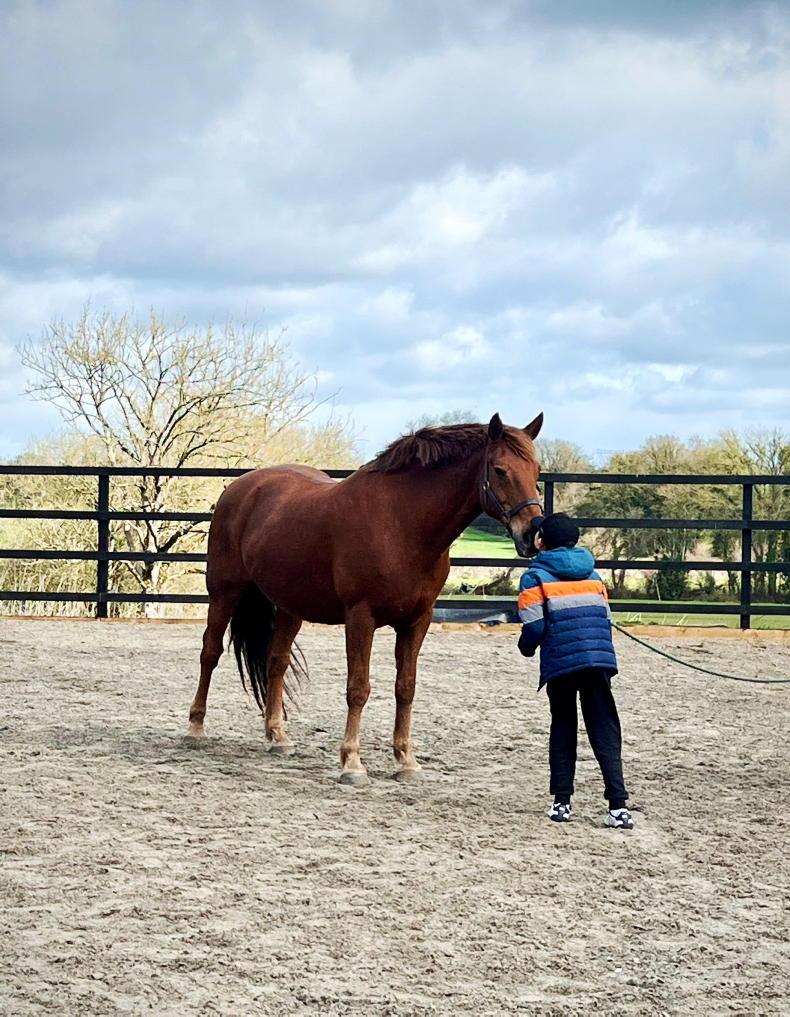
A teenager who had already been failed by several services stood nervously at the edge of an arena. He trusted very few people. Even attending the session had taken weeks of careful encouragement from his youth worker.
Inside the arena, there was no pressure to talk. No clipboard. No interrogation. Just horses.
Weeks later, that same youth worker would admit to being “blown away” by what unfolded. The boy, previously at risk of disengaging from school altogether, began to open up, develop coping strategies and strengthen relationships. “When he was struggling,” says Caitriona Lyons, founder of Kerry Equine Therapies, “the youth worker could say: ‘Do you remember when the horses did this? Remember how you got through that?”
The internationally recognised equine-assisted psychotherapy model, Eagala, has been operating for 27 years and is steadily expanding across Ireland.
“Equine-assisted therapy is a recognised therapeutic modality,” says Caitriona O’Meara, chair of Equine Assisted Psychotherapy Ireland and co-ordinator of the Irish Eagala Network: “What sets Eagala (Equine Assisted Growth and Learning Association) apart is that it is clinically grounded from the very beginning.”
Free to engage
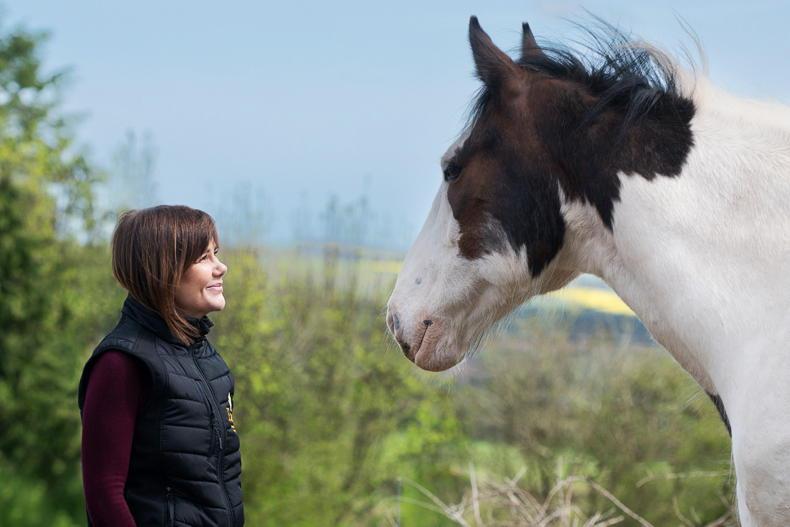
The model is governed by strict international standards used across approximately 40 countries worldwide. Every session involves a team of three: a qualified mental health professional, an equine specialist and the horse itself. Sessions are conducted on the ground rather than in the saddle, where the horses are free to engage in the therapeutic experience through their natural responses and interactions.
In Ireland, practitioners say maintaining integrity and professionalism has become central to the model’s development. Around 16 trained Eagala facilitators are operating across nine counties, with dozens more due to complete training this year.
Importantly, Eagala training is not open to complete beginners. “It’s a certificate for professionals,” says Caitriona O’Meara. “You come into it already qualified. It is an add-on qualification in either mental health or equine practice,” she adds.
An Irish organisation, Equine Assisted Psychotherapy Ireland, has now also been established by the Eagala Irish Network to strengthen national standards, with subcommittees focused on safeguarding, supervision, and research.
There is also growing recognition that the work requires robust emotional holding, particularly when trauma is involved.
“If something difficult emerges,” Caitriona Lyons explains, “there is always somebody there clinically trained to support the participant safely.”
That emotional safety is one reason many clients appear to connect so deeply with the model. Unlike traditional talk therapy, Eagala sessions allow people to “externalise” experiences rather than verbalise them.
Clients physically create, observe or interact with representations of their emotions and stories through the horses and the arena environment.
For some people, that creates enough emotional distance to begin processing experiences they have never been able to articulate before.
Caitriona Lyons is both a psychotherapist and equine professional within Eagala, and she recalls working with a woman carrying grief for more than a decade: “The woman told me: ‘This is the first time I ever got to put the grief outside me.’”
She goes on to describe a session involving a bereaved mother who had never been able to speak openly about losing her child. During the session, one horse quietly approached her, stood beside her and gently arched its neck over her for almost 20 minutes without moving.
“Afterwards,” Lyons says, “she told us it was the first time she had ever been able to put words on losing her child.”
Growing international research
The emotional power of those moments can sound difficult to explain scientifically, yet growing international research is beginning to support what therapists and participants have been observing for many years.
Studies have explored Eagala’s impact on adolescents, trauma survivors, addiction recovery, psychiatric patients, resilience and veterans living with PTSD. For many, the horses themselves appear to play a unique role in that process.
Both practitioners speak about horses as highly sensitive relational animals capable of responding instinctively to human emotional states. They describe sessions where horses appear to mirror anxiety, tension, grief or withdrawal long before a client verbally acknowledges those emotions themselves.
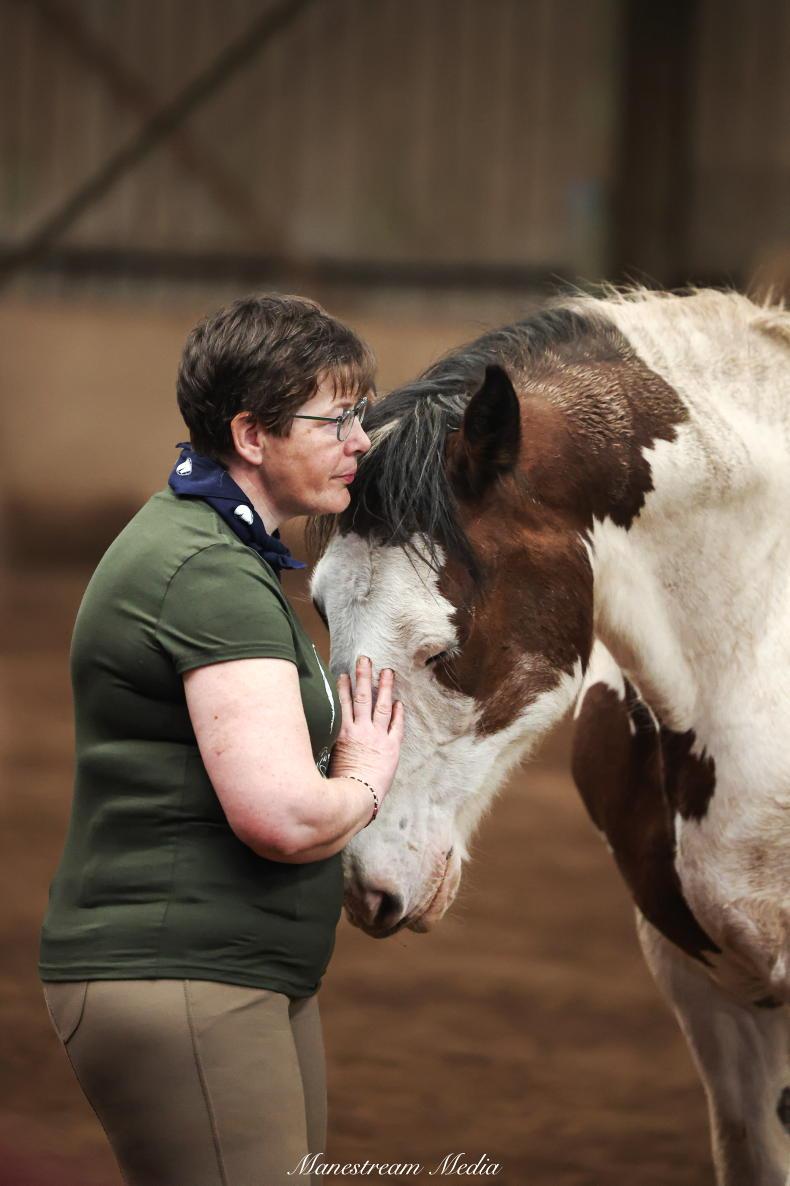
Within the Eagala model, horse welfare is considered inseparable from participant welfare.
“We don’t use them,” O’Meara says simply. “We work with them.”
Despite Eagala’s growing positive reputation, barriers still exist in Ireland. Access remains patchy geographically and as sessions require specialist facilities, horse care and also multidisciplinary teams, they can cost up to €130 per appointment.
However, practitioners argue that the depth and speed of the work can offset the higher upfront expense.
“Some clients appear to experience progress more quickly than they had in traditional therapy settings: one to three sessions of equine-assisted therapy can, according to some, be equivalent to six to 10 sessions in talk therapy,” Lyons adds.
There is also increasing momentum behind Eagala research partnerships and greater integration into mainstream mental health services.
Irish practitioners are currently developing collaborative, Irish-led studies to build a stronger national evidence base.
For now, though, it is often the quieter transformations that speak loudest. And perhaps, in a world where many people struggle to find words for pain, the horses are helping them feel understood before they ever have to speak at all.
See equineassistedpsychotherapyireland.com or eagala.org

