


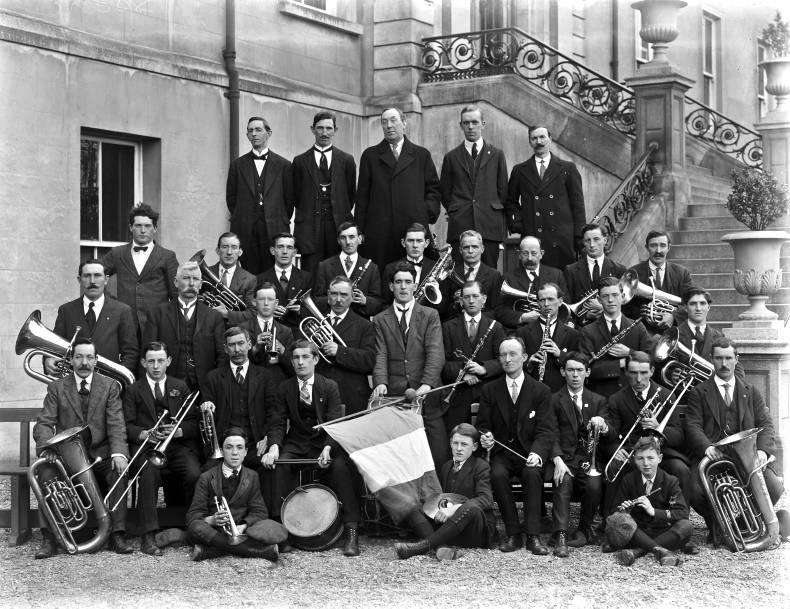
Music is a form of human expression and in many ways Irish music has been central to the evolution of world music. This legacy most probably started with the Celts, who were influenced by eastern music.
It is speculated that the Irish harp, the symbol of our country, is actually Egyptian in origin. The first written collection of Irish music appeared in 1762. But it was not until the Belfast harp festival of 1792 that the decline in the Irish harp was addressed. Most of the manuscripts from this event still exist and are some of the most important music documents in the world.
As Irish people were forced to the new world after Cromwell’s reign of terror, they took their music with them. From the sugar-cane plantations of the West Indies to the snow caps of Canada to the sands of the Outback, Irish music could be heard.
Cagayan, blues, zydeco and jazz all have their roots in Ireland. A few years ago Cork man Philip King chartered this evolution in his documentary Bringing it all Back Home.
Playwright Dion Boucicault intertwined Irish music with theatre in the New York halls of the 1860s and 1970s. As mass emigration took hold, these shows were the connection to the homeland. The Wearing of the Green being one of the favourite songs from Arrah-na-Pogue, a play written in 1864.
Folk influence
From then on, Irish folk music mixed with other cultures and expressions. Probably the biggest catapult for the music was in 1961, when the Clancy’s and Tommy Makem appeared on The Ed Sullivan Show. That night, 80m Americans from Boston to LA heard the lads in Aran jumpers. Today their influence is still there.
Lest we forget, it was the Dubliners who re-introduced the folk tradition to Germany. They paved the way for something unique. After defeat in the Great War, then fascism and the destruction of their country in the latter days of WWII, Germany lost a large proportion of its culture. The Dubliners re-connected them with their past.
Clannad’s Harry’s Game is the only song in the Irish language to reach No 1 in the UK. Indeed, every Christmas Shane McGowan’s great song of emigration Fairytale of New York is sung in every part of the world.
One hundred years ago, Count John McCormack from Athlone was the biggest music act in the world. Now with Enya or U2, Irish music continues to grow and evolve. It is a rich heritage.
As Teagasc celebrates 100 years of farming and country life, music is core. It defines parishes and areas. We are an expressive people. Music and song is part of who we are. Long may it continue.
THE ARTS, Music and dance VILLAGE
Teagasc has joined with the Centre for Irish Studies and the Huston School of Media at NUI Galway to put together an entertainment programme representing the music and dance of 1916. Showcasing over 50 musicians and 60 dancers, the programme will feature an Aeríocht at the crossroads, where you will be invited to partake in set, step and sean-nós dancing with Prionsias Hernon, Jo Seosamh Ó Neachtain, Emma Cunningham and members of Ballinasloe’s Club Damhsa ar an Sean Nós.
On the music front the harp will feature – it is after all Ireland’s national emblem – as will the uilleann pipes, in recognition of Galway’s Éamonn Ceannt who was an accomplished piper. In the main square, harpers Kathleen Loughnane, Úna Flanagan and Floriane Blancke will perform. On pipes, Cormac Cannon, Siobhán Hogan and All-Ireland Under-15 Champion Colm Broderick are among those featured. Accordionists Dermot Byrne, John O’Halloran and Steven Sweeney, flautist Marcus Hernon; fiddlers Erin McGeown, Anders Trajberg, Anna Falkenau and Úna Hogan; and vocalists Corn uí Ríada sean-nós champion Mairéad ní Fhlatharta, Geraldine King and Gerard D’Arcy, are among those scheduled to perform. CL


SHARING OPTIONS