



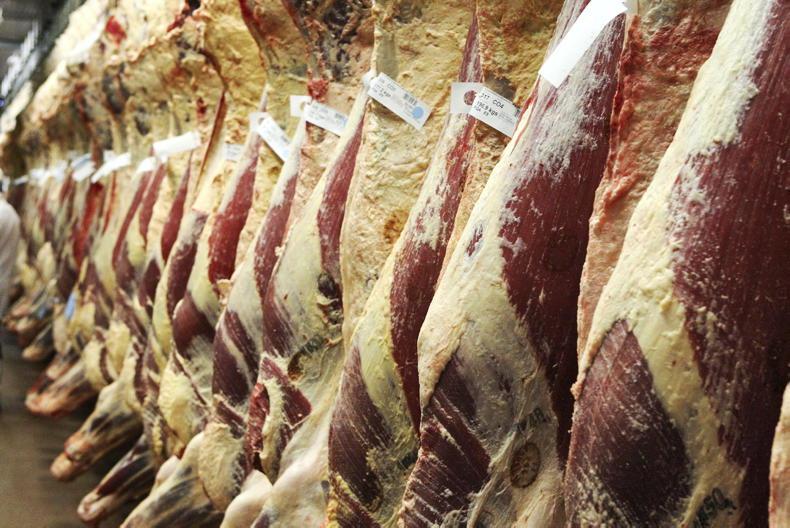
Ireland’s beef industry was back in the mainstream media this week. The trigger was the first part of the Goodman: too big to fail documentary on RTÉ1 last Monday night, with part two following this Monday night.
This has been followed up by various commentators assessing the place the beef industry has in the Irish economy and indeed wider society right up to the top of the political system.
Cattle have always been an integral part of the rural Irish economy. Historically, they were born and reared in the west of the country, fattened on the richer pastures of the east and then shipped to England for slaughter and processing.
This final part of the business in Ireland tended to be dominated by individuals and families, many of whom moved on to become involved in beef processing in Ireland.
A developing industry
Like much of what happened in the Irish State in the first century of its existence, it was a far from perfect business.
It may still have flaws, but most people recognise that it has been transformed over time to a point where the Irish meat processing industry now compares with the best in the world, supplying the most discerning and highest value customers to be found.
This is made possible of course by tens of thousands of Irish farmers who produce the cattle that are the raw material on which the processing business is built.
Given what happened in the latter part of the last century, it was clear that regulation and enforcement didn’t always keep pace with the evolving industry.
This wasn’t unique, as shown by the banking crisis from the first decade of this century and, indeed, more recently, if we look at the rapid development of communication and AI, regulation and enforcement is trying to play catch-up.
Returning to the meat industry, regulation is no longer a "game of cat and mouse". EU regulation now makes the food business operator responsible for everything in relation to compliance.
It hasn’t always worked perfectly, but in general it works. The finding of horsemeat being presented as beef in 2013 highlighted that exclusive focusing on price enabled price.
Since then, the highest-value customers have become more actively involved in the supply chain back through the processors and, indeed, on to farms.
No system is ever perfect, but meat processing in export-approved factories has come a long way, particularly in relation to compliance with legislation.
Room for further improvement
Perhaps the greatest flaw from a farmer’s perspective in Irish beef processing currently is the lack of transparency on what happens from beyond the farm gate until the product reappears on the retail shelf or restaurant menu.
The Agri-Food Regulator publishes a composite value of what factories get for beef, but compared with the information available in the United States, it is miniscule.
If we had the US level of transparency in processing, it would do much to increase farmer confidence in the fairness of factory pricing, particularly when the market weakens and they are looking to reduce prices paid to farmers.
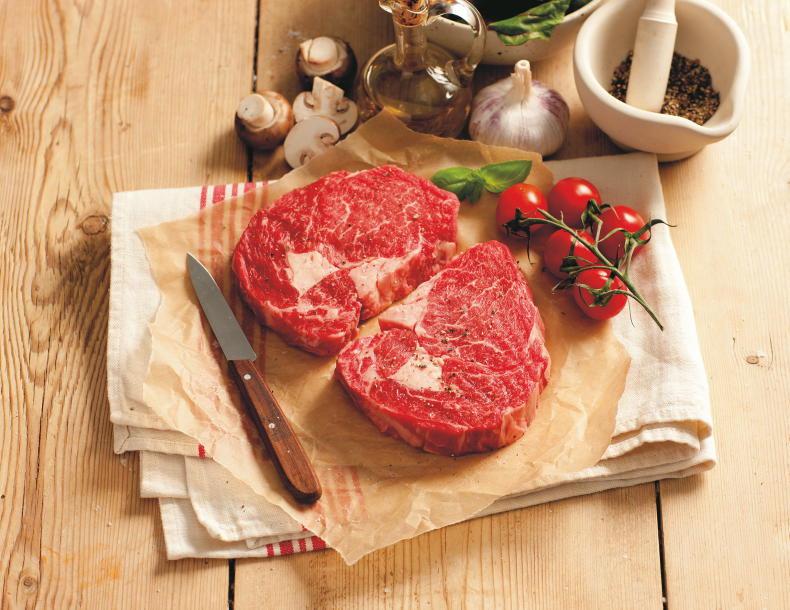
For example, in recent times, factories have been complaining with the difficulty they are having in selling steak meat. If the US model was in place here, we could see current industry stock levels and sales values updated twice daily.
It has to be acknowledged that beef, indeed agriculture in general, isn’t now as important to the Irish economy as it was previously.
If we look at the sources of corporation tax, we can see that multinational pharma and technology companies are the main base.
Of course, it is a good thing that our economy has grown and has diversified beyond being almost totally dependent on agriculture.
While recognising this, it should also be kept in mind that agriculture and the wider food and drink industries are still to the forefront of what can be described as indigenous industries.
They, through farming, are active in every parish in Ireland and processing is also in more remote locations well outside the M50.
The importance of the sector was last properly recognised during the financial crash and banking crisis at the end of the Celtic Tiger era and it was identified in Food Harvest 2020 as critical to getting the economy moving again.
To this day and into the future, it will remain important to the Irish economy, rural areas in particular.


SHARING OPTIONS