




Dress, tan, make-up, nails, suit, tie, corsage, drugs. Such is the check list that a growing number of teenagers are ticking off ahead of their Debs ball, as concerns grow about the rise of drug use among school leavers marking the traditional end to their secondary school education.
As the Debs season gets underway – across the country events are held from the end of June up until the end of October – the prevalence of drug use is on the rise.
A recent study showed alcohol consumption is declining among young people, however, the rise in anecdotal reports of drug use is causing concern.
The European School Survey Project on Alcohol and Other Drugs found that Ireland had recorded some of the greatest reductions in alcohol use by teenagers over the past three decades.
Intimidating behaviour
Despite this, parents are increasingly worried about a growing normalisation of drug use among school leavers.
Irish Country Living has spoken to students, substance misuse counsellors and event organisers to determine the extent of the problem and worrying pattern that is emerging.
Sarah* completed her Leaving Cert in mid-June in a school in the west of Ireland. Two weeks later she attended her Debs, which was organised alongside another school in her hometown. The event was held in a hotel in the midlands.
The bus journey to the event left her traumatised when she witnessed the widespread use of drugs by her peers.
“I’d been to a few Transition Years balls and I had seen plenty of people drunk, but I was really shocked when I saw people openly taking drugs on the bus,” she says.
“Some of those involved were known for being into drugs, but others who would be much quieter, were holding the drugs for the other lads. I saw them using keys to measure out the cocaine and there was a lot of weed being smoked too. There was talk of fentanyl being taken but I’m not sure how true that was or if it was just the drugs talking. It was mainly lads using on the bus but then the girls were taking the cocaine in the hotel toilets.
“They had been taking stuff before they got on the bus but they took more once we had left. It was a two-hour journey so it felt like a very long night before we even got to the hotel.”
Sarah says those students who weren’t involved in drug taking had no option but to keep their heads down, and not draw any attention to themselves.
“I felt so sorry for the bus driver, who was an older man. He knew what was going on but there wasn’t much he could do,” she adds.
I’d been to a few Transition Years balls and I had seen plenty of people drunk, but I was really shocked when I saw people openly taking drugs on the bus
“At one point he threatened to turn the bus around but he got so much abuse he had no choice but to keep driving.
“The security staff at the hotel were doing spot checks and did frisk us for drink, but it’s a lot easier to hide drugs than it is a naggin of vodka.
“It was very intimidating but the behaviour was accepted by the majority. No one is going to challenge a lad who is 6ft tall. I was just really shocked at how open it was and I was very glad to get off that bus.”
Cocaine affordability
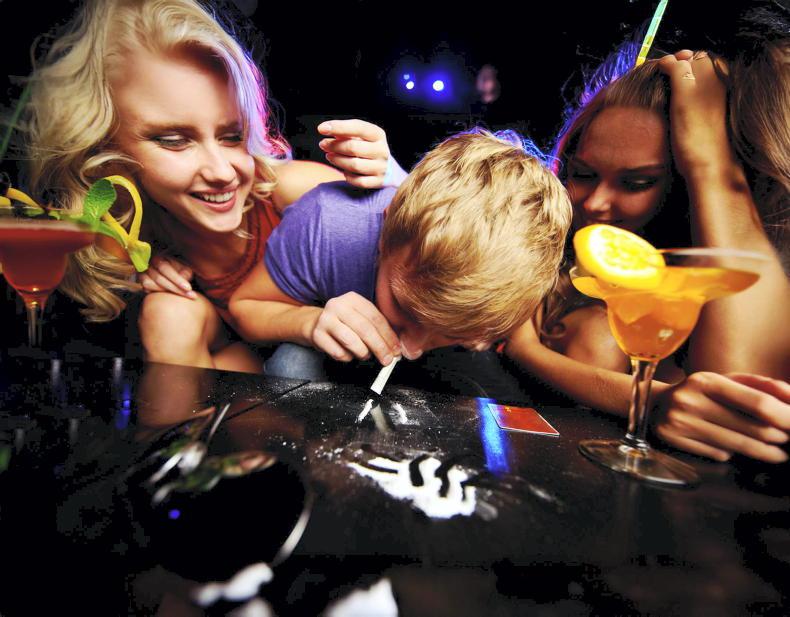
Mike Walsh is team leader with the Community Substance Misuse Team in Limerick. He says the rise of cocaine use in young people comes down to ease of access and the affordability of the drug.
“From what we’re seeing the tendency towards cocaine over alcohol – which is becoming more common in young people – is linked to body image, with young girls especially influenced by consuming something with fewer calories that will still give them that high,” he says.
“The trends we’re seeing vary from cannabis to street drugs like Benzodiazepines and over the last two years the likes of HHC (hexahydrocannabinol) and THC (tetrahydrocannabinol) vapes have become quite potent.
“Young people are not telling their parents about their drug use because it’s not acceptable in the same way drinking is considered part of the culture. We have parents who are very concerned, and then others who take drugs themselves who don’t see it as a problem.
“Our service works with young people aged between 18 and 23 and we cover Limerick city and county, Clare and north Tipperary. Young people come to us to understand how their drug use affects them. There are different trends depending on where the kids are from. For example, in Tipperary we find that young girls are very good at getting help for their female friends where there’s a concern about drug use, whereas that rarely happens with young males.”
However, one of the main organisers of Debs balls in the country argues that young people nowadays are turning away from drink and insists he has not encountered any issues with drug use at his functions so far this year.
Alan McArdle is a director and owner of Debs Ireland, based in Co Louth. They have been organising Debs balls for over 30 years.
“We’re only a month into this year’s season but we’re pleasantly surprised at how well it’s all going so far,” he says.
“I have seen drug use in the past, particularly during the Celtic Tiger days when we used sniffer dogs at our venues. There is always the risk that when there’s more money in the country you will come across cocaine use but so far this year our medics who attend our events haven’t been very busy.
“Drug use hasn’t come to our attention so far, whereas you’ll always have a few students who will drink too much on an empty stomach, but since Covid we’re seeing a drop in the numbers who drink at all.
“Our security staff have the power to remove anyone from an event where they suspect drugs have been consumed, but we ensure these students are returned to their home town safely. But again, this isn’t proving an issue so far. The rural schools tend to hold their Debs earlier in the season with the city schools holding off until later in the year and while years ago there would have been a distinction between urban and rural, that is no longer the case.”
From what we’re seeing the tendency towards cocaine over alcohol – which is becoming more common in young people – is linked to body image
On the bus
Bus driver Niall* has been transporting students to end of school events in the east of the country for the past three years. He says drug use is widespread among young people.
“It really depends on where the kids are from, I have to say it’s not in every group I have brought to a function, but it is getting more and more common. And it’s usually only two or three people who will cause problems,” he says.
“The first time I found the wraps from the cocaine in the bus I didn’t know what they were but now you can be picking up 10 or 12 of them after a run.
“The other thing we’re seeing more and more of is the nitrous oxide which they try to bring on in canisters. They inhale it to get high, it’s what we’d know as laughing gas. We won’t let it on the bus. If they want to fight us on it, we tell them they can put it in the boot and collect it at the end of the night, otherwise they won’t be getting on the bus.
“We’ve had to take kids off buses in the past, for drunken and drugged behaviour but when that happens you have to contact the parents and wait for them to collect their child, which ruins the night for everyone.
“Vaping is huge too and there’s always an element of drunkenness, but with the drugs its different. As a parent you can try to introduce your child to alcohol in a safe way, but you can’t do that with drugs.”
*Names have been changed at the request of those interviewed for this article.
- What is cocaine? Cocaine is a stimulant type drug that can make people feel more alert, energetic and confident. It can cause significant health risks and long terms harms such as dependency.
- Cocaine causes the release of the chemical dopamine in brain circuits which results in a euphoric feeling or ‘high’. The high is sometimes followed by what is known as a ‘crash’ or ‘comedown’ where the person can feel very low
- Parents concerned about their child’s drug use can contact the HSE Drugs and Alcohol Helpline on 1800 459 459 from Monday to Friday between 9.30 am and 5.30 pm.
- Requests for a callback from the free, confidential service can be emailed at any time to helpline@hse.ie. This can also be requested by leaving a voicemail at the freephone number.
- You can find more information through askaboutalcohol.ie anddrugs.ie.
- Information on the Community Substance Misuse Team and the services it offers throughout the Midwest at casp.ie
Is drug use becoming culturally acceptable amongst young people in rural Ireland? Scan this QR code with your phone and have your say.



SHARING OPTIONS