



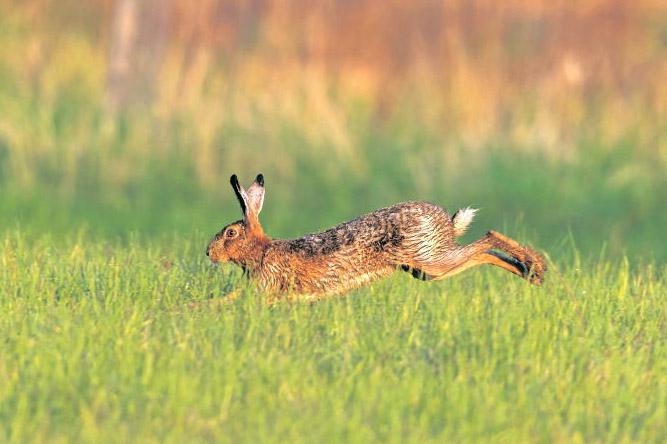
Illegal hunting of hares on farmland is the single biggest crime affecting farm families, who are being subjected to year-round intimidation by gangs, according to the Garda National Rural Crime Lead, Superintendent Michael Corbett.
While this form of hunting, involving lurchers, was once consigned to the winter months, it is now being reported as late as May and as early as September, with reports of people travelling to various locations across the country to hunt hares illegally.
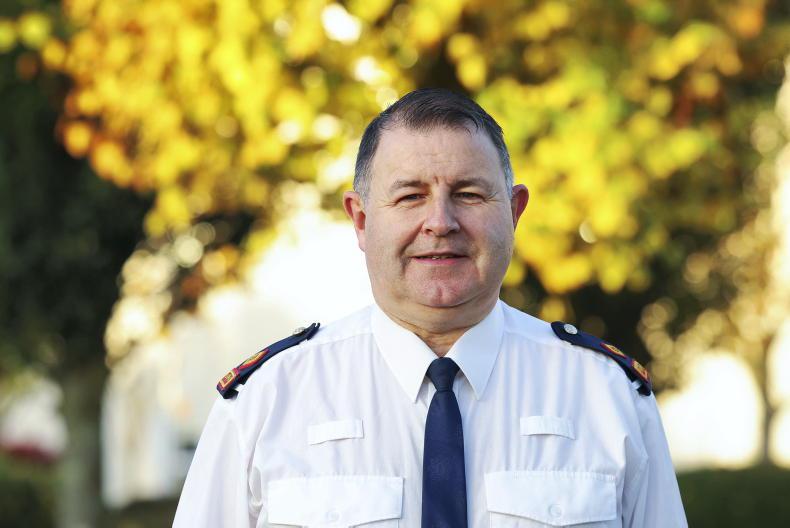
Speaking to Irish Country Living, Supt Corbett says there has been an increase in illegal hunting incidents across the country in recent years.
“Farmers have been assaulted in some incidents and the level of threats and intimidation coming from those involved in illegal hunting is increasing,” he says.
“This issue is mainly confined to Leinster and Munster where fields can be up to 20ac in size and offer free and open territory to illegal hunters. Since 2021, Gardaí have taken 160 prosecutions under Section 44 of the Wildlife Act against those found to be engaged in illegal hunting.
“I am from a farming background so am familiar with this issue for many years but it was highlighted at one of my first meetings with farmers’ groups, since being appointed to this role almost 12 months ago, that illegal hunting and trespassing was the single biggest issue facing farmers.
Thermal imaging
“There is no issue with those members of gun clubs or those who take part in legal hunts, but there is a small core of mainly men, who are illegally hunting hares on land without permission from the landowner.
“That’s the crux of it, if you don’t have the landowner’s consent to be on their land, you are committing an offence. That and the fact it is illegal to hunt hares who are an endangered species.”
A farm family living in the Midlands, who did not want to be identified, believe the issue of illegal hunting has become a bigger problem of intimidation in rural communities.
“We are farming just over 100ac and this has been an issue forever,” says the farmer.
A healthy hare will outrun a dog, it will use its natural defences to escape but it has no defence against thermal imaging, social media, WhatsApp and people hunting from motor vehicles
“Ten years ago, this was low-level stuff. You’d only see these people a couple of times a year and they’d be in and out. Now at the peak of this we could have spotters on our land two or three times a week, day and night.
“They’re using thermal imaging now to find the hare; they’re not hunting it in the traditional sense. They drop a pin where they find a hare underground and then someone else comes along with a dog to that exact spot and the hare has no chance.
“A healthy hare will outrun a dog, it will use its natural defences to escape but it has no defence against thermal imaging, social media, WhatsApp and people hunting from motor vehicles. All of these are crimes under wildlife legislation.”
The farmer and his wife say people are travelling from all over the country to their area to engage in illegal hunting, and the intimidation involved is very unsettling.
“This hunting normally stopped around February/March and used to be something we’d see start up again from November on. Then it moved to September through to April but this year we’ve had incidents in May and August. We’ve had calves being run to high heaven in the middle of the night, and we caught images of those responsible on the CCTV system. Another local farmer had 40 cattle let out onto the road.”
The farmer’s wife tells of a particularly sinister incident that left her and her husband ‘rattled’.
“We were here in the house one night and a car was coming down the road really slowly and we were watching it,” she says.
“We turned off the lights in the house and kept an eye on it as it came to a stop at the gate, trying to see if we could get the registration number. But they had infra-red binoculars, so they were watching us watching them.
“They knew what we were doing, even though we thought we were being really smart turning off lights and there they were laughing at us as they drove by at a snail’s pace. This is how scary this can be. It did rattle us when we figured it out.”
Supt Corbett agrees that the methods deployed by illegal hunters have become more advanced.
“These people are definitely becoming more sophisticated where they use heat sensor scopes to scan a field from the gate, where this infra-red technology can detect the exact point where a hare is,” he adds.
“They then come back and release the dogs which doesn’t give the hare a chance. Before, these people would have to walk the fields to flush the hares out.
Intimidation is becoming a business for organised crime and all crime is now organised. There is big money in illegal hunting and there’s a network of people involved
“Gardaí can take a prosecution under Section 447 of the Wildlife Act, where the onus is on the accused to prove he or she had permission to be on land, and this takes the pressure off farmers from making a statement. This means a Garda must witness that person on the land in question or apprehend them as they return to their vehicle.
“We advise people not to approach these people, but to call 999 or 112 immediately. By giving us as much information as possible, from the registration number to the colour and model of the vehicle, and the Eircode of the farm, it all helps.
“From a policing perspective, 85% of farmers don’t want to make a statement to us about these incidents. They don’t want the hassle of having to go to court, but the primary issue is fear of intimidation, or attracting further trouble to their homes and farms.”
Gambling and intimidation
Alice Doyle, deputy president of the IFA, is co-chair of the National Rural Safety Forum, alongside Assistant Commissioner Denis Ferry. She agrees that illegal hunting or lurching has become one of the most common crimes in rural Ireland.
“Lurching used to be a problem in particular areas but it’s now happening right across the country,” she tells Irish Country Living.
“Illegal trespassing is bad enough but the behaviour of those involved is what has become most concerning. The threatening behaviour towards farmers and animals, with cattle and sheep being chased and raced, is leading to sheep kills and huge distress among the farming community.
“Farmers used to be able to tell people to leave their land but they’re now meeting a very hostile reaction when they ask trespassers to go.”

Pat McLoughlin is a beef farmer and sits on the Offaly Local Community Safety Partnership as a Muintir na Tíre representative. He says communities have to become organised to protect themselves from crime.
“Intimidation is becoming a business for organised crime and all crime is now organised. There is big money in illegal hunting and there’s a network of people involved,” he says.
“Communities that aren’t organised in defending themselves are particularly vulnerable and that is why we are holding a meeting next week where we’ll bring 15 Community Alert groups together at Rahan Hall in Rahan near Birr to share knowledge and offer support.
“We’ve recently launched the Cairde App in our own Community Alert and this is proving a lot more effective than the old text messaging system. It simplifies things for the Gardaí and it is more user-friendly. It’s also able to get messages out a lot quicker and speed is key in responding to incidents such as the reporting of suspicious vehicles that may be involved in illegal hunting.”
Meanwhile, the farming couple from the Midlands believe there’s a whole industry involved in illegal hunting and say they’ve come across people from all over the country on their land.
“Our experience is that when we identify people in the area, they have travelled long distances to be here, people from Tipperary, Limerick, Longford, Clare, Mullingar.
“These are organised events because these people aren’t all just turning up here at the same time to hunt with a dog by accident. There’s online gambling taking place because these hunts and kills are being recorded and, in some cases, live -streamed.
“We would sit here in the morning, having come in from milking and be having the cup of tea and in March and April, the hares would be running up and down the fields, they’d be in the garden. This year I’ve only seen one hare on the land and we’ve caught an image of another hare on a wildlife camera we have on one of the gates.
“Most of our neighbours would say there are no hares around here and it’s this high-tech hunting that is destroying the hare population. But when the hares are gone, the farmers will be blamed.”
See cairdeapp.ie


SHARING OPTIONS