Often writers are required to step into worlds outside of their own. Worlds from which they are removed in both space and time. But Northern Irish screenwriter Declan Lawn is capturing a very immediate and live reality in the award-winning series, Blue Lights, which scooped the award for best drama series at the TV Bafta Awards in London this year. The cop drama charts the path of new recruits to the Police Service of Northern Ireland (PSNI), capturing the unique challenges they face as they police divided communities in a post-conflict society. Sectarianism and paramilitaries are ever-present but somewhat in the background, eclipsed by contemporary issues like gangland crime, drug addiction, a lack of community services and policing resources.
“It’s so rare as a screenwriter to be able to write about your own place in your own time,” Declan reflects. “It almost never happens. Usually you might be writing about the past or writing about another place. To be able to write a show about your own place is such a joy.”
Declan speaks to Irish Country Living following the release of the third season of Blue Lights on BBC. It’s his favourite season so far, and it has received “a completely different level of response”, he remarks.
“There’s been viewers getting in touch, a good response on social media, positive critical reviews, and very good viewing figures from the BBC.”
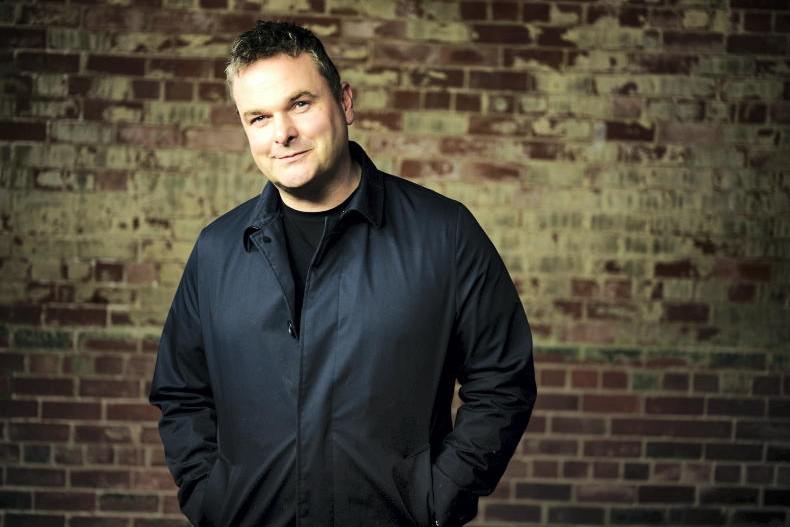
Declan Lawn and his creative partner and co-writer Adam Patterson worked together as colleagues at the BBC before they started writing Blue Lights.
“We were working on it for a couple of years before it was commissioned. But like all writers, we were working on numerous different projects,” he says. Interestingly, neither Declan nor Adam thought it was Blue Lights that would be the script to get the green light, if you pardon the pun.
“Adam and I just kept writing scripts. After about four years, we managed to get an agent, and then it was probably another four or five years before we got a TV commission.” It was a total of 11 years after the two men met that their first show was commissioned in 2020.
“We were nervous in the beginning about whether a show about the police in Northern Ireland could ever be a success, because the subject is so political,” Declan reflects. “There are a lot of people here in the North who just don’t like the police and probably never will.
“But we’ve been very pleasantly surprised. The feedback from both communities actually has been really positive. That’s probably because we write it as a character drama.
“There is politics in it, but we focus on the characters and who they are, and I think that’s probably why people have taken to it.”
The strength of the characters is that they are very ordinary, literally muddling through as they try to bring some sort of order to the streets and surrounds of Belfast.
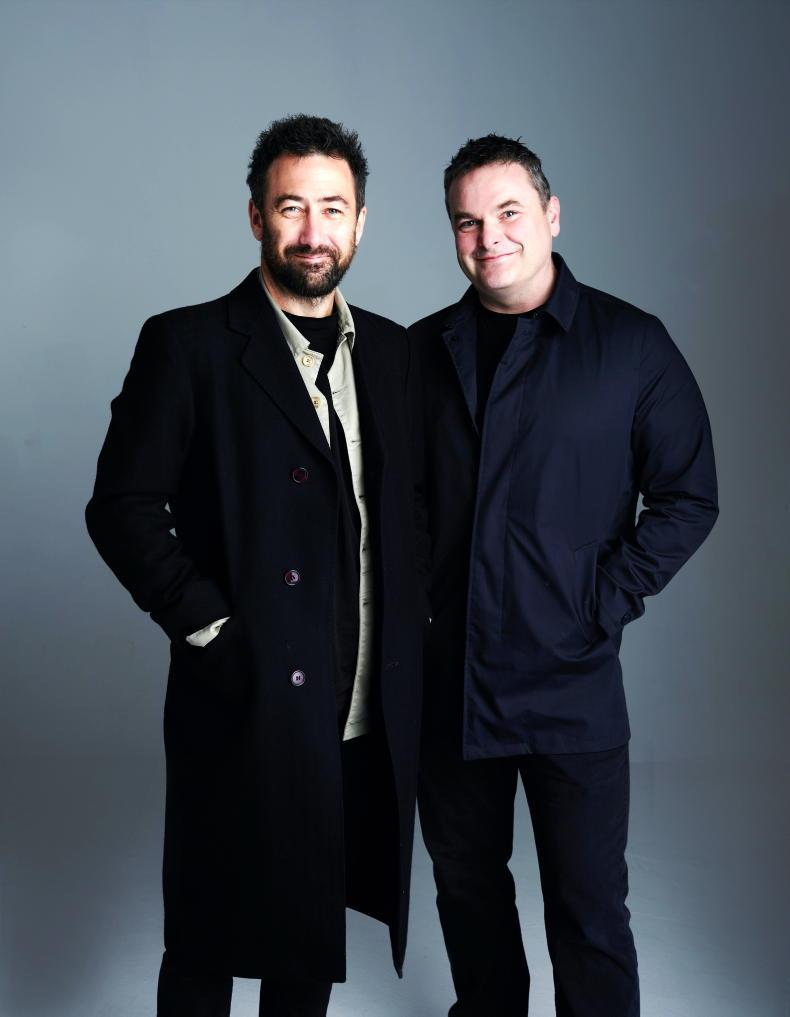
Declan Lawn pictured with his co-writer Adam Patterson who worked together as BBC colleagues before Blue Lights.
Balanced depictions
It has to also be said that, thankfully, the Northern Irish characters are played by homegrown talent, so there’s no cringeworthy attempts at putting on the accent.
“When we wrote the first series, there were 59 speaking roles and my biggest worry, and Adam’s biggest worry, was that there might not be enough actors in Northern Ireland to play all the parts,” Declan admits. “And then we were completely blown away when we started auditioning. There were more than enough actors.
“The thing about the Northern Ireland acting scene is that it’s been really vibrant in theatre for many years. We just have never had a chance to show that talent on TV. I am at the point now that we’re writing series four and I just know every time I write a new role, we’re going to find somebody great.”
There are many potential pitfalls when writing about present day policing in Northern Ireland, but part of the show’s success is that it is considered to be a fair portrayal of all the communities living there, as well as the police service.
“We get quite a lot of feedback from individual police officers on a personal basis saying that the show captures the job,” Declan adds.
The sense of balance that prevails in Blue Lights, in part, comes down to the years of impartial reporting drilled into Declan and Adam, thanks to careers at the BBC. It also reflects Declan’s background.
Born to a mother from Galway and a father from Donegal, Declan grew up in Northern Ireland but without “any tribal affiliations.”
“I have no family background in the north of Ireland at all. I have no aunties or uncles or cousins or grandparents who ever lived here,” he says.
Declan’s parents transferred to Derry in 1975 through their jobs at Bank of Ireland – “a massive step for a couple of 20-somethings from the South” – and they then moved to Limavady, just outside Derry, and later to Ballymena in Co Antrim.
“We went from Martin McGuinness heartland to Ian Paisley heartland,” jokes Declan, “a very nationalist city to a very unionist town. I didn’t realise that at the time, but looking back, it informed a lot about my outlook on life. There are a lot of different narratives. There are different ways of seeing the world. That upbringing has helped Blue Lights, because I like to think the show doesn’t judge anybody.”
The same goes for his 16-year-long career at BBC Northern Ireland, where Declan spoke to “people from all walks of life”, including “former members of the IRA and loyalists who had killed people”.
“There are a lot of things in Blue Lights that are taken directly from my journalistic career. The thing about writing is that you’re using all of your experiences and even your subconscious and things that you’re not even aware of. You use all of it to write.”
Working for nearly two decades as an investigative journalist at BBC NI was “rewarding and exciting”, according to Declan.
“But I always had this itch that I wanted to scratch, that I’d like to explore people and characters.
“I always found, as an investigative journalist, that I was dealing with facts and figures. I rarely got the chance to look at people and how things affected them.
“What really changed my life was when my dad died. I was 32 years old and I felt that you don’t have infinite time in life, and if there’s something that you want to do, you should try and pursue it.”
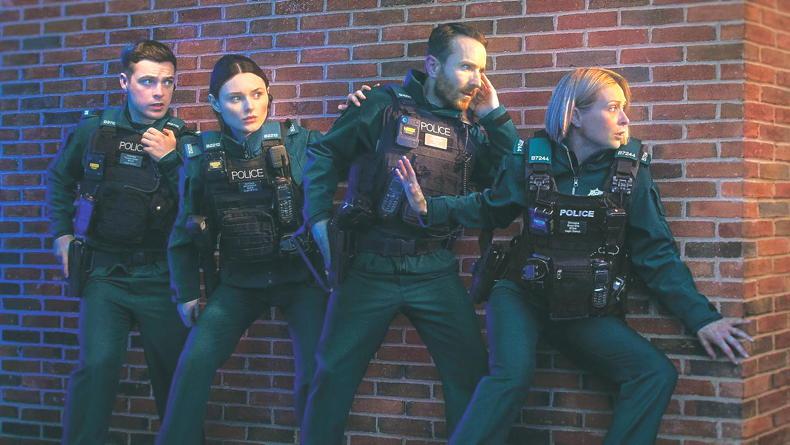
Blue Lights season three landed on screens last month. \BBC/Two Cities Television/Matthias Clamer
Writing mode
Declan is currently in the middle of writing the fourth season of Blue Lights, which will be shot next year. Talking through what it takes to bring each new season to life, he explains that he agrees a central storyline with Adam and they do research together. “We meet a lot of police officers and lawyers and social workers and victims of crime. Then we storyline the series and we look at what we want our main story arcs to be.”
Declan writes the first draft of the script, which Adam then reads and edits. Adam also sometimes directs on the show. “He takes control of the performances and how the show looks, and the visual stuff. I’m more of a words person,” Declan says. “We’re very lucky to have found each other. And we enjoy working together.”
Back at the writing desk, the challenge with every new season is “just trying to do it again”, says Declan, “and trying to make every season better than the last one. That does come with a lot of pressure. We have to up our game again in season four.”
“I did not anticipate this level of impact,” Declan says, honestly. “I wanted to make a good show, and I hoped that we could make more than one season. But this has changed all of our lives. It’s changed my life and Adam’s life, and also the lives of the actors and producers.”
Often writers are required to step into worlds outside of their own. Worlds from which they are removed in both space and time. But Northern Irish screenwriter Declan Lawn is capturing a very immediate and live reality in the award-winning series, Blue Lights, which scooped the award for best drama series at the TV Bafta Awards in London this year. The cop drama charts the path of new recruits to the Police Service of Northern Ireland (PSNI), capturing the unique challenges they face as they police divided communities in a post-conflict society. Sectarianism and paramilitaries are ever-present but somewhat in the background, eclipsed by contemporary issues like gangland crime, drug addiction, a lack of community services and policing resources.
“It’s so rare as a screenwriter to be able to write about your own place in your own time,” Declan reflects. “It almost never happens. Usually you might be writing about the past or writing about another place. To be able to write a show about your own place is such a joy.”
Declan speaks to Irish Country Living following the release of the third season of Blue Lights on BBC. It’s his favourite season so far, and it has received “a completely different level of response”, he remarks.
“There’s been viewers getting in touch, a good response on social media, positive critical reviews, and very good viewing figures from the BBC.”
Declan Lawn and his creative partner and co-writer Adam Patterson worked together as colleagues at the BBC before they started writing Blue Lights.
“We were working on it for a couple of years before it was commissioned. But like all writers, we were working on numerous different projects,” he says. Interestingly, neither Declan nor Adam thought it was Blue Lights that would be the script to get the green light, if you pardon the pun.
“Adam and I just kept writing scripts. After about four years, we managed to get an agent, and then it was probably another four or five years before we got a TV commission.” It was a total of 11 years after the two men met that their first show was commissioned in 2020.
“We were nervous in the beginning about whether a show about the police in Northern Ireland could ever be a success, because the subject is so political,” Declan reflects. “There are a lot of people here in the North who just don’t like the police and probably never will.
“But we’ve been very pleasantly surprised. The feedback from both communities actually has been really positive. That’s probably because we write it as a character drama.
“There is politics in it, but we focus on the characters and who they are, and I think that’s probably why people have taken to it.”
The strength of the characters is that they are very ordinary, literally muddling through as they try to bring some sort of order to the streets and surrounds of Belfast.

Declan Lawn pictured with his co-writer Adam Patterson who worked together as BBC colleagues before Blue Lights.
Balanced depictions
It has to also be said that, thankfully, the Northern Irish characters are played by homegrown talent, so there’s no cringeworthy attempts at putting on the accent.
“When we wrote the first series, there were 59 speaking roles and my biggest worry, and Adam’s biggest worry, was that there might not be enough actors in Northern Ireland to play all the parts,” Declan admits. “And then we were completely blown away when we started auditioning. There were more than enough actors.
“The thing about the Northern Ireland acting scene is that it’s been really vibrant in theatre for many years. We just have never had a chance to show that talent on TV. I am at the point now that we’re writing series four and I just know every time I write a new role, we’re going to find somebody great.”
There are many potential pitfalls when writing about present day policing in Northern Ireland, but part of the show’s success is that it is considered to be a fair portrayal of all the communities living there, as well as the police service.
“We get quite a lot of feedback from individual police officers on a personal basis saying that the show captures the job,” Declan adds.
The sense of balance that prevails in Blue Lights, in part, comes down to the years of impartial reporting drilled into Declan and Adam, thanks to careers at the BBC. It also reflects Declan’s background.
Born to a mother from Galway and a father from Donegal, Declan grew up in Northern Ireland but without “any tribal affiliations.”
“I have no family background in the north of Ireland at all. I have no aunties or uncles or cousins or grandparents who ever lived here,” he says.
Declan’s parents transferred to Derry in 1975 through their jobs at Bank of Ireland – “a massive step for a couple of 20-somethings from the South” – and they then moved to Limavady, just outside Derry, and later to Ballymena in Co Antrim.
“We went from Martin McGuinness heartland to Ian Paisley heartland,” jokes Declan, “a very nationalist city to a very unionist town. I didn’t realise that at the time, but looking back, it informed a lot about my outlook on life. There are a lot of different narratives. There are different ways of seeing the world. That upbringing has helped Blue Lights, because I like to think the show doesn’t judge anybody.”
The same goes for his 16-year-long career at BBC Northern Ireland, where Declan spoke to “people from all walks of life”, including “former members of the IRA and loyalists who had killed people”.
“There are a lot of things in Blue Lights that are taken directly from my journalistic career. The thing about writing is that you’re using all of your experiences and even your subconscious and things that you’re not even aware of. You use all of it to write.”
Working for nearly two decades as an investigative journalist at BBC NI was “rewarding and exciting”, according to Declan.
“But I always had this itch that I wanted to scratch, that I’d like to explore people and characters.
“I always found, as an investigative journalist, that I was dealing with facts and figures. I rarely got the chance to look at people and how things affected them.
“What really changed my life was when my dad died. I was 32 years old and I felt that you don’t have infinite time in life, and if there’s something that you want to do, you should try and pursue it.”

Blue Lights season three landed on screens last month. \BBC/Two Cities Television/Matthias Clamer
Writing mode
Declan is currently in the middle of writing the fourth season of Blue Lights, which will be shot next year. Talking through what it takes to bring each new season to life, he explains that he agrees a central storyline with Adam and they do research together. “We meet a lot of police officers and lawyers and social workers and victims of crime. Then we storyline the series and we look at what we want our main story arcs to be.”
Declan writes the first draft of the script, which Adam then reads and edits. Adam also sometimes directs on the show. “He takes control of the performances and how the show looks, and the visual stuff. I’m more of a words person,” Declan says. “We’re very lucky to have found each other. And we enjoy working together.”
Back at the writing desk, the challenge with every new season is “just trying to do it again”, says Declan, “and trying to make every season better than the last one. That does come with a lot of pressure. We have to up our game again in season four.”
“I did not anticipate this level of impact,” Declan says, honestly. “I wanted to make a good show, and I hoped that we could make more than one season. But this has changed all of our lives. It’s changed my life and Adam’s life, and also the lives of the actors and producers.”
SHARING OPTIONS