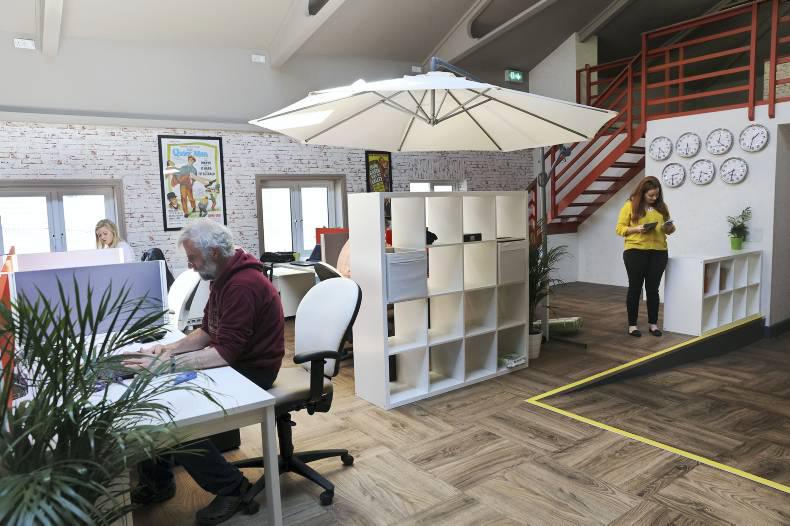
Baking is the act of making something from raw ingredients, so it’s fitting that Ireland’s first rural digital hub is located in a former bakery. The Ludgate project in Skibbereen, West Cork, is welcoming its first residents following a full refurbishment into a bright, airy, modern workspace complete with showers for workers who choose to commute by bicycle. And given the town’s idyllic setting, who wouldn’t want to bike to work?
Named after a Percy Ludgate, born down the street in 1883 and described as “Skibbereen’s answer to Bill Gates”, the hub project will appeal to highly skilled workers who value a certain quality of life.
It is centred around the provision of 1,000 megabytes of uncontested broadband with guaranteed speed – the kind of connectivity swathes of the Irish countryside are crying out for.
Now home to “excessively low” numbers of 25- to 35-year-olds, Skibbereen has traditionally housed a collection of local businesses serving a hinterland of farmers and fishermen with no dominant industry of its own.
We hope that in a year’s time if we were to offer them €1,000 in cash instead of the 1,000 megabytes of broadband, that they would choose the broadband
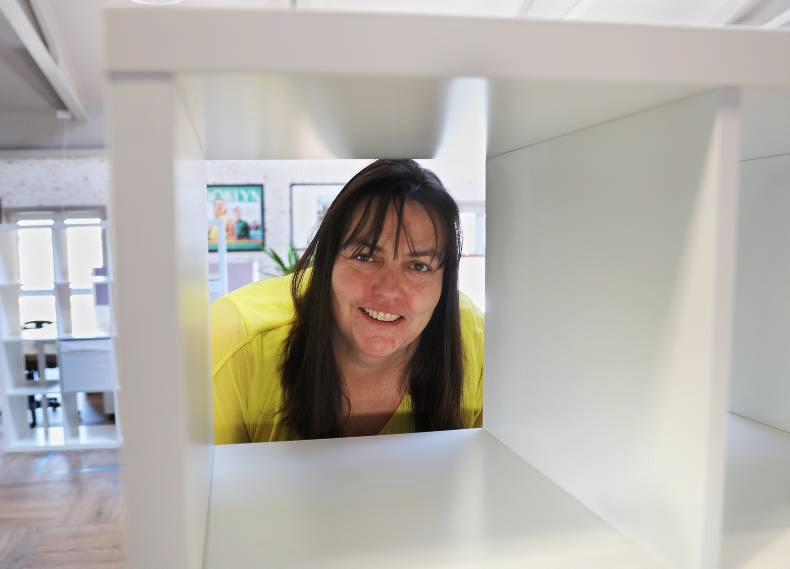
Ludgate project director Grainne Dwyer has taken up the challenge of bringing this project to fruition. She and corporate development manager Callum Donnelly answer basic questions on a daily basis in a bid to explain the concept of a “digital hub”.
Reaching out to “non-liners” is high on Dwyer’s agenda, resulting in the roll-out of iPad training for basic uses, with courses such as Skype and internet banking.
“We don’t want to call them older people, so ‘non-liners’ is the term we use, and training will take place here in the building,” she says.
E-street programme
A survey found less than 23% of the town’s shops and services are trading online, so the Ludgate team is directing part of a €50,000 Department of Environment CEDRA grant to establish an “e-street” programme to boost online business.
“We want to bring that way up to at least 40% or 50%. We have 11 businesses signed up to a programme to develop online sales.
“We hope that in a year’s time if we were to offer them €1,000 in cash instead of the 1,000 megabytes of broadband, that they would choose the broadband,” Grainne says.
Extending its tech-tentacles through the town (Skibbereen is being supplied with 1Gb internet as part of the ESB-Vodafone SIRO joint venture) Ludgate will oversee the installation of two solar-powered tourist information kiosks at either end of the town at a cost of around €20,000.
These vandal-proof kiosks will allow tourists to search for bus and ferry times, accommodation and local points of interest online. “They are really funky looking and will add to the whole digital Skibbereen thing while providing a solution for when our tourist office is closed, seven months of the year,” Grainne says.
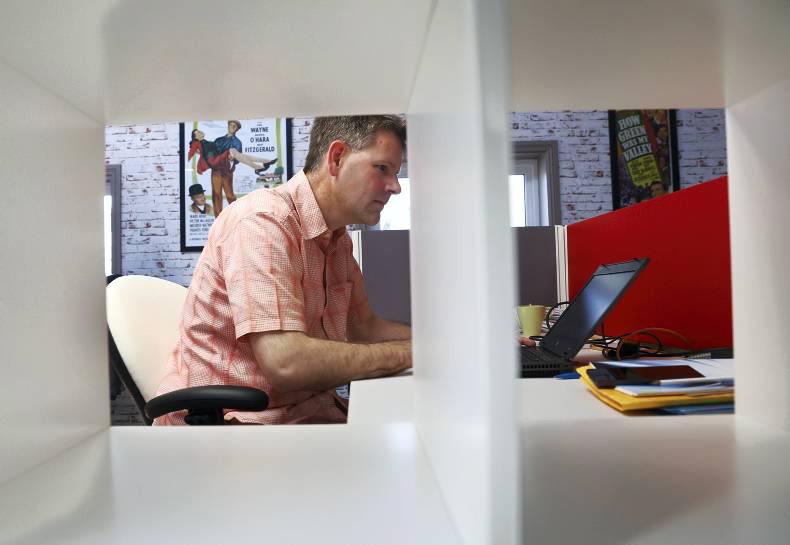
The Ludgate building comprises 10,000 sq ft, with space for 80 desks including hot-desks available for one-day rental and desk and office rental options catering for longer periods.
Designed by local architect Denis O’Donovan, the building was made available by one of the early group members behind the project, local entrepreneur John Field, owner of the local Field’s Supervalu.
Entrepreneurs incorporated
Field and Glen Dimplex CEO Seán O’Driscoll were among the original group of entrepreneurs and digital ambassadors to bring Ludgate to life.
The group members had one thing in common, according to Grainne: “There was a group in the background that didn’t necessarily know each other at the time, but the common denominator between them was that they each had a connection to west Cork. Either they had a house or lived here or had family locally.”
The steering group expanded to include high-profile names such as RTÉ’s new director general Dee Forbes; Kevin Buckley, co-founder and CEO, Spearline Labs; Leonard Donnelly, technology entrepreneur; and Oliver Farrell, co-founder and chairman, Vilicom; Anne O’Leary, CEO Vodafone, Ireland; as well as film producer and Digital Champion for Ireland David Puttnam, among others.
“The original members were asking what we could do, how we sustain a town like Skibbereen, where there has been little or no investment for 30 years,” she says.
Instead of trying to attract one big company in – like Dell in Limerick, which “created chaos when it moved out” – the focus was placed on creating a platform for jobs growth.
“The most sustainable thing to do was create a patchwork of businesses that could expand to attract employees here and hire local services at the same time,” Dwyer adds.
The first Ludgate-based workers – comprising a hand-picked mix of early start-up companies and established sole traders – have begun to settle into their new surroundings, discovering local gems such as the nearby Good Things Cafe, recently relocated to Skibbereen from Durrus.
The occupation of the former bakery follows Ireland’s first National Digital Week in Skibbereen last November, which attracted some 1,600 industry “movers and shakers” to the region for a series of talks examining the challenges and opportunities arising from new technologies.
The Ludgate team members remain tight-lipped on the identity of their new office residents, but one focus is to create a database of existing skills available among the local community, which companies can draw on for expertise.
“Lots of highly skilled people have relocated here. They are working remotely and we just don’t know about them. We are trying to create a database of those people and the skills they offer,” Dwyer says.
Some 18% of applications for office space to date came from the diaspora, a figure that surprised the Ludgate team. “There’s been an interesting mix of applicants: from software developers, web developers and app developers, to the creative industry – film production, marketing and design.
“We have lots of interest from people providing online services. And a lot of people operating within the digital space, like health, home security, design and fin-tech (financial technology).
“Many of our applications have no connection with West Cork. They are literally parachuting down from elsewhere in Ireland: Limerick, Dublin and Cork, which is interesting. People are just taking a chance,” Grainne explains.
Dream job
Her role at Ludgate is a “dream job” for a graduate seeking to live and work in West Cork. A Skibbereen native, she graduated with a Masters in Community Development from University of Limerick in 2014 and set up West Cork Tourism, an umbrella marketing initiative to showcase what the region has to offer. She did some work for the local Chamber of Commerce and, through that, was drafted in to join the Ludgate project.
“I never thought I’d be working in Skibbereen again, but there you go,” she laughs. Her colleague Callum Donnelly is also a recent graduate. He points out that without Ludgate, he would be travelling to the city “for a job like this”. Many of their former classmates have emigrated for work, a common theme across rural Ireland. It’s hoped Ludgate can provide a platform for those seeking to return.
In the meantime, the town will see an influx of young people in the form of college placement interns gaining experience in a dynamic digital environment later this year for National Digital Week 2016. The cost of living in cities coupled with the high-profile companies involved (Airbnb, Google, Uber and AIB) makes the Skibbereen event an attractive alternative for students seeking experience in event management and marketing.
“It’s a good immersion into a medium-size event and they can spend their evenings in Baltimore or Schull, so it’s a fairly attractive option,” Grainne says.
Rent a desk at Ludgate Hub
Baking is the act of making something from raw ingredients, so it’s fitting that Ireland’s first rural digital hub is located in a former bakery. The Ludgate project in Skibbereen, West Cork, is welcoming its first residents following a full refurbishment into a bright, airy, modern workspace complete with showers for workers who choose to commute by bicycle. And given the town’s idyllic setting, who wouldn’t want to bike to work?
Named after a Percy Ludgate, born down the street in 1883 and described as “Skibbereen’s answer to Bill Gates”, the hub project will appeal to highly skilled workers who value a certain quality of life.
It is centred around the provision of 1,000 megabytes of uncontested broadband with guaranteed speed – the kind of connectivity swathes of the Irish countryside are crying out for.
Now home to “excessively low” numbers of 25- to 35-year-olds, Skibbereen has traditionally housed a collection of local businesses serving a hinterland of farmers and fishermen with no dominant industry of its own.
We hope that in a year’s time if we were to offer them €1,000 in cash instead of the 1,000 megabytes of broadband, that they would choose the broadband
Ludgate project director Grainne Dwyer has taken up the challenge of bringing this project to fruition. She and corporate development manager Callum Donnelly answer basic questions on a daily basis in a bid to explain the concept of a “digital hub”.
Reaching out to “non-liners” is high on Dwyer’s agenda, resulting in the roll-out of iPad training for basic uses, with courses such as Skype and internet banking.
“We don’t want to call them older people, so ‘non-liners’ is the term we use, and training will take place here in the building,” she says.
E-street programme
A survey found less than 23% of the town’s shops and services are trading online, so the Ludgate team is directing part of a €50,000 Department of Environment CEDRA grant to establish an “e-street” programme to boost online business.
“We want to bring that way up to at least 40% or 50%. We have 11 businesses signed up to a programme to develop online sales.
“We hope that in a year’s time if we were to offer them €1,000 in cash instead of the 1,000 megabytes of broadband, that they would choose the broadband,” Grainne says.
Extending its tech-tentacles through the town (Skibbereen is being supplied with 1Gb internet as part of the ESB-Vodafone SIRO joint venture) Ludgate will oversee the installation of two solar-powered tourist information kiosks at either end of the town at a cost of around €20,000.
These vandal-proof kiosks will allow tourists to search for bus and ferry times, accommodation and local points of interest online. “They are really funky looking and will add to the whole digital Skibbereen thing while providing a solution for when our tourist office is closed, seven months of the year,” Grainne says.
The Ludgate building comprises 10,000 sq ft, with space for 80 desks including hot-desks available for one-day rental and desk and office rental options catering for longer periods.
Designed by local architect Denis O’Donovan, the building was made available by one of the early group members behind the project, local entrepreneur John Field, owner of the local Field’s Supervalu.
Entrepreneurs incorporated
Field and Glen Dimplex CEO Seán O’Driscoll were among the original group of entrepreneurs and digital ambassadors to bring Ludgate to life.
The group members had one thing in common, according to Grainne: “There was a group in the background that didn’t necessarily know each other at the time, but the common denominator between them was that they each had a connection to west Cork. Either they had a house or lived here or had family locally.”
The steering group expanded to include high-profile names such as RTÉ’s new director general Dee Forbes; Kevin Buckley, co-founder and CEO, Spearline Labs; Leonard Donnelly, technology entrepreneur; and Oliver Farrell, co-founder and chairman, Vilicom; Anne O’Leary, CEO Vodafone, Ireland; as well as film producer and Digital Champion for Ireland David Puttnam, among others.
“The original members were asking what we could do, how we sustain a town like Skibbereen, where there has been little or no investment for 30 years,” she says.
Instead of trying to attract one big company in – like Dell in Limerick, which “created chaos when it moved out” – the focus was placed on creating a platform for jobs growth.
“The most sustainable thing to do was create a patchwork of businesses that could expand to attract employees here and hire local services at the same time,” Dwyer adds.
The first Ludgate-based workers – comprising a hand-picked mix of early start-up companies and established sole traders – have begun to settle into their new surroundings, discovering local gems such as the nearby Good Things Cafe, recently relocated to Skibbereen from Durrus.
The occupation of the former bakery follows Ireland’s first National Digital Week in Skibbereen last November, which attracted some 1,600 industry “movers and shakers” to the region for a series of talks examining the challenges and opportunities arising from new technologies.
The Ludgate team members remain tight-lipped on the identity of their new office residents, but one focus is to create a database of existing skills available among the local community, which companies can draw on for expertise.
“Lots of highly skilled people have relocated here. They are working remotely and we just don’t know about them. We are trying to create a database of those people and the skills they offer,” Dwyer says.
Some 18% of applications for office space to date came from the diaspora, a figure that surprised the Ludgate team. “There’s been an interesting mix of applicants: from software developers, web developers and app developers, to the creative industry – film production, marketing and design.
“We have lots of interest from people providing online services. And a lot of people operating within the digital space, like health, home security, design and fin-tech (financial technology).
“Many of our applications have no connection with West Cork. They are literally parachuting down from elsewhere in Ireland: Limerick, Dublin and Cork, which is interesting. People are just taking a chance,” Grainne explains.
Dream job
Her role at Ludgate is a “dream job” for a graduate seeking to live and work in West Cork. A Skibbereen native, she graduated with a Masters in Community Development from University of Limerick in 2014 and set up West Cork Tourism, an umbrella marketing initiative to showcase what the region has to offer. She did some work for the local Chamber of Commerce and, through that, was drafted in to join the Ludgate project.
“I never thought I’d be working in Skibbereen again, but there you go,” she laughs. Her colleague Callum Donnelly is also a recent graduate. He points out that without Ludgate, he would be travelling to the city “for a job like this”. Many of their former classmates have emigrated for work, a common theme across rural Ireland. It’s hoped Ludgate can provide a platform for those seeking to return.
In the meantime, the town will see an influx of young people in the form of college placement interns gaining experience in a dynamic digital environment later this year for National Digital Week 2016. The cost of living in cities coupled with the high-profile companies involved (Airbnb, Google, Uber and AIB) makes the Skibbereen event an attractive alternative for students seeking experience in event management and marketing.
“It’s a good immersion into a medium-size event and they can spend their evenings in Baltimore or Schull, so it’s a fairly attractive option,” Grainne says.
Rent a desk at Ludgate Hub
Hot desk rental costs €15 per day (ex VAT) and offers access to superfast fibre optic broadband, canteen and print facilities, as well as meeting rooms with flexible day-to-day contracts. Desk rental costs €195 per month (ex VAT, minimum four-month rental) offfers access to superfast broadband, canteen and print facilities, meeting and conference rooms along with 24 hour access.Office rental costs €500 oer month (ex VAT) with access to all facilities - minimum 12 month rental. 







SHARING OPTIONS