



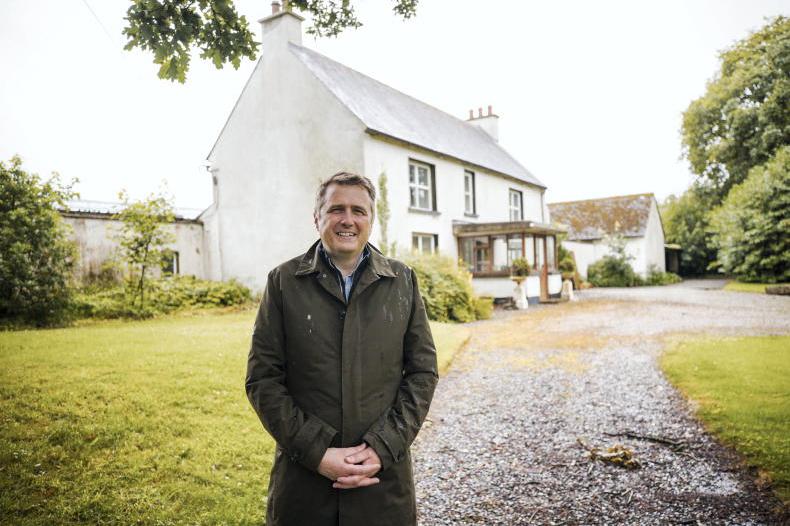
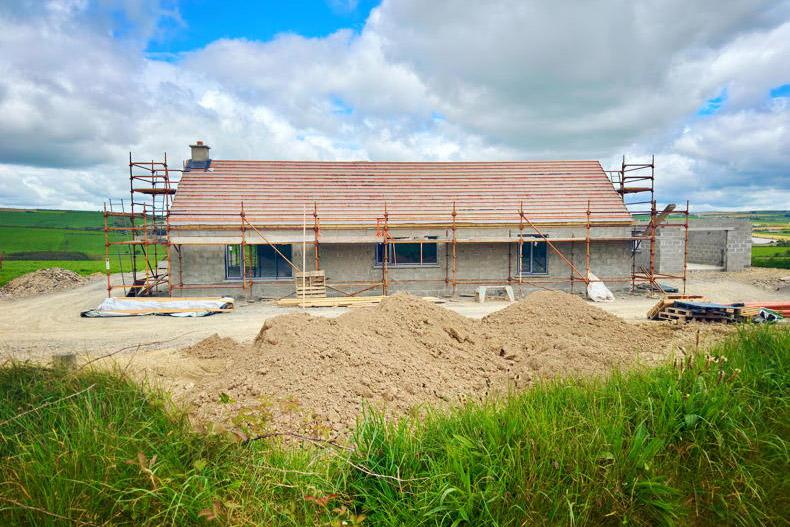
Relief is on the way for rural families wishing to build their own home with a new National Planning Statement regarding rural housing to be introduced by the Government in the coming days.
Minister for Housing James Browne is expected to bring a memo to cabinet next week to set out new rural housing rules as part of the statement.
The new legislation will supersede what the Wexford TD describes as ‘arbitrary rules that have led to frustration, anger, uncertainty and excessive costs’ for those trying to build one-off rural homes.
Speaking exclusively to Irish Country Living, the Wexford TD says over the past 25 years, since the current rural housing guidelines were issued, it has become more and more restrictive to build a rural home.
“The current situation means that two local authorities in neighbouring counties can have totally different approaches to interpreting the existing rural housing guidelines, so you may as well be in two different countries trying to build a house,” he says.
“What I am introducing to cabinet, under the new Planning Act 2024 are legally binding rules at national level that will overrule any individual interpretation of guidelines, as has been the case for too long.”
This new National Planning Statement also sets out new rules on backland development which many local authorities have prohibited. Under the new rules, this type of development will be allowed, subject to certain conditions. It also eases the restriction on ribbon development in that every application will be considered on its own merit, regardless of how many homes are in an area.
“These new rules will help to deliver more rural housing and are the key to fulfilling a vibrant rural Ireland.”
Minister Browne says he has come across countless cases of people being denied permission to build on their own land and believes these restrictions must be lifted to allow people to put down roots in rural communities.
Frustration in rural towns
“Farmers have the right to build on their own land and as a rural TD I am very well aware of the frustration involved in trying to secure planning permission for a one-off rural home,” he adds.
“There is real social good in allowing people to live in their own communities. I think planning legislation has lost sight of the value in people being close to elderly parents, or taking over the family farm and wanting their children to go to the same small rural school they did.”
While the Government has allocated funding to address the shortage of planning staff in several parts of the country, a cross departmental approach to recruitment continues to work toward a solution.
“I very much acknowledge the shortage of planners across the country but the difficulty is in hiring people. The funding has been provided but it’s trying to get people into the jobs,” says Minister Browne.
Farmers have the right to build on their own land and as a rural TD I am very well aware of the frustration involved in trying to secure planning permission for a one-off rural home
“I am working with my colleague Minister for State James Lawless in the Department of Higher and Further Education to try to encourage more students to consider a career in planning. That search extends beyond this country.”
Changes already announced under the Planning Act 2024 suggest major changes to how planning officials work in local authorities, with more time being afforded to rural housing planning applications.
“The other part of it is simplifying standard systems that will free up staff from work they shouldn’t have to do. The current situation is you need planning permission to install a velux window in your house or if you want to put a shed to the front of your property. Nor should they be directly involved in enforcement issues so this is all something the new rules will address,” adds the minister.
Simplifying systems
One area of consternation, reported by people across the country during Irish Country Living’s Build a Home series in recent years, is the influence certain State agencies have when it comes to determining the outcome of a planning application.
Transport Infrastructure Ireland (TII) is cited by many as a major stumbling block in securing planning for sites with road frontage, but Minister Browne believes local authorities should have the final say when it comes to rural housing planning applications.
“We need a common sense approach applied to the planning process but some local authorities have been adopting TII’s preference as opposed to the legal mandatory control afforded to county councils when it comes to planning,” says the minister.
“TII are not of the community and can’t understand a particular area to the same extent local planners can. They don’t have local knowledge and their determinations on individual applications are based on policy. Policy of course is important but their role is advisory only and while they have a valuable role to play in maintaining road safety, theirs is not the only opinion that should be taken into account.
“I have heard countless cases where people have run into difficulty with site lines and road frontage measurements. We have to change this in that each planning application is afforded a common sense approach to decision making.”
Minister Browne believes rural communities will only thrive if people are given the right to remain or return to where they are from and that economic arguments against one-off housing don’t stand up.
“I want people to be supported in their efforts to return to rural Ireland and they should not be forced into our towns and cities because of planning. One of the reasons we support higher density of housing in urban areas is to reduce the need for a commute. The same rule applies to rural housing. Why should people have to live in towns and villages if the family farm is a commutable distance away?
“I have never accepted the argument that one off rural housing costs more, as far as I’m concerned that ship sailed 40 or 50 years ago.
“We have the facilities and infrastructure to support rural housing and it’s crucial that we implement this National Planning Statement which removes any interpretation offered by the old guidelines.
National Planning Statement
“In the past some councils have a first build rule in that if it is the first house you are building, your application is generally approved. Others have a first home rule, in that if you moved away and had a home in another part of the country, or overseas, you could be denied the opportunity to build a home wherever you’re looking to return to. I want to see the first build rule implemented across the board, to bring uniformity to the whole process.”
The minister was keen to emphasise that the new National Planning Statement would not open the floodgates for rural housing as concerns such as environmental, heritage and topography of sites would remain a consideration.
We need a common sense approach applied to the planning process but some local authorities have been adopting TII’s preference as opposed to the legal mandatory control afforded to county councils when it comes to planning
“It goes back to the arbitrary nature of the exisiting guidelines, in that each individual application needs to be taken on its merits. If it doesn’t meet environmental or heritage criteria then it will not be approved. But by taking away the interpretation of guidelines element you’ve got a clearer system that can’t be misconstrued.
“Every local authority currently bases its planning on their county development plan, but this National Planning Statement will supersede these decisions and its rules are legally binding so will have to be adhered to.
“I am trying to make the planning system simple, clear and straightforward. We have made things way too complicated in this country and the cost of bureaucracy, at a time when the cost of living is already impacting so many people, is just driving up costs further.”
It is understood the introduction of the new rules are imminent but will require a screening process that could take some months. It is anticipated the new National Planning Statement will be in force before the end of the year.



SHARING OPTIONS