Most successful entrepreneurs are quick to tell you that any good business idea is born out of a real market need. But for Carlow artist, Edel Fenelon, the real and very immediate need she was facing in her life was quickly sourcing a birthday present for her dad, James.
Typical farmer, typical man – notoriously hard to buy for. We all know the type.
“It was me and Mum wracking our brains, thinking, what in the name of God will we get Dad for his birthday?” It is a feeling of desperation that many readers can relate to. “Like a lot of farmers, my dad is not materialistic in the slightest,” Edel continues. “He loves being outside. He has no idea what an iPhone is. So credit to Mum, she said to me: ‘why don’t you draw the farm?’ So I drew the farmhouse he grew up in, which is over 100 years old, and I included the Gaelic name and the farm and he really loved it.”
This was in 2021 and Edel has been drawing farms and farmhouses across the country ever since. “Orders started to come in, and it all came from an idea of a present from Dad,” Edel smiles.
Art and agriculture
Looking at Edel’s drawings – personal and highly detailed – it is not hard to see why the business has enjoyed such success. Or, perhaps, it could also be read as an indication that many people struggle with presents for their farming parents
Art and agriculture have always gone hand-in-hand for Edel. She grew up on the family farm in Myshall, Co Carlow. The farm is 75ac and now fully livestock, but when Edel was a child, it was also a fruit farm.
Looking back, she says that one standout memory from her childhood was competing in the arts and crafts section in the Tinahely Show in Co Wicklow.
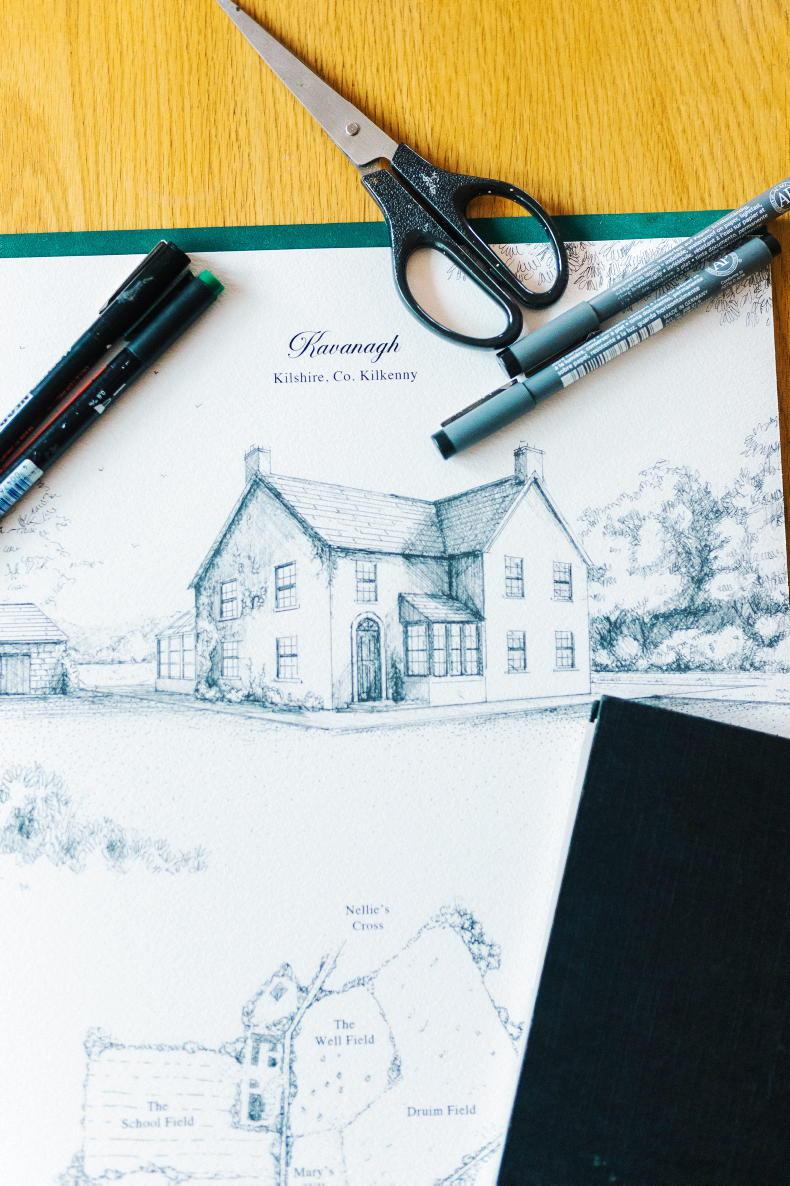
Edel draws all her illustrations by hand using a black ink pen. \ Tom Clarke
“As a child, you could enter up to around 15 different sections and the best part was it focused on creativity more than technical drawing,” says Edel, her face lighting up. “I loved it so much. Every year I was just waiting for it to come around. I think those are the things in my childhood that definitely led to me to study at the National College of Art and Design.”
After graduating from college, Edel says she “didn’t have a really clear idea of what to do with my art degree.” So, like some lucky graduates in their twenties, she decided to see the world instead.
“I went travelling and spent one year backpacking across Asia,” Edel says. “I actually ended up funding seven months of the trip out of artwork. I was on this tiny Cambodian island and I met a man from Turkey that had just opened a hostel and he said he needed someone to design the hostel and paint things.
“Basically for six months there, in exchange for food and accommodation, I would paint and I think this planted the seed of: ‘being an artist is possible.’ I can I can live off this.”
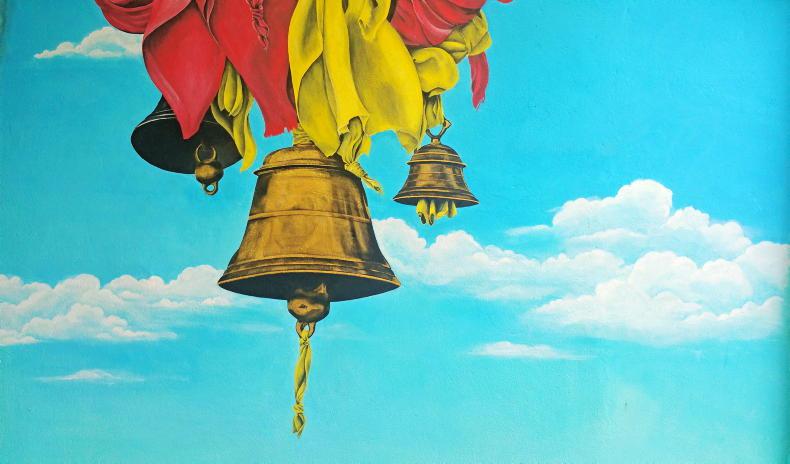
Edel painted this mural for a restaurant in Pokhara, Nepal. It took three weeks to paint. The city is known as the gateway to the Annapurna Circuit, a popular trekking route in the Himalayas. The mural, approximately 3x4 metres, depicts a traditional Nepalese bell, which holds deep religious and spiritual significance for the Nepalese people.
Edel travelled on to New Zealand and Nepal, where she kept painting murals. “I would have had a sketchbook with me, and when I got back to Europe, I slowly started sharing drawings on Instagram and people would reach out for random stuff.”
Historical connections
Edel jokes that she has drawn everything over the years, but now the focus is solely farms and farmhouses. She adds, these are often located in “completely random places”, but that it allows her to get to know the country she grew up in better.
Telling Irish Country Living about a commission she is currently working on, Edel explains: “I’m working on a house portrait and it doesn’t have a farm, but it’s an old house somewhere in Cork.
“The really interesting part is that the house was built in the 1800s, and it doesn’t exist anymore.
“So I’m working with my client as she tries to recall what it looks like and she has maybe 20 snippets of different parts of the area and really old photos and we’re just putting it together and building something that meant a lot to her and that was part of her childhood.”
Edel does all her drafting in pencil and then goes over it in black ink pen. “I just have one pen and that’s my tool,” she says.
Now married to a German native, Nicolas Schader, Edel splits her time between Germany and Ireland. She takes some inspiration from the city, Wiesbaden, where she lives. Located just outside Frankfurt, Wiesbaden was not heavily bombed in World War II and much of the architecture in this city is still preserved.
“There’s so much beautiful architecture in Wiesbaden in particular, but interestingly, I don’t think there’s the same connection to farms and houses in Germany as there is in Ireland,” she reflects. “People don’t pass houses and farms through generations as much. It doesn’t seem to be a thing.”
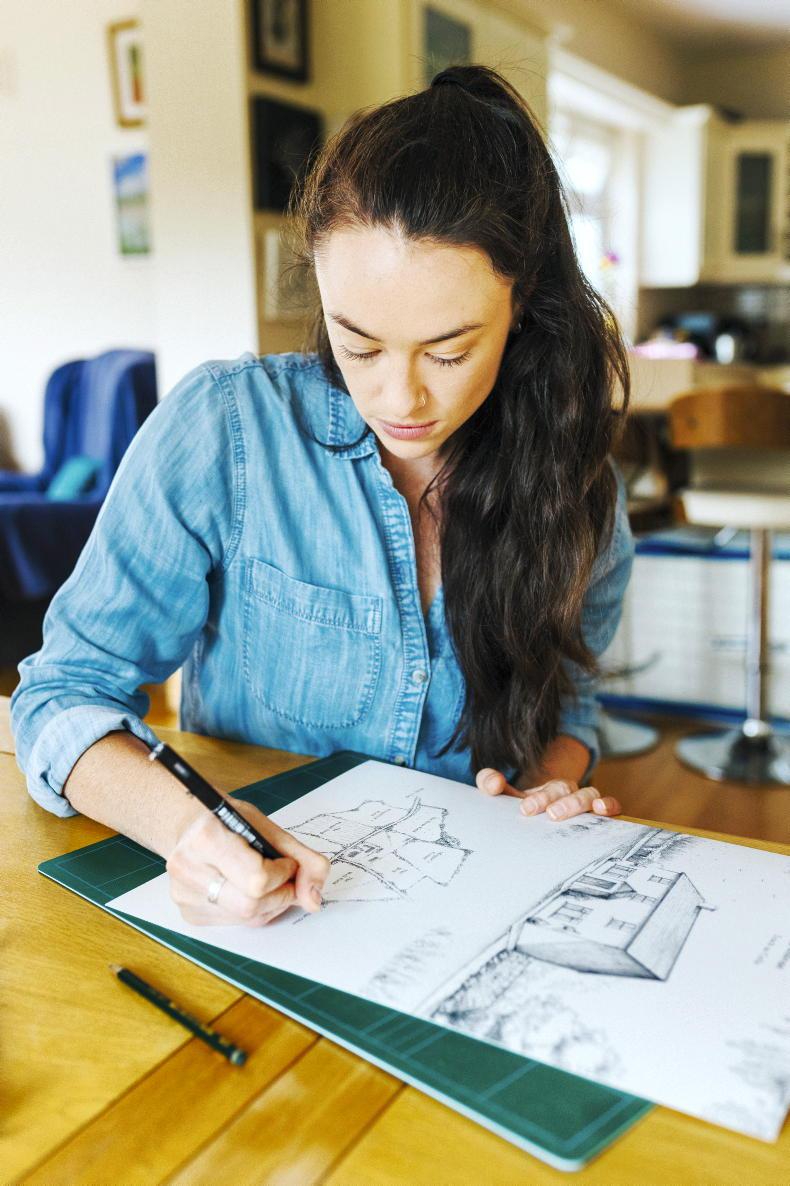
Edel's art business started with her racking her brain trying to come up with a birthday present for her dad. \ Tom Clarke
Contrast that with Ireland where there is so much emotion and history tied to parcels of farmland and houses. “It’s amazing the stories that come from someone’s farm,” says Edel enthusiastically. “For example, the field names. Maybe one name is called Fitzgerald’s Meadow. I’ve had commissions where the person has no idea who is Fitzgerald and this is a name that has come from generations or the past – or maybe even a neighbour.
“And then you get little snippets, like maybe the field is called the Brick Field. The person might be trying to figure out: was clay excavated here and then used to make bricks? Was the field used to lay bricks? The names themselves actually connect to history and tell an older story that isn’t even the story belonging to the family who live in the farm now.”
It is these layers of meaning that Edel peels back in the process of her work and what she believes makes her drawings so special.
“Often the farm and the house actually represent so many generations of hard work,” says Edel. “It’s not an aesthetic reason that people get the farm or the map drawing. It’s nostalgic, it’s memory, it’s history. I think that’s also what makes me love doing them.”
Edel’s dad, James, is still working away on the farm, and when asked whether Edel has plans to take over any time soon, she laughs. “This is the closest that I will be to becoming a farmer,” she says. “To draw peoples’ farms.”
See artbyedel.com.
Most successful entrepreneurs are quick to tell you that any good business idea is born out of a real market need. But for Carlow artist, Edel Fenelon, the real and very immediate need she was facing in her life was quickly sourcing a birthday present for her dad, James.
Typical farmer, typical man – notoriously hard to buy for. We all know the type.
“It was me and Mum wracking our brains, thinking, what in the name of God will we get Dad for his birthday?” It is a feeling of desperation that many readers can relate to. “Like a lot of farmers, my dad is not materialistic in the slightest,” Edel continues. “He loves being outside. He has no idea what an iPhone is. So credit to Mum, she said to me: ‘why don’t you draw the farm?’ So I drew the farmhouse he grew up in, which is over 100 years old, and I included the Gaelic name and the farm and he really loved it.”
This was in 2021 and Edel has been drawing farms and farmhouses across the country ever since. “Orders started to come in, and it all came from an idea of a present from Dad,” Edel smiles.
Art and agriculture
Looking at Edel’s drawings – personal and highly detailed – it is not hard to see why the business has enjoyed such success. Or, perhaps, it could also be read as an indication that many people struggle with presents for their farming parents
Art and agriculture have always gone hand-in-hand for Edel. She grew up on the family farm in Myshall, Co Carlow. The farm is 75ac and now fully livestock, but when Edel was a child, it was also a fruit farm.
Looking back, she says that one standout memory from her childhood was competing in the arts and crafts section in the Tinahely Show in Co Wicklow.

Edel draws all her illustrations by hand using a black ink pen. \ Tom Clarke
“As a child, you could enter up to around 15 different sections and the best part was it focused on creativity more than technical drawing,” says Edel, her face lighting up. “I loved it so much. Every year I was just waiting for it to come around. I think those are the things in my childhood that definitely led to me to study at the National College of Art and Design.”
After graduating from college, Edel says she “didn’t have a really clear idea of what to do with my art degree.” So, like some lucky graduates in their twenties, she decided to see the world instead.
“I went travelling and spent one year backpacking across Asia,” Edel says. “I actually ended up funding seven months of the trip out of artwork. I was on this tiny Cambodian island and I met a man from Turkey that had just opened a hostel and he said he needed someone to design the hostel and paint things.
“Basically for six months there, in exchange for food and accommodation, I would paint and I think this planted the seed of: ‘being an artist is possible.’ I can I can live off this.”

Edel painted this mural for a restaurant in Pokhara, Nepal. It took three weeks to paint. The city is known as the gateway to the Annapurna Circuit, a popular trekking route in the Himalayas. The mural, approximately 3x4 metres, depicts a traditional Nepalese bell, which holds deep religious and spiritual significance for the Nepalese people.
Edel travelled on to New Zealand and Nepal, where she kept painting murals. “I would have had a sketchbook with me, and when I got back to Europe, I slowly started sharing drawings on Instagram and people would reach out for random stuff.”
Historical connections
Edel jokes that she has drawn everything over the years, but now the focus is solely farms and farmhouses. She adds, these are often located in “completely random places”, but that it allows her to get to know the country she grew up in better.
Telling Irish Country Living about a commission she is currently working on, Edel explains: “I’m working on a house portrait and it doesn’t have a farm, but it’s an old house somewhere in Cork.
“The really interesting part is that the house was built in the 1800s, and it doesn’t exist anymore.
“So I’m working with my client as she tries to recall what it looks like and she has maybe 20 snippets of different parts of the area and really old photos and we’re just putting it together and building something that meant a lot to her and that was part of her childhood.”
Edel does all her drafting in pencil and then goes over it in black ink pen. “I just have one pen and that’s my tool,” she says.
Now married to a German native, Nicolas Schader, Edel splits her time between Germany and Ireland. She takes some inspiration from the city, Wiesbaden, where she lives. Located just outside Frankfurt, Wiesbaden was not heavily bombed in World War II and much of the architecture in this city is still preserved.
“There’s so much beautiful architecture in Wiesbaden in particular, but interestingly, I don’t think there’s the same connection to farms and houses in Germany as there is in Ireland,” she reflects. “People don’t pass houses and farms through generations as much. It doesn’t seem to be a thing.”

Edel's art business started with her racking her brain trying to come up with a birthday present for her dad. \ Tom Clarke
Contrast that with Ireland where there is so much emotion and history tied to parcels of farmland and houses. “It’s amazing the stories that come from someone’s farm,” says Edel enthusiastically. “For example, the field names. Maybe one name is called Fitzgerald’s Meadow. I’ve had commissions where the person has no idea who is Fitzgerald and this is a name that has come from generations or the past – or maybe even a neighbour.
“And then you get little snippets, like maybe the field is called the Brick Field. The person might be trying to figure out: was clay excavated here and then used to make bricks? Was the field used to lay bricks? The names themselves actually connect to history and tell an older story that isn’t even the story belonging to the family who live in the farm now.”
It is these layers of meaning that Edel peels back in the process of her work and what she believes makes her drawings so special.
“Often the farm and the house actually represent so many generations of hard work,” says Edel. “It’s not an aesthetic reason that people get the farm or the map drawing. It’s nostalgic, it’s memory, it’s history. I think that’s also what makes me love doing them.”
Edel’s dad, James, is still working away on the farm, and when asked whether Edel has plans to take over any time soon, she laughs. “This is the closest that I will be to becoming a farmer,” she says. “To draw peoples’ farms.”
See artbyedel.com.
SHARING OPTIONS