


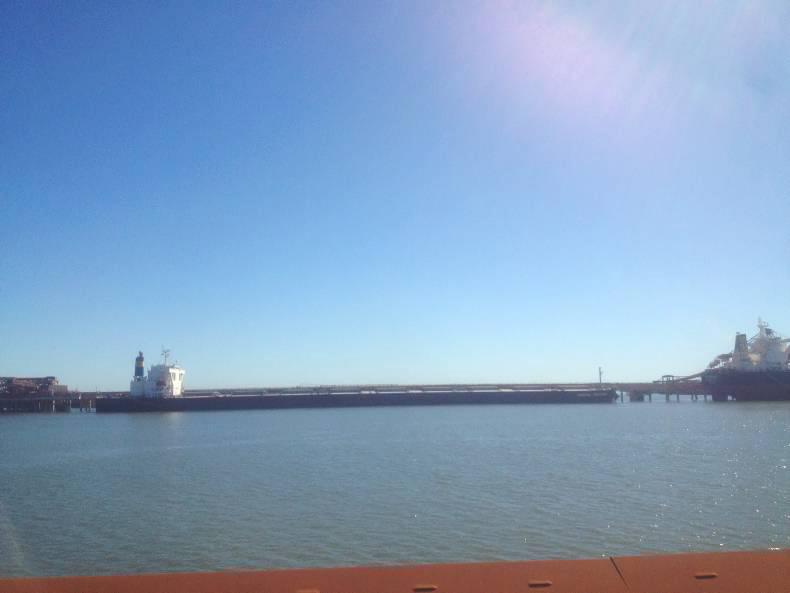
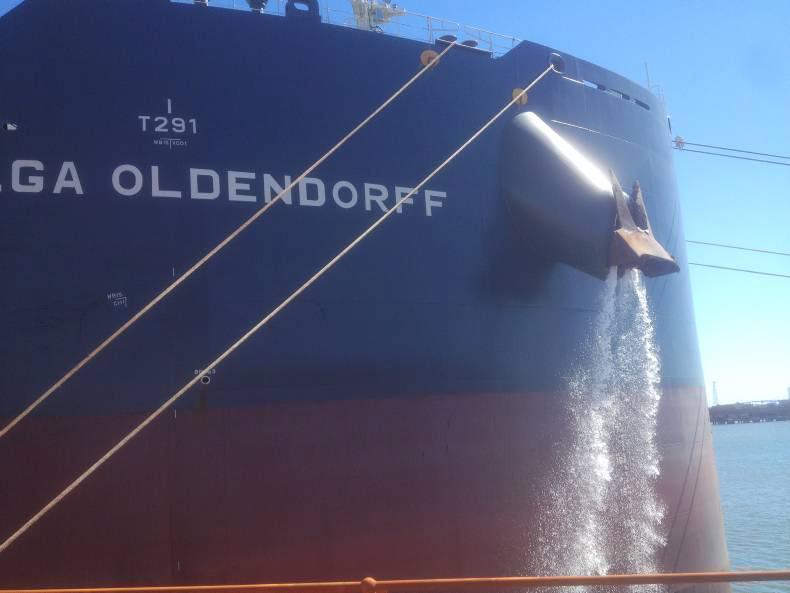
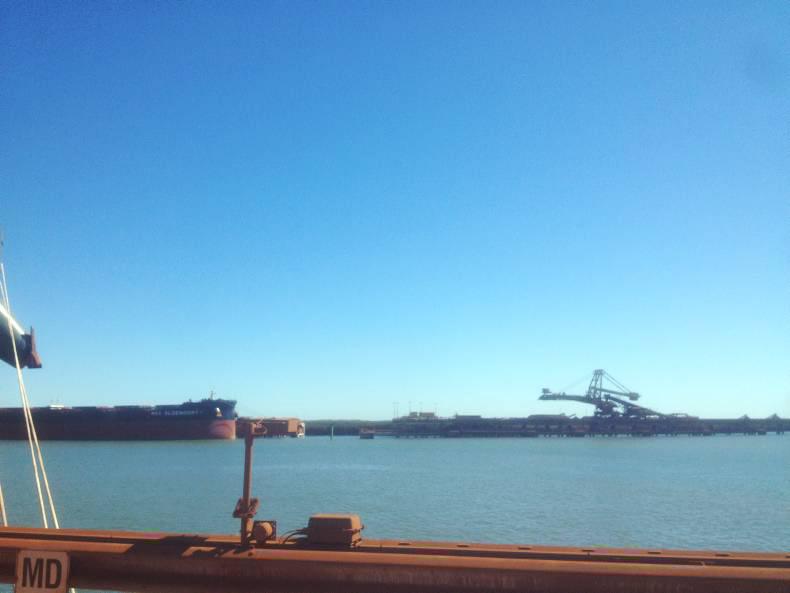
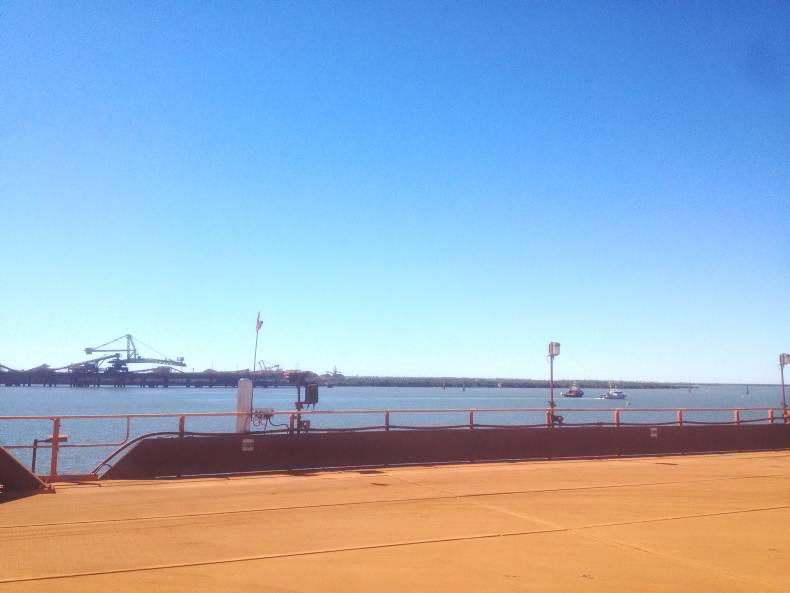
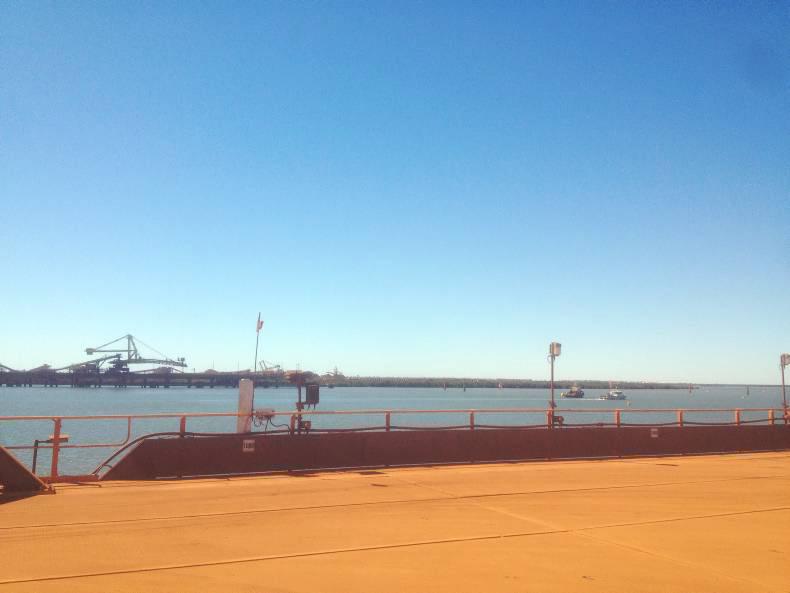
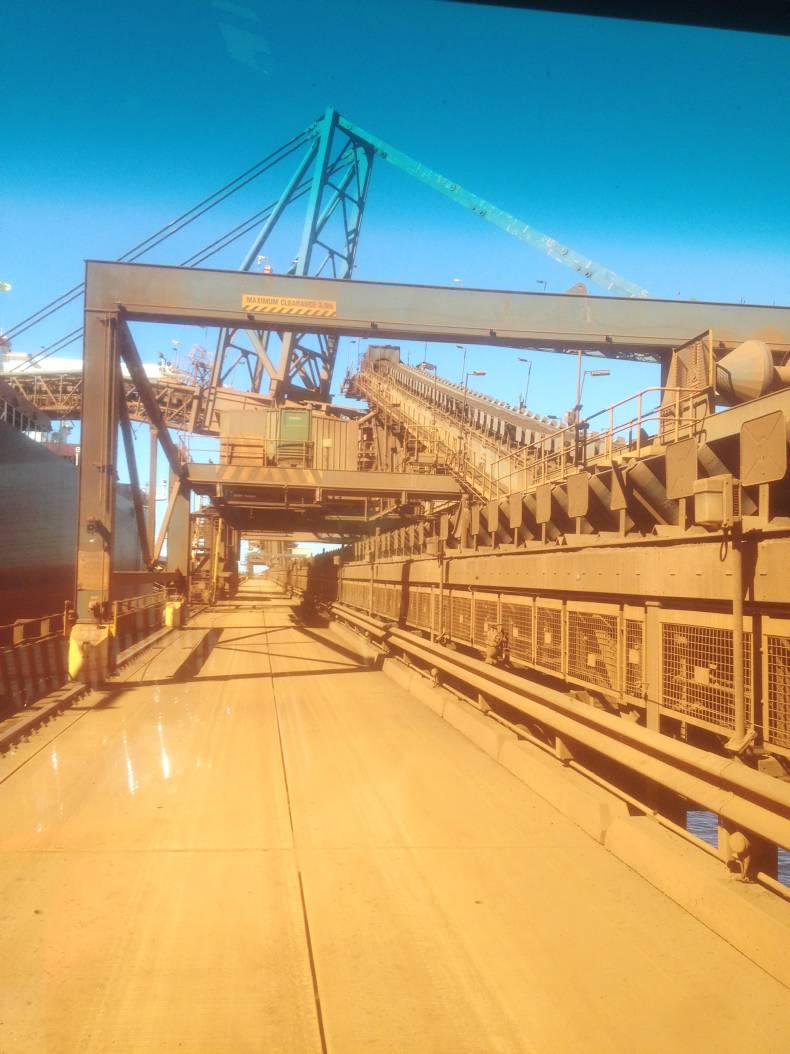
Port Hedland is a town where the ground is orange, the sky is cobalt blue and it is hot, hot, hot.
“You go from your air-conditioned house to your air-conditioned car to your air-conditioned shops, buy your shopping, back into your air-conditioned car and back to your air-conditioned house,” one local informs me.
My first impressions of the town were formed 1,650km away in Perth as I queued to board my flight. I found myself surrounded by men wearing boots, shorts and high-vis yellow jackets.
It’s not really a place you go on holiday.
Situated in northwest Australia, Port Hedland is the world’s largest bulk export port. Trade through the town mostly consists of iron ore exports.
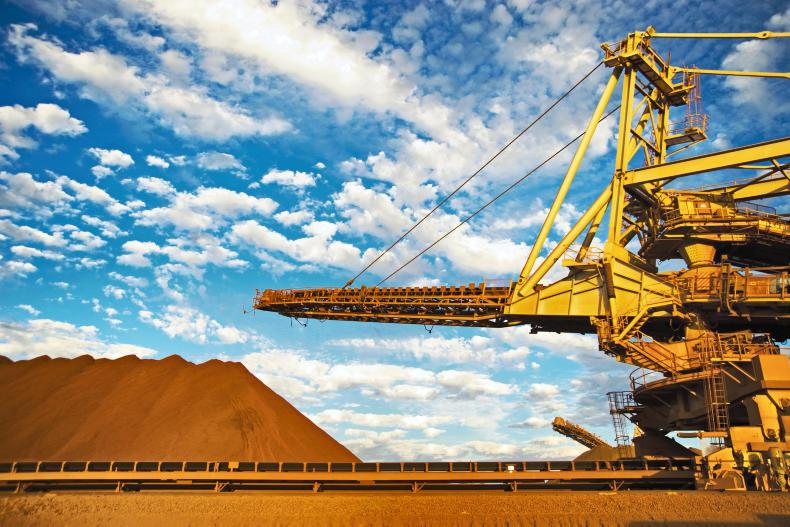
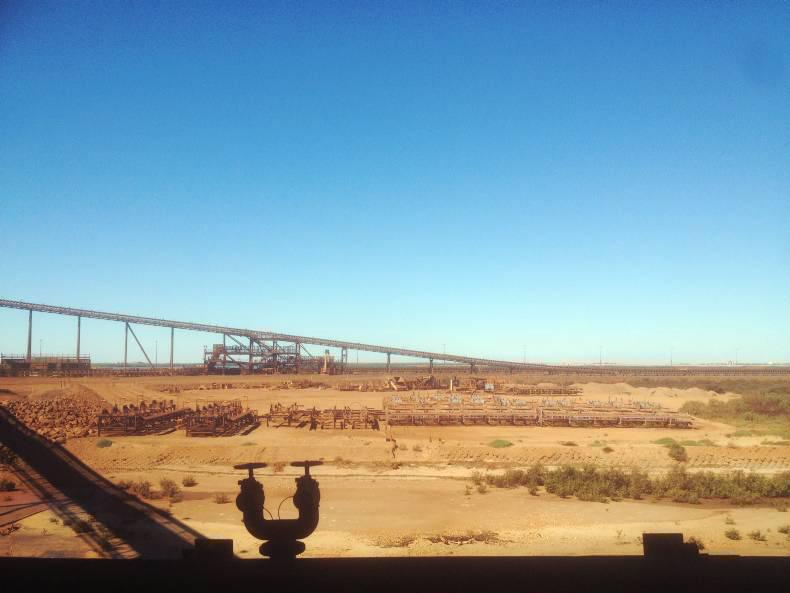
When I got there, I was greeted by mounds of iron ore, salt flats and a port where everything seems to be giant in scale, starting with the ships. The landscape is dotted with huge machinery that is used on iron ore processing sites for companies like Fortescue, and a port pilot buzzes around in a helicopter, guiding in ships, which dock 40km offshore, waiting in turn for his navigation. I’m told he’s one of the highest paid people in town. And then there are the trains. Some of them have 250 cars and are almost 3km long, which makes for a long wait at level crossings (“great excuse if you’re running late for work,” one Irish emigrant later tells me).
The jobs and the very good salaries that go with them draw people to this town, and to Australia’s Pilbara region in general. People come to save for house deposits in Perth, for example, and then: “Boom they’re gone,” Irish emigrant Cathal Lennon puts it.
At 2.646m km2, Western Australia (WA) is 31 times the size of Ireland, but it has just over half of Ireland’s population and 1.84m of those live in Perth. Irish-born local MP Stephen Dawson tells Irish Country Living that when the mining boom started, WA didn’t have the workforce locally and so the state government went overseas looking for skilled workers to come across.
Irish people didn’t have to be asked twice but they weren’t the only nationality to get involved as Port Hedland’s Mayor Kelly Howlett tells us 65 nationalities “call Hedland home”.
Most of those who work in Port Hedland itself work in iron ore processing facilities, around the port, or in support services for the industry. The mines themselves are found hundreds of kilometres inland (which is “just over the road” by Australian standards). Trains come inland from mines in places such as Newman, dump their ore and go back for more.
Biggest change
The biggest change in Port Hedland at the moment that’s affecting all nationalities, including the Irish, is that the end-construction phase of the mining boom has finished.
Irish emigrant and electrician Cathal Lennon lives and works in Port Hedland. He summarises this change by relaying an adage told to him by an Aussie man years ago: “If it takes 100 blokes to build a mine, it takes one bloke to run it.”
“That’s not your ratio, but when building, they employed – mobilised they say here – thousands of blokes just to get it built in the shortest time possible. Thousands and thousands and thousands of lads, right, building these camps out in the middle of the bush. They’re all made up with dongas, they’re like portakabins, all wired up. And then you’d have a couple of hundred blokes running it – you just press start and monitor.”
This upgrading and building of new mines took place when the price of iron ore was up, so the companies had the money to do it. Now that the price of iron ore has dropped, building on the mines has stopped and: “We’re returning to what’s a normal sort of level of activity,” says Marty Kavanagh, honorary consul of Ireland in Perth.
But what has happened to all the Irish people who were working in construction on the mines? Have they gone home?
“The stats don’t show that ... there is a significant move back but there’s not a massive move back,” says Marty Kavanagh. “I think they’re going to other places ... what we sense, and this is just a sense, is that they’re going to Dubai, they’re going to Canada, they’re going to the States. So you might be a civil engineer here, you’re showing us leaving Australia, but you’re not necessarily showing us coming back to Ireland. If you’re in that industry then you’re either in Dubai, the Middle East, Canada or you’re in the US.”
Over the last 12 months, thousands have been laid off and we'll see it again over the next 12 months as some of the oil and gas projects are built
Stephen Dawson says many mine construction workers are: “Back in Perth, looking for jobs, driving uber cars ... some have gone overseas. Many Irish people have gone home, partly because things quietened over here but also things were getting better at home.”
Stephen notes there are a lot of people still unemployed after being let go.
“Over the last 12 months, thousands have been laid off and we’ll see it again over the next 12 months as some of the oil and gas projects are built.”
A lot of those workers were on FIFO contracts which can be a difficult way of life.
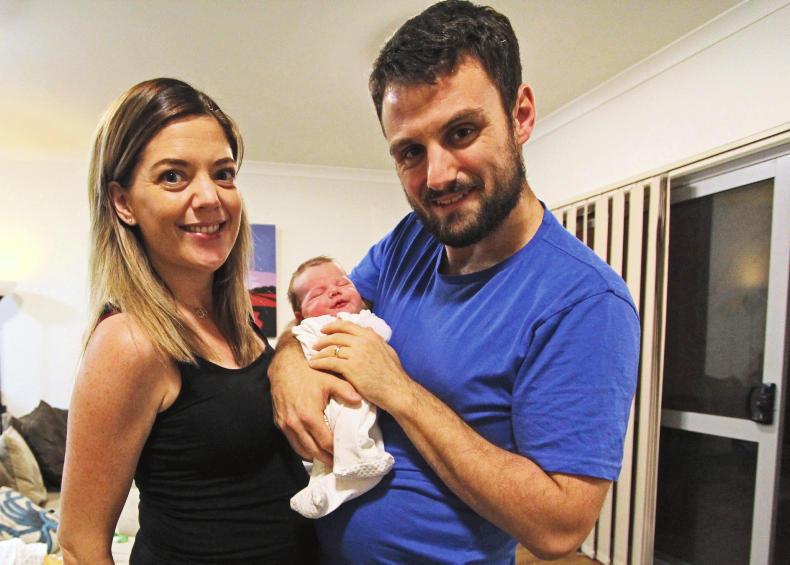
Cathal Lennon works in power (“it’s like I work for the ESB of the port”). Cathal commuted to mining sites from Perth for his first few years in Australia on FIFO contracts. At one point he was doing four weeks on, one week off, which his wife Alison says was extremely difficult.
“He could miss a whole month,” she says. To which Cathal chimes in cheerily: “Seasons used to come and go.”
Alison continues: “When he did come back, it wasn’t like real life. You went for dinner, you did this, you did that, but you didn’t do the day-to-day mundane stuff.”
These kind of rosters are notorious for taking their toll on relationships, with Cathal saying he saw a lot men in their 40s in the construction side of mining who were divorced.
Mental health
Irish Country Living received a tour of mining company Fortescue’s production site in Port Hedland. One interesting aspect of the tour was that the shiploaders are the only human-operated equipment on the site. All the other large-scale equipment, such as the stackers and reclaimers, were operated from a control centre in Perth.
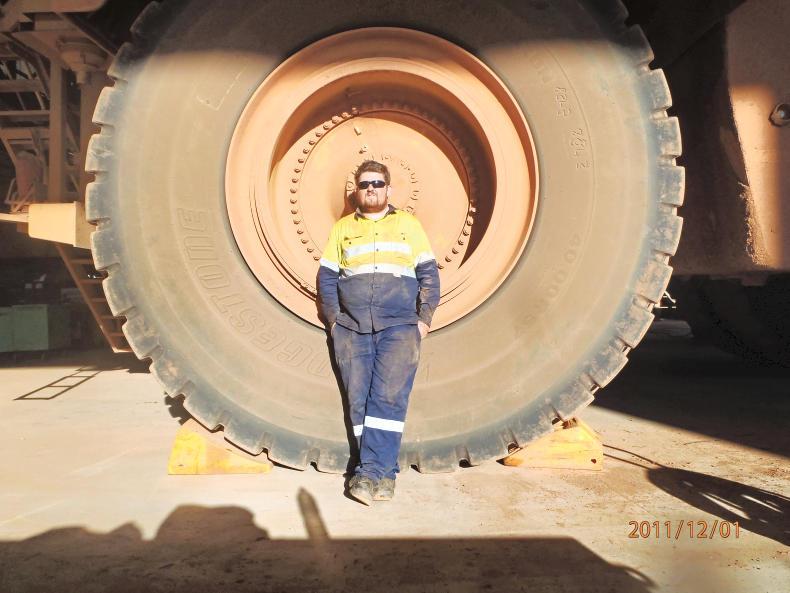
One emigrant who spends a lot of time up close and personal with the work being done on the mining sites, however, is Saggart (Co Dublin) farmer’s son Brian Kelly. He is an engineer with WesTrac and his work sees him travel to a lot of mining sites where he helps support and maintain the specialised GPS tracking systems that the mines use. He says the first thing that struck him was the size of the machinery.
“Growing up on the farm, I would have worked on a lot of machinery ... but nothing to the size of here ... you’re literally climbing up two flights of stairs to get into these things. For the first few weeks, I thought this is pretty cool.”
Brian has done a lot of FIFO work himself in the Pilbara region.
He says eight days on and six days off or two weeks on and one day off was, until recently, the typical roster in the mines in WA, but he says there’s a big shift happening in the mining industry currently, with rosters harking back to what they were years ago: “Massive swings and short breaks.”
This could basically be anything from a month on with a week off, to three months on with two weeks off, to working six months straight and getting a day off every few weeks.
And in a mine, the hours are not nine to five.
Brian says the hours are typically 5am to 5pm, with employees often getting up at 3.30am as the mines can be located some distance from the camp.
He says the shift to longer swings is taking place due to an oversupply of workers, which gives employers more leverage and employers prefer longer swings as it’s cheaper for them.
However, intense rosters in the mines take their toll on emotional wellbeing and mental health.
“You do notice some people, when they start doing shift work like that – it destroys them. Some people just aren’t made for it,” says Brian.
Cathal agrees.
“Someone might be giving out to someone about how some task he did was a bit wrong and he’d absolutely go over the top, lose it. But it’s obviously more to do with what’s going on behind.”
The mining companies now, however, are making an effort to tackle this with various mental health campaigns, which compares to when Cathal started working in the industry: “There was nothing – ‘harden up’ – that’s what it was.”
Negative impacts
Brian travels to different mine sites all the time in his work and says he gets to see people at different stages of their roster.
“I’ll see somebody who’s just started the roster, then maybe a month later I’ll go back for a few more days to do something else and I’ll see that same guy at the end of his roster ... and he’ll be different person. At the start of his roster, he’ll be happy, smiling, full of energy – but by the end he’ll be crabby, annoyed, frustrated, and basically he’s just going through that cycle constantly.
“Some camps are better than others – they’ll have facilities like football tournaments, darts tournaments, games, gyms, sports areas and stuff for guys to have an outlet. But you’ll get to other camps where there’s literally nothing. And I mean nothing. You’ll have the rooms you sleep in, there’ll be a wet mess (drinks hall) and a dry mess (food hall) and that’s it.
“Guys will call in by the wet mess, they’ll grab their six-pack of beer and go back to the room.”
This is of course only on sites where alcohol is allowed, as the policy varies across different mining sites but some sites do have a full open bar.
“You will get guys who will go in there and drink themselves stupid every night. Some of them could be on maybe a three- or four-week roster and that’s how they’re coping with it.”
This may be a negative aspect of what life on the mines has been like for some emigrants, but this part of the world has given many Irish stunning opportunities in recent years and many of these are now in a very good financial position to return home and establish themselves. We don’t have too much iron ore in Ireland but it will be interesting to see what our economy can learn from the Irish who have immersed themselves in the mines in the Aussie bush.
Since being interviewed in June, Cathal and Alison Lennon have since returned to live in Perth and Cathal will be returning to work in Port Hedland, but on fly-in fly-out basis.
Supported by the Global Irish Media Fund.


SHARING OPTIONS