


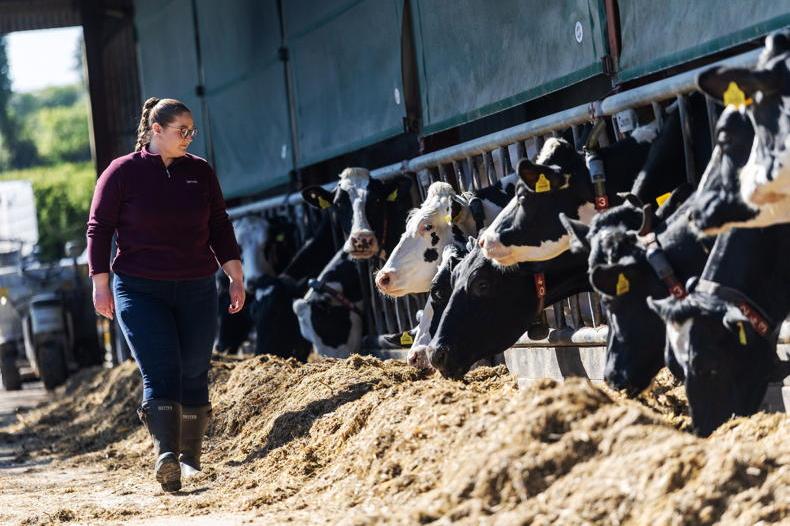
Over the past 10 months, momentum surrounding women in farming has been building with a strong programme of events and functions up and down the country marking the UN International Year of the Woman Farmer.
While many argue that hard-fought recognition and progress in the industry is still too slow, others concede that the spotlight being shone on women farmers is helping to deliver an equal footing for women in Irish agriculture.
One woman who has watched the journey farmers have travelled over the past 25 years is Nuffield Ireland chairperson Gráinne Dwyer. The Kildare native embarked on her farming life when she married her husband Jim and moved to his dairy farm in Borris-in-Ossory in Co Laois in the late 1980s.
While she agrees that huge progress has been made over the last 25 years, she refers to her early years in agriculture as the ‘dark ages’ for Irish farming women.
Featuring on an episode of RTE’s Ear to the Ground back in 2001, Gráinne highlighted the fact that women farmers in Ireland were at least a decade behind their counterparts in Scandinavia, Europe, Australia and New Zealand.
“The UN International Year of the Woman Farmer has been a brilliant platform for Irish farming women but we need to drive this on now and continue with this momentum in order for it to have a meaningful impact,” she tells Irish Country Living.
“I became the first woman in Ireland to be awarded a Nuffield scholarship in 1999, where I looked at the role of women in agriculture.
“Back then the role of women in farming in Ireland was akin to the dark ages. I wasn’t recognised as a farmer in any official sense, on the Census I was listed as a housewife. When I travelled to Brittany as part of my studies I found women-only discussion groups, with women facilitators, and this was completely normal. This networking gave these women the opportunity and confidence to assimilate into the mainstream farming industry as they had the groundwork done, which gave them a huge advantage.
Back then the role of women in farming in Ireland was akin to the dark ages. I wasn’t recognised as a farmer in any official sense, on the Census I was listed as a housewife
Gráinne continues, “It was the same when I travelled to Australia and New Zealand where women dairy farmers were making huge strides in equality as they had built up their own discussion groups and were able to bring their learnings and experience to the mainstream.”
‘Change the narrative’
Agreeing that things are much improved for women farmers in Ireland since the late 1990s, Gráinne says the success of the past 10 months needs to be harnessed to continue the push towards equality and recognition.
“My entry to farming was very typical of how most women farmers start out, and in the late 1980s there were very few off-farm job opportunities for anyone, let alone women. I spent the first decade of married life working on the farm where I really learned about agriculture.
“There was no formal education path for women so we had to learn very quickly. Myself and Jim set up our own discussion group, where alongside four or five other young married couples, we came together to share knowledge and learn from each other. The Damer Discussion group is still running, and it was great fun.
“We were all like-minded and there was no distinction between any of us. We learned about extended grazing which was great fun when you were trying to move cows in the frost and the snow.
“Our son is involved in it now, and it is a great example of the power of coming together and learning from each other, which is what many women farming groups have done in recent years.
“These groups build knowledge and information and most importantly confidence among women in the industry.
“We have come a long way but real change will happen when more women are given the opportunity to engage in mainstream issues and decision-making. It is vital that both male and female voices are heard and valued for a more balanced perspective on Irish agriculture.”
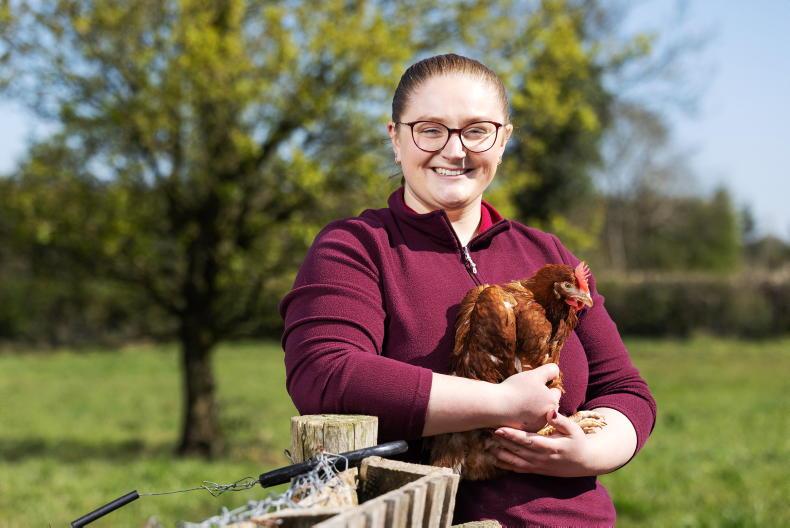
Gráinne believes the future of farming for Irish women is healthier than it has ever been and credits the next generation as being on the cusp of delivering transformative change.
“The next generation of Irish farming women is more educated, more dynamic and doesn’t face the same obstacles we did,” she reasons.
“They’re a lot more articulate, so I think that is helping to change the overall thinking.
“But we have to change the narrative that continues to portray farming as a male-dominated industry. Young women need to see themselves in government campaigns and media coverage. Subtle changes such as the imagery surrounding policy and schemes, depicting the daughter, mother and grandmother would be so powerful instead of it always being a son, father and grandfather.”
Increased visibility
Longford farmer Rebecca O’Halleran believes the UN International Year of the Woman Farmer has brought many positives to Irish farming, but says change has been slowly building over recent years in how women are perceived in the industry.
Farming alongside her parents, Shirley and Derek, on their family farm at Keenagh, near Ballymahon, Rebecca has known since she was a teenager that she wanted to be a farmer.
Opting to study business management at university to broaden her skill set, Rebecca returned to the farm and has recently completed her Green Cert. Her plan to become a full-time poultry and dairy farmer remains on course.
“I farm part-time at the moment, alongside my role as farm schemes development executive with Bord Bia,” she explains.
“I have half my workday done before I open my laptop every morning and every decision related to the farm is made by all three of us, whether that’s to do with the poultry side of the farm or the dairy. We have 16,500 hens and we milk 85 Holsteins so it’s a very busy enterprise.
“I’ve grown up seeing equality in farming as Mam is the farmer on paper as she inherited our farm so the herd number is in her name. I suppose she would’ve been the exception when I was growing up in that she was a farmer in her own right, but I’ve never considered gender an issue.”
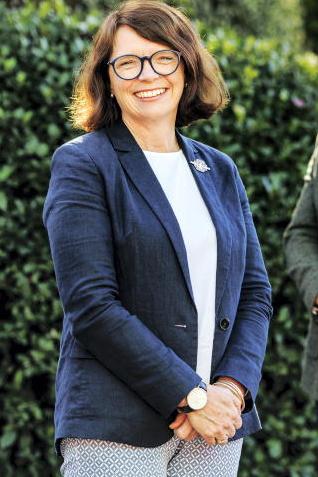
Rebecca also believes that the increased profile of young farmers on social media has helped remove barriers for women in the industry.
“I set up my own Instagram page, _myfarmlife_ during the pandemic and it has played a massive role in promoting the farm and the work we do. The amount of young women farmers like me, who are on social media, showing the younger generations what is possible in what is still a male-dominated industry, is incredible.
“The message we are sharing is that young women can do anything a man can do and gender shouldn’t be the reason they don’t chase their dreams and own what they do.”
I’ve grown up seeing equality in farming as Mam is the farmer on paper as she inherited our farm so the herd number is in her name. I suppose she would’ve been the exception when I was growing up in that she was a farmer in her own right, but I’ve never considered gender an issue
While her parents are not yet ready to hand the reins over formally, Rebecca is already on the look out for land to rent so that she can get her own herd number.
“Mam and Dad are still young and aren’t ready to retire. I respect that fully and it isn’t an issue when I am 100% involved in every decision when it comes to the farm,” she adds.
“We have had the succession conversation and when the time comes, I will enter into a farm partnership with them. First, I need to get my own herd number and for that I’ll need to rent some land. It’s in scarce supply around here and it’s costly but I’m hopeful that I will make the move sooner rather than later.”
Rebecca is confident she has established herself through her family farm to be taken seriously among the farming fraternity in her own right.
“I’d like to think gender wouldn’t be an issue for me now that I have proven myself, and attitudes are changing,” she says.
“Farming methods have advanced so much in recent years that a lot of the physically demanding aspects, which would have been hard for women in terms of strength, are now a thing of the past.
“We’ve invested in head scoops and handling crates which have overcome my lack of physical strength so I’m able to do every job as capable as any man.
“We introduced robotic milking in the past few years too and that’s given a much greater work-life balance for everyone. Mam and Dad look back at the 30 years they’ve been farming and wonder if the endless days and back-breaking work was the best way to live, so we are all benefiting from the greater flexibility that farming advances and new technology have brought.”

