


Not that it is very rare or difficult to grow – as it is neither of those – the purple bell vine is just not very well known. Mostly, it is people with an interest in plants that come across it, admire it, and want to have it in their own garden.
Many people have come across it for the first time in the National Botanic Gardens, where it has been traditionally grown in some of the greenhouses. Although it looks so exotic that only the expertise of a botanic gardens could grow it, it is not at all difficult or especially demanding.
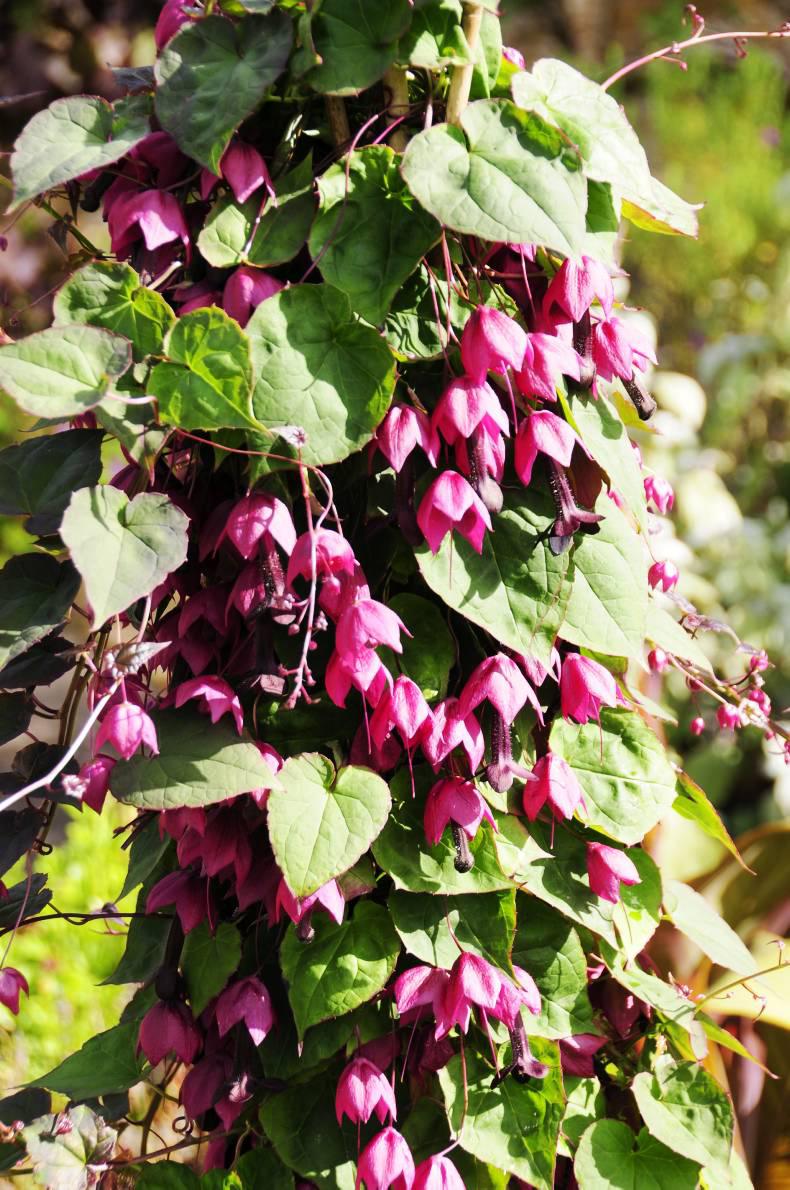
The purple bell vine is a perennial herbaceous vine that flowers in spectacular fashion from mid- to late summer and well into autumn until the weather gets cold. The snaking vines are light and twist their way around canes or other supports to gain height, the leaf stalks also gripping on to supports.
The vines carry pretty, heart-shaped leaves along their length, the leaves orienting themselves so the tip of the leaf is normally pointing down. The foliage looks good, even before the flowering begins. The flower is composed of a red-purple bell-like calyx, hanging straight down on a light flower stem and the dark-purple flower corolla hangs from the calyx.
Even when the flower corolla has been pollinated and is shed, the calyx persists and protects the developing seed pod. The effect of full flowering is like a sheet of deep purple colour.
The plant is native to mountainous parts of Mexico, growing in dense, cool rainforest, where it scrambles over bushes and other small plants. It is part of the foxglove family, which typically has tubular flowers, and its botanical name is Rhodochiton atropurpureum.
It can grow to over three metres in good conditions, but usually less in cultivation. It is not hardy and is killed by a touch of frost, similar to dahlias, another Mexican native. But it is so vigorous that it can be raised from seeds each year and treated as a half-hardy annual, grown outdoors in the summer and early autumn months, or in a greenhouse or conservatory all through winter.
It likes the extra warmth of a glasshouse and thrives there, growing more rapidly and flowering freely. However, it grows well and flowers well outdoors in a good, warm, sunny, sheltered location.
Rhodochiton seeds are sown in spring indoors, ideally with some additional heat from a heat mat or a small propagator. Sometimes the seeds can be slow to germinate, taking several weeks, and for this reason it is best to sow in early spring, potting up the seedlings as needed.
The plants can be grown finally in a large pot, even 10 or 20-litres to get lots of vigour and growth. Three plants could be used in a 10-litre pot and five in a bigger pot. The pot can be kept in a greenhouse or stood outdoors from mid-June. In warmer countries, they can be planted in the open ground, but here they seem to like the warmer soil of a pot. The plant likes light, open soil, well enriched with well-rotted manure. Supports such as light canes should be given from an early stage. The plants can be grown on wires up a greenhouse roof.
Liquid feeding every two weeks or more can boost growth dramatically. The young plants can also be planted in a large basket to trail down in a curtain of foliage and flowers. CL
Trim marjoram plants
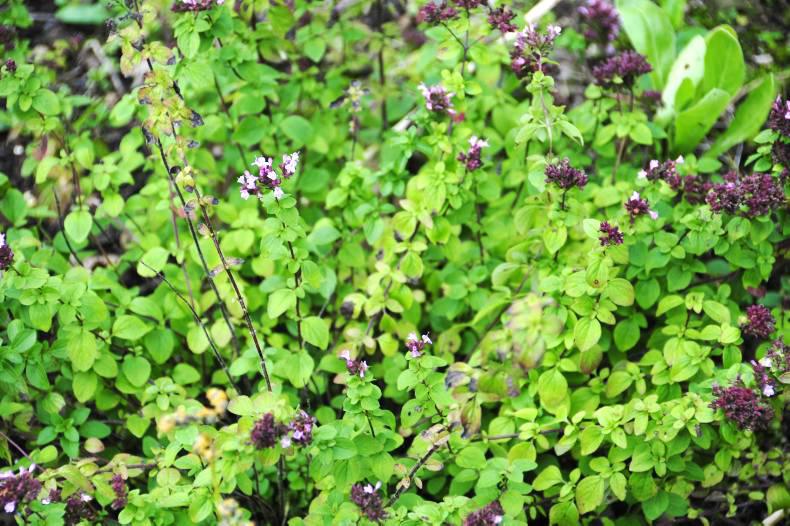
Marjoram is a very useful garden herb that can be used with, or instead of, sage and thyme. It is more or less interchangeable with oregano, Origanum being the botanical name for both, but commercial samples of herbs labelled oregano, may contain other herbs such as rosemary and thyme. There are various kinds of marjoram, including the native common marjoram, which is the most robust. This plant can be evergreen if the weather is not too hard and can be used in winter.
Cut back the growth of most plants now by about two-thirds, keeping one or two plants for winter use. By spring, the cut-back plants will have grown out and will continue to do so, providing fresh leaves for picking. Common marjoram often self-sows in the vegetable garden and young plants can be left to grow and replace old ones.
Trees, shrubs and roses
Plant evergreens of all kinds, either from pots or as root-balled plants. All kinds of pot-grown trees and shrubs can be planted too. Check that young trees are securely staked if they need it – wind-rocking can seriously damage and even kill young trees that are not yet wind-firm. Prune rambler roses.
Flowers
Plant all kinds of spring bulbs as soon as possible. Hanging baskets and other containers are coming to the end of their time, if not already done. If they have already gone over, replace the summer plants with some plants for winter and spring, including bulbs. Begin dividing perennial flowers, or planting new plants.
Lawns
Use mosskiller now if necessary, particularly in shaded areas. Continue mowing and use an autumn lawn fertilizer, unless growth has stopped or the ground is too wet. There is still time to sow a new lawn or to over-sow damaged patches, but conditions will not be as good in coming weeks as the weather gets cooler.
Fruit, vegetables and herbs
Plant spring cabbage plants without delay. Remove old vegetables as soon as they are finished and do not allow weeds to build up. Lift and store potatoes and carrots now for winter use. Parsnips generally keep better when left in the ground. Prune raspberries, blackcurrants and gooseberries. Remove weeds from herbs.
Greenhouse and house plants
Pick tomatoes as they ripen, or if the plants have lost leaves, pick the last few green to ripen off the vine. Keep the greenhouse tidy and ventilated. Do not over-water or splash water about, reducing the risk of grey mould disease. Remove all summer shading, if not already done, to increase light levels.


SHARING OPTIONS