


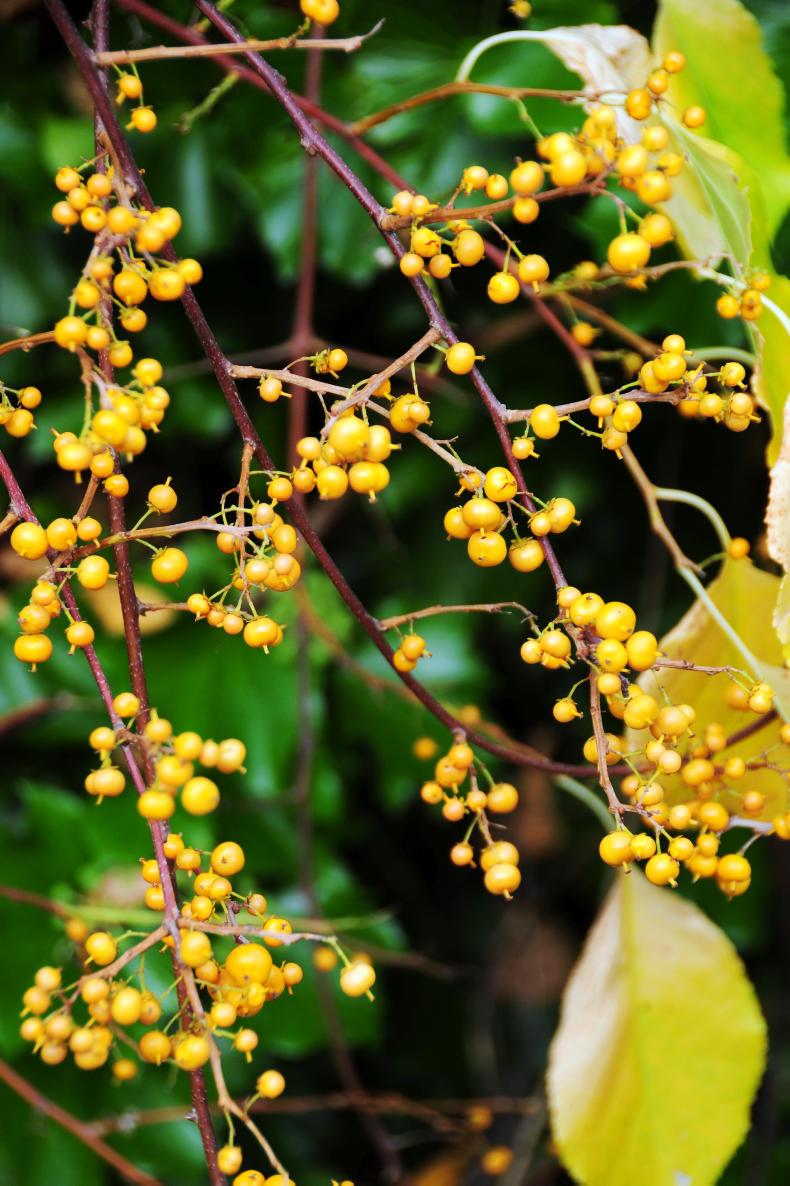
The bittersweet vine is an autumn specialist. It carries its colouring leaves and berries – its two main attractions, both in autumn – and it has been very pretty in recent weeks. Being a deciduous plant, the rounded, elliptical, leaves start to change colour in early autumn and are usually gone by the end of October.
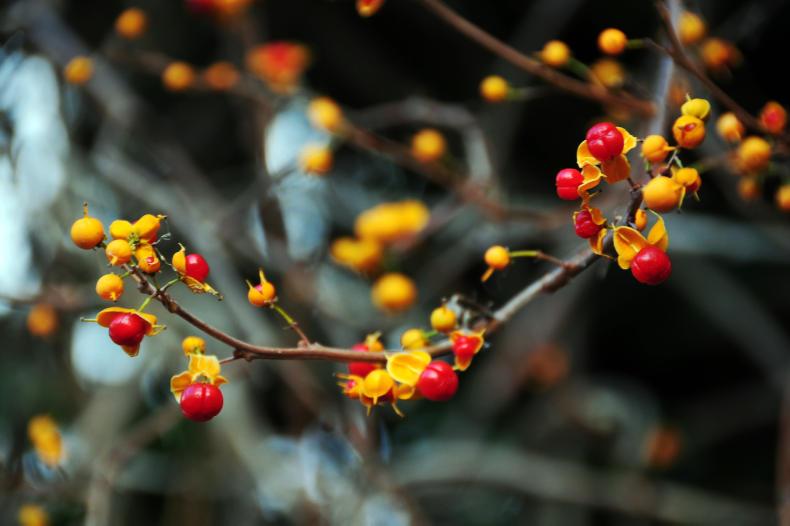
When the leaves fall, they reveal the masses of small yellow, berry-like fruits. These have their own little trick of opening back the sides of the fruit to reveal the red-coloured seeds. In a good year, as this has been, the bead-like fruits are carried in large clusters, and they can look like a cloud of tiny fruits.
Bittersweet is not related to the native bittersweet that is seen growing wild here on disturbed ground, but the red fruits of the two have the common feature of being red.
When Europeans settled America, they often used familiar names for new plants that had a similar appearance, even though the plants were not related. So the bittersweet name from Europe was given to an American species, the botanical name of which is celastrus, which has its own family that it shares with spindle trees or euonymus.
The native spindle, and other euonymus, exhibit a similar structure of pod flaps opening to show the red-coated seeds. However, apart from the red berry-like fruits, the two have in common that they are poisonous – not very poisonous, but enough to cause severe vomiting. In fact, American bittersweet was used in the past as a folk herbal remedy to treat a range of ailments.
The American species, Celastrus scandens, is grown as a garden climber, but not nearly as much as the Asian species, Celastrus orbiculatus, commonly called Oriental bittersweet or Chinese bittersweet. This is the one in the photograph with yellow beads and yellow leaves.
This is a strong climber, capable of reaching 10m, though usually seen at a lot less, around 3m to 5m. It tends to spread outward in a windy spot. It is a twining vine, climbing on other plants, trees and large shrubs. It can be grown on a wall or fence but needs strong wires to hold its weight.
While celastrus makes a great show in autumn, most years at least, it just produces green foliage in summer. The leaves are nicely shaped and carried in overlapping layers, quite decorative, but the flowers are not much. They are small and green, carried in mid-summer.
Because bittersweet is limited to one season and is not noteworthy for flowers, it is not a first-choice climber for a small garden. However, it might suit a larger rural garden better, as it looks very natural clambering up a tree or over a bush.
The plant is hardy and does best in a warm summer, when it sets most fruit. Some plants may have mostly male flowers and may not set many fruits, others are more female and carry a good show of fruits. The fruits generally have three seeds.
In parts of America, the Asian bittersweet has become invasive but not here – presumably because of cooler summer weather. The plant likes good soil, well-drained, in a sunny spot, if such is available, but can tolerate part-day shade if not, though with less fruiting. If the climber gets too tall or wide, it can be trimmed back in late winter.
Apple sharing
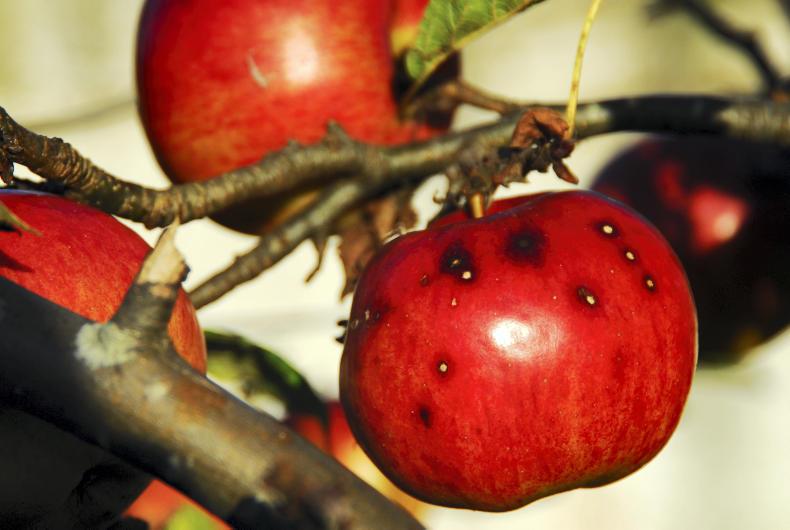
There was a great crop of apples in most parts of the country this year, in many cases far more than are likely to be picked and used. Most have already fallen, and unless you want to gather them up for cider-making, these will either rot on the ground or be eaten by birds or other garden wildlife. Deer have been known to eat apples, and you might not want to encourage these damaging animals into the garden, as they are increasing in numbers every year.
Quite often birds do not feed on apples until harsh, frosty weather comes along, and the fruit can be a useful source of food when the ground is hard with ice in the mornings. If you have evergreen trees that offer some overhead cover from frost, birds are more likely to use the fruit. Pick windfalls into a wheelbarrow and move them under the tree cover. Or just leave them as they are, and the birds will help themselves.
>> This week
Trees, shrubs and roses
Finish up planting root-balled evergreens, before harsh weather comes, but start planting bare-root deciduous trees and shrubs. All kinds of pot-grown trees and shrubs can be planted, although it would be best to wait until spring in very exposed areas. Use rabbit guards in rural areas.
Flowers
Bedding plants for spring colour should be put in now. Complete planting all kinds of spring bulbs as soon as possible. Divide perennial flowers, and plant new plants. Lift dahlias, begonias and cannas in frost-prone localities to prevent damage, or cover them with soil in milder areas.
Fruit, vegetables and herbs
Lift and store potatoes and carrots now for winter use, if not already done. Parsnips generally keep better when left in the ground. Prune raspberries, blackcurrants and gooseberries. Remove old vegetables as soon as they as finished and do not allow weeds to build up.
Lawns
Use sulphate of iron to kill moss, as it has built up with a mild autumn. Continue mowing as late as possible, as long as the ground is reasonably firm, but not if soggy. It is too late to apply autumn lawn feeds, as they are likely to be wasted, at least the nitrogen part, which is more soluble.
Greenhouse and house plants
Pick the last tomatoes if there are any left on the vines and pull out the old plants. Keep the greenhouse tidy and ventilated occasionally. Water very little to reduce the risk of grey mould disease. Check all greenhouse and house plants for signs of pests, which can build up.


SHARING OPTIONS