



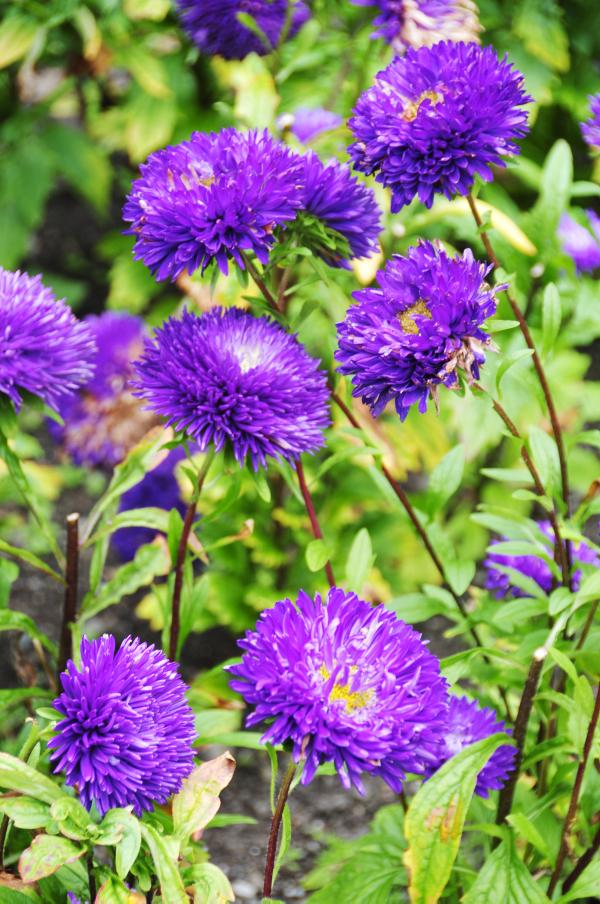
The China aster is an old-fashioned flower, not as popular as it once was, but still very well worthwhile growing because it offers plenty of colour and variety. The reason it declined in popularity is that it is not perennial and seeds have to be re-sown each year and plants raised, and that is too much trouble for some people. However, it is not a great deal of effort and the rewards are spectacular. Try it out once to see how it goes and then decide whether it is worth sowing again.
This flower is a daisy family plant, related to chrysanthemums and asters. It is often listed as aster, although its botanical name is Callistephus chinensis, native to China and Japan. Chrysanthemums and flowers like chrysanthemums are greatly admired in those countries. The flowers are large for an aster, 5cm to 10cm across, depending on variety, and mostly fully double like chrysanthemums.
The colour range is red, blue, pink, violet, yellow, purple and white, with many intermediate shades. The mix of colours is similar to the aster with small flowers and makes a wonderful contrast with red and yellow autumnal shades of leaves on trees and shrubs. The colours are generally very rich and deep but there are light shades too. The flowers are carried on branching stems. The China aster is a very good cut flower, lasting well in water.
Lots of varieties have been raised for flower colour, shape and size.‘Milady Mix is a compact variety to about 30cm, with a typical mix of shades in double blooms. Tall Fraggle Mix is 70cm tall, with a good mix of colours, its long stems ideal for cutting. Duchess Mixed has a range of colours on 60cm stems with in-curving petals on fully double flowers. Pink Tower is a very pretty single colour variety, with soft pink-flushed petals. Duchess Blue Ice is similar but in blue. Starlight Light Pink has very pale pink flowers and is only 20cm tall. Spider has spidery narrow petals in a range of colours. Unicum has narrow petals on large flowers. There are many other varieties to choose from and the mixed colours are most popular. The modern varieties are bred for resistance to rough weather and many of these continue in flower until the first hard frosts of autumn.
China asters are very easy to raise from seeds which can be sown in March or April. Earlier sowing will give flowers earlier, but the role of this flower is usually to provide colour in late summer and autumn, adding to the late show. The seeds can be sown in seed trays indoors and are large enough to sow into cell trays, sowing two seeds and pinching out the weaker one, or simply pricking out the seedlings from the seed tray.
The seeds can also be sown directly outdoors in late April where the plants are to grow. Otherwise, keep the seedlings in a greenhouse or sunny place indoors until planting out in May. They are not frost-hardy and should not be planted out too early, and only after hardening off.
The foliage is quite plain, even rough, and not of any great interest but acts as a good backdrop to the flowers. The plants are best planted in small groups of five or more plants, in beds or borders, and small kinds in pots or containers, spaced about 15cm to 30cm apart depending on eventual height of the variety, the tall ones spaced widely apart. Plant tall varieties out of the wind so they will not topple over, or stick in some twigs for support while the plants are still growing.
Dead-heading, if you have time, helps to keep the flowers coming late in the year.
Assess autumn colour
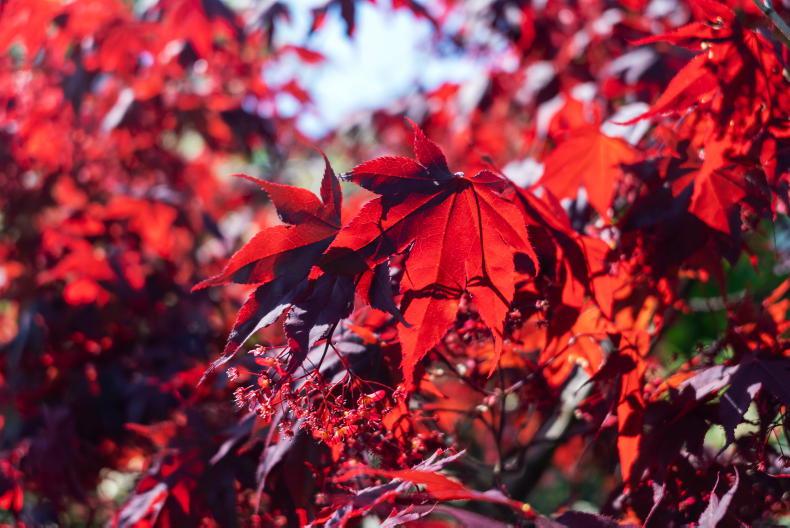
The autumnal colouring of deciduous trees and shrubs, and some non-woody flowers, is one of the great highlights of the garden year, but it usually comes as an unplanned bonus. Lots of trees and shrubs, such as cherry, malus, witch hazel and magnolias, are grown for the flowers and the autumn colour is an extra. Every garden should have some autumn colour to look seasonal, and now is a good time to assess how good your autumn colour display really is. If it is scant and a better display is wanted, it might simply mean planting a few trees or shrubs in strategic spots to heighten the effect. Mountain ash can be very good and has berries too. Japanese maple is wonderful for autumn. Birch is good on a big scale, as it beech. June berry is excellent for autumn and good in spring too and the winged spindle is a pillar of crimson year after year.
Trees, shrubs and roses
Evergreens can still be planted but it would be best to wait until spring in an exposed site where winter winds might desiccate the foliage. Rose bushes can be planted now. Check the tree ties on trees planted and staked in recent years to ensure the stakes are solid and the ties are firm but not rubbing the tree bark.
Fruit, veg and herbs
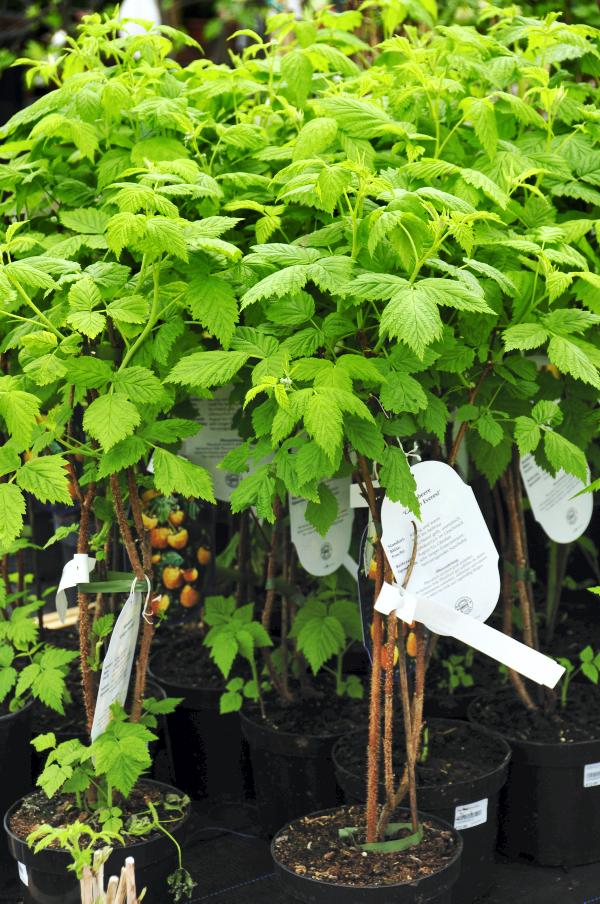
Plant fruit trees and bushes of all kinds in the coming weeks. Apples, pears and plums in that order are easy to grow in good, well-drained soil with a sunny aspect. Soft fruits are even easier to grow and need less space. Fruit trees can be pruned, with the exception of plum trees. The vegetable area can be tidied up.
Flowers
Containers and flower beds can still be planted up with spring bedding, such as wall flowers and tulips. Most perennial flowers can be lifted and divided or new specimens planted, but do not do this if the soil is wet and sticky as it is in places. Dahlias and cannas may need to be covered, or lifted and taken under protection.
Lawn
Growth of grass was very good all autumn but has slowed now. Carry out mowing if possible, unless the lawn is too soft for mowing. Repairs to a damaged lawn can be carried out and humps and hollows fixed. Although seed will be slow to germinate now, it can still be sown. If lawn moss is evident, apply sulphate of iron.
Greenhouse and house plants
All debris and dead plants should be removed. Water lightly, if at all. The glass should be cleaned to improve light levels. Check for pests such as greenflies that can cause a lot of damage. Tidy away old tomato plants. Water house plants sparingly and do not stand pots in water.




SHARING OPTIONS