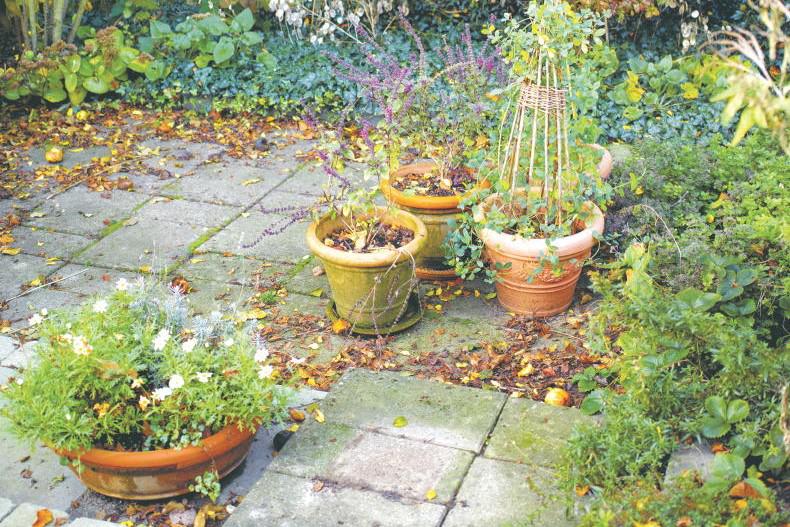
Without fail, someone will approach me in December and say “ah well, at least you can take a break from the garden now that it is the middle of winter”. I explain that even though the garden is in its winter slumber, this is the time when work begins for the year to come.
Now is a good time to take stock of how your garden looked and charmed you over the year, remembering what was a success as well as what didn’t quite work. Some will say that their garden is out of control and a source of angst, leaving them feeling like giving up as they can never get it right.
The first few weeks of the new year offer the perfect opportunity to start making notes of the things that are not working for you. Let your imagination run free as to what the solutions might be.
Garden notebook
I have accumulated many gardening notebooks over the years which have become some of the best tools to help formulate success. We all should document the plants that worked well, along with the ones that just do not like your soil or site. You quickly start to form an opinion of what success looks like in your garden.
Some gardeners persistently try to grow certain plants and fail which is a sign they may not be suitable in your garden. Make notes of trees, shrubs, annuals, perennials and bulbs noting what you love to grow and what not. This should be an ongoing process throughout the year and it becomes your garden journal. This does not need to amount to more than notes, jottings and sketches.
Trees
There are very few gardens that cannot accommodate a tree. They form the pillars of a garden and provide the opportunity for interesting plant combinations beneath. They can block or frame views of your garden. Always check ultimate height for the purpose of positioning.
Shrubs
Shrubs are the mainstay of many gardens, as they bring permanence. In considering these, create a plan for those that have a flowering period for every season of the year or perhaps coloured foliage to charm you in winter. Scent is a key consideration as there is a myriad of choice here.
Perennials
Perennials provide flowering colour for a long period from spring into autumn. If your goal is to minimise the gardening workload, you can do so by planting low growing plants to 1m in height. Higher growing perennials, will require staking and it is timely work as you need to stake plants in advance of growth. Bulbs that naturalise and become perennial are a real bonus and often bring with them the element of surprise. We are now entering snowdrop season and the joy of that.
Annuals
Annuals are an immediate way to get instant impact. I suggest that they are best suited to pots and planters, however they look well as infill planting among perennials and low growing shrubs. However, annuals require work such as watering, deadheading and ultimately replacing.
Climbers
Climbers are a great way to clothe bare walls and a trellis. You need to decide between deciduous or evergreen, self-clinging or on vertical supports. Some research is needed to ensure that your climbers do not outstrip the space you need covered. Keep in mind the surface they are attached to will be difficult to maintain in terms of painting in the future.
Winter is a time when plants can easily tolerate relocation by transplanting or division. This can be achieved now, but do not rush into it. Take time to consider your options.
Paths and paving
We need to get around our gardens so hard surfaces are key. Always consider ease of access for you and your family especially the elderly and frail. In some gardens it is inevitable that slopes exist and steps are necessary.
Examine if the route through the garden can be recreated to include easier gradients. Winter is the best time to undertake construction work and it is worth investing in this as a garden should be easily accessed for all. In our Irish climate, paving tends to have slippery patches of slime and mould and these need to be scrubbed or power washed to ensure safety.
Research
My go to book is the Gardeners’ Encyclopaedia of Plants and Flowers, published by The Royal Horticultural Society, where you will find the information easily accessible to forge forward for a better garden.
Q&A: Can I sow purple fennel seeds?

Sow seeds in a tray with quality compost. \iStock
I received a Christmas present of a dried flower bouquet which contained purple fennel. Seeds are dropping from it, can I sow these? – George, Cork City.
What a lovely gift and a lovely idea.
Yes, it is very common with dried flower bouquets that seed will be present. Presumably the bouquet maker informed you that purple fennel was contained within. If so, the seed can be sown in the normal way, in a tray with quality seed compost.
That said, we have to be careful about what we sow in terms of their identity and origin. Ornamental plants are normally OK, however, seed from wild plant material from other countries need to be treated.
Tools: garden tools may be resting at the moment, but take the opportunity to make sure they are stored dry and are rust free. It is a good idea to check and sharpen where necessary so you’re ready to go.
Trees and shrubs: pruning and cutting back of shrubs is a good idea now although avoid any that are about to flower.
Transplanting: as long as weather is mild and ground is not waterlogged, transplanting can continue to take place.
Do you have a gardening question? Email
icl@farmersjournal.ie or post to Irish Country Living, Irish Farm Centre, Bluebell, Dublin 12.

Without fail, someone will approach me in December and say “ah well, at least you can take a break from the garden now that it is the middle of winter”. I explain that even though the garden is in its winter slumber, this is the time when work begins for the year to come.
Now is a good time to take stock of how your garden looked and charmed you over the year, remembering what was a success as well as what didn’t quite work. Some will say that their garden is out of control and a source of angst, leaving them feeling like giving up as they can never get it right.
The first few weeks of the new year offer the perfect opportunity to start making notes of the things that are not working for you. Let your imagination run free as to what the solutions might be.
Garden notebook
I have accumulated many gardening notebooks over the years which have become some of the best tools to help formulate success. We all should document the plants that worked well, along with the ones that just do not like your soil or site. You quickly start to form an opinion of what success looks like in your garden.
Some gardeners persistently try to grow certain plants and fail which is a sign they may not be suitable in your garden. Make notes of trees, shrubs, annuals, perennials and bulbs noting what you love to grow and what not. This should be an ongoing process throughout the year and it becomes your garden journal. This does not need to amount to more than notes, jottings and sketches.
Trees
There are very few gardens that cannot accommodate a tree. They form the pillars of a garden and provide the opportunity for interesting plant combinations beneath. They can block or frame views of your garden. Always check ultimate height for the purpose of positioning.
Shrubs
Shrubs are the mainstay of many gardens, as they bring permanence. In considering these, create a plan for those that have a flowering period for every season of the year or perhaps coloured foliage to charm you in winter. Scent is a key consideration as there is a myriad of choice here.
Perennials
Perennials provide flowering colour for a long period from spring into autumn. If your goal is to minimise the gardening workload, you can do so by planting low growing plants to 1m in height. Higher growing perennials, will require staking and it is timely work as you need to stake plants in advance of growth. Bulbs that naturalise and become perennial are a real bonus and often bring with them the element of surprise. We are now entering snowdrop season and the joy of that.
Annuals
Annuals are an immediate way to get instant impact. I suggest that they are best suited to pots and planters, however they look well as infill planting among perennials and low growing shrubs. However, annuals require work such as watering, deadheading and ultimately replacing.
Climbers
Climbers are a great way to clothe bare walls and a trellis. You need to decide between deciduous or evergreen, self-clinging or on vertical supports. Some research is needed to ensure that your climbers do not outstrip the space you need covered. Keep in mind the surface they are attached to will be difficult to maintain in terms of painting in the future.
Winter is a time when plants can easily tolerate relocation by transplanting or division. This can be achieved now, but do not rush into it. Take time to consider your options.
Paths and paving
We need to get around our gardens so hard surfaces are key. Always consider ease of access for you and your family especially the elderly and frail. In some gardens it is inevitable that slopes exist and steps are necessary.
Examine if the route through the garden can be recreated to include easier gradients. Winter is the best time to undertake construction work and it is worth investing in this as a garden should be easily accessed for all. In our Irish climate, paving tends to have slippery patches of slime and mould and these need to be scrubbed or power washed to ensure safety.
Research
My go to book is the Gardeners’ Encyclopaedia of Plants and Flowers, published by The Royal Horticultural Society, where you will find the information easily accessible to forge forward for a better garden.
Q&A: Can I sow purple fennel seeds?

Sow seeds in a tray with quality compost. \iStock
I received a Christmas present of a dried flower bouquet which contained purple fennel. Seeds are dropping from it, can I sow these? – George, Cork City.
What a lovely gift and a lovely idea.
Yes, it is very common with dried flower bouquets that seed will be present. Presumably the bouquet maker informed you that purple fennel was contained within. If so, the seed can be sown in the normal way, in a tray with quality seed compost.
That said, we have to be careful about what we sow in terms of their identity and origin. Ornamental plants are normally OK, however, seed from wild plant material from other countries need to be treated.
Tools: garden tools may be resting at the moment, but take the opportunity to make sure they are stored dry and are rust free. It is a good idea to check and sharpen where necessary so you’re ready to go.
Trees and shrubs: pruning and cutting back of shrubs is a good idea now although avoid any that are about to flower.
Transplanting: as long as weather is mild and ground is not waterlogged, transplanting can continue to take place.
Do you have a gardening question? Email
icl@farmersjournal.ie or post to Irish Country Living, Irish Farm Centre, Bluebell, Dublin 12.
SHARING OPTIONS