



As we settle into autumn and leave summer behind, it is time to start planning ahead for next year. Never let the opportunity pass where you are not planning and preparing for the next burst of colour. Yes, the winter garden will have its many colourful plants to admire, but these are predominately shrubby.
As the grey days of winter grind on, the work you do now will pay dividends in welcoming the spring with a blast of colour. One way to achieve this is by planting bulbs and other spring-flowering bedding plants.
Narcissus, commonly known as the daffodil, comes in many varied types. There are the large, blousy, trumpet ones that demand attention and give you a tidal wave of yellow and orange. If that is to your liking, look for Narcissus ‘Dutch Master’, which grows to a height of 45cm, its golden yellow flowers are up to 11cm across; it is very free-flowering.
I prefer the smaller flowering ones that sometimes have multi heads and some are beautifully scented. Narcissus ‘Angels Whisper’ has pale yellow petals and grows to 35cm high. All have a three-week flowering period, even longer if the weather is colder.
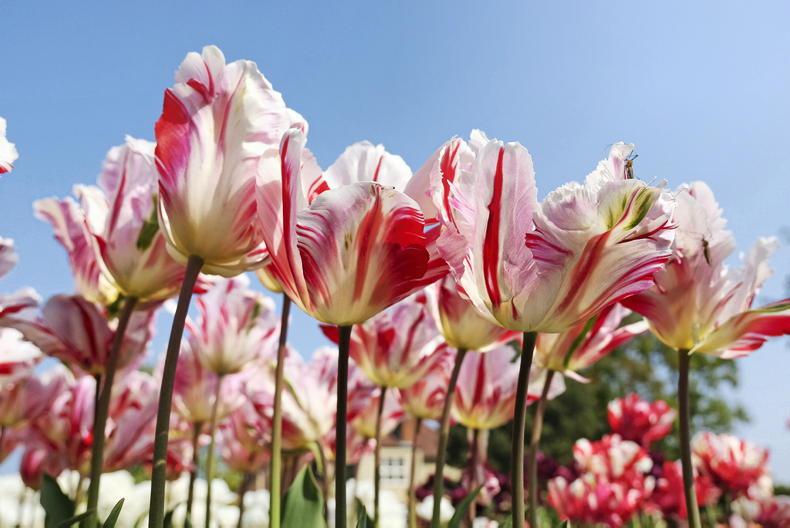
It wouldn’t be spring without looking at tulips, they are on a par with the daffodil for spring performance. Tulipa ‘Carola’, with its rich magenta pink flowers, is perfectly formed and wonderful, growing to a height of 40cm. They are even more beautiful when underplanted with blue myosotis.
In our garden we get more enjoyment from smaller growing tulips, which are more weather resistant and return each year after planting. T. tarda, with pale yellow flowers and T. clusiana with its white and pink colours, both of these are low growing.
Spring would not be complete without crocus in your spring garden, and C.tommasinianus ‘Barr’s Purple’ works well. Its cool blue flowers match the air on a February morning. C. vernus ‘Ice Queen’ is a large-flowered white type, highlighted by its bright orange stamens. It is considered to be one of the best white varieties.
Make it all white
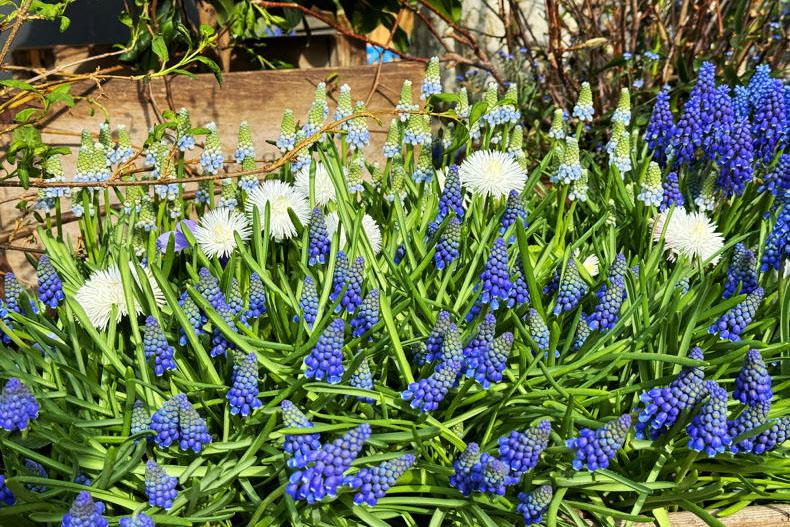
White stands out in dim winter evening light long after other flowers fade from view. Muscari, commonly known as the Grape Hyacinth, is another spring garden stalwart and is not widely grown. Muscari ‘Esther’ has a spike of pale blue, tiny flowers fading towards the top, held over rich green foliage, growing to 20cm in height. If a pink tone is what you are after, plant M. ‘Pink Sunrise’, with the palest pink flowers on spikes of similar height. These make good cut flowers too.
While they grow well in ordinary garden soil, they work best featured in pots on a patio or doorstep. Bulbs are forgiving and will grow in most situations, however, it is always best to prepare the ground well in advance of planting, pretty much as you should for all plants. They tolerate a wide range of soils, although care is needed if soil is heavy or prone to flooding in winter. In that case, adding grit to the area is best practice.
Each bulb is a wonder in itself, as it arrives with its own food store in the bulb and ready to perform. As soon as leaves are produced, photosynthesis begins and further nourishes the bulb – feeding the plant more.
Choose carefully where you want to plant. I suggest that bulb colours are chosen to blend in with the colours that already exist in other plants around them, as this can heighten the visuals during flowering time. Make sure to check planting heights and spacing, you will usually find this on the packs supplied from your garden centre.
Planting depth has always been the key to get optimum flowering. There was a time when twice the height of the bulb as the planting depth was the recommendation, however the latest research indicates that three times the depth is now what we should aim for.
This ensures better flowering which is what we require. There is no need to fuss about feeding.
Bulbs are an investment for the future, so make sure after flowering, all seed heads are removed and foliage allowed to die back naturally. Get to your local garden centre now, as they are a good source of advice and guidance.
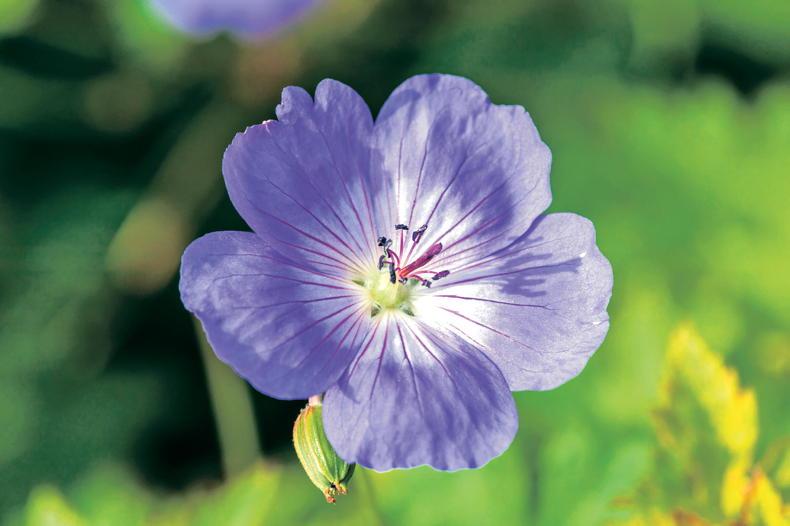
Can I take cuttings from my geranium? It was a present and flowered beautifully all summer in my window box. – Siobhan, Co Galway
Yes, you can, and this is a good time of the year to take cuttings. Geraniums or pelargoniums have sun ripened stems by now, perfect for cuttings. Cut good, firm sections of stem, about 10cm long, just below a node and remove the lower leaves. Allow them to dry for several hours before inserting them in a very gritty propagating compost. Water initially to settle them in and no more after that until they root. In three to four weeks they will have rooted. At that point, pot up into 9cm pots in standard potting compost. Water lightly over winter.
Lawns: lawns are now in full growth making up for lost time. Gradually reduce cutting height to your normal level.
Perennials: late-flowering perennials are now in full flower, while early ones are going dormant. Now is a good time to take notes of what needs lifting and dividing.
Bulbs: garden centres are now well stocked with spring bulbs, check what you have leftover in pots from last spring and purchase straightaway.
Trees and shrubs: soil is warm after the summer heat and now is the time to plan for planting or transplanting trees and shrubs.
Do you have a gardening question? Email icl@farmersjournal.ie; post to Irish Country Living, Irish Farm Centre, Bluebell, D12.


SHARING OPTIONS