


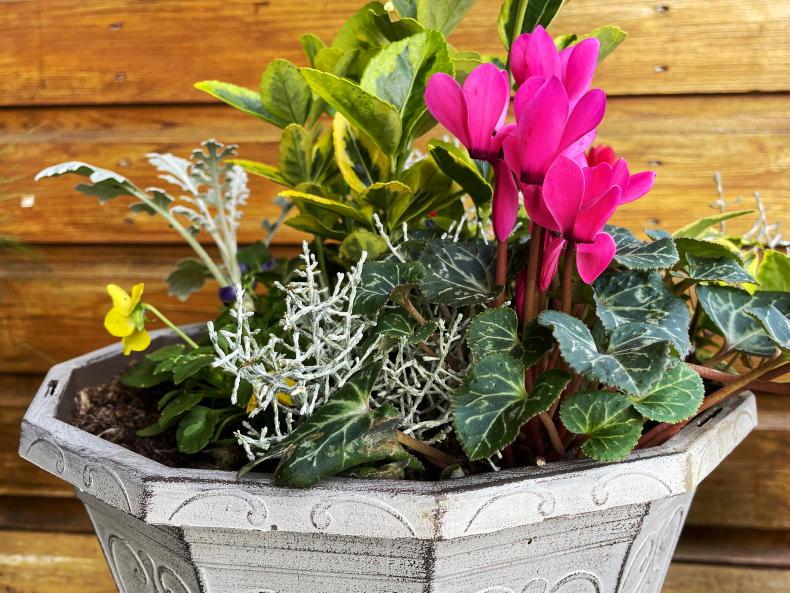
Christmas is the season to be jolly, or so the song goes and there is a lovely sentiment to that. We do our best to pull out the stops in getting into the spirit, the home is filled with decorations bringing a burst of colour heralding the season.
I am a believer that our gardens should also be designed in such a way as to add seasonal colour. This week, I want to focus on the doorstep or the entrance to our homes, as this is the place where the festivities begin. The burst of colour here signals that there is more to come once you get inside.
The doorstep is the place guests pause before entering your home and here the first impressions are made. For this I am talking about the use of pots and planters filled with flowering and foliage colour conveying this feeling.
It is worth investing in good quality pots for every feature no matter what the season, that along with good quality planting will produce stunning results.
Garden centres and nurseries are constantly increasing their efforts to produce plants for the Christmas season and now all have plants in abundance. There you may well find pots already planted to take home with you. But don’t deprive yourself of the joy of gardening, have a go at doing it yourself.
When planning for this type of feature, I always suggest using good solid evergreen or variegated plants as a centrepiece surrounded with seasonal coloured flowering plants.
In making the most of this work, consider creating pots with some permanent planting that can feature throughout the year, you can do this by changing the flowering content at the right time. There is a rule of thumb used and often quoted for planting in pots, a ‘pillar’, a plant that gives height, a ‘filler’ one that fills the space around it and a ‘spiller’, one that hangs down to hide or cover some of the pot.
Beautiful results
Conifers are used indoors as our Christmas trees, so in our doorstep pots I suggest planting another conifer, Pinus mugo ‘Ophir’ which is a compact growing pine. It is ball shaped with yellow-green foliage, the yellow being more prominent in winter. This in time will make a good garden plant growing to 1m in height. Plant this surrounded with blue pansy and white cyclamen as your ‘filler’, add to this Vinca minor ‘Aureomarginata’ as your ‘spiller’ to the pot for a beautiful result.
Another option is Taxus baccata ‘Fastigiata Standishii’, an upright yew creating a spire of dense golden-yellow narrow foliage creating your ‘pillar’. For your ‘filler’ use Skimmia japonica ‘Pabella’ with its rich green foliage and red berries persisting right through the Christmas period. Hedera helix ‘Glacier’, a small leaved variegated ivy works well as your ‘spiller’.
Given time, T. baccata ‘Fastigiata Standishii’ makes an excellent garden plant, growing to 2m in height.
Osmanthus heterophyllus ‘Goshiki’, creates a good ‘pillar’, it is a variegated shrub with five colours in the leaf. It is slow growing so will happily grow in a large pot for several years before it needs to be transplanted to the garden. Use Skimmia japonica ‘Fructu-albo’ as a ‘filler’, it has dark green leaves and pure white berries. As a ‘spiller’ add Vinca minor ‘Ralph Shugert’ with small dark green leaves and creamy-white edges. It will also produce some light blue flowers.
If it is a low-growing feature you require, use Astelia chathamica ‘Silver Spear’ and surround it with a large flowered blue pansy as your ‘filler’. Again, Hedera helix ‘Glacier’ is the perfect ‘spiller’. This gives you a strikingly cool combination.
Always use good quality compost, I recommend John Innes Potting Compost No 2. This has more nutrients for a longer period in pots.
All plants coming from garden centre shelves should be soaked before planting, no matter how wet they feel. Plunge them in a bucket of water to pot depth to ensure complete saturation.
If pots float, there is more water needed at the rootball. This will ensure that plants will establish well.
Then when planted water again and monitor plants daily for water after that. As with all flowering plants, it is best practice to take off any spent flowers as this will prolong flowering.
Continue to observe the plants for water as compost dries. All this will of course encourage you outdoors for a little Christmas gardening, what could be better?
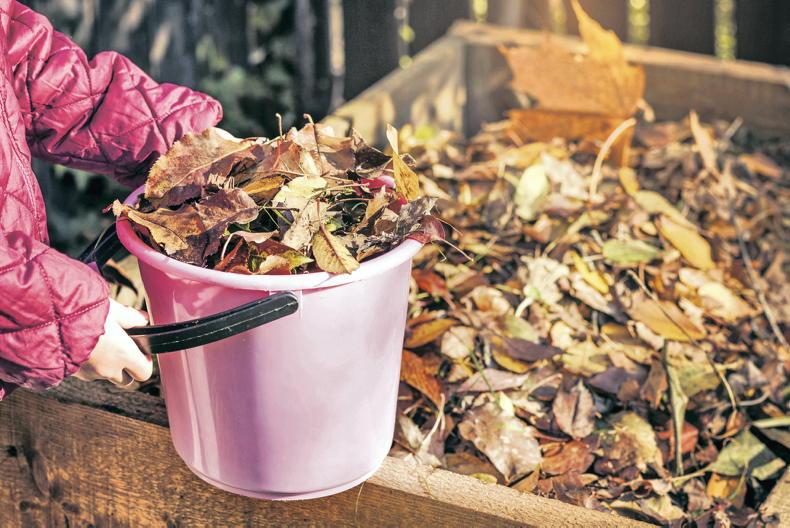
I have a lot of beech leaves and read it is possible to compost them in plastic sacks. Have you any advice on how to do this? – Matthew, Co Donegal.
When it comes to leaf composting especially beech, you can do it in black plastic sacks. This in time creates what we call leaf mould.
Collect the leaves and make sure they are wet before packing into bags. Don’t over compress them, allow their own weight to settle them. Sprinkle a handful of sulphate of ammonia on them to speed up decomposition. Create holes in the bag to allow more moisture and air. Store in a dark area and check regularly. In all it can take up to two years to complete, but the outcome is well worthwhile.
Trees & shrubs: shrub pruning can now take place reducing overgrown specimens. Do not prune any spring flowering plants until after flowering.
Lawns: lawns are still growing, raise the cutting height slightly and keep mowing until the first frosts arrive.
Perennials: it has been incredibly mild and many perennials are regrowing. Cut back any top growth but keep any fresh growth. Now is a good time to start lifting and dividing.
Glasshouse and polytunnels: bring tender plants in for winter protection.
Do you have a gardening question? Email icl@farmersjournal.ie or post to Irish Country Living, Irish Farm Centre, Bluebell, Dublin 12.

