


The shrubby form of phlomis, known as Jerusalem sage, used to be quite widely grown in gardens, but it was one of those shrubs that took a hard knock from frost in those two exceptionally cold winters.
It had decreased in popularity in recent years in any case, for no apparent reason, except that shrubs, in general, were not in vogue for quite some time.
Now that there is a big revival of interest in the merits of shrubs, perhaps Jerusalem sage will also appear more widely in gardens. Jerusalem sage is one of those shrubs that is just about woody. The branches are not very strong. It is a fast-grower in its early years, making rapid soft growth and forming a large sprawling bush, wide and relatively low. It is perfect as a temporary ground filler, while other more long-lived shrubs or trees claimed the space.
It has large evergreen leaves, very much like sage, to which it is related. The leaves are dark green with a silvery sheen on the back, the edges and on the young stems.
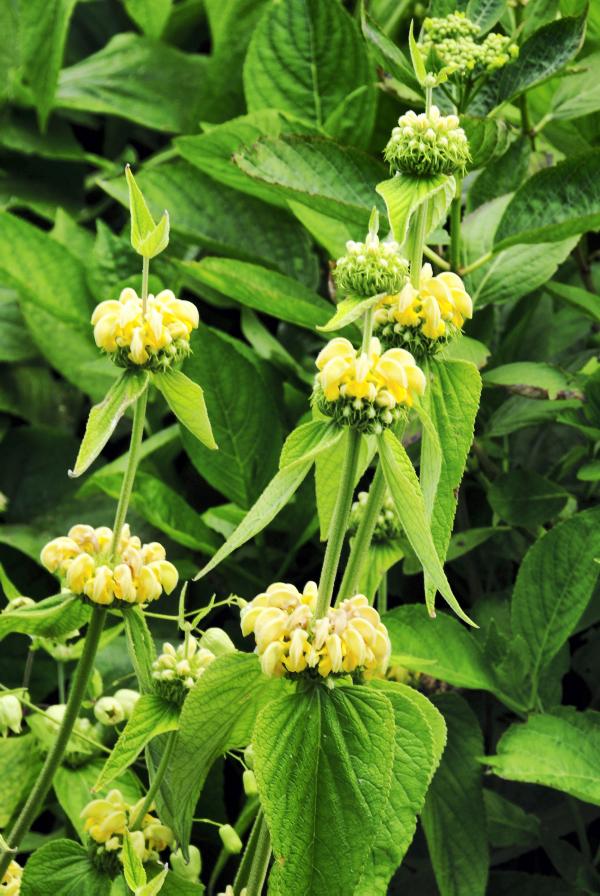
The shoots produce whorls of dark yellow flowers, hooded in appearance, in early to mid-summer. As it gets older, the bush begins to look a bit tired, somewhat straggly and not flowering as well as it does as a young plant. Trimming over after flowering helps to tidy the plant.
It is a good seaside shrub, benefitting from the milder conditions, and it is very resistant to wind. It is native to the Mediterranean region, growing on dry hillsides in very exposed places and on dry, sharply-drained soil. Those are the best conditions in which to grow it and it is perfect for a dry sunny bank. In heavy ground, it grows too soft and leafy and is prone to root rot diseases.
If the shrubby Jerusalem sage, Phlomis fruticosa, has been out of favour in recent decades, its non-woody relatives have been benefitting enormously from the popularity of herbaceous perennials.
The one that got the most attention is Phlomis russeliana, an excellent border flower, originally from Turkey and Syria. This is a vigorous and robust perennial, growing to about one metre and as wide. It is very good ground-cover, producing dense foliage, large leaves at ground level. The flower stems are sent up with whorls of light yellow hooded flowers.
The whorls are spaced along the stem, three or four per stem. This is a very understated and elegant flower, not very showy but subtle and effective. In winter, the plant withers but the flower stems, by now seed heads, remain in place and make a very attractive picture, each whorl being dark chocolate brown. Phlomis is one of the best flowers for winter seedheads and is worth growing for this alone.
There are several other kinds of phlomis, mostly with light purple flowers. Phlomis samia is very like the yellow kind, about the same size, but with light purple colour.
This is reasonably hardy too, also from Turkey. Phlomis italica has soft, purple-pink flowers on very upright stems, but is only for mild areas. Phlomis tuberosa has tuberous roots, also purple flowers, and can come back from frost by means of the tubers. All kinds of phlomis are lovers of very well-drained soil, sandy or gravelly even.
They are ideal for places that other flower find hard to deal with and they look well with other Mediterranean plants.
They like full sunshine but Phlomis russeliana can take some part-day shade quite well. They can be planted at any time but would need watering if planted in summer.
Cabbage mealy aphid
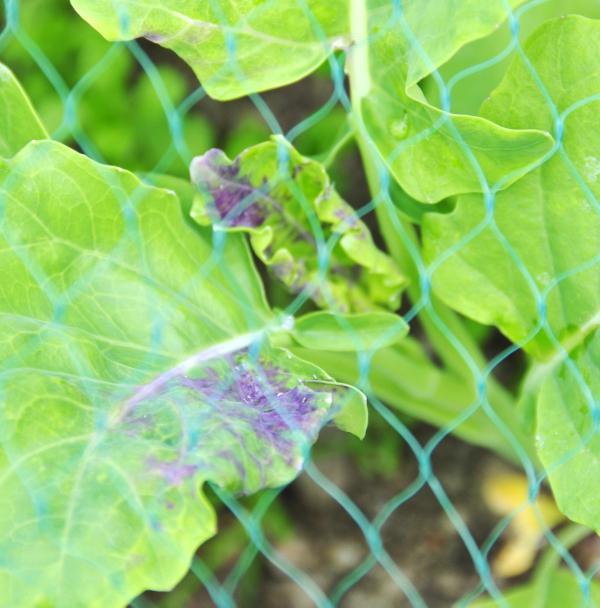
It would appear that there is quite a bit of cabbage mealy aphid around this summer. This is a form of greenfly and attacks members of the cabbage family, including turnips. The first signs can be a touch of unusual curling at the edge of the younger leaves, followed by yellowish or purple discolouration. Deformation and discolouration of the growing point can become severe as the number of aphids increase, stunting plants.
Large colonies of mealy grey insects draw sap from the young plants and adversely affect growth as well as spoiling the leaves of edible kinds. If caught early, the greenfly can be rubbed off, especially if present only in a few sites. However, in a heavy infestation, these aphids may need to be sprayed with a garden insecticide suitable for fruit and vegetables.
Trees, shrubs and roses
After the recent dry weather, any plant put in during the past year can struggle for moisture if they have not yet rooted out into the soil properly. Shrubs finished flowering should be pruned now if necessary and if there is not room for them to grow. Greenflies are active in some trees and cast sticky specks on parked cars.
Fruit, veg and herbs
Weeds in the vegetable garden should be controlled by hoeing or hand-weeding before they get away. Snails can do a lot of damage to small vegetable plants. Make any repeat sowings that are necessary. Apple scab disease is not a problem unless there is wet weather and the fruit that is now just starting to swell.
Flowers
Control weeds in flower beds and make sure that all containers are watered and given liquid fertilizer every two or three weeks. In dry weather, baskets and other containers may need to be watered every day, but it is better to water thoroughly less often than to give a small amount in more doses.
Lawns
Edges should be trimmed to leave them neat, especially now as the grasses have put out flowers. Do not apply fertilizer after dry weather. Lawn weeds can be killed now and lawn weedkillers work well in warm weather, but only if there is moisture in the soil and the weeds are growing. Otherwise, wait.
Greenhouse
Continue watering and feeding regularly. Give plenty of ventilation on sunny days, a little less on dull days to keep the temperature up. Watch for greenflies and red spider mites which tend to build up dramatically during warm weather, especially red spider mites which affect cucumbers and impatiens very badly.


SHARING OPTIONS