Who do you turn to? What if friends and extended family don’t have the financial resources to help any more as the months tick by?
Cliona’s Foundation is a charity that helps parents in this position and it sprang from the experience of Limerick couple Brendan and Terry Ring, whose daughter Cliona died on 2 December 2006 at the age of 15.
She was diagnosed with an inoperable brain tumour at the age of eight.
Cliona’s illness meant a lot of travelling for the family from Lough Gur, Bruff, Co Limerick, to Crumlin Children’s Hospital in Dublin for 18 months while Cliona underwent chemotherapy. It also meant being with her full-time in a Cork hospital during the three months before she died.
“Coping financially when you’ve a sick child is very difficult,” says Brendan.
“Our belief in setting up Cliona’s Foundation, in memory of our daughter, was that no family should have to go through this financial stress when they also have the stress of their child being ill.”
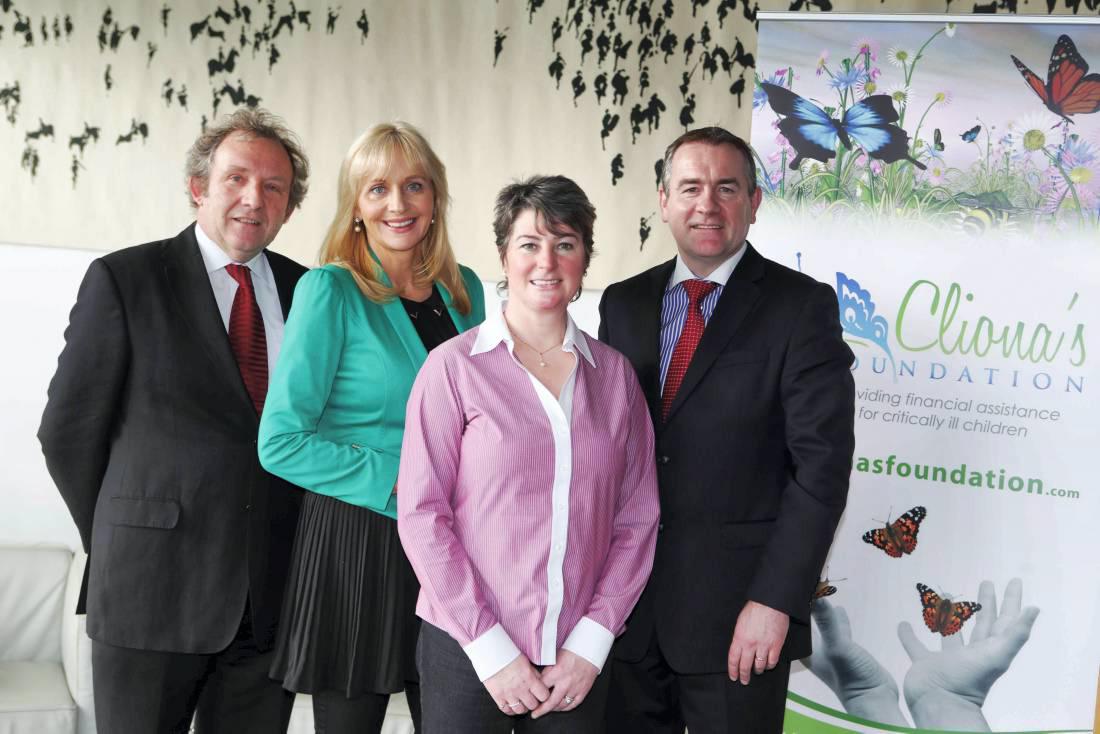
Since setting it up in 2007, over €600,000 has been raised by the foundation and 200 families have been helped. Prime Time presenter Miriam O’Callaghan is now patron of the charity.
A booklet entitled Practical Financial Advice for Parents Coping With A Child With A Life Limiting Illness has now been launched and is available on the website www.clionasfoundation.ie
“It outlines the kind of costs that you can expect. We found that it costs a minimum of €100 for each trip and that’s for the very basics. If you have to stay over or you’ve other children who need care at home then it’s more. The costs, over time, can be quite large.”
The Rings have met a lot of families who are struggling like they did in the past.
“I remember meeting one couple with a child in an oncology ward,” Brendan adds, “and they’d travelled 200 miles to Crumlin in a taxi. I asked if the child was too sick for them to drive. The man said: ‘We have no car.’ I can still see him. How could any family meet sudden costs like that?”
Parents having to take time off work because their child is sick is also a cause of financial stress.
“I have a business so was able to take time from the company, but not everybody can do that. My wife, Terry, gave up her work when Cliona became ill, but again everyone can’t do that. Cliona’s Foundation is about helping parents to cope.”
Cliona herself was a fantastic child, her Dad says.
“She was our only daughter – beautiful, bubbly, out-going.”
Her diagnosis happened overnight.
“She had a mark on her forehead one evening and Terry took her to the GP who referred her straight on to hospital. Three days later we were told she had an astrocytoma – an inoperable brain tumour.
“Having already lost two brothers in this way prior to Cliona’s diagnosis, it was devastating to get that news,” says Brendan.
Brendan and Terry, who have an older son, Colm, had eight years with their daughter before she died.
“Cliona would be 24 this month if she’d lived,” he says. “Having those eight years with her helped us deal with her passing, to an extent.”
Because of their own experience of going through this journey with Cliona, the Rings were well aware of the toll this took on a family’s finances and how valuable community support was.
“Several groups had raised money for us over the years and after Cliona died there was a huge outpouring of support for us in the area and we are so thankful for that.
“As a family, we wanted to raise money to give something back to groups and organisations that had helped us. So we had our first charity night after Cliona died and raised €50,000. That was on the back of the launch of a CD that all her friends had got together and made because Cliona had loved music.
“We didn’t realise we were going to raise as much and it was after that that the penny dropped – why don’t we start helping other families who are struggling to cope financially when their child is in hospital, like we were?”
400 children are diagnosed with some form of life-limiting illness every year, he states.
“That’s a lot of families affected. Not all need financial support, but many do.”
How approaches come
Most approaches to Cliona’s Foundation for funding come “from the ground up”, Brendan says.
“Nurses or social workers or doctors in the hospitals would know very quickly who needs financial support and they encourage families to contact us. Families also contact us themselves.”
The types of requests have included money to subsidise income.
“Sometimes it’s in lieu of wages because one or other parent has to take time off work. We’ve helped repair people’s cars too, so that they can keep going to the hospital.
“Cliona’s Foundation is there to meet real need. Many people are struggling unbelievably.”
Long-term illness can drain resources completely, Brendan says.
“Family help, understandably, can run out over time and it’s then that parents are really under pressure. You run out of places to get help. Often, we are seen as the charity of last resort really because people have to contact us to try and survive.”
So far, Cliona’s Foundation has been able to meet demand for money.
“We’ve managed that by cutting back and giving less to more people, but our goal is to increase the funding so that we can give more to the families.”
The charity becoming better known brings change, he adds.
“We get more applications because more people know about us now. We used to get one or two a month, now we get one a week. But as long as donations come in then we can do that.”
The foundation has one full-time staff member and both Brendan and Terry are still heavily involved with organising fundraising events. The eighth Cliona’s Foundation commemorative night will be held on the 24 January in Bulgaden Castle, Bruff.
“We always have a theme and this year it’s team spirit – the spirit that’s led to the charity helping out so many.”
To download the booklet see www.clionasfoundation.ie. The charity’s registration number is CHY18127. To donate see the website for bank details or text CLIONA to 50300 to donate.
Seek the help of a social worker
Many parents are surprised at the additional costs outside of any medical bills that occur when caring for a sick child, Brendan Ring says.
“In most cases (when a seriously ill child is first diagnosed/admitted to hospital) a social worker is required to help parents access information such as meals being subsidised in hospital canteens, accommodation for parents, parking, transport issues and so on.
“A social worker can also apply for a medical card on your behalf. If your child is disabled and requires a Primary Medical Cert, this can be obtained through the social worker also. There may be other allowances the family are entitled to i.e. Domiciliary Care Allowance.”
Sarah’s story
“As a single mother living quite far away from a hospital, I often cannot afford to get the train down to see my daughter when she is in long-term care. I found myself blindsided by all these unexpected bills and fees and had to carry on with my job in order to afford them. The balance between the emotional stress of Sarah’s illness and the financial stress caused by it is often unbearable. My advice would be to find your happy place. For me, it is her smile. When things are very tough, go to that happy place.”
The cost of a daily hospital trip
Here is an example of the breakdown of non-medical expenses as outlined in the Practical Advice for Parents booklet. The €100 per hospital trip average daily cost includes the following items:
• Parking: €17.00• Petrol/diesel: €15.50• Lunch: €7.00• Snacks: €5.00• Takeaway: €14.00• Treats: €4.00• Childcare: €30.00• Phone: €7.00• TOTAL: €99.50
Who do you turn to? What if friends and extended family don’t have the financial resources to help any more as the months tick by?
Cliona’s Foundation is a charity that helps parents in this position and it sprang from the experience of Limerick couple Brendan and Terry Ring, whose daughter Cliona died on 2 December 2006 at the age of 15.
She was diagnosed with an inoperable brain tumour at the age of eight.
Cliona’s illness meant a lot of travelling for the family from Lough Gur, Bruff, Co Limerick, to Crumlin Children’s Hospital in Dublin for 18 months while Cliona underwent chemotherapy. It also meant being with her full-time in a Cork hospital during the three months before she died.
“Coping financially when you’ve a sick child is very difficult,” says Brendan.
“Our belief in setting up Cliona’s Foundation, in memory of our daughter, was that no family should have to go through this financial stress when they also have the stress of their child being ill.”
Since setting it up in 2007, over €600,000 has been raised by the foundation and 200 families have been helped. Prime Time presenter Miriam O’Callaghan is now patron of the charity.
A booklet entitled Practical Financial Advice for Parents Coping With A Child With A Life Limiting Illness has now been launched and is available on the website www.clionasfoundation.ie
“It outlines the kind of costs that you can expect. We found that it costs a minimum of €100 for each trip and that’s for the very basics. If you have to stay over or you’ve other children who need care at home then it’s more. The costs, over time, can be quite large.”
The Rings have met a lot of families who are struggling like they did in the past.
“I remember meeting one couple with a child in an oncology ward,” Brendan adds, “and they’d travelled 200 miles to Crumlin in a taxi. I asked if the child was too sick for them to drive. The man said: ‘We have no car.’ I can still see him. How could any family meet sudden costs like that?”
Parents having to take time off work because their child is sick is also a cause of financial stress.
“I have a business so was able to take time from the company, but not everybody can do that. My wife, Terry, gave up her work when Cliona became ill, but again everyone can’t do that. Cliona’s Foundation is about helping parents to cope.”
Cliona herself was a fantastic child, her Dad says.
“She was our only daughter – beautiful, bubbly, out-going.”
Her diagnosis happened overnight.
“She had a mark on her forehead one evening and Terry took her to the GP who referred her straight on to hospital. Three days later we were told she had an astrocytoma – an inoperable brain tumour.
“Having already lost two brothers in this way prior to Cliona’s diagnosis, it was devastating to get that news,” says Brendan.
Brendan and Terry, who have an older son, Colm, had eight years with their daughter before she died.
“Cliona would be 24 this month if she’d lived,” he says. “Having those eight years with her helped us deal with her passing, to an extent.”
Because of their own experience of going through this journey with Cliona, the Rings were well aware of the toll this took on a family’s finances and how valuable community support was.
“Several groups had raised money for us over the years and after Cliona died there was a huge outpouring of support for us in the area and we are so thankful for that.
“As a family, we wanted to raise money to give something back to groups and organisations that had helped us. So we had our first charity night after Cliona died and raised €50,000. That was on the back of the launch of a CD that all her friends had got together and made because Cliona had loved music.
“We didn’t realise we were going to raise as much and it was after that that the penny dropped – why don’t we start helping other families who are struggling to cope financially when their child is in hospital, like we were?”
400 children are diagnosed with some form of life-limiting illness every year, he states.
“That’s a lot of families affected. Not all need financial support, but many do.”
How approaches come
Most approaches to Cliona’s Foundation for funding come “from the ground up”, Brendan says.
“Nurses or social workers or doctors in the hospitals would know very quickly who needs financial support and they encourage families to contact us. Families also contact us themselves.”
The types of requests have included money to subsidise income.
“Sometimes it’s in lieu of wages because one or other parent has to take time off work. We’ve helped repair people’s cars too, so that they can keep going to the hospital.
“Cliona’s Foundation is there to meet real need. Many people are struggling unbelievably.”
Long-term illness can drain resources completely, Brendan says.
“Family help, understandably, can run out over time and it’s then that parents are really under pressure. You run out of places to get help. Often, we are seen as the charity of last resort really because people have to contact us to try and survive.”
So far, Cliona’s Foundation has been able to meet demand for money.
“We’ve managed that by cutting back and giving less to more people, but our goal is to increase the funding so that we can give more to the families.”
The charity becoming better known brings change, he adds.
“We get more applications because more people know about us now. We used to get one or two a month, now we get one a week. But as long as donations come in then we can do that.”
The foundation has one full-time staff member and both Brendan and Terry are still heavily involved with organising fundraising events. The eighth Cliona’s Foundation commemorative night will be held on the 24 January in Bulgaden Castle, Bruff.
“We always have a theme and this year it’s team spirit – the spirit that’s led to the charity helping out so many.”
To download the booklet see www.clionasfoundation.ie. The charity’s registration number is CHY18127. To donate see the website for bank details or text CLIONA to 50300 to donate.
Seek the help of a social worker
Many parents are surprised at the additional costs outside of any medical bills that occur when caring for a sick child, Brendan Ring says.
“In most cases (when a seriously ill child is first diagnosed/admitted to hospital) a social worker is required to help parents access information such as meals being subsidised in hospital canteens, accommodation for parents, parking, transport issues and so on.
“A social worker can also apply for a medical card on your behalf. If your child is disabled and requires a Primary Medical Cert, this can be obtained through the social worker also. There may be other allowances the family are entitled to i.e. Domiciliary Care Allowance.”
Sarah’s story
“As a single mother living quite far away from a hospital, I often cannot afford to get the train down to see my daughter when she is in long-term care. I found myself blindsided by all these unexpected bills and fees and had to carry on with my job in order to afford them. The balance between the emotional stress of Sarah’s illness and the financial stress caused by it is often unbearable. My advice would be to find your happy place. For me, it is her smile. When things are very tough, go to that happy place.”
The cost of a daily hospital trip
Here is an example of the breakdown of non-medical expenses as outlined in the Practical Advice for Parents booklet. The €100 per hospital trip average daily cost includes the following items:
• Parking: €17.00• Petrol/diesel: €15.50• Lunch: €7.00• Snacks: €5.00• Takeaway: €14.00• Treats: €4.00• Childcare: €30.00• Phone: €7.00• TOTAL: €99.50 




SHARING OPTIONS