



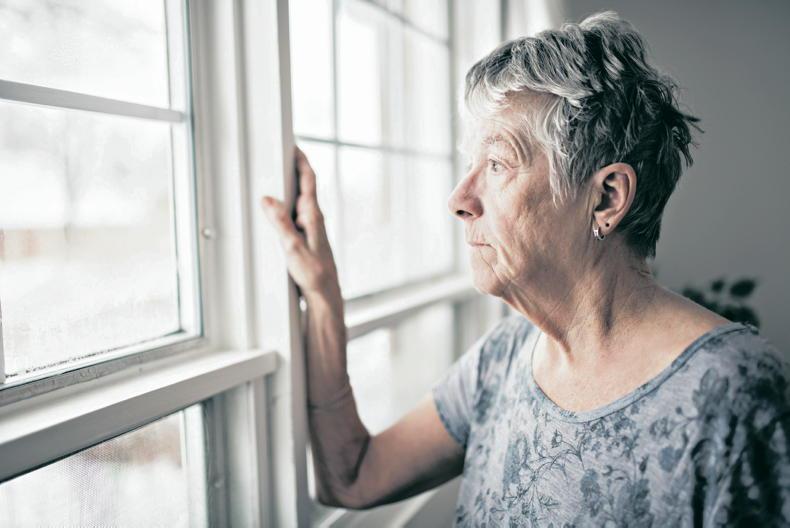
Ireland’s fertility rate is below the replacement rate for the population. What that means is the number of younger people relative to the number of older people in Ireland is shrinking year on year, and the average age of the population is increasing.
An ageing population is not a challenge unique to this country – the reality is the same throughout many parts of Europe and some Asian countries.
Edgar Morgenroth is a professor of economics at DCU Business School who has done extensive research in population projection. He has sat on the CSO Population Projections Expert Group for a number of decades.
Professor Morgenroth explains to Irish Country Living how Ireland compares to some of our European counterparts.
Fertility rate
“In Ireland’s case, we’re about 10 or 15 years behind Germany. In Germany, the average age is now in the 50s.”
In Ireland, the fertility rate is around 1.5 children per woman, he adds. “It’s not all that long ago when we actually had over two, it dropped since the financial crisis.” In Italy and Germany, the fertility rate is around 1.3 births per woman.
In terms of state intervention, while countries like Russia and Hungary have offered tax breaks to incentivise people to have children, Prof Morgenroth says that a tax break “isn’t going to make anyone have a child – there’s more to this.”
He points out that the objectives that people have in their lives matter. The careers of women, in particular, are affected by maternity leave and child-rearing, and more financial aid does not change this.
“It also takes a long time. If we had an effective policy to raise fertility that we enact today, you won’t see any effect of this for basically nine months at least, just biologically. And then you’ve got a baby, and before that makes any difference in economic terms, that’s going to be 18 years or 20 years [until they start working].
“The only really fast way to overcome this is actually immigration. So there’s a reality check necessary when we talk about immigration policy.
Birth policies
You can have these birth policies, and you can give people €20,000 to have a child. It might work, but it isn’t going to change anything for another 20 years in terms of care.
“The fact is that we actually do need immigrants,” Prof Morgenroth continues. “In Ireland more recently we have had very simplistic and very uninformed narratives out there around migration. But we will need some of these people, maybe all of them.
“Now we might want to think about who we actually need. That’s where we should really have a debate to say what skillsets are we looking for, and why. But, ultimately, we are where we are demographically.”
An ageing population continues to intensify pressure on the workforce, increasing the need for measures that expand labour supply, as there are fewer workers to contribute to the pension pots of a growing number of pensioners. And there’s a question of long-term care too.
“If you have a much higher average age, you will have more people who have medical issues that require them to have carers,” Prof Morgenroth outlines. “These carers in the past often were family members, but now we don’t have large families. Some people will not have a family at all to look after them. That’s where this immigration thing really bites.
The only really fast way to overcome this is actually immigration. So there’s a reality check necessary when we talk about immigration policy
“So there is an economic dimension in terms of paying for it, and then there is a reality of someone has to do the work. Maybe it’s robots that are going to end up doing all of this. Who knows? But at the moment, it is certainly people, and we don’t necessarily have them.
“It is the last two years of your life, usually, where you require the most healthcare. As you get older, the demand for healthcare is going to increase.
“That has a cost implication, but it also has a supply implication. Who is going to provide all this healthcare? And again, we’re short on doctors. Where are they going to come from? Ultimately, they’re going to end up coming from abroad.”
Demographic change is having an impact on our economy, workforce and labour supply. It is also affecting the conversations that families have with each other on their care wishes.
Seán Moynihan, CEO of ALONE, a national organisation that enables older people to age at home, tells Irish Country Living that he believes we are having “a superficial conversation” about an ageing population.
“We talk about health, we talk about pensions, and then the conversation nearly stops. And so, we’re not really having a conversation of what that demographic shift means to levels of loneliness – how will people live, transport and what does it take to keep you healthy and well when you’re at home.”
ALONE supports people to age at home, assisting service users with practical issues like housing, transport and health, as well as providing befriending services to tackle loneliness or isolation.
The majority of their service users come from the northwest and the southwest, including counties Cork, Kerry, Donegal, Mayo and Sligo.
“We’ve worked with just under 47,000 people. This year, it’ll be close to 55,000 people. And that is the ageing population in action.
“As an organisation, for the last 16 or 17 years, we have been growing at 10% a year. And the reason for that is not because you want a big NGO; it’s because the need is going up.
“What we’re trying to prevent is that older people ever end up in a situation like homelessness, where you go from people who are aware of it to a crisis. Once it gets to that level, it’ll get hard to deal with.
“There are 18 Government departments, and every department needs to be thinking about demography, and ask, how does this affect us? Or if you put it a different way, in every Government department, their customers are changing.
“We have over 800,000 people who are over 65. In 15 years’ time, that will be double. That makes it probably one in four people in the population.”
Rural areas
Ageing will affect spatial distribution across Ireland too. But Professor Morgenroth says that it may not affect the country along the expected rural/urban lines, and such an interpretation is “too simplistic”.
“There are rural areas that potentially have a population that is not ageing at all, and then you have other rural areas which are already very old on average.
“In urban areas, even in Dublin, you can find places that are emptying. Cork city has been losing its population because people were living above a shop or in between shops, and so on.
“That’s not the norm anymore, and if you have money and you want a front garden and a back garden, you’re not going to have that on Patrick Street in Cork, or O’Connell Street in Dublin.”



SHARING OPTIONS