



About 12% of the population will develop gallstones at one point or another,” says Rob Hannon, Beacon Hospital consultant in general, colorectal and laparoscopic surgery.
“Gall bladder disease, the overall term for conditions caused by gallstones, is more common after the age of 40. It can run in families and is three times more common in females. People who are overweight or have recently lost a lot of weight are also more likely to develop gallstones.”
Why do people develop gallstones?
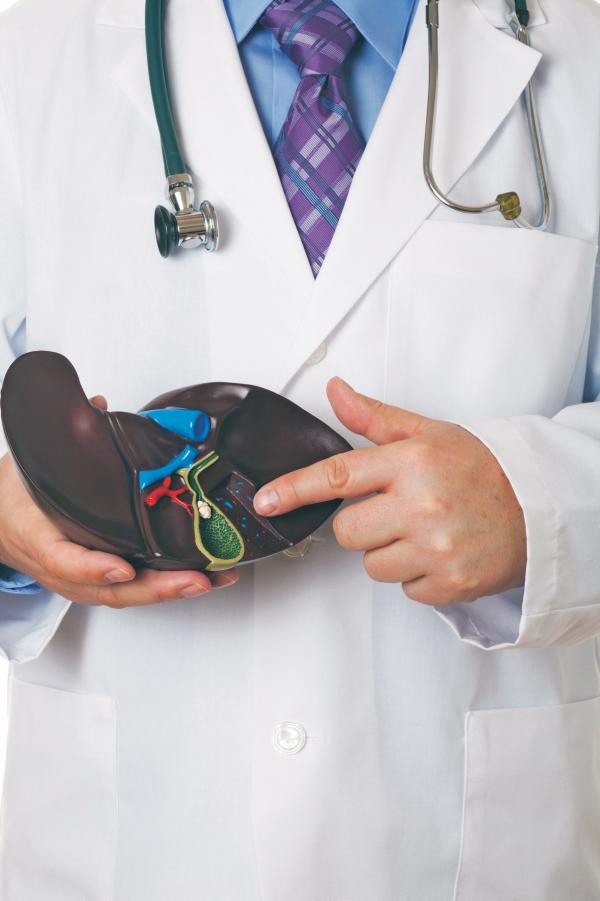
“You have to think about how your digestive system works,” says Hannon. “Your liver is a part of the digestive system and bile drains from your liver into your gut, just below the stomach, to help digest your food. Bile is a bit like washing-up liquid. It emulsifies your food after it has been broken up in the stomach. It is particularly good at digesting oily or fatty foods, like dairy products and so on. Your gall bladder (a small, pear-shaped organ which sits under your liver, beneath your right ribcage), acts as a reservoir for this bile.
When the stomach has a high content of fatty or oily foods, a message is sent to the liver, via the brain, and your liver then produces extra bile. Your gall bladder then contracts and drains more bile into your gut.”
The majority of stones are made up of cholesterol, explains Hannon.
“Tiny particles of dirt or silt collect in the bile. Cholesterol then precipitates on these particles to form cholesterol crystals. Eventually, these build up into cholesterol stones.
“Some people have one or two big gallstones and some have lots of small stones. It’s the stones that cause the symptoms – severe pain, nausea and, in complicated gall bladder disease, jaundice and other symptoms.”
Women are more prone to gallstones than men because the female hormone oestrogen affects the balance of cholesterol and salts in bile, making cholesterol stones more likely to form. This can be particularly problematic during pregnancy.
Not everyone will experience pain
Of the 12% of people who develop gallstones, about one quarter, over their lifespan, will develop symptoms, says Rob.
“Around 75% of people with gallstones don’t have any symptoms. Of the 25% that develop symptoms, a majority will have uncomplicated gall bladder disease and a minority will have complicated gall bladder disease.”
Uncomplicated gall bladder disease
“Usually the first symptom to develop will be what we call flatulent dyspepsia. Patients may experience nausea, wind (or belching) and abdominal discomfort.
“It’s often mistaken for acid-reflux, but an ultrasound scan will confirm if gallstones are present.”
The giveaway is that it’s related to mealtimes, particularly eating rich, oily foods, explains Hannon.
“We call this fatty-food intolerance. The more of those foods you eat, the more active your gall bladder becomes and therefore the more symptoms you develop.”
The other condition in the uncomplicated gall bladder disease category is biliary colic.
“Biliary colic is the pain that comes on typically after a rich, oily or fatty meal. It tends to come on at night-time, several hours after a meal, often waking the patient with severe upper abdominal pain.
“In cases of biliary colic, a stone gets stuck in or near the cystic duct (which connects the gall bladder to the bile duct). Essentially this blocks the flow of bile from the gall bladder, the gall bladder then swells up, causing a colicky or waxing and waning pain.
“The pain can be severe and patients frequently present in A&E departments requiring pethidine or morphine.
“However, the pain from biliary colic is usually short-lived, so by the time they are seen the next morning by the consultant, the pain will often have subsided. This is because the stone has moved out of the cystic duct and the flow of bile from the gall bladder is no longer obstructed.”
Patients are usually advised to adopt a low-fat diet.
“This is not to reverse the gall bladder disease, but to prevent further attacks of biliary colic while awaiting surgery,” adds Dr Hannon. “Attacks of biliary colic tend to persist until your gall bladder is removed.”
Complicated gall bladder disease
Table one (previous page) shows the four different types of complicated gall bladder diseases which may require urgent admission to hospital.
On the length of time a surgeon decides to wait before operating on the gall bladder, Dr Hannon says.
“There are two trains of thought on this. Historically, the patient would be treated conservatively initially, to let the inflammation settle down. They would then return for elective surgery in six to eight weeks.
“My preference, however, would be to perform the surgery in the first 48 hours of an attack, as the surgery is often less complicated than delayed surgery and the patient avoids a second admission to hospital.”
What surgery involves
In 95% of cases, the surgery is keyhole surgery (laparoscopic), either as a day patient or with an overnight stay.
“In cases where there is severe inflammation present, it may not be possible to complete the procedure laparoscopically. In such cases (5% of cases), a decision is made to convert to an open procedure (5cm incision under the right ribcage) instead.
“The patient will have been asked for consent to this prior to the operation. This will require one or two days longer in hospital.”
After your gall bladder is gone?
“You can live perfectly normally without your gall bladder, as your biliary system deals with fatty foods in the same way. In a small number of patients (12%), stools may be a bit looser after the operation. However, the majority of patients do not notice any difference.”
Dissolving gallstones
Irish Country Living has heard of people trying a particular combination of juices over a period of time, believing they will dissolve their gallstones and help them avoid surgery.
What is Dr Hannon’s opinion of this strategy?
“These treatments don’t work,” he says. “People have tried lots of different things to dissolve stones, but because of the makeup of gallstones – most of them consist of cholesterol – it isn’t successful. The only treatment for gall bladder disease is to remove the gall bladder.”
For more information visit www.beaconhospital.ie and www.hse.ie (click on Health A-Z, G for gallstones).


SHARING OPTIONS