For those who have gone through any cardiac event, like a heart attack, appropriate aftercare is really important. But building habits that support the heart (nutrition, movement and sleep) is equally crucial for the prevention of cardiovascular disease in the first place.
Cardiovascular disease remains one of the leading causes of death nationally, with nearly 9,000 people in Ireland dying from the disease every year. The good news is that 80% of premature cases are preventable.
There are some risk factors that you cannot change, including your family history, but others that you can, like your diet, weight, smoking habits, and alcohol consumption.
Dr Blaithnead Murtagh, a cardiology consultant at the Galway clinic, says it is important “to know your numbers” regarding blood pressure and cholesterol. Routine health screenings are equally important, she says. The typical screening age is 45 years for males and 55 years for females, but if there is history of cardiovascular disease in the family, screenings should start earlier.
According to Dr Murtagh, cardiovascular symptoms to look out for are chest pain (angina), pain in the jaw, back or neck, shortness of breath, palpitations.
“You can have blockages in the arteries of your heart without noticing any symptoms,” Dr Murtagh explains. “A heart attack occurs when a plaque becomes unstable, breaks open and spills its fatty contents into the artery. This triggers a blood clot to form, which reduces the supply of blood to the heart’s muscle, causing a heart attack. The chances of plaque rupture are much higher in smokers.
“Because there are often no symptoms, routine health screenings are important. This usually starts with blood pressure, cholesterol and blood sugar check.
“An ECG or electrocardiogram identifies irregular heart rhythms like atrial fibrillation. A stress test can check how well your heart functions under pressure but can miss early coronary artery disease. A coronary artery calcium score can identify plaque buildup and silent disease. A cardiac CT coronary angiogram is a non-invasive test to show detailed pictures of the heart.”
Cardiac rehabilitation
Going through a major heart event, like having stents put in or a heart attack, is very frightening, but one community-based programme is bringing people together to help them understand what happened to their heart.
Croí, the west of Ireland heart and stroke foundation, decided to launch the Healthy Hearts Club, a pilot programme focused on self-management of heart disease and aimed at people who have gone through some kind of heart event.
Following more than one year of development, Croí began the first induction of patients into the Healthy Hearts Club in September. Those who attended cardiac rehabilitation through the HSE in Galway were invited to take part. Over six months, the participants link regularly with a nurse and other cardiac specialists for ongoing guidance, and take part in group workshops focused on building their personal exercise routine, healthy eating, emotional wellbeing, and heart disease risk factors.
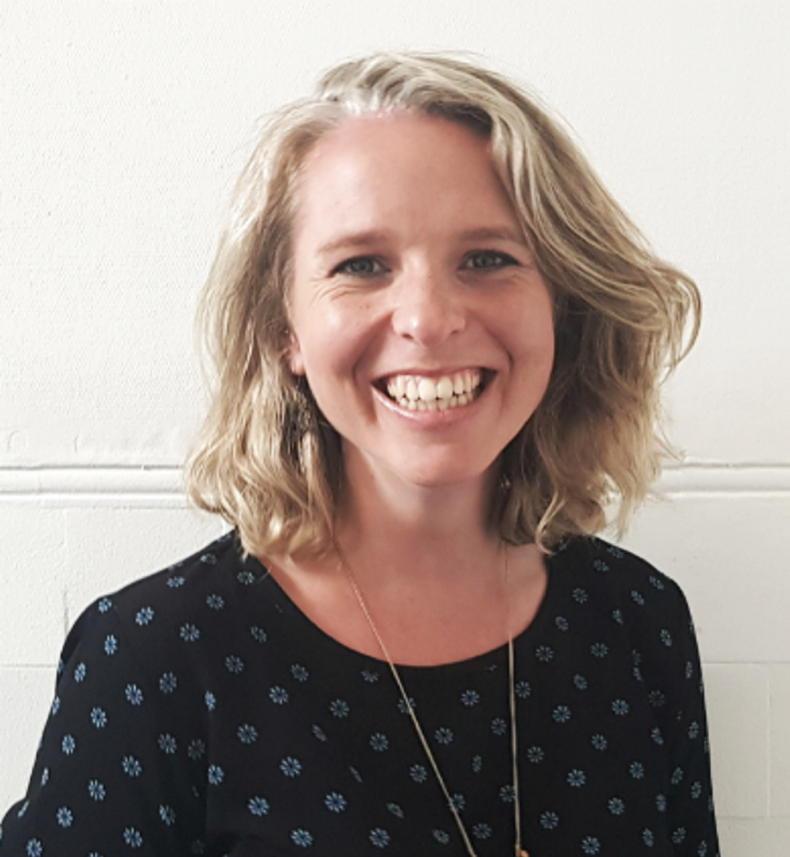
Dr Lisa Hynes has been the lead on the Healthy Heart Club.
Dr Lisa Hynes, head of health programmes at Croí, has been leading the Healthy Hearts Club project since September of last year.
“It’s very much building on the things that we’ve been doing for a long time to help people find out about and understand their risk factors for heart disease and stroke,” she explains.
“Life for everyone – and very much for farmers – gets busy very quickly. So even if something really unexpected and shocking happens to someone, like a heart attack, we know from research that it’s hard to stay on top of things like healthy eating and being physically active in a structured way.
“People tend to do very well in the cardiac rehabilitation, but the reason we put Healthy Hearts Club together is to offer a next step after the cardiac rehabilitation. It’s to help people to stay connected with the healthy routines that they’re working on and to keep recovering after whatever event has happened to their heart.”
“It’s all about the time and space to keep working on a healthy routine. It takes time for any of us to get our head around change,” Dr Hynes continues.
Join the club
“The Healthy Hearts Club is intended to be like a club where people can continue coming for six months to keep figuring things out. It’s really easy to say ‘I’m going to exercise three times a week’ and ‘I’m going to cut down on my saturated fat’. But what does that actually means in anyone’s life? There’s always going to be ups and downs.”
Most of the people currently enrolled in the Healthy Hearts Club are farmers.
“The majority of participants are either full or part-time farmers, and that’s such an important part of their lives. They’re so passionate about farming.
“We know how demanding that is. With calving season coming up, we’ll be there to help people keep an eye on the health side of things, totally appreciating that there are other priorities that are really immediate.”
While the reality is that we always cycle in and out of our routine, Dr Hynes says: “One of the things that we want to help people do is plan ahead.
That might be about how they’re going to fit in some element of activity, how to improve their sleep or remembering their medications.
“Health has an awful lot to it, and it’s going to be different for everyone. That’s why it’s so important to get a bit of support, especially if you have some risk factors or family history of heart disease.”
Keeping active
Often strolling the farm and moving heavy machinery, there is no doubt that farmers move a lot and are very active. But that isn’t the same as formal exercise. Dr Hynes recommends choosing the kind of activity that is achievable for you, and that fits into your weekly routine.
“Someone might have some physical limitations or problems of pain,” Dr Hynes reflects. “So many farmers would have picked up knee problems or shoulder problems over the years. It’s about people figuring out what’s going to work for them and bringing the things that they gained in the cardiac rehabilitation service and translating all of that into their daily lives.”
Croí is aiming for 160 people to be enrolled in the Healthy Hearts Club by June 2026. There is currently between 30 and 40 people actively enrolled, according to Dr Hynes, and the cohort is comprised of participants of all ages.
This is not ‘an old person’s issue’, and it is important to reiterate that heart problems can emerge much earlier than people would expect.
“We’re seeing more people under 65 with heart problems or stroke,” Dr Hynes says. “One interesting way to think about it is being part of something called ‘vascular ageing’ [gradual stiffening of the blood vessels].
“All of us are made up of this vascular system that is covering every single part of our body. The heart is the pump in the middle. Our arteries, veins and our capillaries go all over the body and feed every single system – like the brain, the skin, the muscles.
“Factors like lack of physical activity across the population or high levels of sugar and salt in food are making vascular ageing happen more quickly than it should.
“This is contributing to the fact that cardiovascular disease is becoming more common among younger people.”

You can find an instruction video showing how to check your blood pressure at home on: croi.ie/heart/high-blood-pressure.
Croí’s telephone helpline, Croí Connects, is available for those living with or affected by heart disease and stroke. Callers are connected with a cardiac nurse specialist. Croí Connects is available weekdays from 9am-5.30 pm on 091 332999 or by email at healthteam@croi.ie.
The Irish Heart Foundation provides free one-to-one health checks to farmers in marts across the country through their ‘Farmers Have Hearts’ programme, supported by the HSE.
Nearly 80% of farmers who have attended ‘Farmers Have Hearts’ health checks at local marts were identified with risk factors for heart disease and stroke.
The Irish Heart Foundation also have a Nurse Support Line available on 01 668 5001 from 9am-5pm every Monday and from 9am to 1pm, Tuesday to Friday. See irishheart.ie.
For those who have gone through any cardiac event, like a heart attack, appropriate aftercare is really important. But building habits that support the heart (nutrition, movement and sleep) is equally crucial for the prevention of cardiovascular disease in the first place.
Cardiovascular disease remains one of the leading causes of death nationally, with nearly 9,000 people in Ireland dying from the disease every year. The good news is that 80% of premature cases are preventable.
There are some risk factors that you cannot change, including your family history, but others that you can, like your diet, weight, smoking habits, and alcohol consumption.
Dr Blaithnead Murtagh, a cardiology consultant at the Galway clinic, says it is important “to know your numbers” regarding blood pressure and cholesterol. Routine health screenings are equally important, she says. The typical screening age is 45 years for males and 55 years for females, but if there is history of cardiovascular disease in the family, screenings should start earlier.
According to Dr Murtagh, cardiovascular symptoms to look out for are chest pain (angina), pain in the jaw, back or neck, shortness of breath, palpitations.
“You can have blockages in the arteries of your heart without noticing any symptoms,” Dr Murtagh explains. “A heart attack occurs when a plaque becomes unstable, breaks open and spills its fatty contents into the artery. This triggers a blood clot to form, which reduces the supply of blood to the heart’s muscle, causing a heart attack. The chances of plaque rupture are much higher in smokers.
“Because there are often no symptoms, routine health screenings are important. This usually starts with blood pressure, cholesterol and blood sugar check.
“An ECG or electrocardiogram identifies irregular heart rhythms like atrial fibrillation. A stress test can check how well your heart functions under pressure but can miss early coronary artery disease. A coronary artery calcium score can identify plaque buildup and silent disease. A cardiac CT coronary angiogram is a non-invasive test to show detailed pictures of the heart.”
Cardiac rehabilitation
Going through a major heart event, like having stents put in or a heart attack, is very frightening, but one community-based programme is bringing people together to help them understand what happened to their heart.
Croí, the west of Ireland heart and stroke foundation, decided to launch the Healthy Hearts Club, a pilot programme focused on self-management of heart disease and aimed at people who have gone through some kind of heart event.
Following more than one year of development, Croí began the first induction of patients into the Healthy Hearts Club in September. Those who attended cardiac rehabilitation through the HSE in Galway were invited to take part. Over six months, the participants link regularly with a nurse and other cardiac specialists for ongoing guidance, and take part in group workshops focused on building their personal exercise routine, healthy eating, emotional wellbeing, and heart disease risk factors.
Dr Lisa Hynes has been the lead on the Healthy Heart Club.
Dr Lisa Hynes, head of health programmes at Croí, has been leading the Healthy Hearts Club project since September of last year.
“It’s very much building on the things that we’ve been doing for a long time to help people find out about and understand their risk factors for heart disease and stroke,” she explains.
“Life for everyone – and very much for farmers – gets busy very quickly. So even if something really unexpected and shocking happens to someone, like a heart attack, we know from research that it’s hard to stay on top of things like healthy eating and being physically active in a structured way.
“People tend to do very well in the cardiac rehabilitation, but the reason we put Healthy Hearts Club together is to offer a next step after the cardiac rehabilitation. It’s to help people to stay connected with the healthy routines that they’re working on and to keep recovering after whatever event has happened to their heart.”
“It’s all about the time and space to keep working on a healthy routine. It takes time for any of us to get our head around change,” Dr Hynes continues.
Join the club
“The Healthy Hearts Club is intended to be like a club where people can continue coming for six months to keep figuring things out. It’s really easy to say ‘I’m going to exercise three times a week’ and ‘I’m going to cut down on my saturated fat’. But what does that actually means in anyone’s life? There’s always going to be ups and downs.”
Most of the people currently enrolled in the Healthy Hearts Club are farmers.
“The majority of participants are either full or part-time farmers, and that’s such an important part of their lives. They’re so passionate about farming.
“We know how demanding that is. With calving season coming up, we’ll be there to help people keep an eye on the health side of things, totally appreciating that there are other priorities that are really immediate.”
While the reality is that we always cycle in and out of our routine, Dr Hynes says: “One of the things that we want to help people do is plan ahead.
That might be about how they’re going to fit in some element of activity, how to improve their sleep or remembering their medications.
“Health has an awful lot to it, and it’s going to be different for everyone. That’s why it’s so important to get a bit of support, especially if you have some risk factors or family history of heart disease.”
Keeping active
Often strolling the farm and moving heavy machinery, there is no doubt that farmers move a lot and are very active. But that isn’t the same as formal exercise. Dr Hynes recommends choosing the kind of activity that is achievable for you, and that fits into your weekly routine.
“Someone might have some physical limitations or problems of pain,” Dr Hynes reflects. “So many farmers would have picked up knee problems or shoulder problems over the years. It’s about people figuring out what’s going to work for them and bringing the things that they gained in the cardiac rehabilitation service and translating all of that into their daily lives.”
Croí is aiming for 160 people to be enrolled in the Healthy Hearts Club by June 2026. There is currently between 30 and 40 people actively enrolled, according to Dr Hynes, and the cohort is comprised of participants of all ages.
This is not ‘an old person’s issue’, and it is important to reiterate that heart problems can emerge much earlier than people would expect.
“We’re seeing more people under 65 with heart problems or stroke,” Dr Hynes says. “One interesting way to think about it is being part of something called ‘vascular ageing’ [gradual stiffening of the blood vessels].
“All of us are made up of this vascular system that is covering every single part of our body. The heart is the pump in the middle. Our arteries, veins and our capillaries go all over the body and feed every single system – like the brain, the skin, the muscles.
“Factors like lack of physical activity across the population or high levels of sugar and salt in food are making vascular ageing happen more quickly than it should.
“This is contributing to the fact that cardiovascular disease is becoming more common among younger people.”
You can find an instruction video showing how to check your blood pressure at home on: croi.ie/heart/high-blood-pressure.
Croí’s telephone helpline, Croí Connects, is available for those living with or affected by heart disease and stroke. Callers are connected with a cardiac nurse specialist. Croí Connects is available weekdays from 9am-5.30 pm on 091 332999 or by email at healthteam@croi.ie.
The Irish Heart Foundation provides free one-to-one health checks to farmers in marts across the country through their ‘Farmers Have Hearts’ programme, supported by the HSE.
Nearly 80% of farmers who have attended ‘Farmers Have Hearts’ health checks at local marts were identified with risk factors for heart disease and stroke.
The Irish Heart Foundation also have a Nurse Support Line available on 01 668 5001 from 9am-5pm every Monday and from 9am to 1pm, Tuesday to Friday. See irishheart.ie.






SHARING OPTIONS