



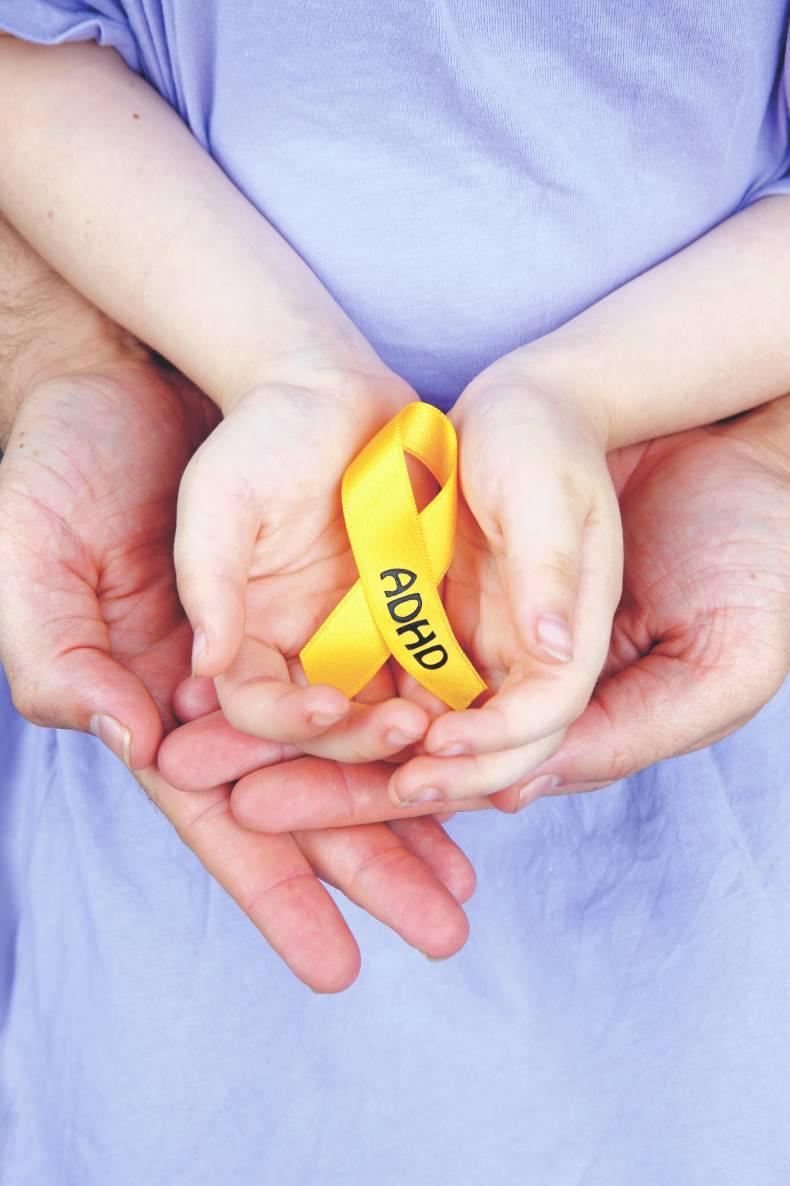
ADHD (Attention Deficit Hyperactivity Disorder) is a disorder that typically presents in childhood but can continue into adulthood,” says Fiona McNicholas, professor of child and adolescent psychiatry at UCD.
“Those with the condition present with difficulties in three areas – hyperactivity, impulsivity and attention problems. You would typically see it in school where the teacher identifies that while the child is bright enough, they can’t sit still, they are interrupting and distracting other people and they are not able to concentrate very well. They also get distracted by what’s going on around them. ADHD is a common mental health disorder and is present in 5% to 6% of children worldwide.”
It is linked to a deficiency in neurotransmitter chemicals in certain circuits of the brain, eg the attention, planning and organisational networks.
Children who are clever will probably do okay in primary school, professor McNicholas says, but that usually changes in secondary school.
“As the workload becomes increasingly difficult, they are not going to be able to pay enough attention. If they have learning difficulties as well, this is going to be an additional impairment for them.”
Boys are more likely to have ADHD
Boys are more likely to have ADHD, she says, because of the way their brains are wired.
“Boys, if you take any boy, are already that bit more active than girls, so you only have to go one or two steps up on the ladder of activity before the problem becomes impairing in a classroom setting.”
ADHD is one of the most common reasons that children are referred to CAHMS – the HSE-run child and adolescent mental health service.
Treatment is multimodal
Professor McNicholas, who also practices at one of the Lucena clinics (St John of God child and adolescent mental health services) and at Our Lady’s Children’s Hospital, Crumlin, says that treatment is multimodal.
“After getting a case history, parents are offered medication for their child and support for themselves. That’s because ADHD is a difficult disorder for parents to consistently manage as there are organisational difficulties in the child.”
ADHD medication works to increase brain neurotransmitter chemicals like dopamine and noradrenalin.
“Such medication has been successfully used since the 1960s and new medications with good side-effect profiles are being developed all the time. Ritalin is still the most evidence-based medication and the one most commonly used, but you find that it is now being prepared in different ways. It used to be just short acting, lasting a couple of hours, now it can last all day long. There are newer medications available too.”
ADHD drugs are the most researched drugs in paediatrics, she states.
“There is always going to be a search for alternative treatments too. There’s neurofeedback training, some people have written bits about that; study of omega fatty acids; mindfulness, which is very interesting; study skills; organisational skills; and cognitive behaviour strategies – these are all treatments that can be helpful in individual cases.
“However, if you’re looking at what is tested in a very evidence-based way, then none of those come into that yet. If you are the HSE and wondering where to spend your scarce resources, you are only going to follow the evidence-based treatments, such as parenting support and medication.”
RISK FACTORS FOR ADHD
Risk factors for ADHD include smoking and alcohol consumption during pregnancy, but the biggest risk factor of all is genetic.
“ADHD is highly heritable, so if the parent has it then there is a big risk of their kids having it. Parents may be struggling with the same impairment themselves and if that’s the case then we should be referring them on for additional services. The biggest problem of all though is that there is almost no (HSE) adult ADHD service in this country.”
New treatments available for ADHD
Neurofeedback training is one of the new treatments for ADHD but is only available to those who can afford to pay for it privately.
Dr Michael Keane of www.actualise.ie has been offering this treatment since 2012 in the Healthy Living Centre in Dublin.
“I did a degree in psychology in NUIG and later research into brain activity during sleep, for example,” he says.
“Running EEG labs was part of that research and when I finished I wanted to do something practical with the knowledge.
“I left my job as a lecturer in DCU to run the clinic full-time in response to the level of interest in neurofeedback training. I now have six employees and primarily treat ADD and ADHD.”
What does the process involve?
After taking a detailed case history, a cap fitted with special sensors is placed on the child’s head.
“The analogy we use is that it’s like using a stethoscope to listen to your heart. It is no more uncomfortable than putting a swimming cap on. EEG technology is used in thousands of hospitals and clinics and is a standard measure of brain function.
“By getting a snapshot, we can then compare this to the brain function of, say, other boys the same age. You can then see where your brain is working the same and where it is working differently. We then focus on training those areas of the brain, eg the attention network to work better.”
Neurofeedback training takes place usually over three months with two sessions per week and involves operative conditioning.
“This means that your eight-year-old boy, for example, will be watching a Harry Potter computer game on the monitor and it will play only after a little period of more efficient brain function.
“It can essentially reinforce more positive brain function by rewarding desirable brain patterns. Over time, in our experience, symptoms (eg lack of attention) begin to reduce.”
The price for the treatment depends on the number of sessions the child has, but the three-month process can cost as much as €1,500-€2,000.
“In our experience, about 15% of parents shrug their shoulders and aren’t sure that it has helped but, overall, 85% of parents have left happy, with the treatment having met if not exceeded their expectations,” Dr Keane adds.
A reader's story
‘All the signs had been there but we didn’t really see them’
Joan* is a Leinster-based Mum of four. At the age of 14, her now 16-year-old son Liam was diagnosed with ADD (attention deficit disorder and ODD (oppositional defiance disorder) which both come under the umbrella of ADHD.
His mother admits, looking back, that she failed to acknowledge that Liam had a problem as far back as primary school.
“All the signs had been there but we didn’t really see them. I blamed the problem on teachers and schools – always on something else.”
Joan did take Liam for an educational psychological assessment related to dyslexia at one point, but, apart from identifying a poor working memory, it still didn’t pick up ADHD.
“Everything got much worse in secondary school,” she says. “His organisation and learning issues were magnified. He’d forget books, not do homework, leave classes, not go to classes and so on. In primary school I had always developed a relationship with the teacher to smooth things along, but it’s different in secondary school as there are so many teachers and I didn’t know classmates’ parents to ring them about homework. Liam got detention early on for various misdemeanors. His behaviour worsened over time, including giving teachers cheek, part of the oppositional defiance disorder, ODD, that hadn’t yet been diagnosed. He even argued with the principal when he was sent to her office.
“We decided to move him to another school thinking that he needed a fresh start, but within three weeks he was in front of his new principal with exactly the same issues. We were devastated. It was then that a teacher rang me and asked if we’d ever considered that Liam might have ADHD. I went online straight away and it was like reading a script of our lives.
“We accessed CAHMS straight away and got to see the team very quickly. It included a psychiatrist, a social worker and family and occupational therapists.
“The diagnosis was made after three lengthy appointments that involved interviews going over Liam’s life and all the issues.
“Medication – Ritalin – was recommended for him, combined with behaviour management techniques. It took a full year to see the benefits of everything. The parenting courses were very useful because there were lot of issues around his behaviour at home.
“Our three other children have all struggled with the fact that Liam consumes so much time. I always struggled, too, with the notion that ADHD is the parents’ fault, but I’m fortunate in that I knew I had three other children who didn’t have these issues so I knew it wasn’t the way we brought Liam up.
“I would advise parents in our position to educate themselves about ADHD, contact CAHMS and the support group www.hadd.ie.
“I keep reminding myself that it is a medical condition and that with the right help Liam will be a fully functioning member of society. I am more optimistic now. The medication has been a huge help and he is now thinking of third-level study of some sort and he is able to keep up with his peer group – something he wasn’t able to do before.”
* Names have been changed.
Useful websites


SHARING OPTIONS