

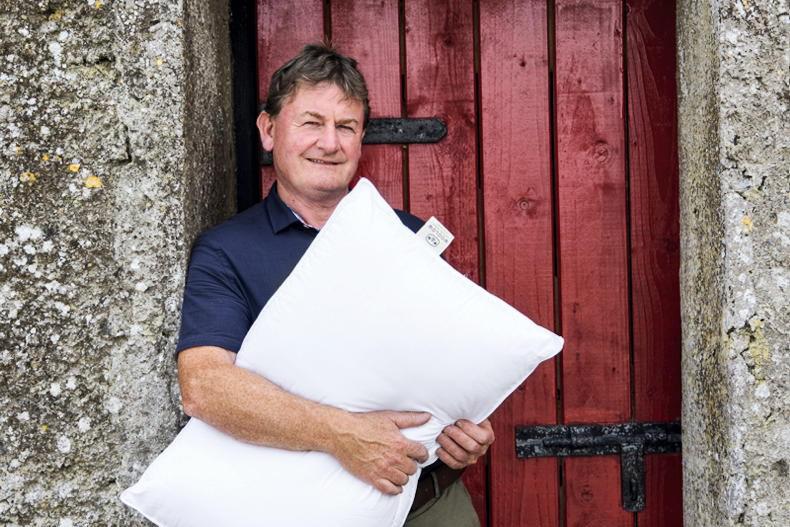
When Michael Burke founded Woolow – a company specialising in Irish wool-based bedding – in 2018, health and wellbeing were at the forefront of his mind. But something else was also driving the project: his own farming heritage, and the long-held agricultural traditions of the west of Ireland.
Michael grew up in Dunblaney House in Dunmore, Co Galway where his youth was spent farming alongside his father. The farm holds special historic significance to the area.
“It was built in 1787 for the Archbishop of Tuam [at the time], who died in 1798,” he tells Irish Country Living. “The farm and the house came into my family’s possession after that. I grew up here and it’s been in the family for generations. Today, it’s a mixed enterprise with cattle, sheep and tillage, and we’ve been certified organic since 2015.”
As a child, Michael was adept at sheep shearing and enjoyed helping with that annual task. He has always considered Irish wool a material of immense value and felt it was under-utilised.
In recent times, Irish wool has been considered a low-value by-product of the sheepmeat sector. This is unfortunate, because as a material, it has so much potential: it is sustainable, renewable, non-synthetic and can be used in a variety of ways.
From insulation to mattresses and, in Michael’s case, to pillows and bedding, there is growing interest around the benefits of wool and a growing distrust in synthetic alternatives.
“Working in the pharmaceutical sector for so many years made me conscious of these things,” Michael explains.
“My work was in drug development, and this increasingly drove home the benefits of diet, exercise and good quality sleep. I was conscious that over 30% of us suffer from poor sleep for various reasons – stress, respiratory issues, anxiety – and that sleep is really a superpower; we can’t function without it.
“Woolow was created from the concept of replacing synthetic materials with natural fibres,” he continues. “I didn’t want to veer too far away from what I knew. I was familiar with the benefits of wool, and my background was in health and farming. I figured, since people sleep for eight hours a night with their face and airways near their pillow, synthetic materials or oil-based products might have a negative effect on sleep or aggravate health issues. I thought that sleeping on a natural material could have more of a positive impact.”
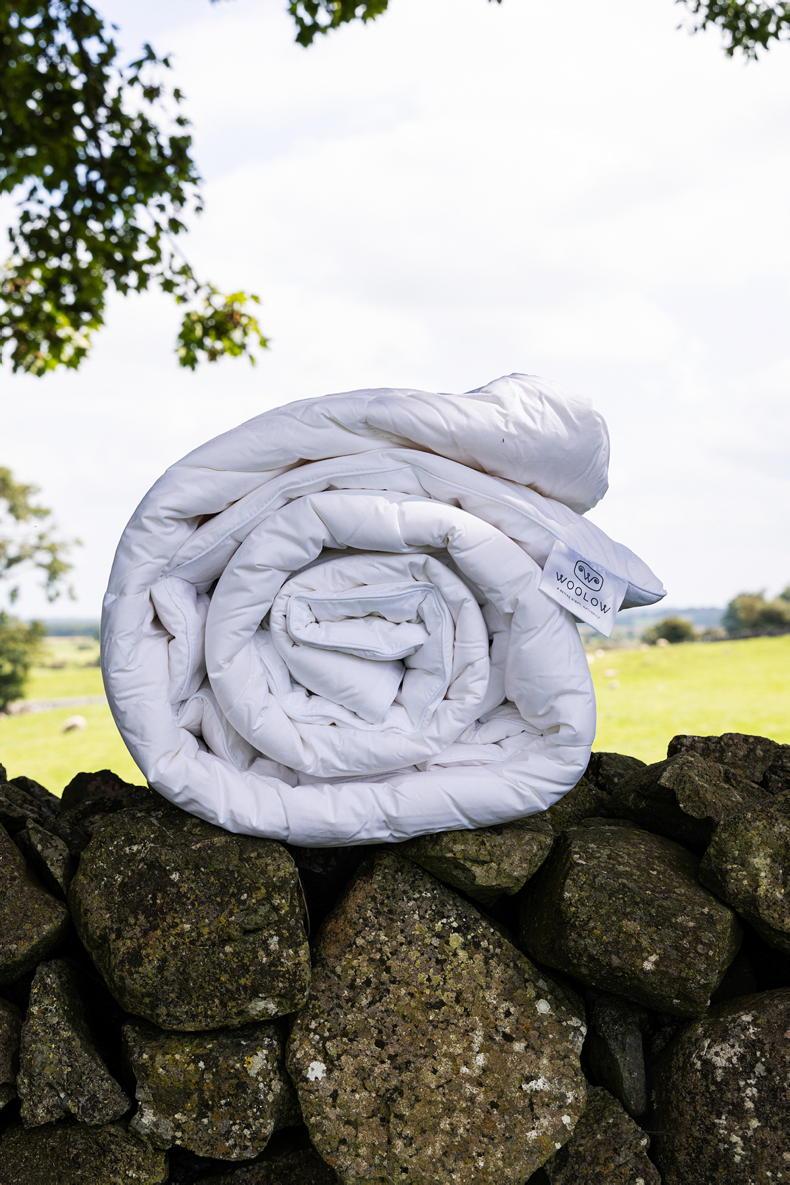
Woolow bedding is made with just two things: Irish wool and natural cotton. The line is naturally hypoallergenic, making it ideal for those living with allergies or respiratory issues.
Research and development
Michael felt strongly about the benefits of natural Irish wool but wanted proof to back up his ideas. He enrolled in Enterprise Ireland’s New Frontiers programme and, with funding from the Local Enterprise Office and Galway Rural Development, developed Woolow in line with the scientific research available on sleep and the benefits of natural materials.
Wool is dust mite, mould and mildew resistant and clinically proven to prevent germs and allergens.
“[Developing the business] was a really positive journey, I worked with some great people,” he says. “Identifying an Irish processing plant to make our product was crucial. If facilities were available in this country, I was going to give them our business. Gary Stevenson [of Pownall and Hampson in Dublin] has more than 90 years of experience in the manufacturing of bedding. Gary understood the need for more natural wool products, and we worked together to develop the Woolow range.”
Woolow has since expanded to a full range of Irish wool duvets, mattress toppers, body pillows and lavender-infused bedding. When they first launched, Michael thought their main customer base would be found outside of Ireland, but the opposite has since proven true.
“Though we ship worldwide, most of our customers are right here in Ireland,” he says. “We have developed good relationships with select Irish hotels – Dromoland Castle and the Hastings Group, for example – who use our products as they like to offer a pillow choice. Pillows are difficult and you can’t please everyone – some like a firm pillow and others prefer soft. However, we can customise orders if a client has a particular requirement.”
The wool used in Woolow products is sourced from the 300 sheep kept on Michael’s farm, with the remainder sourced locally. While manufacturing takes place in Ireland, the wool must first be sent to the United Kingdom for cleaning and processing. There are currently no local facilities to take on this work, but with the establishment of the Irish Wool Council (who, among their main goals, aim to facilitate a regionally based wool industry), there is some hope for the future.
“One area [the Irish Wool Council] is looking at is the creation of an Irish wool cleaning facility,” he says. “In Bradford [in the UK], they could wash all the wool produced in this country in seven weeks, and they have built this system up over centuries. In Ireland, our sheep population isn’t huge, so the potential could be to create small, bespoke cleaning facilities around the country,” Michael explains.

Sheep and wool are a part of the farming heritage in the west of Ireland, and Michael wants to support farmers and those trying to develop an Irish wool industry. Here he is with his Belclare and Texel sheep.
Community focus
Michael is active within his community to promote health, wellness and social inclusion. He participates in the Fit Farmers programme and is currently working to launch a social programme where attendees of the Brothers of Charity Centres in the west of Ireland can build wool-based sensory toys from assembly kits. It is hoped this programme will create local employment and upskilling for adults with additional needs while providing parents and schools options for sustainable, interactive toys.
“I’ve been approved for funding from Enterprise Ireland and am currently working with ATU [Atlantic Technological University] Letterfrack to design these kits,” Michael says. “We also have the support of Connemara Eco-Skills. I’m just delighted to be involved with it; it all ties in with healthy sleep and healthier kids. A lot of these products already exist, but in synthetic materials and they aren’t made locally.”
Leading Irish sleep expert Tom Coleman recently joined as a Woolow brand ambassador. He speaks on the importance of quality sleep for our overall health and Michael says he is in perfect alignment with their own goals and ethics.
“He really gets our product and has been down to the farm a number of times – he likes to see the connection between the farm and the product,” he says. “He’s a great advocate. It’s important to have people like Tom share his expertise and help demonstrate the authenticity of these products.”
Reflecting on the past eight years in business, Michael is ultimately proud of what he and his team have achieved, but also feels the potential for Irish wool has yet to be fully realised.
“The key is to identify a problem and the market opportunity, but also to be able to tell your story,” he reflects. “Also, to build a great team that believes in what we’re doing – there’s myself, two full-time employees, our marketing and manufacturing people. I’m working with a group of graduates, as well, in design and sustainability. We’re a small team, but there’s great potential to grow.”
See woolow.com
When Michael Burke founded Woolow – a company specialising in Irish wool-based bedding – in 2018, health and wellbeing were at the forefront of his mind. But something else was also driving the project: his own farming heritage, and the long-held agricultural traditions of the west of Ireland.
Michael grew up in Dunblaney House in Dunmore, Co Galway where his youth was spent farming alongside his father. The farm holds special historic significance to the area.
“It was built in 1787 for the Archbishop of Tuam [at the time], who died in 1798,” he tells Irish Country Living. “The farm and the house came into my family’s possession after that. I grew up here and it’s been in the family for generations. Today, it’s a mixed enterprise with cattle, sheep and tillage, and we’ve been certified organic since 2015.”
As a child, Michael was adept at sheep shearing and enjoyed helping with that annual task. He has always considered Irish wool a material of immense value and felt it was under-utilised.
In recent times, Irish wool has been considered a low-value by-product of the sheepmeat sector. This is unfortunate, because as a material, it has so much potential: it is sustainable, renewable, non-synthetic and can be used in a variety of ways.
From insulation to mattresses and, in Michael’s case, to pillows and bedding, there is growing interest around the benefits of wool and a growing distrust in synthetic alternatives.
“Working in the pharmaceutical sector for so many years made me conscious of these things,” Michael explains.
“My work was in drug development, and this increasingly drove home the benefits of diet, exercise and good quality sleep. I was conscious that over 30% of us suffer from poor sleep for various reasons – stress, respiratory issues, anxiety – and that sleep is really a superpower; we can’t function without it.
“Woolow was created from the concept of replacing synthetic materials with natural fibres,” he continues. “I didn’t want to veer too far away from what I knew. I was familiar with the benefits of wool, and my background was in health and farming. I figured, since people sleep for eight hours a night with their face and airways near their pillow, synthetic materials or oil-based products might have a negative effect on sleep or aggravate health issues. I thought that sleeping on a natural material could have more of a positive impact.”

Woolow bedding is made with just two things: Irish wool and natural cotton. The line is naturally hypoallergenic, making it ideal for those living with allergies or respiratory issues.
Research and development
Michael felt strongly about the benefits of natural Irish wool but wanted proof to back up his ideas. He enrolled in Enterprise Ireland’s New Frontiers programme and, with funding from the Local Enterprise Office and Galway Rural Development, developed Woolow in line with the scientific research available on sleep and the benefits of natural materials.
Wool is dust mite, mould and mildew resistant and clinically proven to prevent germs and allergens.
“[Developing the business] was a really positive journey, I worked with some great people,” he says. “Identifying an Irish processing plant to make our product was crucial. If facilities were available in this country, I was going to give them our business. Gary Stevenson [of Pownall and Hampson in Dublin] has more than 90 years of experience in the manufacturing of bedding. Gary understood the need for more natural wool products, and we worked together to develop the Woolow range.”
Woolow has since expanded to a full range of Irish wool duvets, mattress toppers, body pillows and lavender-infused bedding. When they first launched, Michael thought their main customer base would be found outside of Ireland, but the opposite has since proven true.
“Though we ship worldwide, most of our customers are right here in Ireland,” he says. “We have developed good relationships with select Irish hotels – Dromoland Castle and the Hastings Group, for example – who use our products as they like to offer a pillow choice. Pillows are difficult and you can’t please everyone – some like a firm pillow and others prefer soft. However, we can customise orders if a client has a particular requirement.”
The wool used in Woolow products is sourced from the 300 sheep kept on Michael’s farm, with the remainder sourced locally. While manufacturing takes place in Ireland, the wool must first be sent to the United Kingdom for cleaning and processing. There are currently no local facilities to take on this work, but with the establishment of the Irish Wool Council (who, among their main goals, aim to facilitate a regionally based wool industry), there is some hope for the future.
“One area [the Irish Wool Council] is looking at is the creation of an Irish wool cleaning facility,” he says. “In Bradford [in the UK], they could wash all the wool produced in this country in seven weeks, and they have built this system up over centuries. In Ireland, our sheep population isn’t huge, so the potential could be to create small, bespoke cleaning facilities around the country,” Michael explains.

Sheep and wool are a part of the farming heritage in the west of Ireland, and Michael wants to support farmers and those trying to develop an Irish wool industry. Here he is with his Belclare and Texel sheep.
Community focus
Michael is active within his community to promote health, wellness and social inclusion. He participates in the Fit Farmers programme and is currently working to launch a social programme where attendees of the Brothers of Charity Centres in the west of Ireland can build wool-based sensory toys from assembly kits. It is hoped this programme will create local employment and upskilling for adults with additional needs while providing parents and schools options for sustainable, interactive toys.
“I’ve been approved for funding from Enterprise Ireland and am currently working with ATU [Atlantic Technological University] Letterfrack to design these kits,” Michael says. “We also have the support of Connemara Eco-Skills. I’m just delighted to be involved with it; it all ties in with healthy sleep and healthier kids. A lot of these products already exist, but in synthetic materials and they aren’t made locally.”
Leading Irish sleep expert Tom Coleman recently joined as a Woolow brand ambassador. He speaks on the importance of quality sleep for our overall health and Michael says he is in perfect alignment with their own goals and ethics.
“He really gets our product and has been down to the farm a number of times – he likes to see the connection between the farm and the product,” he says. “He’s a great advocate. It’s important to have people like Tom share his expertise and help demonstrate the authenticity of these products.”
Reflecting on the past eight years in business, Michael is ultimately proud of what he and his team have achieved, but also feels the potential for Irish wool has yet to be fully realised.
“The key is to identify a problem and the market opportunity, but also to be able to tell your story,” he reflects. “Also, to build a great team that believes in what we’re doing – there’s myself, two full-time employees, our marketing and manufacturing people. I’m working with a group of graduates, as well, in design and sustainability. We’re a small team, but there’s great potential to grow.”
See woolow.com
SHARING OPTIONS