Fifteen years after the launch of the original Axion 900 series, Claas has introduced its replacement, the Axion 9 series.
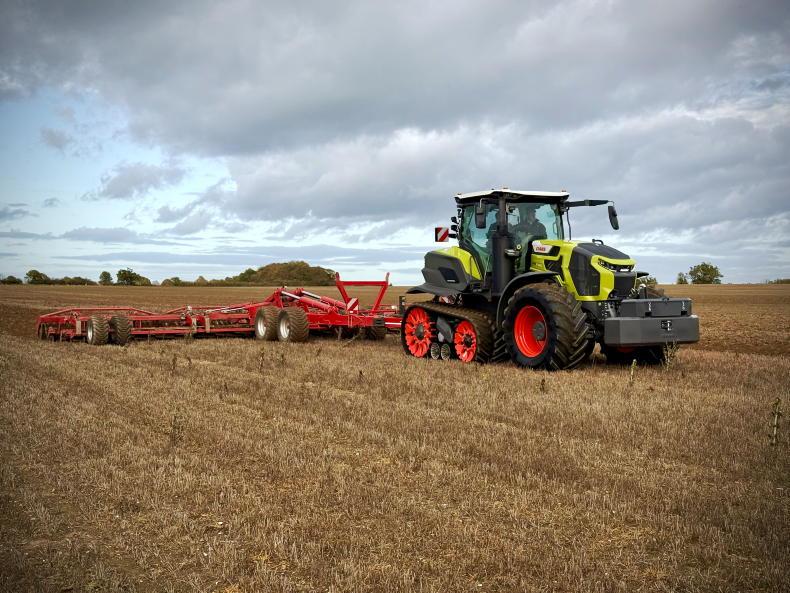
The result is a heavily overhauled platform spanning from 326hp to 448hp which Claas is certain will right any previous shortfalls and broaden its appeal in the high-horsepower segment. The range remains with five wheeled models (9.330, 9.360, 9.390, 9.420, 9.450) and two Terra Trac, half-track models (9.360TT and 9.450TT).
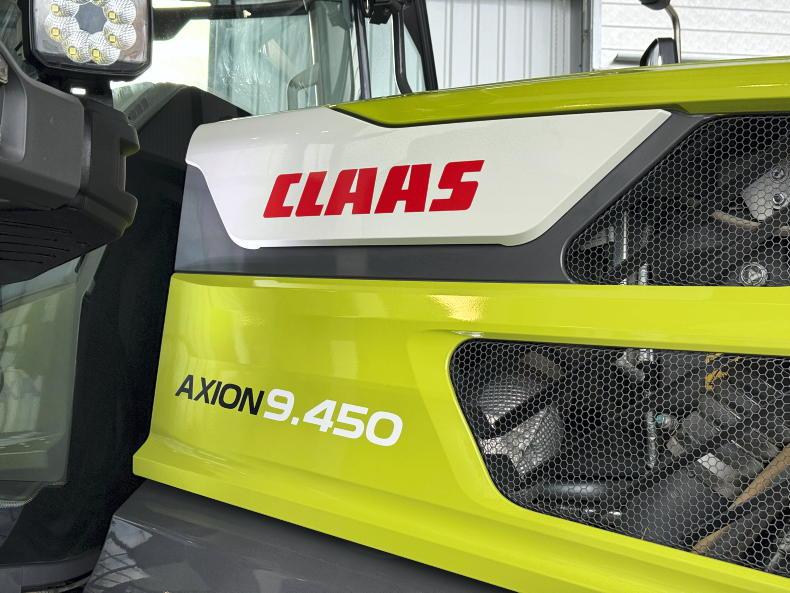
The new model numbering logic now relates to power output.
The range adopts the latest generation ‘Visor’ bonnet styling – a look which we feel nods to the Claas Atles generation from the early 2000s. Another welcome change is the move to clearer model numbering logic, first adopted by the Xerion 12 series.
Jumping right in, the new generation Axion has been fully revised from front to back, the main highlight of which is a new cab and electrical architecture, improving integration and support for semi-autonomous operation.
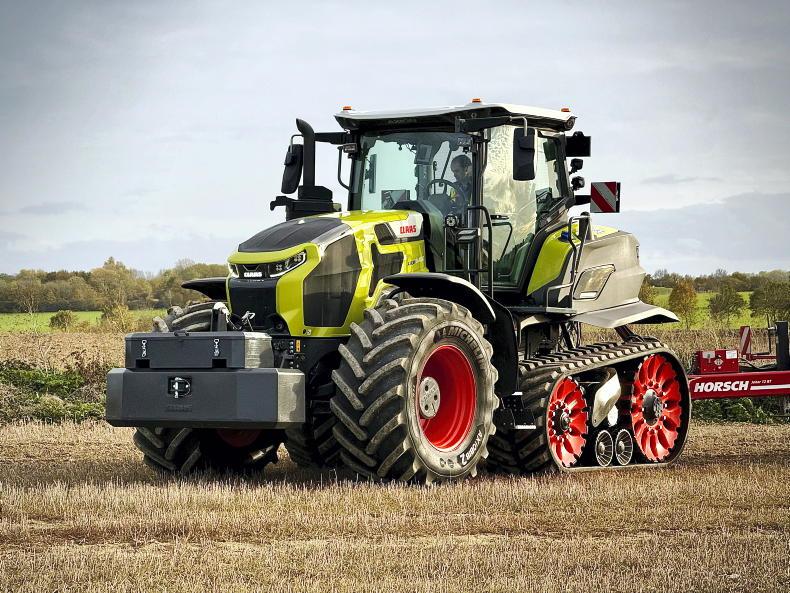
Axion 9 models feature a reworked FPT Cursor 9 engine and an updated Cmatic stepless transmission.
The last time Claas broadened the appeal of the series was in 2019 with the introduction of the 930TT and 960TT Terra Trac half -track versions. Since then, the UK and Ireland combined has accounted for 15% of all global Axion 900TTs built. Today, the sale of TT models is roughly double that of wheeled units on the UK and Irish market.
Cab
The new K09 cab replaces the long-standing K07 Renault-esque work space and offers more width, length, legroom and sound insulation. The result is 17% more volume, 10% more glazed area. Access has been improved with shallower sloped steps and a wider door opening. The cab suspension has been resdesigned to reduce cab roll.
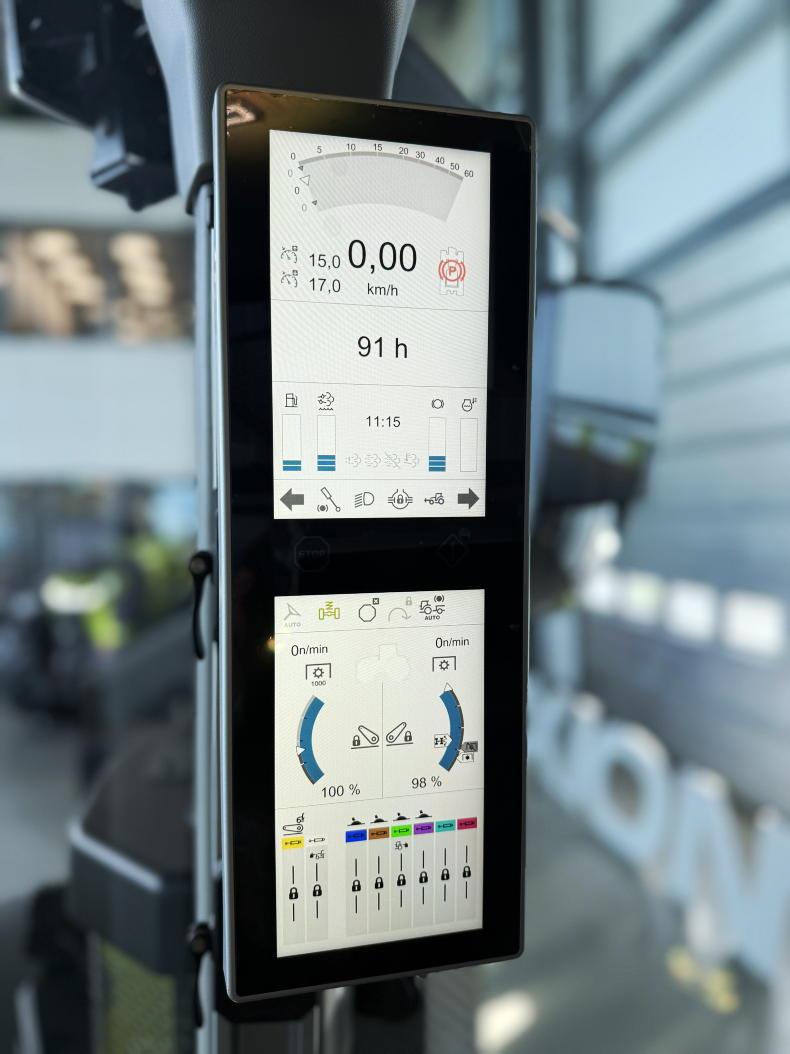
Two large A-pillar displays replace the traditional steering column dash.
Inside, the fit and finish is to a more premium standard. For example, the old paddle-like shuttle lever which hadn’t changed much since the Renault days is now swapped for a more sculpted automotive design. Meanwhile, the steering column dash display has been replaced by two generous, crisp clear A-pillar displays. The operator’s seat now rotates more for better visibility and comfort.
Beneath the surface, the electrical architecture has been completely redesigned and geared for better integration and future capabilities. This brings with it a more refined Cebis armrest, which features a new Electropilot Isobus/hydraulic joystick, as well as integrated A/C, radio and lighting controls, taking it up to speed with its competitors. These cluster are no longer separately positioned along the roof line.
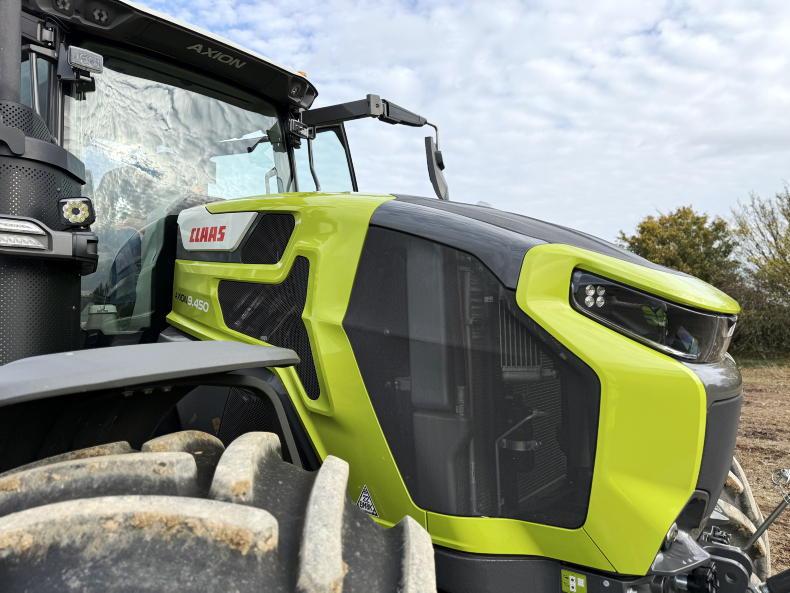
The new bonnet styling is reminiscent of the older Claas Atles range from the early 2000s.
Up to 30 tractor/implement functions can be programmed on the Electropilot joystick or 38 in combination with the programmable function buttons on the Cmotion drive controller.
For the first time on a Claas tractor, GPS and autosteer has been integrated into the main Cebis display, something which – until now – forced buyers into fitting a separate display terminal.
Air conditioning performance is 30% better, using two fans instead of one and better-placed air vents, cooling the cab by a further 6.2°C. All lights are now LED as standard while the premium package lighting kit offers almost 50,000 lumens. The new roof integrates both worklights and beacons.
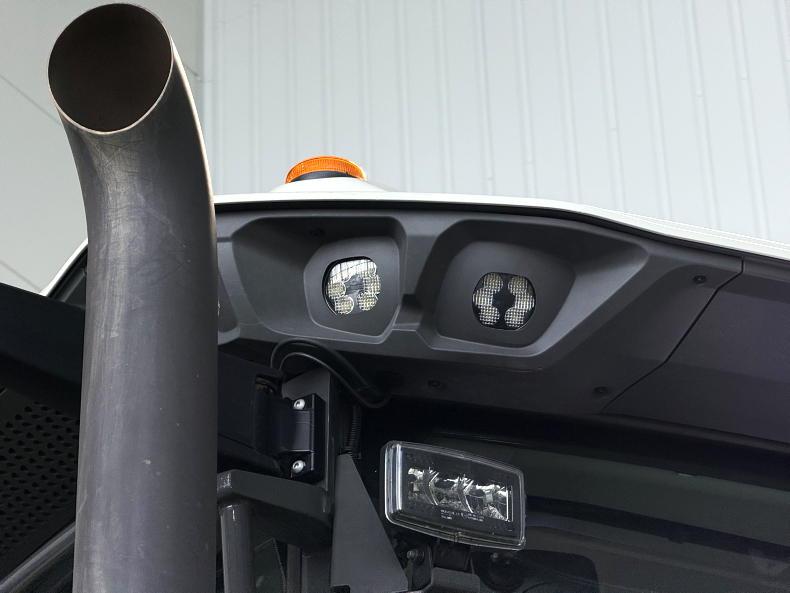
The beacons and roof work lights are now integrated into the roof skin.
Semi-autonomous
Cebis Connect is another new platform introduced on the Axion 9 and the firm’s next step in telematics and autonomy for production tractors. This allows level 2 autonomy whereby the tractor and the Claas Connect portal can better communicate and allow the option of semi-autonomous operation via AgXeed.
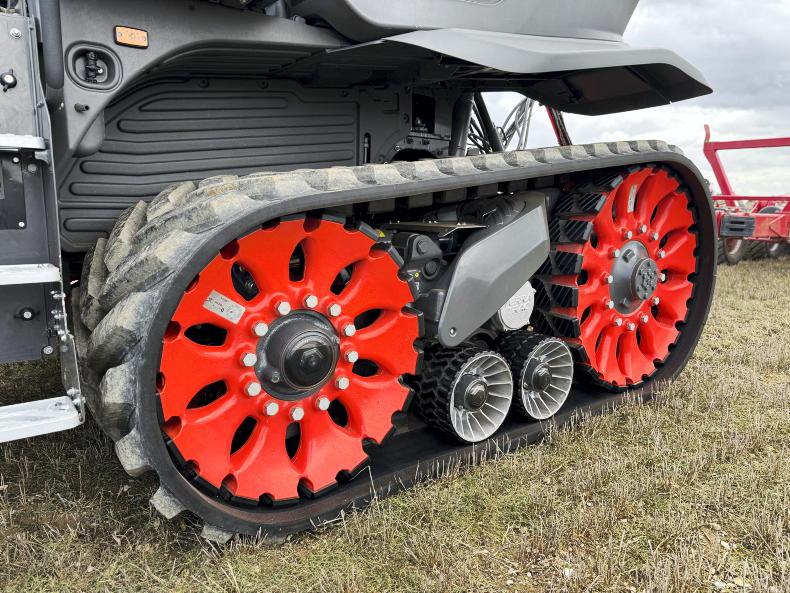
The Terra Trac units have been heavily updated and extended service intervals.
Although, an operator still needs to be present, pre-scheduled tasks can be assigned on the Claas Connect portal and then transferred to the tractor. When up and running within the field, the operator engages the task for the tractor to carry it out autonomously.
Engine and driveline
Under the new bonnet sits a tweaked version of the familiar 8.7l Cursor 9 engine. Claas said that it has invested €2 million with FPT to further develop the engine for the revised Axion 9. The results include hardened pistons to help secure a steady 448hp on the flagship Axion 9.460 model, 13hp more than New Holland has squeezed out of the same 8.7l unit in its new T7.440 XD.
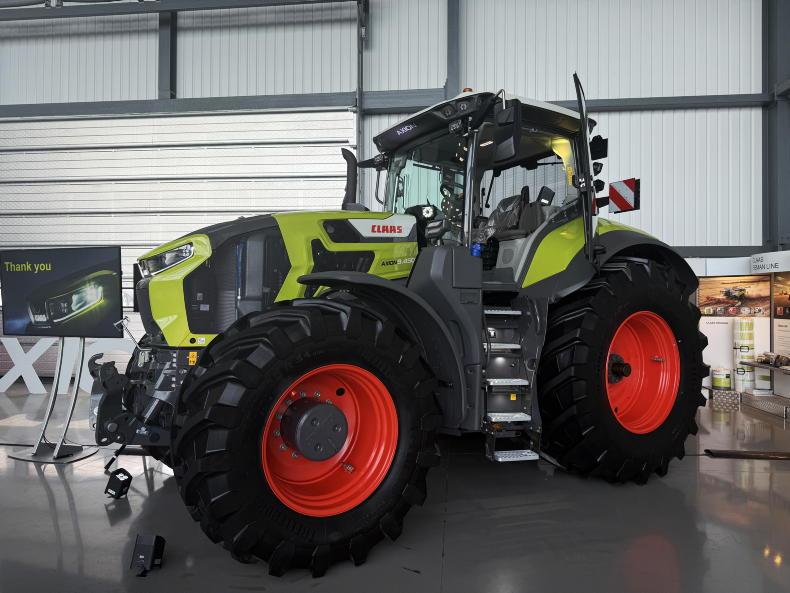
All five Axion 9 models are available as wheeled versions.
Engine service intervals have been extended from 600 hours to 750 hours.
Building on years of feedback and testing, Claas has tweaked certain areas of the driveline. The ZF-sourced CMatic stepless transmission has been modified for quieter operation and reduced cab noise. Both front and rear differentials have also been upgraded while the transmission behaviour is said to be improved too.
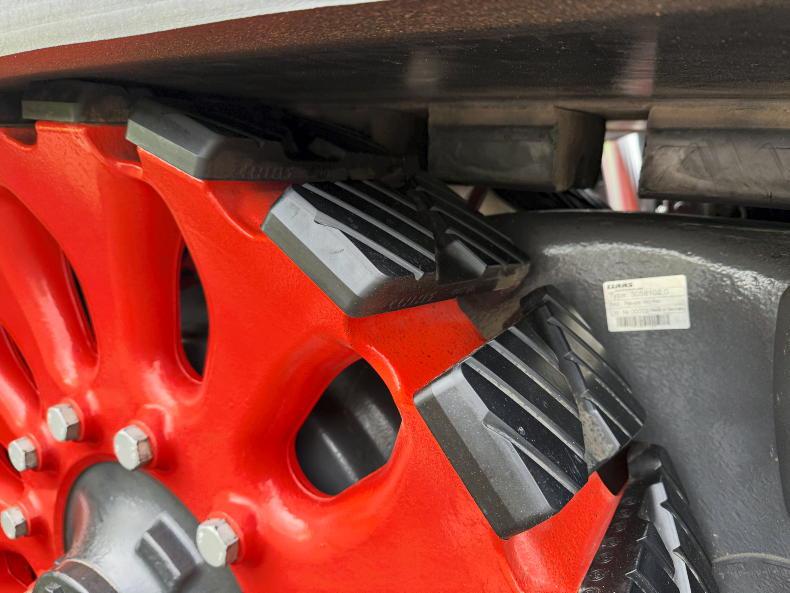
The driver and idler wheels benefit from a new, thicker thread profile allowing better friction in wet conditions and a longer wear life.
There is also a new ZF torque sensor fitted for better power management. Using sensor data such as linkage movement or spool/GPS activity, a self-learning algorithm enables Auto Load Anticipation, which predicts load changes and raises engine speed in advance to maintain stable performance.
The automatic stretch brake borrowed from the Arion 660, uses transmission sensors to automatically engage implement brakes as soon as high thrust forces are placed on the tractor. Other updates include an auto trailer axle lock function, as well as the option of a reversible fan and or a central tyre inflation system (CTIS).
Backend
In addition to new rear fenders and taillights, there is a larger rear window, thus improving implement visibility. Hydraulic capacity has been increased, with two pump options offered.
The standard offers 220l/min or 370l/min in a tandem configuration, with two valves offering 170l/min maximum flow. Rear linkage capacity has increased to 13t on the smaller 9.330 and 9.360 models, 12t on 9.390, 9.420 and 9.450 models and 11t on the Terra Trac models.
There is now a hydraulic top link assist function to help assist the operator with the weight of the toplink when attaching an implement. Hydraulic stabilisers are now fitted also.
Terra Trac
At first glance the Terra Trac system may look unchanged, but it features several significant updates. Servicing has got easier while intervals have been stretched from 600 to 750 hours, in-line with engine service intervals. A new bearing fixation reduces drag losses by 4hp per track unit in comparison to Axion 900TT models.
Other changes include a new idler wheel hub, improved cylinders, transparent hub caps for easier oil inspection, updated bronze bushings, and flanged mid rollers with increased oil volumes.
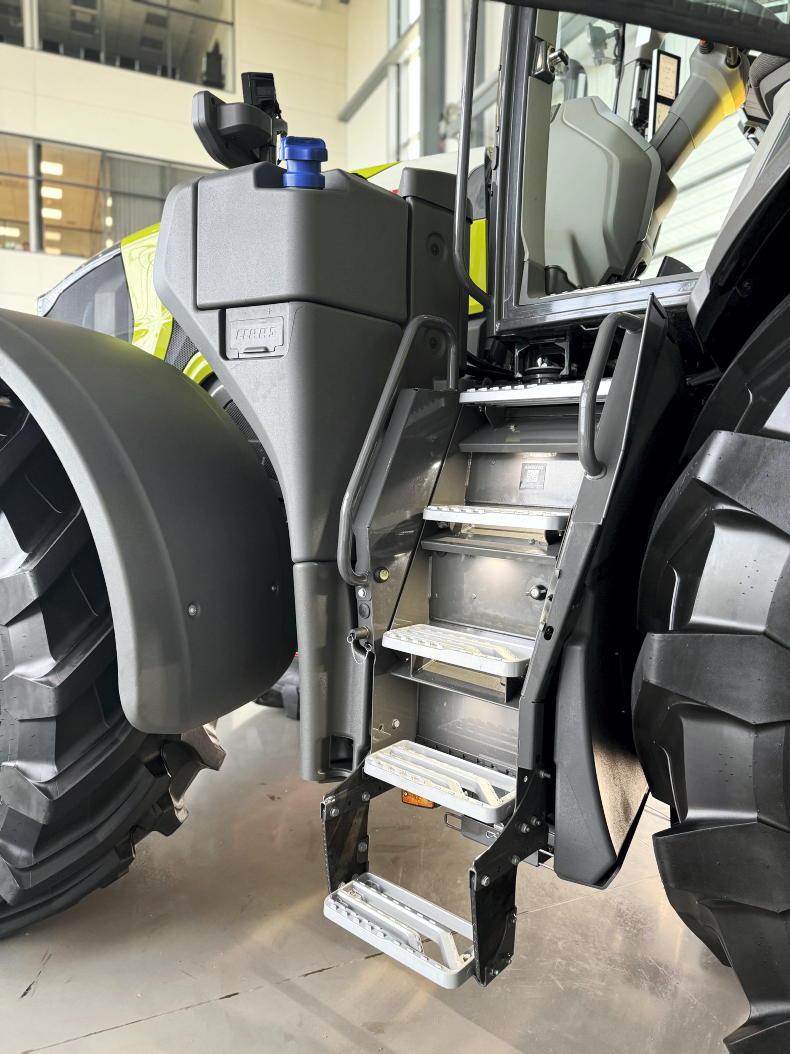
The steps now feature a lower sloping angle while the door opens wider.
Meanwhile, driver and idler wheels benefit from a new, thicker thread profile allowing better friction in wet conditions and a longer wear life.
The standard 735mm wide tracks can be optioned out for a new puncture resistant alternative. Combined with a VF 710/60 R34 front tyres, the TT models offer a 3.5m2 total footprint.
On paper, Claas has hit the nail on the head with the new Axion 9. Having spent some time with the 9.450 in the field, the new cab is an instant selling point – from the quality of materials used to the comfort, quietness and visibility.
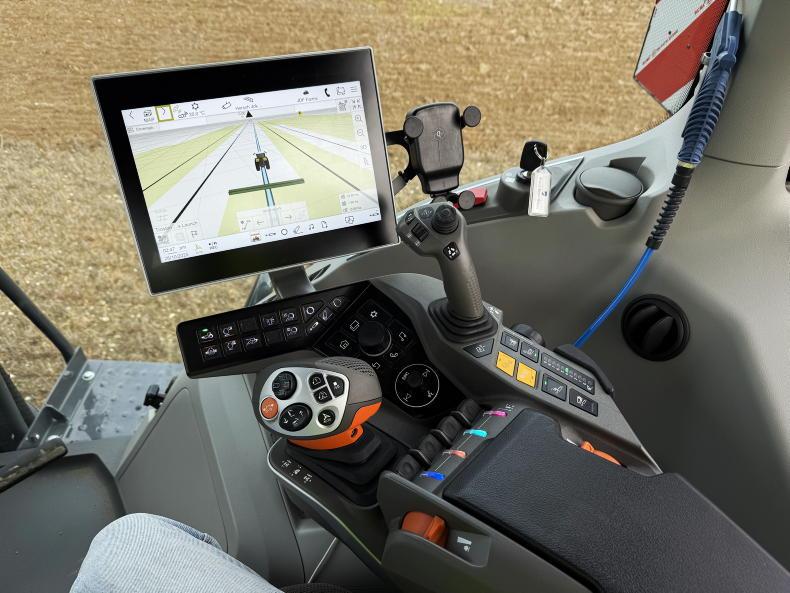
For the first time on a Claas tractor, GPS and autosteer has been integrated into the main Cebis display.
The integration of features such as radio, heating controls and GPS/autosteer on the armrest and main Cebis display have been long awaited, and are welcomed.
Fifteen years after the launch of the original Axion 900 series, Claas has introduced its replacement, the Axion 9 series.
The result is a heavily overhauled platform spanning from 326hp to 448hp which Claas is certain will right any previous shortfalls and broaden its appeal in the high-horsepower segment. The range remains with five wheeled models (9.330, 9.360, 9.390, 9.420, 9.450) and two Terra Trac, half-track models (9.360TT and 9.450TT).

The new model numbering logic now relates to power output.
The range adopts the latest generation ‘Visor’ bonnet styling – a look which we feel nods to the Claas Atles generation from the early 2000s. Another welcome change is the move to clearer model numbering logic, first adopted by the Xerion 12 series.
Jumping right in, the new generation Axion has been fully revised from front to back, the main highlight of which is a new cab and electrical architecture, improving integration and support for semi-autonomous operation.

Axion 9 models feature a reworked FPT Cursor 9 engine and an updated Cmatic stepless transmission.
The last time Claas broadened the appeal of the series was in 2019 with the introduction of the 930TT and 960TT Terra Trac half -track versions. Since then, the UK and Ireland combined has accounted for 15% of all global Axion 900TTs built. Today, the sale of TT models is roughly double that of wheeled units on the UK and Irish market.
Cab
The new K09 cab replaces the long-standing K07 Renault-esque work space and offers more width, length, legroom and sound insulation. The result is 17% more volume, 10% more glazed area. Access has been improved with shallower sloped steps and a wider door opening. The cab suspension has been resdesigned to reduce cab roll.

Two large A-pillar displays replace the traditional steering column dash.
Inside, the fit and finish is to a more premium standard. For example, the old paddle-like shuttle lever which hadn’t changed much since the Renault days is now swapped for a more sculpted automotive design. Meanwhile, the steering column dash display has been replaced by two generous, crisp clear A-pillar displays. The operator’s seat now rotates more for better visibility and comfort.
Beneath the surface, the electrical architecture has been completely redesigned and geared for better integration and future capabilities. This brings with it a more refined Cebis armrest, which features a new Electropilot Isobus/hydraulic joystick, as well as integrated A/C, radio and lighting controls, taking it up to speed with its competitors. These cluster are no longer separately positioned along the roof line.

The new bonnet styling is reminiscent of the older Claas Atles range from the early 2000s.
Up to 30 tractor/implement functions can be programmed on the Electropilot joystick or 38 in combination with the programmable function buttons on the Cmotion drive controller.
For the first time on a Claas tractor, GPS and autosteer has been integrated into the main Cebis display, something which – until now – forced buyers into fitting a separate display terminal.
Air conditioning performance is 30% better, using two fans instead of one and better-placed air vents, cooling the cab by a further 6.2°C. All lights are now LED as standard while the premium package lighting kit offers almost 50,000 lumens. The new roof integrates both worklights and beacons.

The beacons and roof work lights are now integrated into the roof skin.
Semi-autonomous
Cebis Connect is another new platform introduced on the Axion 9 and the firm’s next step in telematics and autonomy for production tractors. This allows level 2 autonomy whereby the tractor and the Claas Connect portal can better communicate and allow the option of semi-autonomous operation via AgXeed.

The Terra Trac units have been heavily updated and extended service intervals.
Although, an operator still needs to be present, pre-scheduled tasks can be assigned on the Claas Connect portal and then transferred to the tractor. When up and running within the field, the operator engages the task for the tractor to carry it out autonomously.
Engine and driveline
Under the new bonnet sits a tweaked version of the familiar 8.7l Cursor 9 engine. Claas said that it has invested €2 million with FPT to further develop the engine for the revised Axion 9. The results include hardened pistons to help secure a steady 448hp on the flagship Axion 9.460 model, 13hp more than New Holland has squeezed out of the same 8.7l unit in its new T7.440 XD.

All five Axion 9 models are available as wheeled versions.
Engine service intervals have been extended from 600 hours to 750 hours.
Building on years of feedback and testing, Claas has tweaked certain areas of the driveline. The ZF-sourced CMatic stepless transmission has been modified for quieter operation and reduced cab noise. Both front and rear differentials have also been upgraded while the transmission behaviour is said to be improved too.

The driver and idler wheels benefit from a new, thicker thread profile allowing better friction in wet conditions and a longer wear life.
There is also a new ZF torque sensor fitted for better power management. Using sensor data such as linkage movement or spool/GPS activity, a self-learning algorithm enables Auto Load Anticipation, which predicts load changes and raises engine speed in advance to maintain stable performance.
The automatic stretch brake borrowed from the Arion 660, uses transmission sensors to automatically engage implement brakes as soon as high thrust forces are placed on the tractor. Other updates include an auto trailer axle lock function, as well as the option of a reversible fan and or a central tyre inflation system (CTIS).
Backend
In addition to new rear fenders and taillights, there is a larger rear window, thus improving implement visibility. Hydraulic capacity has been increased, with two pump options offered.
The standard offers 220l/min or 370l/min in a tandem configuration, with two valves offering 170l/min maximum flow. Rear linkage capacity has increased to 13t on the smaller 9.330 and 9.360 models, 12t on 9.390, 9.420 and 9.450 models and 11t on the Terra Trac models.
There is now a hydraulic top link assist function to help assist the operator with the weight of the toplink when attaching an implement. Hydraulic stabilisers are now fitted also.
Terra Trac
At first glance the Terra Trac system may look unchanged, but it features several significant updates. Servicing has got easier while intervals have been stretched from 600 to 750 hours, in-line with engine service intervals. A new bearing fixation reduces drag losses by 4hp per track unit in comparison to Axion 900TT models.
Other changes include a new idler wheel hub, improved cylinders, transparent hub caps for easier oil inspection, updated bronze bushings, and flanged mid rollers with increased oil volumes.

The steps now feature a lower sloping angle while the door opens wider.
Meanwhile, driver and idler wheels benefit from a new, thicker thread profile allowing better friction in wet conditions and a longer wear life.
The standard 735mm wide tracks can be optioned out for a new puncture resistant alternative. Combined with a VF 710/60 R34 front tyres, the TT models offer a 3.5m2 total footprint.
On paper, Claas has hit the nail on the head with the new Axion 9. Having spent some time with the 9.450 in the field, the new cab is an instant selling point – from the quality of materials used to the comfort, quietness and visibility.

For the first time on a Claas tractor, GPS and autosteer has been integrated into the main Cebis display.
The integration of features such as radio, heating controls and GPS/autosteer on the armrest and main Cebis display have been long awaited, and are welcomed.
SHARING OPTIONS