



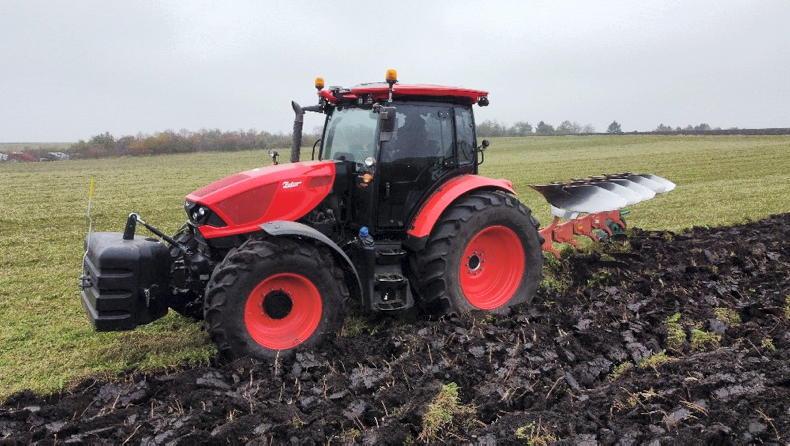
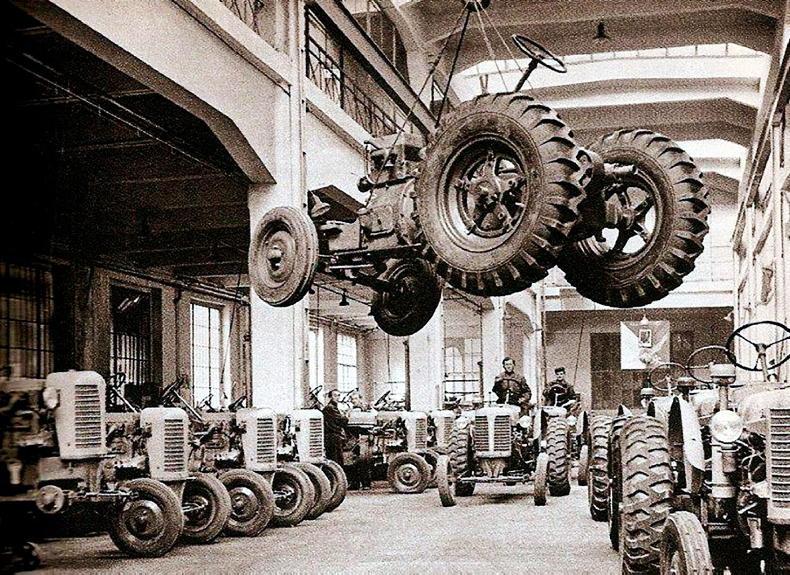
This week marks exactly 80 years since the first three Zetor Z 25 tractors rolled off the production line at the Zbrojovka factory in Brno. The first Z 25 model was developed shortly after World War II. The tractor quickly gained popularity not only in the Czech Republic, but also overseas.
The Zetor tractor has a long association with Ireland. One year after Zetor began producing tractors in 1946, Cork man Tim O’Shea went to post-war Czechoslovakia to seek the Irish franchise for the Škoda car. He came home with a Zetor tractor, with the Škoda franchise to follow later. O’Shea was interested in the Zetor 25 tractor, which he had researched and felt had potential. He bought 10 tractors in his first deal and it included a deal to take 50 Jawa motorbikes, which were also a Czech product.
The first tractors to arrive in Ireland in 1947 were the 25hp Zetor 25 models, powered by a two-cylinder diesel engine. They were fast on the road with an eight forward and two reverse speed gearbox. They were also reputed to be more fuel-efficient that the TVO and petrol-powered tractors of the time. The tractor was expensive at £850 relative to a Ferguson TE20 TVO at the time costing £350. The early models required a hand starter and had no hydraulics.
They were upgraded in 1953 with full electrics and a hydraulic lift. Sales were difficult against the Ferguson, Fordson, David Brown and Nuffield competition and, despite that, the O’Shea Group is reported to have sold 100 tractors in the first five years. Tim O’Shea actually organised loans for farmers to buy these expensive tractors, often with his personal bank guarantee.
Unified 1 (U1) range
The company’s next major milestone came in the early 1960s with the introduction of the Unified model range UR I, which brought more modern design solutions and the unification of key components. Zetor explained that the concept of unification significantly simplified production and service and became one of the characteristic features of the brand.
The Unified (UR I) range included the 3011 and 4011 models, followed by the 2011 model in 1963. These were two-, three- and four-cylinder engine tractors, all with the same engine bore and stroke. They became very popular among Irish farmers.
Like the Zetor 25, these tractors were initially blue in colour and came with a dual clutch for a live PTO, with full lighting and indicators, all very novel at the time. O’Sheas introduced the first four-wheel-drive Zetor models in 1965 and the change of tractor colour coincided with the introduction of a super large tractor cab, which was novel at the time.
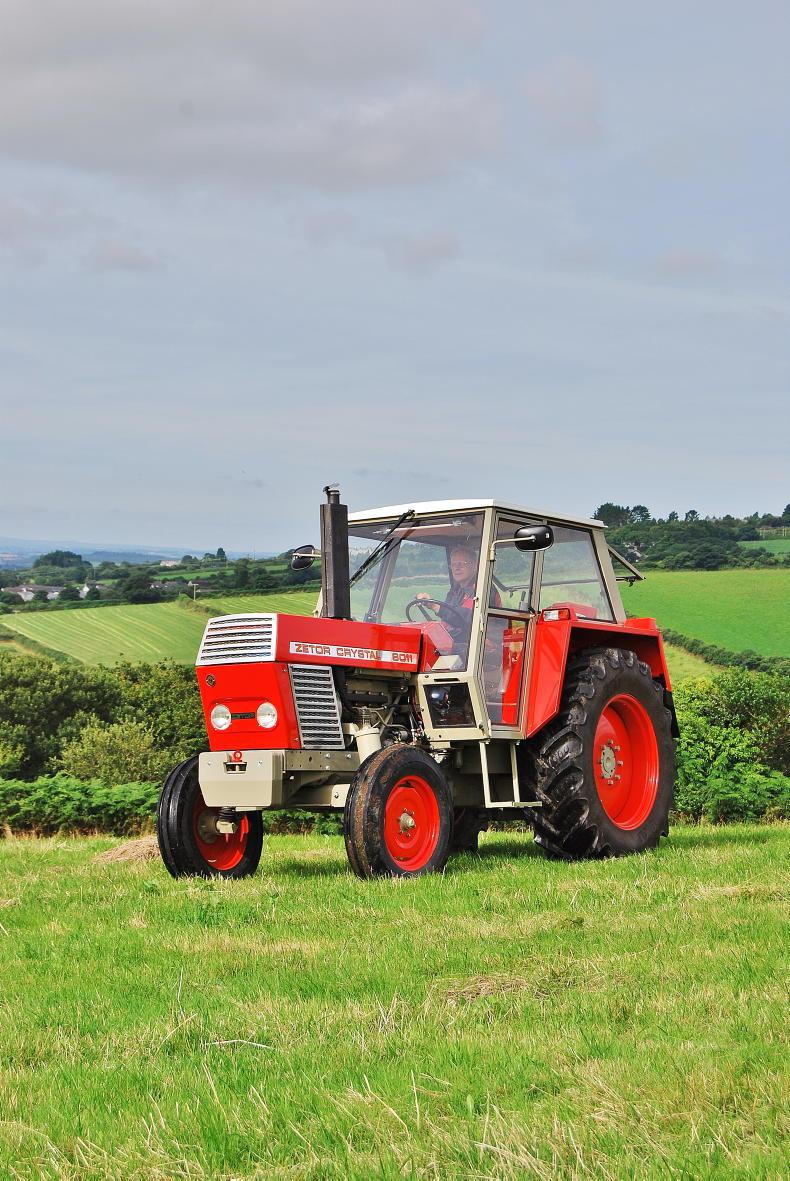
In 1968, Zetor launched the UR II series, better known as the Zetor Crystal, which offered more powerful tractors for more demanding work. These included the new 2511, 3511 and 4511 models which were in turn replaced by the 4712, 5711 and 6711 models in 1972.
Zetor said that the 1970s represented its greatest expansion. Zetor introduced the 8011 model, which was the popular Zetor Crystal in 1970, giving an affordable 80hp tractor that was to launch many a contracting career.
The Crystal was a joint Zetor and Ursus tractor development which pushed Zetor into first place on the Irish market in the early 1970s. At that time, the Czech brand was getting more price competitive as western-built tractor prices rose with inflation.
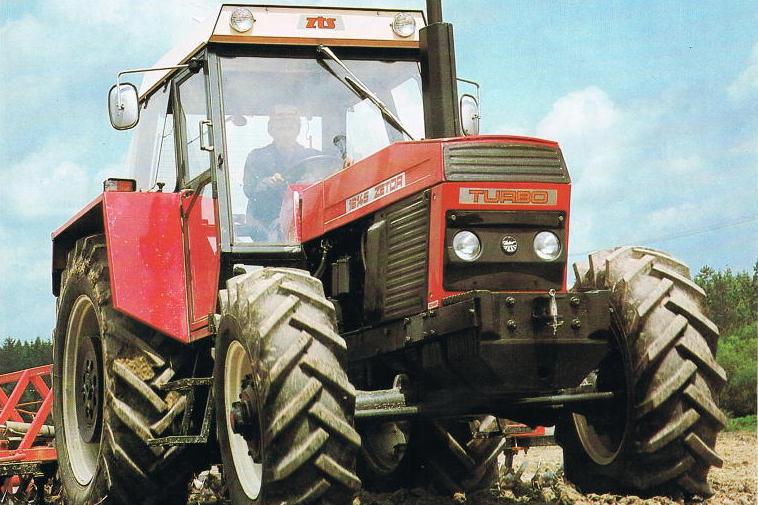
By 1975, Zetor was offering 12 tractor models on the Irish market. They introduced the larger 120hp Crystal, the 12011, in 1980. The ninth Zetor range followed in 1977 in the form of the Zetor 4911, 5911 and 6911 models. The 10th generation introduced in 1981 included the 5011, 6011 and 7011 models. Zetors first 160hp six-cylinder 16045 was also launched.
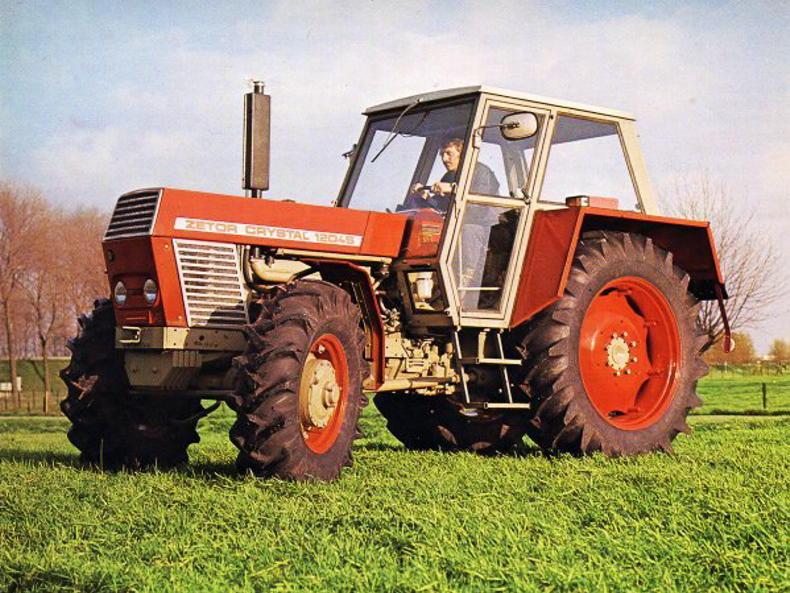
The Crystal of this era was and still is widely regarded by Irish contractors as being ahead of its time. The Crystal was a powerful tractor for its time, with spec including four-wheel drive, a safety cab with a passenger seat, air compressor, two speed PTO, packaged together at a keen price.
The firm claims its Crystal made history as one of the first tractors in the world equipped with a safety cab. It achieved several global distinctions, including one of the lowest noise levels in the tractor cab at the time, providing comfortable working conditions.
After 1989, the company underwent a major transformation. Zetor gradually modernised its product portfolio and adapted to new conditions in both European and global markets.
The still-popular UR III was introduced, and with the arrival of the new millennium a new generation of machines emerged that accompanied the brand through its modern history – namely Proxima, Forterra, and the modernised Major and Crystal series.
The O’Shea Group ceased operations in 1984 and the Zetor brand was taken over by Motokov Ireland, a subsidiary of the Czech export company Motokov. Motokov continued with the brand until 2011 when it was taken over by McHale Plant Sales, based in Birdhill, Co Tipperary. For the past seven years, Zetor is being distributed to its Irish dealers through the UK.
Zetor’s production history
While Zetor produced its first tractors in 1946, serious production began six years later in 1952. By 1960, Zetor was producing 19,262 tractors per year. A total of 158,570 Zetor 25 tractors were produced during its 16 years of manufacturing. By the beginning of the 1980s, Zetor had ramped up production and had produced more than 736,000 tractors. For a period during the 1990s, Zetor produced a series of tractors in John Deere colours for sale to a limited number of Deere markets. The deal was short-lived. By the turn of the millennium, Zetor was still a Czech state-owned enterprise and was on the verge of bankruptcy with tractor production falling.
In June 2002, the Slovak company HTC Holding became the owner of Zetor and remains its owner to this day. HTC purchased Zetor after a bidding war against Turkish manufacturer Uzel Makina, a company who later filed for bankruptcy in 2012. Today, Zetor tractors operate in more than 100 countries across all continents except Antarctica.
Referring to recent years, the offical Zetor statement says it has been undergoing a gradual transformation aimed at strengthening the company’s stability and adapting production to the current conditions of the global market. The company says it is focusing on improving efficiency in areas that directly affect customers – product quality, the availability of spare parts, and reliable service.
However, behind the scenes, the manufacturer has struggled in a competitve market. Reports from 2023-2024 indicated low sales, high debt and significant staff layoffs. Financial difficulties in recent years have forced a business restructuring, leading to a scaling back of operations. Modern Zetor tractors are now assembled using European components, over its own in-house built componentry which it traditionally used. For example, Zetor ended the production of its engines and transmissions in Brno in 2024, as part of a strategic shift towards outsourcing.
New range
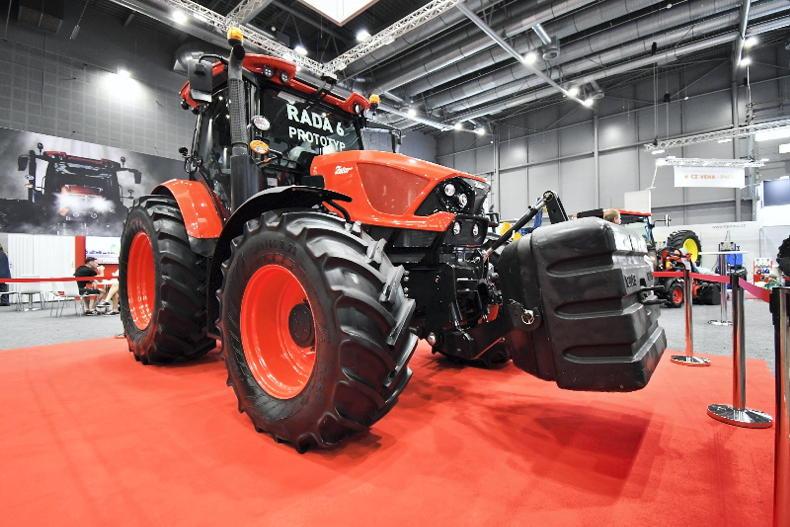
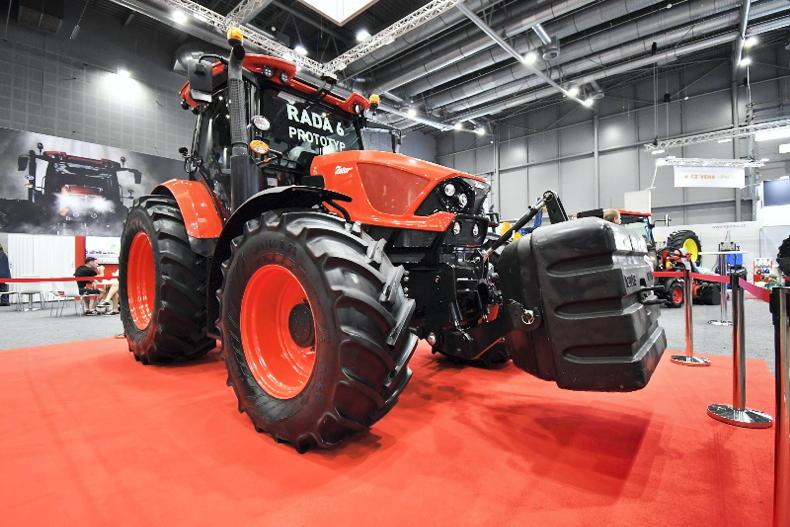
Its most recent development is the new Series 6, which was introduced last year. The 6 series is made up of four models: the 6130 (130hp), 6140 (141hp), 6160 (156hp) and the 6170 (171hp). The range source power from a 4.1l Deutz four-cylinder engine, which is married up to a six-stage semi-automatic ZF powershift transmission.
Zetor is currently revamping its tractor offering. It’s currently testing a new 100-130 horsepower 5 series which will replace the Proxima, with plans on developing a new lower horsepower 4 series and a larger horsepower 7 series. Outside Europe, Zetor manufactures five additional model ranges, namely the Compax, Hortus, Major, Super and VST Zetor 5011.
The first four of these ranges are intended for non-emission markets worldwide and are exported to Mexico, Latin America, Africa and Asia, while the VST Zetor 5011 model is designed for the Indian market.
80 years celebrations
The company will celebrate the 80th anniversary of the brand together with the public in April at the AgriShow exhibition in Brno, where selected historic Zetor models will be displayed alongside the new Series 6.
Zetor says that visitors will not only be reminded of the brand’s historical milestones, but also of the role Zetor tractors have played in the mechanisation of agriculture in many countries.



SHARING OPTIONS