During the early summer months, the Irish Farmers Journal joined forces with Fleet Management magazine to carry out a series of van tests in order to find the small van that could be judged to be the Irish Farmers Journal Farmer’s Van of the Year 2016. The aim was to find the small van that best suited the needs of the average farmer, from being a farm runabout to being a general farming toolbox carrier and also a useful and cost-effective alternative transport vehicle for all-round farm duties.
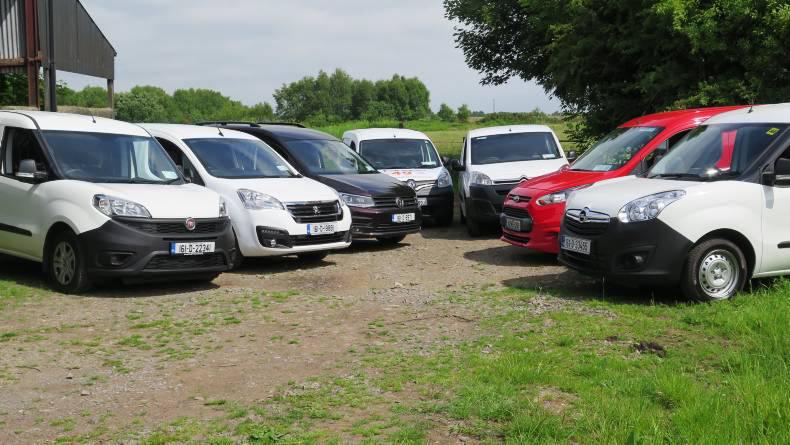
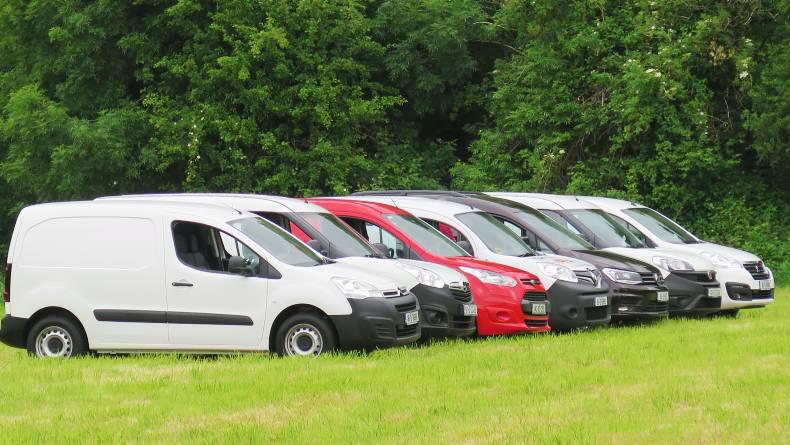
We gathered together a panel of seven vans – the Citroën Berlingo, Fiat Doblo, Ford Connect, Opel Combo, Peugeot Partner, Renault Kangoo and Volkswagen Caddy. Some of the vans were almost brand new and others had some kilometres on the clock.
Over a period of two days we brought each of the vans through a 30km test route in south Leitrim that is typical of any Irish rural road network. The road conditions varied and included many narrow and hilly sections as well as a final dual carriageway section of 3km.
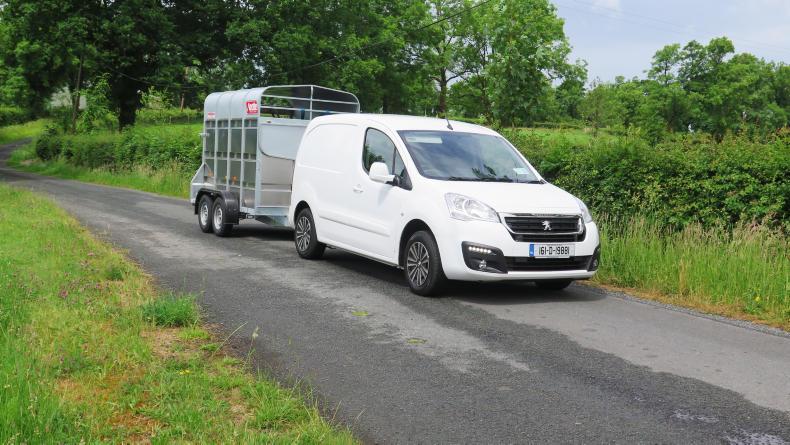
The vans were first driven empty of a load and then driven with an 8ft Aerlite trailer on tow that was partly loaded to 400kg using a cube containing water to simulate the load. The aim of this test was to replicate the driving conditions that a small van would expect to encounter in a typical mixed farm situation.
As all of the vans were fitted with their own fuel-metering devices, it was decided to use these to measure fuel usage on a trip-by-trip basis. The vans were topped with diesel where required in advance of each test and the odometers were set to zero for consistency and accuracy.
We specified that each of the vans would be fitted with a diesel engine of not more than 1.6 litres in cubic capacity, with a minimum power output of 75bhp. One of the vans, the Volkswagen Caddy, came to us with a larger 2.0 litre turbo-diesel engine, which, although it is included, prevented us from making a true and valid comparison.
We also specified that each van has a minimum towing rating of 1.0t with a braked trailer. This was important to satisfy our trailer loading. And finally, we specified that each van had the ability to carry a standard-size euro pallet in the load section.
Each van was fitted with a towbar and a towing rating of not less than 1,000kg. There were differences in the types of electrical connections, with some having a 10-pin plug and others the new type 13-pin unit. We used a coupler to allow both sets to be used with safety on the road in mind.
The trailer for the van tests was provided by Jim Murphy Trailers, Tuam, Co Galway (www.aerlite.com), makers of the Aerlite livestock trailers. The tandem axle Aerlite Irish manufactured trailer satisfied the needs of our test and is well suited to Irish conditions and comes with full CE certification.
Each driving cycle was completed with a change of driver at the same point on the route in the town of Mohill, every time. This ensured a consistency of driving conditions and comments, based on the similar route each time.
Each van was also tested for noise level using an iPhone decibel app when driving at 80km/h. This test gave interesting while not widely different readings, some of which were a little unexpected.
At the end of the two days of testing during which we drove the vans over 460km, we were able to carefully appraise their application. The vans were judged under seven headings as follows:
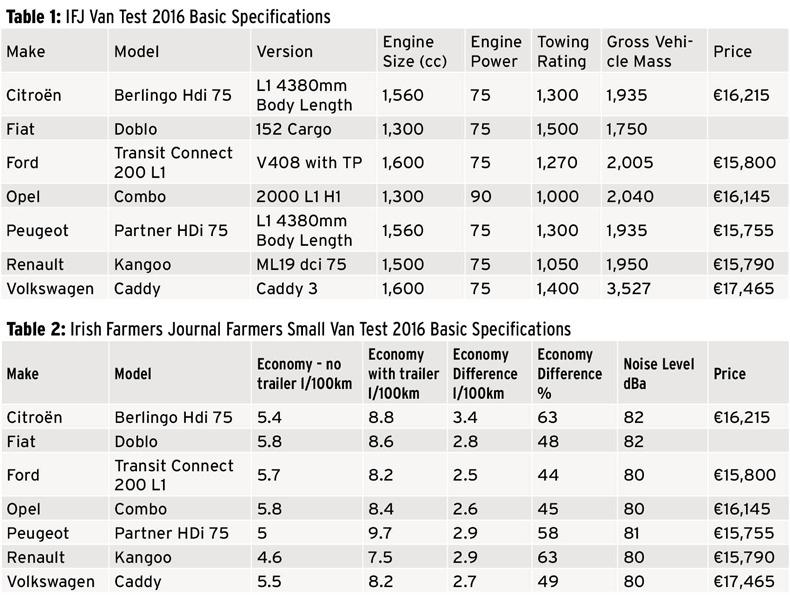
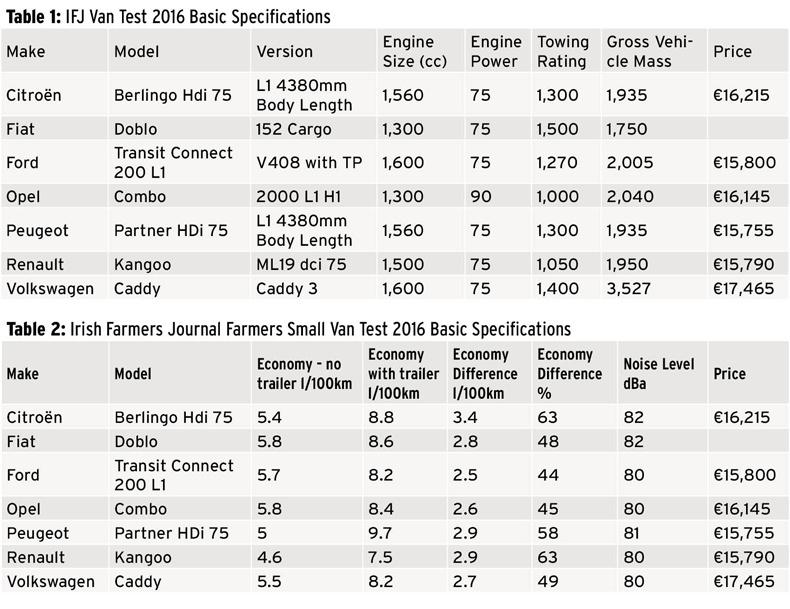
Towing ability.Driveability.Noise level.Mirrors and views.Ease of access.Ergonomics.Economy driving v towing.The results of our tests will be announced at the Irish Farmers Journal stand at Ploughing 2016 in Tullamore, and we will have a full report with the details of the winning vans in the Irish Farmers Journal issue of September 24. Over these pages, we outline the different features of the vans as we found them with some specification details in Tables 1 and 2 for comparison purposes.
Small vans compared in the Journal road tests
During our recent small van test, carried out in association with Fleet Management magazine, we tested seven popular vans that are increasingly being used on farms. Ground conditions were dry in June when we drove the vans on roads and across fields, in a testing programme that was designed to allow us to appraise each van on its merits for farm use.
Here we look at each model in alphabetical order and assess their performance based on our testing criteria. The full results of our appraisals will be announced at the National Ploughing Championships on Wednesday 21 September at the Irish Farmers Journal stand.
Citroën Berlingo
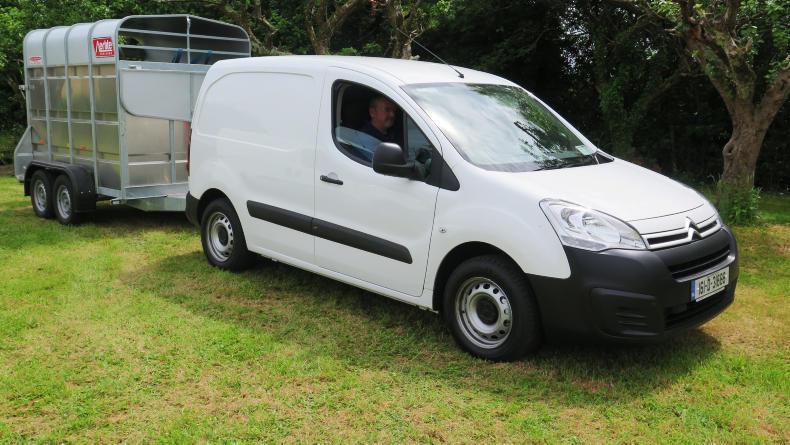
The Citroën Berlingo has been a popular van among Irish farmers and we had the 1.6-litre diesel 75bhp version on test. The van had the older screen than the more recently upgraded Peugeot Partner, which is very similar in design.
This van came with a full bulkhead to safely separate the seating from the load area. The gear lever is in a good position while there was no seat height adjustment.
There were a number of storage areas and the van performed well in terms of power and acceleration. We found the Berlingo to be a solid towing van that was well able to tow its load in safety, achieving 80km/h at a steady 1,800rpm.
We found the Berlingo to be a shade noisy and it recorded a 63% economy difference when towing, which was higher than some of the other vans tested.
Fiat Doblo
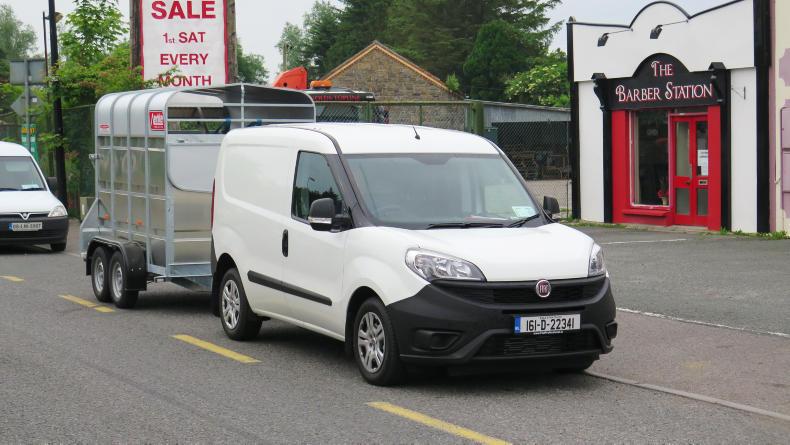
Our Fiat Doblo test van was the 1.3-litre turbo-diesel version that is rated at 75bhp. This is a modern version of the Doblo and came with seat height adjustment with an armrest and steering wheel controls, including cruise control. This van has the full range of Aux/USB connectors, which are essential in a modern van for phone charging, etc.
We liked the gear lever position and ease of use, but found that the mirrors were a little small for trailer use. There was also some noticeable tyre noise and this contributed to the overall relatively high noise level in the van cabin area.
We found the Doblo to be very stable when towing. Its good torque levels from the small engine meant that when towing at a speed of 80km/h it was running at 2,100rpm, which was probably close to its towing limit. We were impressed with the 48% fuel economy difference between driving empty and towing the trailer.
Ford Connect
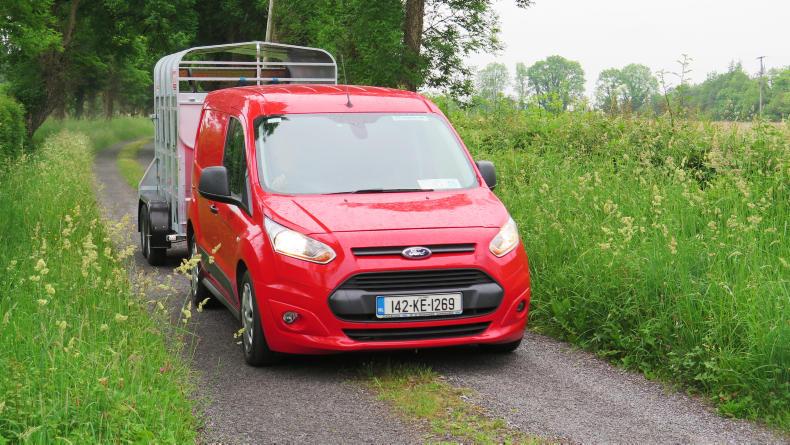
Ford has upgraded the Connect van since the 142 model that we had in our test was first produced. The van was fitted with a 1.6-litre turbo-diesel engine that was rated at 75bhp and was among the most car-like to drive. We noted this the test van was not the basic specification model but it did come with a full metal bulkhead and three seats in front, one of which folds down to be a coffee cup holder.
We noted a solid feel to the Ford Connect and there were plenty of storage areas, with a decent-size glove box. The bulkhead also folds open to carry longer items. There is an airy and spacious feel to the cabin area and we expect that the latest versions come with Aux/USB connectors.
We found the Transit Connect to be very stable when towing. We liked the fact that the mirrors were large and easily adjusted for towing a trailer. We also noted that the percentage fuel economy difference figure between empty and towing was the lowest in the group and so too was the cabin noise level.
Opel Combo
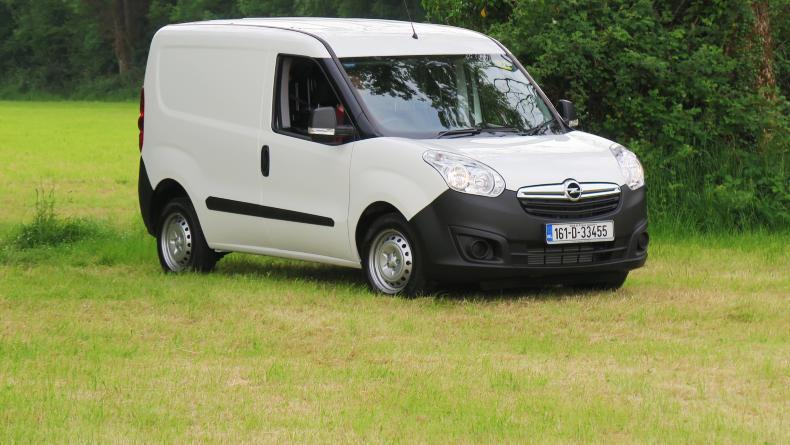
Opel’s Combo and the Fiat Doblo share many features, although Opel gets 90bhp from the 1.3-litre engine, a shade higher than Fiat. We liked the lively engine performance which included some useful low-end torque for towing the trailer.
This van was more basic than the Fiat counterpart with no seat height adjustment, armrests or Aux/USB connectors. They are all on the options list. Like the Fiat Doblo, there is not a lot of rest room for your left foot when driving, although the gear lever position is good and is easy to use with a light clutch feel. The overall driving feel was comfortable with a good steering feel to the van.
The Combo was comfortable and stable towing at a speed of 80km with 2,100rpm on the engine. We found that at that speed the van was at its limit and content at it.
We found that the percentage fuel economy difference figure between empty and towing was more impressive than with the Fiat Doblo and a close second to the Ford Connect even with its smaller engine.
Peugeot Partner
Like the Citroën Berlingo the Peugeot Partner is popular among farmers. The test van was powered by the 1.6-litre turbo-diesel engine but it has a lower torque rating than most of the competition so is at its best at lower engine revs.
The three-seat cab was separated from the load area by a mesh which meant that the drive was noisier. There is good seat height adjustment and the front, side and rear doors can be locked separately. There was an Aux port fitted but no USB connection, with Bluetooth included as standard.
This van is very similar to the Citroën Berlingo in terms of features, with slight specification differences. The driving experience gave more vibration and noise than the other vans on test and this could be due to mesh bulkhead, which combined to give a higher noise rating.
Out towing we found the Partner to be very stable and reasonably quiet at cruising towing speed of 80km/h on good roads. We noted the need to drop down the gears with the trailer behind when facing hills, while on the open road it cruised at 80km/h at a smooth 1,800rpm. There was an unusual noise effect from the ball hitch which we failed to trace.
We found that when driving without the trailer the Peugeot Partner was more economical than most of the other vans, although when the trailer was hitched the economy difference at 63% was the joint highest with the very similar Citroën Berlingo.
Renault Kangoo
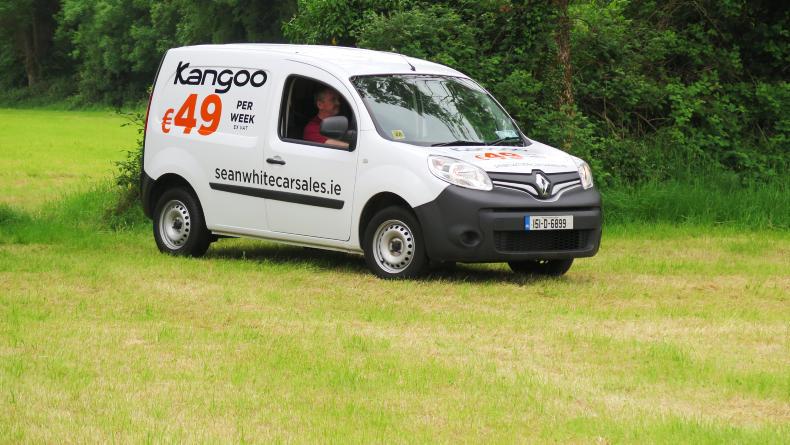
The Renault Kangoo that we had on test was an older model with some kilometres on the clock. This was a basic model with no bulkhead to separate the load area from the seats. The Kangoo was fitted with an after-market Aux/USB kit that included Bluetooth.
There was an airy feel to the Kangoo cabin, probably due to the lack of a bulkhead. The overall noise effect was significant even though the noise meter recorded a low reading.
There is good storage including a big pocket area in the front dash to hold an A4 booklet.
The seating position was not great which impacts on the view of the dash dials. The seats themselves were a shade soft and lacked support. On the other hand, there is good side visibility due to the seat position, especially when coming to road junctions.
When towing, we found a little more front to back bounce while the low revving engine was effective in delivering a speed of 80km/h at 1,800rpm. Without a load on board, the Kangoo was the most economical van in the test but that changed when we hitched up the trailer - it had one of the highest percentage differences.
Volkswagen Caddy
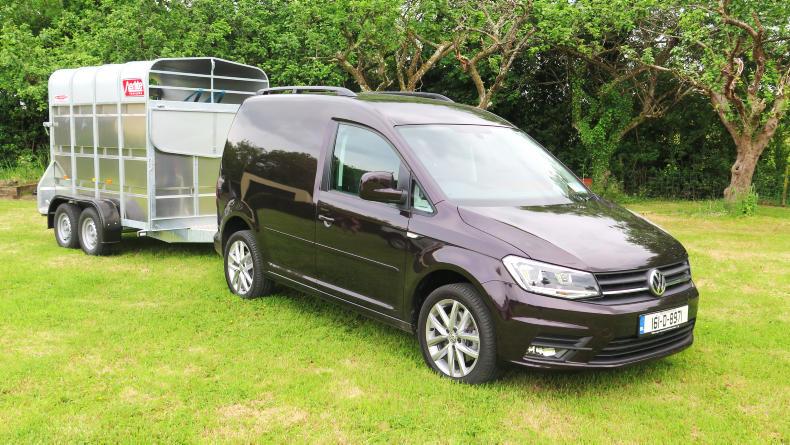
The Volkswagen Caddy for the van test came well equipped and powered by a 2.0-litre turbo-diesel engine that was the biggest-capacity engine in the group. This gave it a power and torque advantage over the other vans compared, even though this is the entry van in the Caddy range. This was the only AdBlue engine van in the range of fully EU6 compliant.
The engine was matched to a six-speed gearbox, making this the only six-speed van in the test. The Caddy gear lever is in a low floor position while all others are higher mounted, making them easier to use.
The Caddy cabin area is modern and car-like, with a full bulkhead which curves out more on the passenger side. However, this restricts the ability to recline the passenger seat, so the driver’s mate won’t be happy. The Caddy has great storage options, with a generous glove compartment and good overhead storage. The Caddy mirrors were the best of the group with large mirrors making life easy for trailer work.
Out on the road towing this was a very stable and very good towing van. There is lots of low-down engine torque to cope with hills and you can cruise on the better road with a trailer in sixth gear at just 1,200rpm on the engine, for good economy. This Caddy came with a good economy rating and economy percentage difference when towing was close to the best at 49%, while noise levels are very good due to a combination of solid build features.
During the early summer months, the Irish Farmers Journal joined forces with Fleet Management magazine to carry out a series of van tests in order to find the small van that could be judged to be the Irish Farmers Journal Farmer’s Van of the Year 2016. The aim was to find the small van that best suited the needs of the average farmer, from being a farm runabout to being a general farming toolbox carrier and also a useful and cost-effective alternative transport vehicle for all-round farm duties.
We gathered together a panel of seven vans – the Citroën Berlingo, Fiat Doblo, Ford Connect, Opel Combo, Peugeot Partner, Renault Kangoo and Volkswagen Caddy. Some of the vans were almost brand new and others had some kilometres on the clock.
Over a period of two days we brought each of the vans through a 30km test route in south Leitrim that is typical of any Irish rural road network. The road conditions varied and included many narrow and hilly sections as well as a final dual carriageway section of 3km.
The vans were first driven empty of a load and then driven with an 8ft Aerlite trailer on tow that was partly loaded to 400kg using a cube containing water to simulate the load. The aim of this test was to replicate the driving conditions that a small van would expect to encounter in a typical mixed farm situation.
As all of the vans were fitted with their own fuel-metering devices, it was decided to use these to measure fuel usage on a trip-by-trip basis. The vans were topped with diesel where required in advance of each test and the odometers were set to zero for consistency and accuracy.
We specified that each of the vans would be fitted with a diesel engine of not more than 1.6 litres in cubic capacity, with a minimum power output of 75bhp. One of the vans, the Volkswagen Caddy, came to us with a larger 2.0 litre turbo-diesel engine, which, although it is included, prevented us from making a true and valid comparison.
We also specified that each van has a minimum towing rating of 1.0t with a braked trailer. This was important to satisfy our trailer loading. And finally, we specified that each van had the ability to carry a standard-size euro pallet in the load section.
Each van was fitted with a towbar and a towing rating of not less than 1,000kg. There were differences in the types of electrical connections, with some having a 10-pin plug and others the new type 13-pin unit. We used a coupler to allow both sets to be used with safety on the road in mind.
The trailer for the van tests was provided by Jim Murphy Trailers, Tuam, Co Galway (www.aerlite.com), makers of the Aerlite livestock trailers. The tandem axle Aerlite Irish manufactured trailer satisfied the needs of our test and is well suited to Irish conditions and comes with full CE certification.
Each driving cycle was completed with a change of driver at the same point on the route in the town of Mohill, every time. This ensured a consistency of driving conditions and comments, based on the similar route each time.
Each van was also tested for noise level using an iPhone decibel app when driving at 80km/h. This test gave interesting while not widely different readings, some of which were a little unexpected.
At the end of the two days of testing during which we drove the vans over 460km, we were able to carefully appraise their application. The vans were judged under seven headings as follows:
Towing ability.Driveability.Noise level.Mirrors and views.Ease of access.Ergonomics.Economy driving v towing.The results of our tests will be announced at the Irish Farmers Journal stand at Ploughing 2016 in Tullamore, and we will have a full report with the details of the winning vans in the Irish Farmers Journal issue of September 24. Over these pages, we outline the different features of the vans as we found them with some specification details in Tables 1 and 2 for comparison purposes.
Small vans compared in the Journal road tests
During our recent small van test, carried out in association with Fleet Management magazine, we tested seven popular vans that are increasingly being used on farms. Ground conditions were dry in June when we drove the vans on roads and across fields, in a testing programme that was designed to allow us to appraise each van on its merits for farm use.
Here we look at each model in alphabetical order and assess their performance based on our testing criteria. The full results of our appraisals will be announced at the National Ploughing Championships on Wednesday 21 September at the Irish Farmers Journal stand.
Citroën Berlingo
The Citroën Berlingo has been a popular van among Irish farmers and we had the 1.6-litre diesel 75bhp version on test. The van had the older screen than the more recently upgraded Peugeot Partner, which is very similar in design.
This van came with a full bulkhead to safely separate the seating from the load area. The gear lever is in a good position while there was no seat height adjustment.
There were a number of storage areas and the van performed well in terms of power and acceleration. We found the Berlingo to be a solid towing van that was well able to tow its load in safety, achieving 80km/h at a steady 1,800rpm.
We found the Berlingo to be a shade noisy and it recorded a 63% economy difference when towing, which was higher than some of the other vans tested.
Fiat Doblo
Our Fiat Doblo test van was the 1.3-litre turbo-diesel version that is rated at 75bhp. This is a modern version of the Doblo and came with seat height adjustment with an armrest and steering wheel controls, including cruise control. This van has the full range of Aux/USB connectors, which are essential in a modern van for phone charging, etc.
We liked the gear lever position and ease of use, but found that the mirrors were a little small for trailer use. There was also some noticeable tyre noise and this contributed to the overall relatively high noise level in the van cabin area.
We found the Doblo to be very stable when towing. Its good torque levels from the small engine meant that when towing at a speed of 80km/h it was running at 2,100rpm, which was probably close to its towing limit. We were impressed with the 48% fuel economy difference between driving empty and towing the trailer.
Ford Connect
Ford has upgraded the Connect van since the 142 model that we had in our test was first produced. The van was fitted with a 1.6-litre turbo-diesel engine that was rated at 75bhp and was among the most car-like to drive. We noted this the test van was not the basic specification model but it did come with a full metal bulkhead and three seats in front, one of which folds down to be a coffee cup holder.
We noted a solid feel to the Ford Connect and there were plenty of storage areas, with a decent-size glove box. The bulkhead also folds open to carry longer items. There is an airy and spacious feel to the cabin area and we expect that the latest versions come with Aux/USB connectors.
We found the Transit Connect to be very stable when towing. We liked the fact that the mirrors were large and easily adjusted for towing a trailer. We also noted that the percentage fuel economy difference figure between empty and towing was the lowest in the group and so too was the cabin noise level.
Opel Combo
Opel’s Combo and the Fiat Doblo share many features, although Opel gets 90bhp from the 1.3-litre engine, a shade higher than Fiat. We liked the lively engine performance which included some useful low-end torque for towing the trailer.
This van was more basic than the Fiat counterpart with no seat height adjustment, armrests or Aux/USB connectors. They are all on the options list. Like the Fiat Doblo, there is not a lot of rest room for your left foot when driving, although the gear lever position is good and is easy to use with a light clutch feel. The overall driving feel was comfortable with a good steering feel to the van.
The Combo was comfortable and stable towing at a speed of 80km with 2,100rpm on the engine. We found that at that speed the van was at its limit and content at it.
We found that the percentage fuel economy difference figure between empty and towing was more impressive than with the Fiat Doblo and a close second to the Ford Connect even with its smaller engine.
Peugeot Partner
Like the Citroën Berlingo the Peugeot Partner is popular among farmers. The test van was powered by the 1.6-litre turbo-diesel engine but it has a lower torque rating than most of the competition so is at its best at lower engine revs.
The three-seat cab was separated from the load area by a mesh which meant that the drive was noisier. There is good seat height adjustment and the front, side and rear doors can be locked separately. There was an Aux port fitted but no USB connection, with Bluetooth included as standard.
This van is very similar to the Citroën Berlingo in terms of features, with slight specification differences. The driving experience gave more vibration and noise than the other vans on test and this could be due to mesh bulkhead, which combined to give a higher noise rating.
Out towing we found the Partner to be very stable and reasonably quiet at cruising towing speed of 80km/h on good roads. We noted the need to drop down the gears with the trailer behind when facing hills, while on the open road it cruised at 80km/h at a smooth 1,800rpm. There was an unusual noise effect from the ball hitch which we failed to trace.
We found that when driving without the trailer the Peugeot Partner was more economical than most of the other vans, although when the trailer was hitched the economy difference at 63% was the joint highest with the very similar Citroën Berlingo.
Renault Kangoo
The Renault Kangoo that we had on test was an older model with some kilometres on the clock. This was a basic model with no bulkhead to separate the load area from the seats. The Kangoo was fitted with an after-market Aux/USB kit that included Bluetooth.
There was an airy feel to the Kangoo cabin, probably due to the lack of a bulkhead. The overall noise effect was significant even though the noise meter recorded a low reading.
There is good storage including a big pocket area in the front dash to hold an A4 booklet.
The seating position was not great which impacts on the view of the dash dials. The seats themselves were a shade soft and lacked support. On the other hand, there is good side visibility due to the seat position, especially when coming to road junctions.
When towing, we found a little more front to back bounce while the low revving engine was effective in delivering a speed of 80km/h at 1,800rpm. Without a load on board, the Kangoo was the most economical van in the test but that changed when we hitched up the trailer - it had one of the highest percentage differences.
Volkswagen Caddy
The Volkswagen Caddy for the van test came well equipped and powered by a 2.0-litre turbo-diesel engine that was the biggest-capacity engine in the group. This gave it a power and torque advantage over the other vans compared, even though this is the entry van in the Caddy range. This was the only AdBlue engine van in the range of fully EU6 compliant.
The engine was matched to a six-speed gearbox, making this the only six-speed van in the test. The Caddy gear lever is in a low floor position while all others are higher mounted, making them easier to use.
The Caddy cabin area is modern and car-like, with a full bulkhead which curves out more on the passenger side. However, this restricts the ability to recline the passenger seat, so the driver’s mate won’t be happy. The Caddy has great storage options, with a generous glove compartment and good overhead storage. The Caddy mirrors were the best of the group with large mirrors making life easy for trailer work.
Out on the road towing this was a very stable and very good towing van. There is lots of low-down engine torque to cope with hills and you can cruise on the better road with a trailer in sixth gear at just 1,200rpm on the engine, for good economy. This Caddy came with a good economy rating and economy percentage difference when towing was close to the best at 49%, while noise levels are very good due to a combination of solid build features.






SHARING OPTIONS