Skoda is one of the few car brands that gives you power choices and that includes diesel engine options.
Add to that some new model choices from large estate cars to modern-looking SUVs and the Skoda practical offers seem to be leap-frogging ahead of other brands within the Volkswagen Group.
This week, we look at the choice between a large estate car in the shape of the Superb Combi and the new generation Kodiaq SUV. Both are available with petrol, diesel and Plug-In Hybrid (PHEV) power options, and that alone is refreshing.
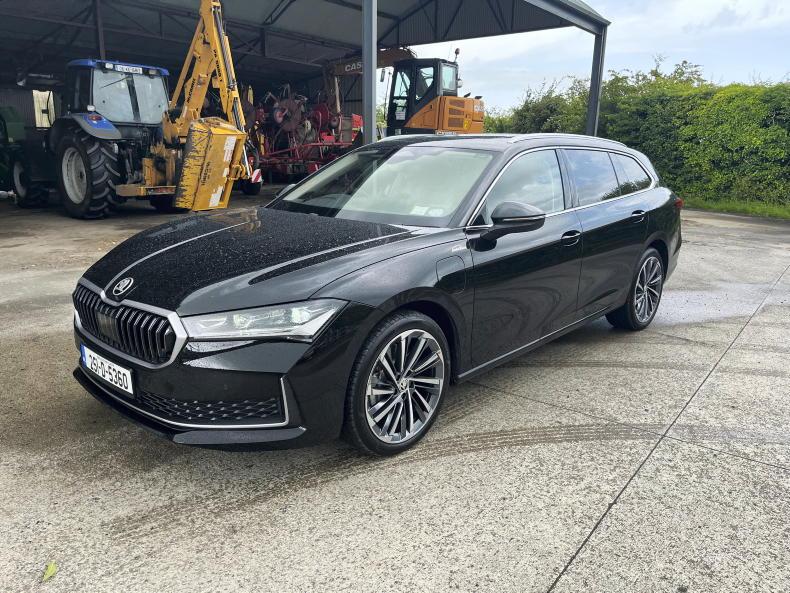
The hugely spacious Skoda Superb Combi has extra comfort, with entry prices starting at €50,865 or £48,175 in N. Ireland.
I’ve driven both cars in recent weeks and while they are different in terms of styling and market perception, they are close in terms of price.
The new Kodiaq is just the second generation of the car and, not surprisingly, it is the second most popular car in the Skoda range in Ireland after the Octavia.
Boot space
This is a bigger and more modern-looking Kodiaq than in the past and the boot space has been further enlarged by 75 litres to push to over 1,900 litres with all the rear seats down.

The boot capacity is massive in the Skoda Superb Combi.
The PHEV version that I drove does not have the seven-seat option, while this is available in the diesel versions of the car. The seats are comfortable and easily adjustable while there is adequate rear legroom.
The dash layout has been modernised, and the automatic gearbox control lever has been moved to a stalk position on the steering wheel.
This new design gives a more spacious and airy interior feel to the front of the car and there were nice touches of leather in the dash.
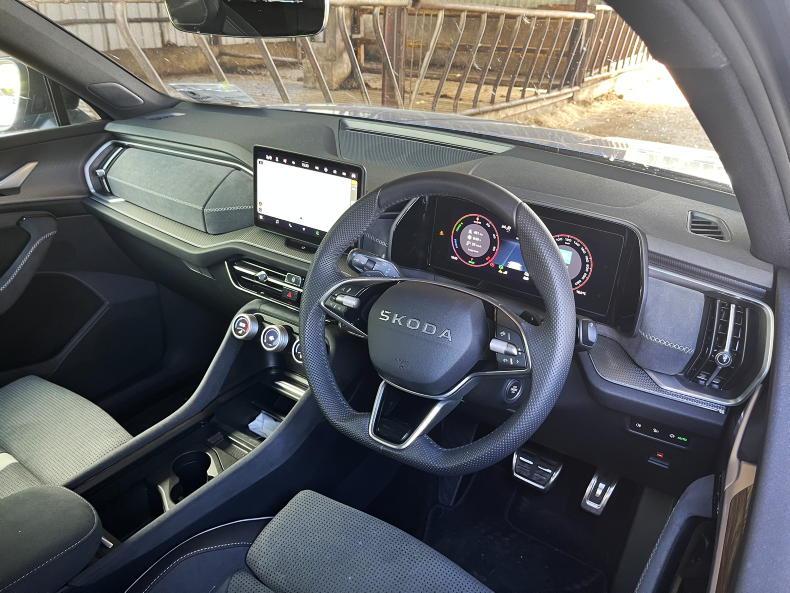
The dash for the Skoda Kodiaq is modern and has a more luxury feel to it, with a clear layout that’s easy to use while angling the infotainment screen slightly would have been more helpful.
The Superb Combi is, on the other hand, a large, almost hearse-like estate car that has levels of luxury that you’ll only find on some more expensive brands.
The version that I drove was the L&K specification, where luxury leather type seating dominated the colour palate.
Fold down the rear seats and there seems to be no end to the length of the car. I filled it with 3.2 metre lengths of fencing timber and drove home without a hint of the extent of the load on board.
There are some similarities in the design lines of the dashboard, with a more luxury feel to the Superb. Again the automatic gearbox control is stalk-mounted and easy to use, along with a very clear and large, centrally mounted infotainment screen.
1.5 litre turbo-petrol engine
Both of these PHEV cars were powered by the same 1.5 litre turbo-petrol engine with the support of an identical hybrid drive system and a similar 45-litre capacity fuel tank.
For some reason, the Kodiaq was rated faster in terms of acceleration, while the Superb was rated as being more economical, if only marginally.
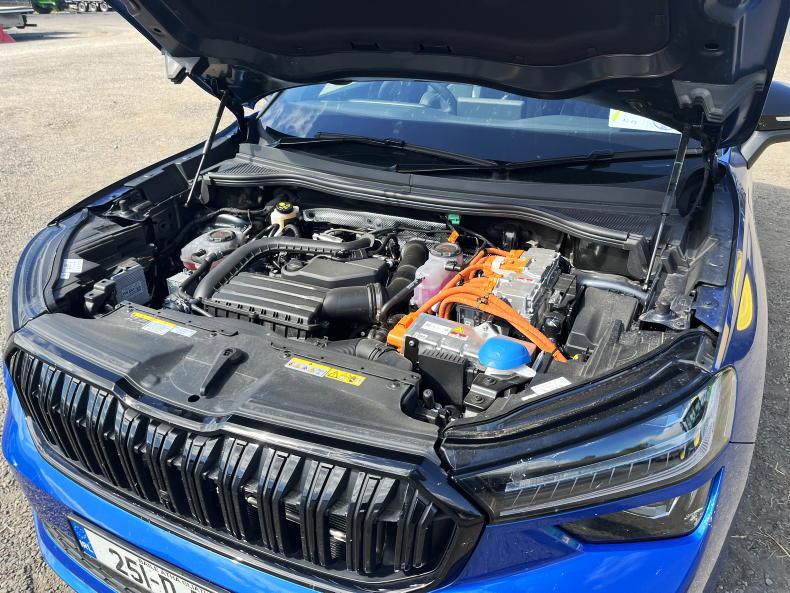
The Skoda Kodiaq PHEV is powered by a 1.5 litre petrol engine combined with a rechargeable 19.7kWh battery.
With that economy benefit, the Superb will travel further on a full tank with a fully charged 19.7kWh battery.
The Kodiaq is a slightly heavier car, while they are identical in terms of towing ability at 1.8 tonnes. The Superb comes with the trailer hitch preparation kit included while the towbar adds €1,150 to the price of the Kodiaq.
If you take the option of a 2.0 litre turbo-diesel engine in both cars, the towing rating jumps to two tonnes, while the 4x4 diesel version of the Kodiaq is rated to pull 2.5 tonnes and that’s impressive.
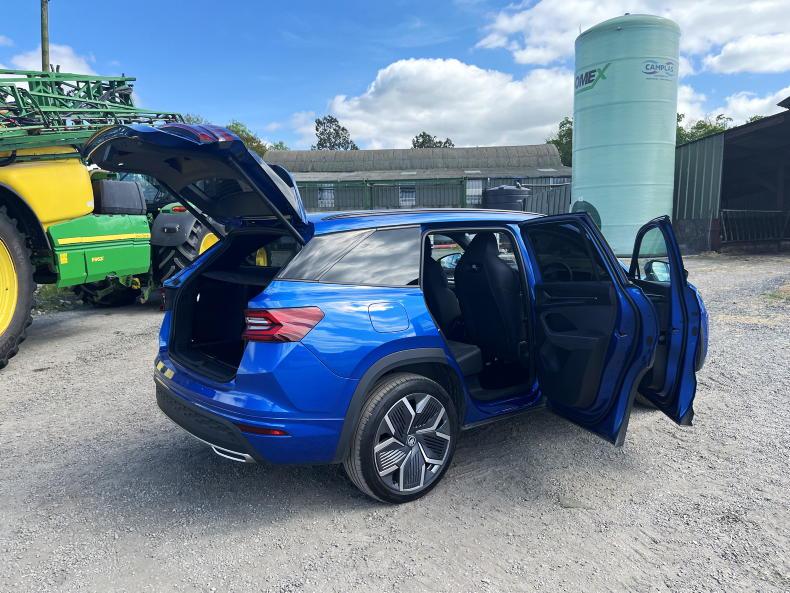
The access to the Skoda Kodiaq is easy with good space and a huge boot area, while seven seats are available on diesel powered models.
The diesel versions all have 10 litres more capacity in their fuel tanks, giving a fully loaded range rating of almost 1,000km without stopping.
That’s simply the highlight of the diesel engine difference, along with a doubling of the annual road tax rate.
Pricing
When it comes to pricing, the PHEV version with its lower CO2 values are more price competitive, by upwards of €1,000 across each model.
Either way, these are good practical cars that have a modern styling and uniquely give power choices; mine was the Kodiaq.
Skoda is one of the few car brands that gives you power choices and that includes diesel engine options.
Add to that some new model choices from large estate cars to modern-looking SUVs and the Skoda practical offers seem to be leap-frogging ahead of other brands within the Volkswagen Group.
This week, we look at the choice between a large estate car in the shape of the Superb Combi and the new generation Kodiaq SUV. Both are available with petrol, diesel and Plug-In Hybrid (PHEV) power options, and that alone is refreshing.

The hugely spacious Skoda Superb Combi has extra comfort, with entry prices starting at €50,865 or £48,175 in N. Ireland.
I’ve driven both cars in recent weeks and while they are different in terms of styling and market perception, they are close in terms of price.
The new Kodiaq is just the second generation of the car and, not surprisingly, it is the second most popular car in the Skoda range in Ireland after the Octavia.
Boot space
This is a bigger and more modern-looking Kodiaq than in the past and the boot space has been further enlarged by 75 litres to push to over 1,900 litres with all the rear seats down.

The boot capacity is massive in the Skoda Superb Combi.
The PHEV version that I drove does not have the seven-seat option, while this is available in the diesel versions of the car. The seats are comfortable and easily adjustable while there is adequate rear legroom.
The dash layout has been modernised, and the automatic gearbox control lever has been moved to a stalk position on the steering wheel.
This new design gives a more spacious and airy interior feel to the front of the car and there were nice touches of leather in the dash.

The dash for the Skoda Kodiaq is modern and has a more luxury feel to it, with a clear layout that’s easy to use while angling the infotainment screen slightly would have been more helpful.
The Superb Combi is, on the other hand, a large, almost hearse-like estate car that has levels of luxury that you’ll only find on some more expensive brands.
The version that I drove was the L&K specification, where luxury leather type seating dominated the colour palate.
Fold down the rear seats and there seems to be no end to the length of the car. I filled it with 3.2 metre lengths of fencing timber and drove home without a hint of the extent of the load on board.
There are some similarities in the design lines of the dashboard, with a more luxury feel to the Superb. Again the automatic gearbox control is stalk-mounted and easy to use, along with a very clear and large, centrally mounted infotainment screen.
1.5 litre turbo-petrol engine
Both of these PHEV cars were powered by the same 1.5 litre turbo-petrol engine with the support of an identical hybrid drive system and a similar 45-litre capacity fuel tank.
For some reason, the Kodiaq was rated faster in terms of acceleration, while the Superb was rated as being more economical, if only marginally.

The Skoda Kodiaq PHEV is powered by a 1.5 litre petrol engine combined with a rechargeable 19.7kWh battery.
With that economy benefit, the Superb will travel further on a full tank with a fully charged 19.7kWh battery.
The Kodiaq is a slightly heavier car, while they are identical in terms of towing ability at 1.8 tonnes. The Superb comes with the trailer hitch preparation kit included while the towbar adds €1,150 to the price of the Kodiaq.
If you take the option of a 2.0 litre turbo-diesel engine in both cars, the towing rating jumps to two tonnes, while the 4x4 diesel version of the Kodiaq is rated to pull 2.5 tonnes and that’s impressive.

The access to the Skoda Kodiaq is easy with good space and a huge boot area, while seven seats are available on diesel powered models.
The diesel versions all have 10 litres more capacity in their fuel tanks, giving a fully loaded range rating of almost 1,000km without stopping.
That’s simply the highlight of the diesel engine difference, along with a doubling of the annual road tax rate.
Pricing
When it comes to pricing, the PHEV version with its lower CO2 values are more price competitive, by upwards of €1,000 across each model.
Either way, these are good practical cars that have a modern styling and uniquely give power choices; mine was the Kodiaq.
SHARING OPTIONS