



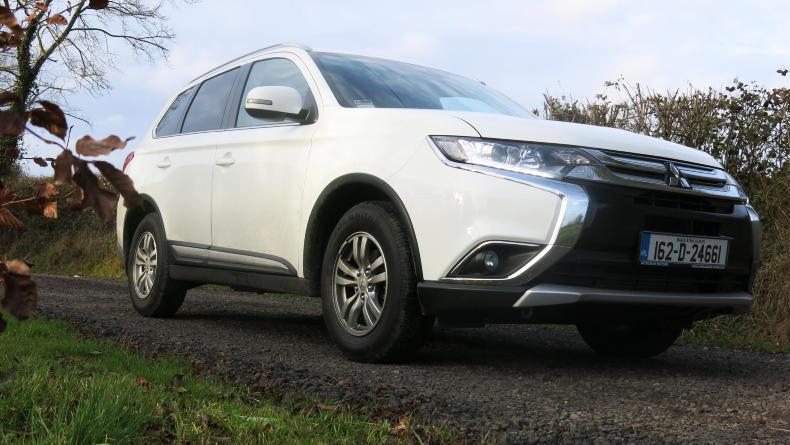
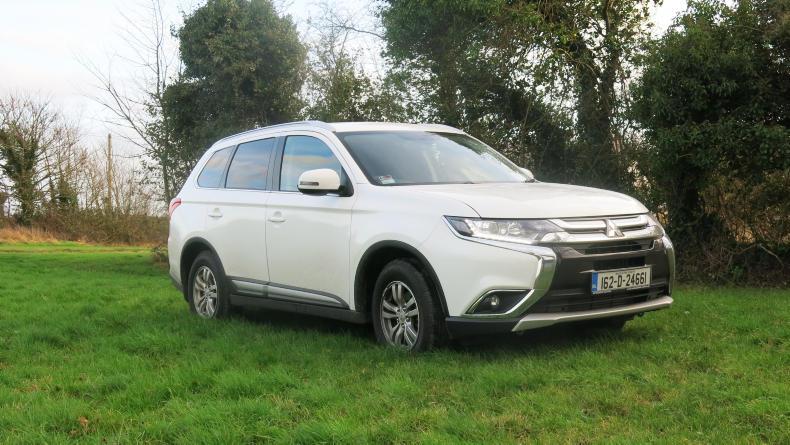
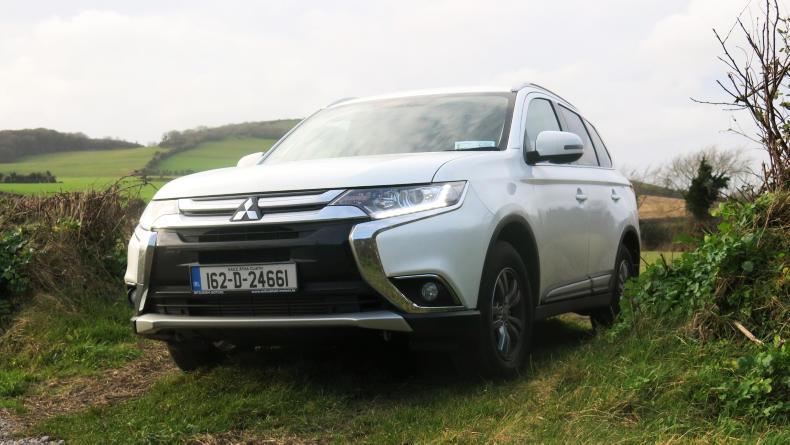
The Outlander, introduced way back in 2001, has earned a reputation as a dependable workhorse for both commercial and family use. The Business model I had on test is enjoyable to drive, and is equipped with a level of comfort to satisfy most drivers.
The Outlander has often been cited as being too bland compared with other SUVs on the market. It had a reputation of not being particularly well finished on the inside. However, Mitsubishi has paid a bit of attention to the cabin on this model. There are significant technology upgrades, while the seating and trim has been upgraded also.
There is a leather steering and gear shift lever, the trim has a quality stitched feel to it. Everything inside the cabin feels like it will last on the road and in the field. The seatbelt warning indicator light did appear like it was lifted straight from an early Pajero model.
Driving the Outlander Business
I did quite enjoy the Outlander on the road. The interior noise seems to have been reduced quite a bit compared with the previous models. On a motorway cruise, the decibel (dB) level ranged from 55-70dB depending on the volume of traffic and road noise at higher speeds.
When using the Bluetooth hands-free system, a few people commented on how quiet and clear I sounded over the phone. For a business-targeted SUV, that is really important.
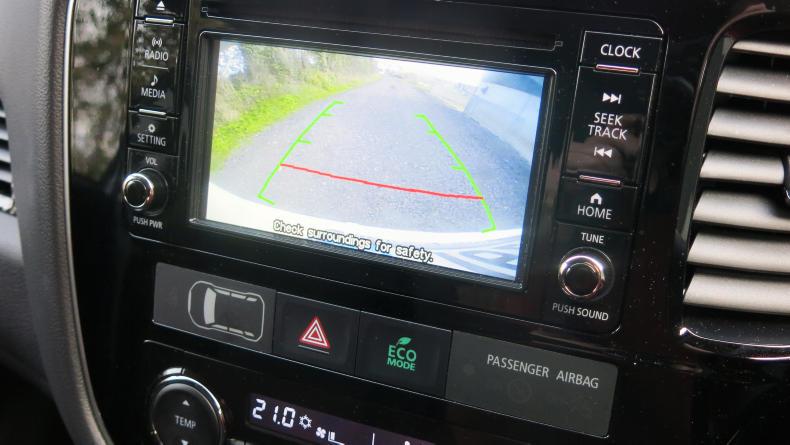
The touchscreen did get a little bit fiddly at times. The phone menu on the screen is found by scrolling over to the right, making it a little bit more cumbersome to navigate. That said, the voice-activated dialling worked far better than on other models with the same feature.
Cruise control is standard. Another nice feature is the speed limiter function, which will not allow the driver pass the set speed. It could help with keeping the penalty points down. Other nice features included auto-dimming rear view mirror and rain-sensitive wipers, all adding to driving experience. Long journeys in the Outlander were comfortable; the seat position has two adjustments and lumbar support for the back and a tiltable telescopic steering adjustment.
The transmission drive train offers three driving modes in 4wd. All are electronically controlled from the dial located next to the handbrake. For most journeys, I selected 4wd Eco for maximum fuel efficiency, reducing the transmission effort. The other modes are 4wd Auto for normal driving conditions, and 4wd Lock mode for rough terrain off-road. The SUV uses an auto stop and go – as soon the car stops, the engine switches off, and restarts when the brake pedal is released.
The driver aids for the outlander include the clever hill start function that allows a two-second hold on the brakes after the pedal is released, and the accelerator depressed. This window eliminates the roll back when starting off. Traction control is standard, along with an ABS system featuring Electronic Brake Force Distribution. This feature can assess where the braking effort is most required. For example, when towing, the SUV will generate the most braking effort to the rear brakes as the weight is loaded on to the rear axles.
Five is the magic number for Mitsubishi, which offers a five-year warranty or 150,000km, and the Outlander scores five in the Euro NCAP Safety Test. The warranty is three years under the passenger variant. This will appeal to business drivers, and shows that Mitsubishi is pretty confident of the Outlander. The warranty is subject to the vehicle being presented for a free annual health check to any approved Mitsubishi dealer.
The Jewel in the Outlander
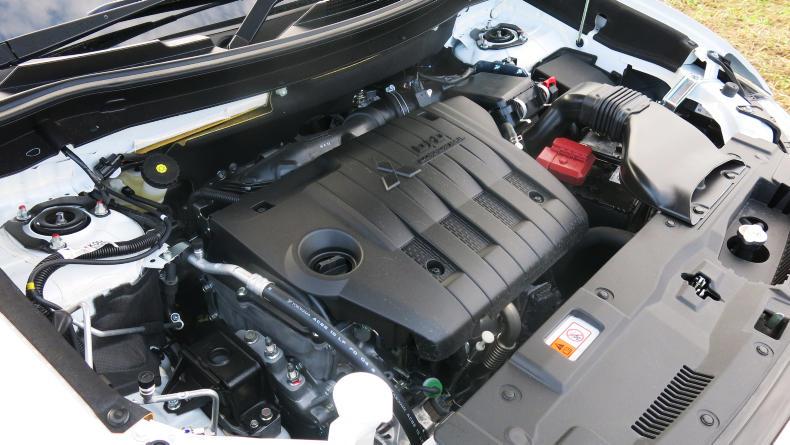
Overall, the best feature for me in this package is the performance of the 2.2l diesel engine. Mitsubishi has refined the engine and reduced the noise levels, but more importantly it is a miser on fuel for this class of car. On the fuel test, the SUV achieved a staggeringly good 5.4l/100km or 51mpg. This was achieved on a run from Portlaoise to Dublin, where the tank was brimmed and then refilled to the same level in Dublin.
On the test, the SUV was driven as close as possible to the recommended driving speeds. That said, it cruised at 120km along he motorway at 2,000rpm. The engine is no slouch either at 150bhp developing 380Nm of torque, so thanks to the Outlander’s reasonably trim 1,595kg kerb weight, it never feels less than brisk.
Under the new skin are some more significant changes. The suspension mounts are stiffer and the rear shock absorbers have been increased in diameter, both to improve ride quality and sharpen the steering. The Outlander comes with 16in alloy wheels as standard. These can be upgraded with an optional styling pack that gives leather heated seats also. The Outlander Business has impressive towing ability at 2,000kg and also the storage capacity of 2,000l in the back will appeal to a lot of business users.
Mitsubishi is aiming this SUV at the business driver who needs the economy of a saloon with the storage and towing capacity of an SUV or small 4x4. Practically, this car makes a lot of sense for a business. Entry prices start at €26,260 ex VAT, with €333 annual taxation for a commercial of this size. A lot of fleet drivers could consider this an option, with the lower rate of 5% BIK, and the extra specification added to the Outlander Business.
Added to that is the fact that the Outlander can bounce across fields to inspect animals or tackle some more of the challenging driving conditions. The low kerb weight also allows a decent-sized trailer to be towed behind the Outlander without needing the B2 licence category. In summary, the Outlander is practical, well equipped and efficient. If that is what you’re after, it’s well worth a look.



SHARING OPTIONS