



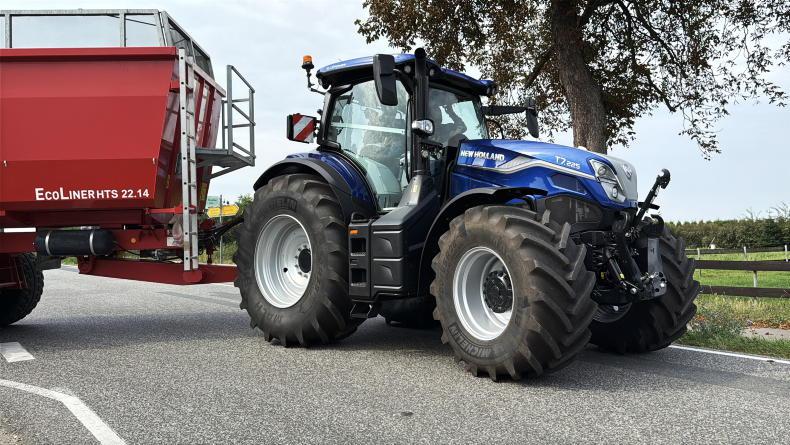
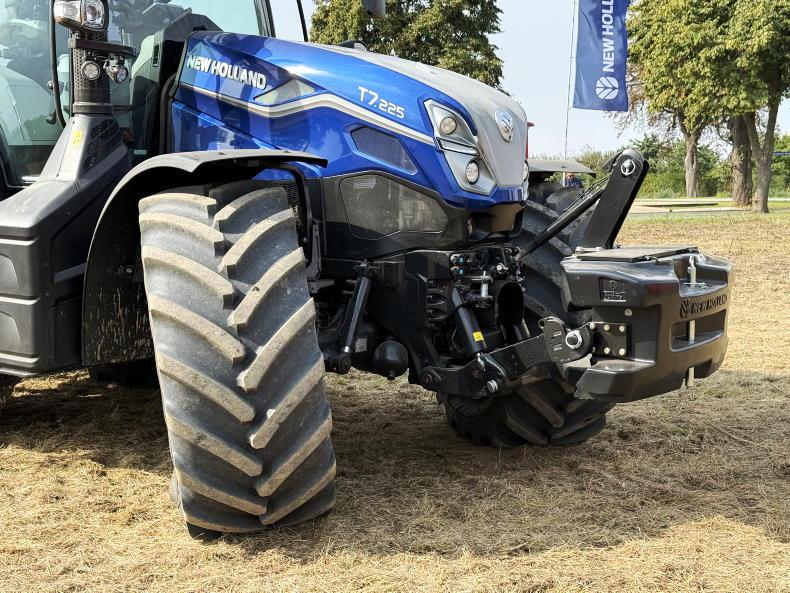
Earlier this autumn, New Holland unveiled a new lineup of Basildon-built short wheelbase (SWB) T7 tractors, ranging from 180hp to 225hp, completing what has been four year renewal of the entire T7 portfolio.
In Ireland, the T7 short wheelbase accounts for a large proportion of new and used sales.
Most notably, the T7.210 recorded the highest number of used imports in 2024, with 92 registrations. The T7.200 and T7.225 also ranked in the top 10 with 27 and 23 used imports, respectively.
Though the core DNA remains, the new models have been completely re-engineered after extensive customer feedback.
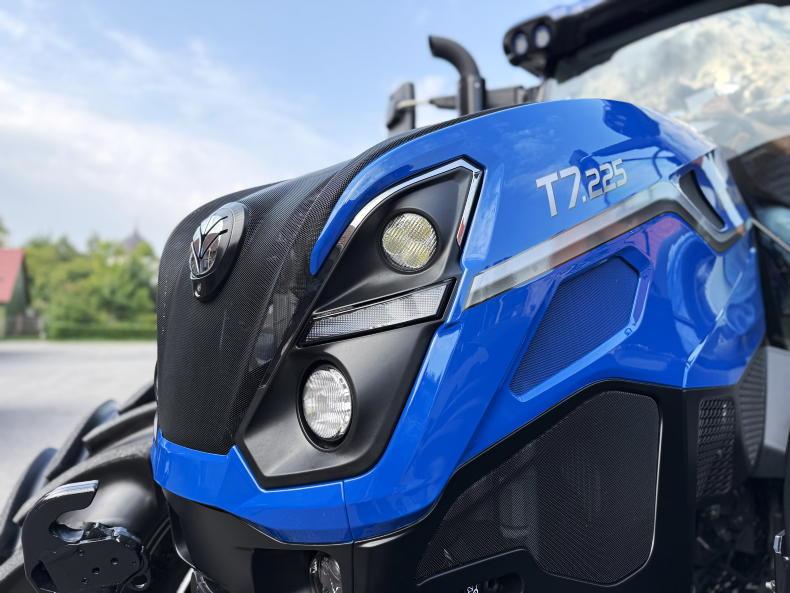
Alongside striking new bonnet styling, New Holland has introduced a ‘dynamic blue’ colour scheme and grey rims as standard, providing a more ‘premium look’.
The ‘blue power’ colour and styling package remains optional.
To see if the new short wheelbase range was worth the wait, the Irish Farmers Journal spent some time with the flagship T7.225 AutoCommand at the launch event in Germany.
The lineup
Four models continue to be offered, each sharing the 2.79m wheelbase. However, T7.175 now becomes the T7.180 and is joined by T7.190, T7.210 and T7.225. Although confusing for some, New Holland continues using its boosted power rating for the model numbering.
New models will be originally offered as AutoCommand only until production has been fully ramped up. Both Dynamic and Range Command units will then follow later in 2026.
That said, the existing generation will continue to be offered for an unknown period of time with Range and Power Command transmissions.
Cab
Arguably one of the more outdated features of the current SWB T7 tractors has been the cab. Although structurally unchanged, the fit and finish from the larger T7 LWB/HD Horizon cab has migrated over, giving a more automotive feel.
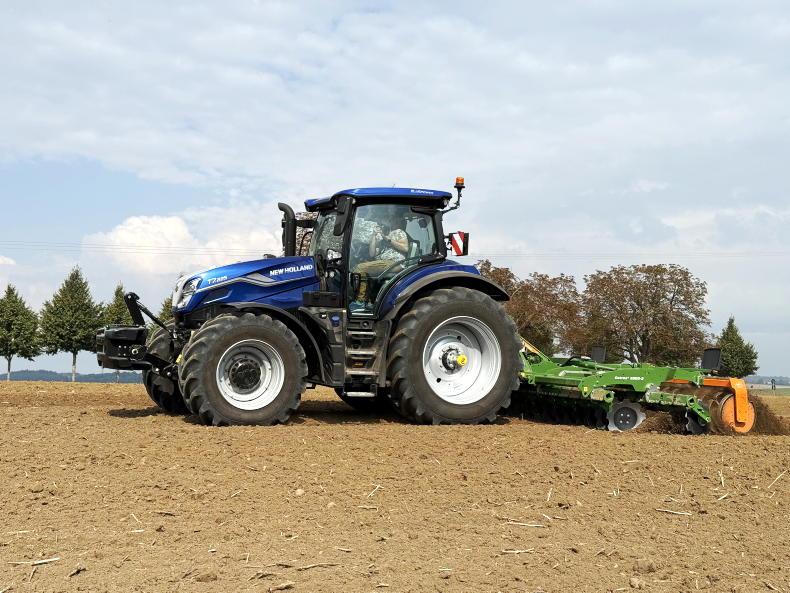
The rear pillars have been reworked to improve visibility and space, particularly behind the operator seat which now offers 10% more travel.
In addition to the standard roof – which is available with or without a sunroof – there is a low-profile panoramic option available. The new cab is Isobus class three and TIM compatible, ex-factory.
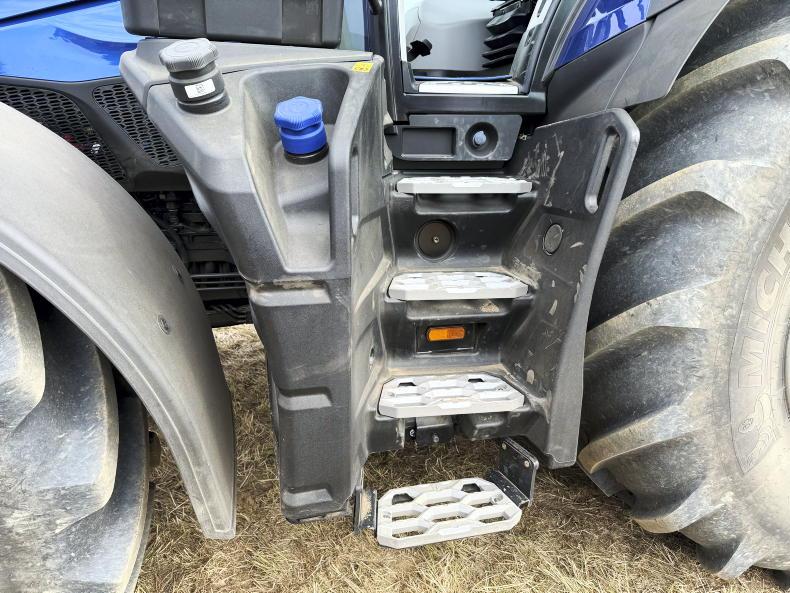
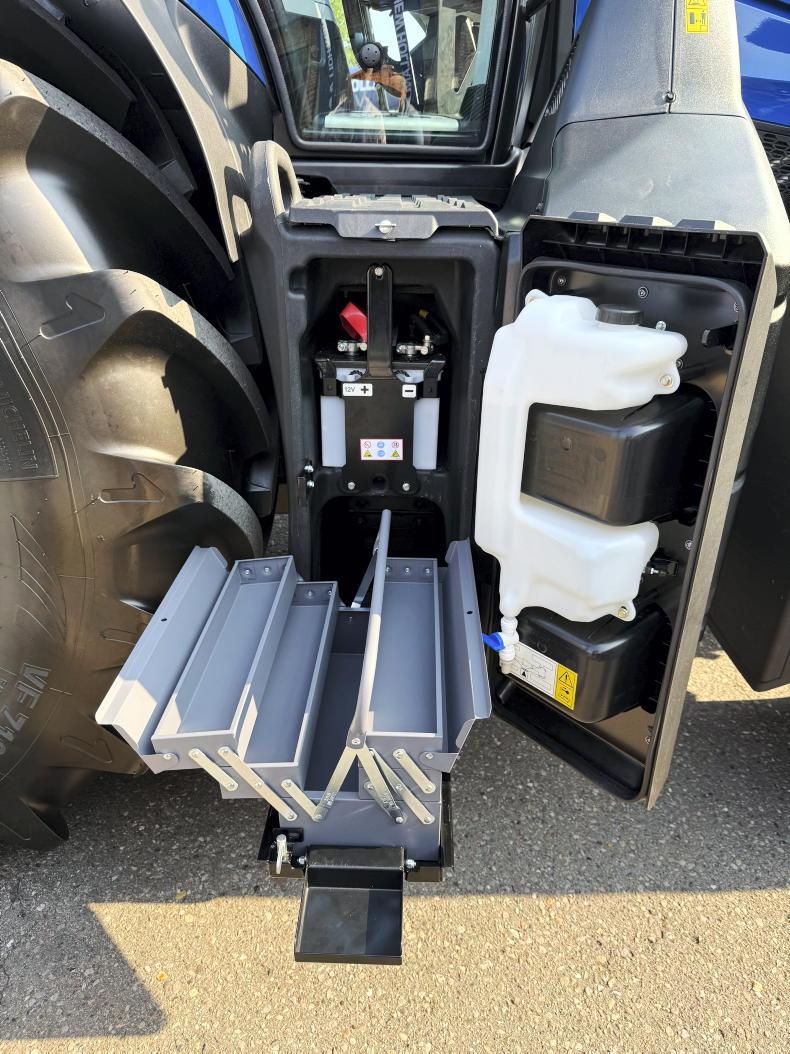
New, wider steps have been integrated into the diesel tank along with grab handles.
The windscreen wiper is no longer roof-mounted, instead, it is hood-mounted and provides a larger 270-degree sweep angle.
With a larger focus on improved comfort, new models are available with three cab suspension options, mechanical, pneumatic and hydraulic.
The hydraulic option has three settings; soft, medium and hard which can be selected via the terminal. The inclusion of dual track rods reduce the feeling of cab roll, leaving it more stable than before.
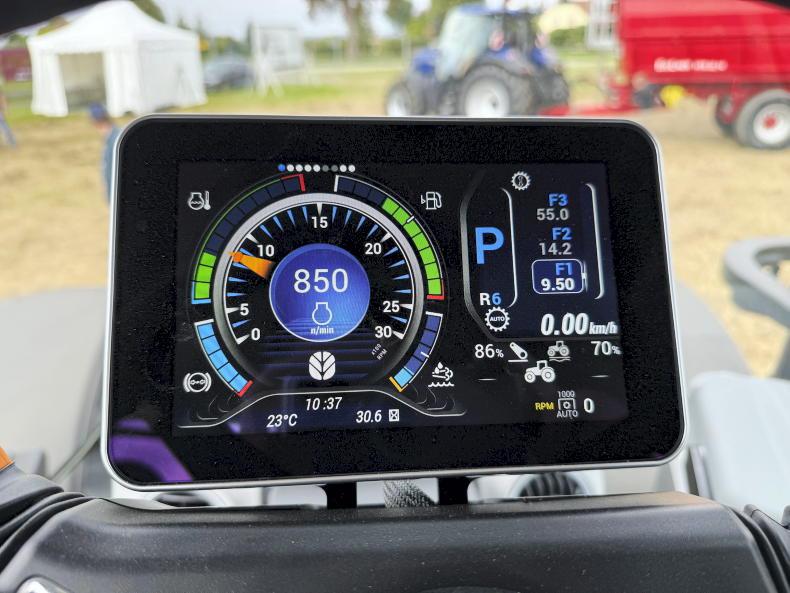
For now, New Holland has chosen to stick with a steering column mounted dash, albeit compact and digital.
Dash lights are displayed on a new a-pillar display. Air conditioning performance has been improved, so too has the positioning of air vents. The cab is also said to be quieter due to an increased level of floor insulation.
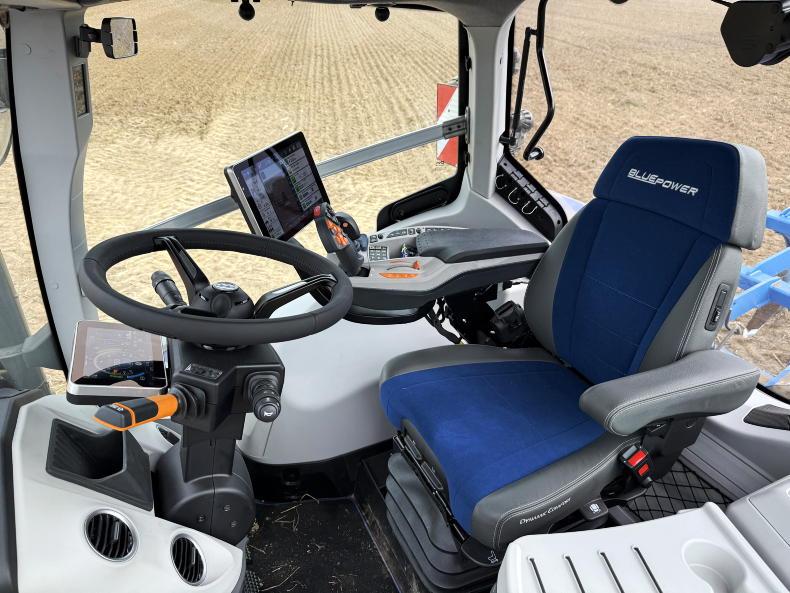
Central to the cabin is a compact version of the SideWinder Ultra armrest and the joystick found in the larger T7 models.
Hoping to offer a spec to suit all customer needs, the T7.225 can now be specified with the Auto Command CVT transmission but without the IntelliView 12 terminal or electric spools.
In addition to integrated cameras on the front grill and roof, a third camera can be displayed through the IntelliView 12 terminal.
Front axle
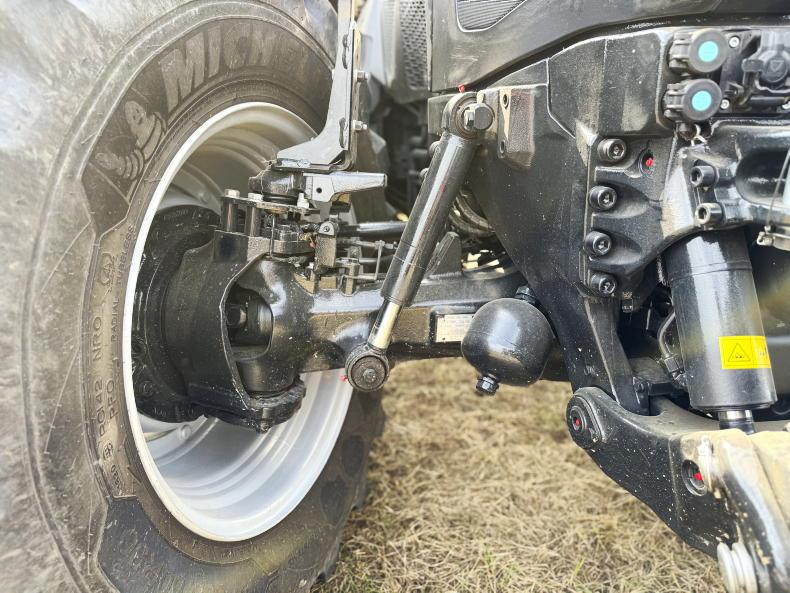
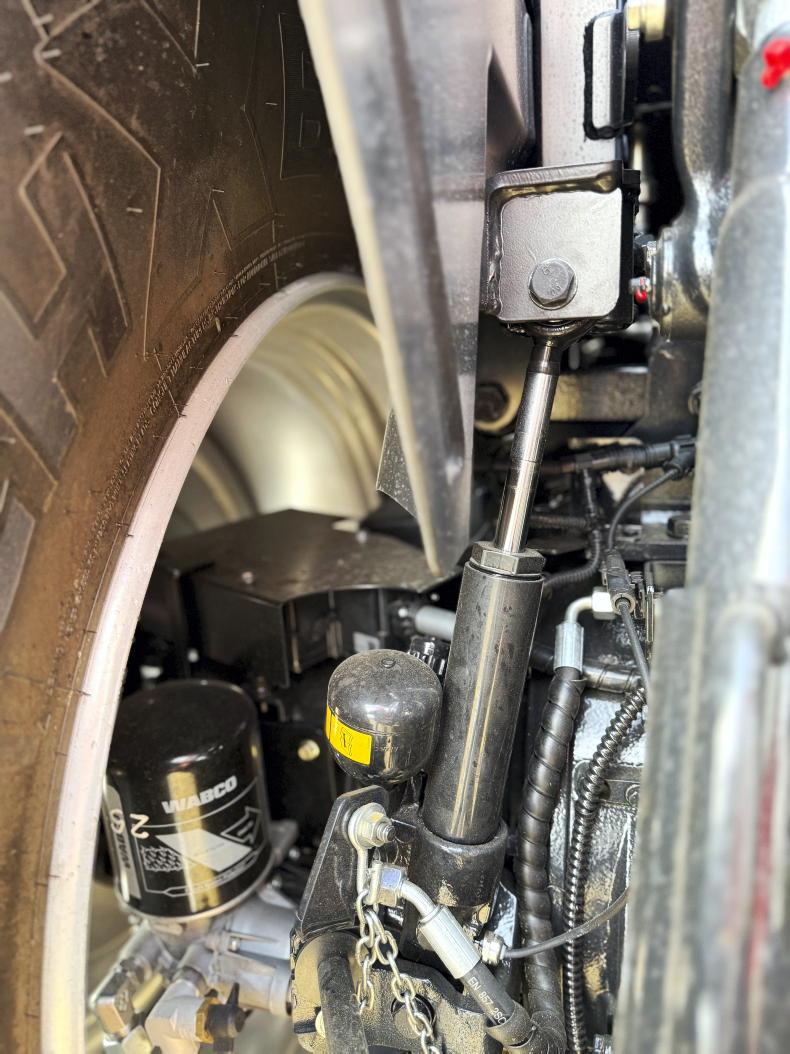
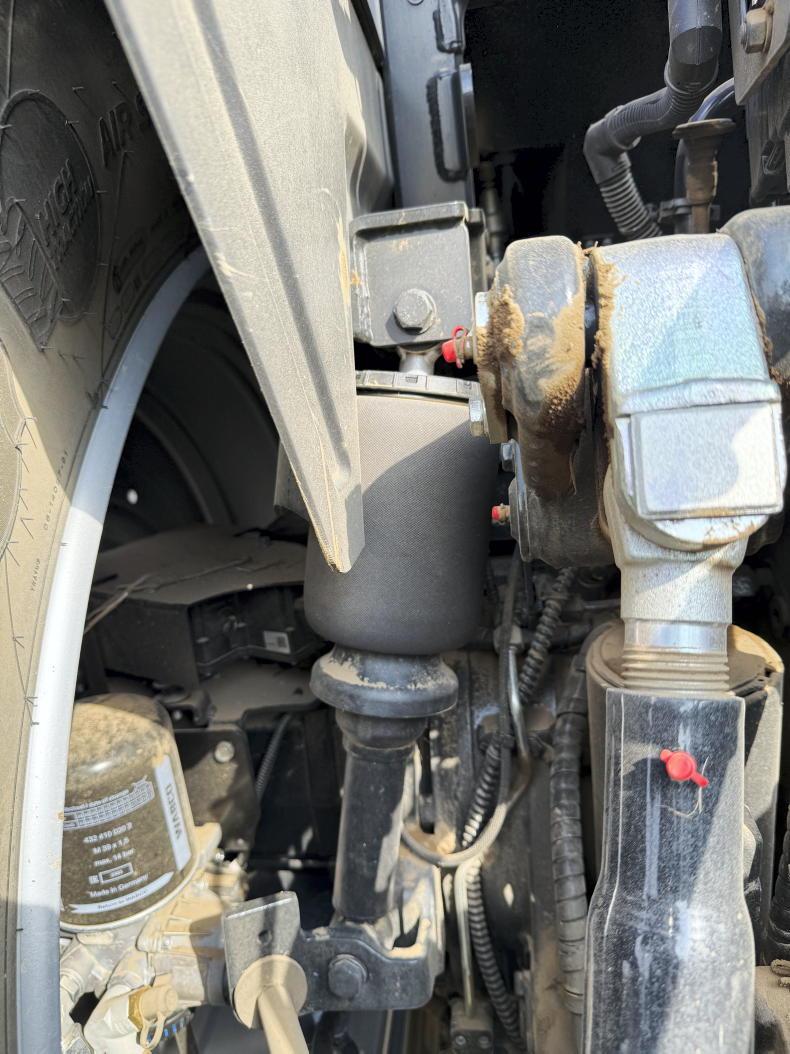
A new front axle has been fitted improving both suspension and steering lock. The new saddle type design sees two hydraulic cylinders mounted directly to the chassis. A new roll control feature alters pressure within the hydraulic cylinders to provide improved stability on the road.
Through the use of dual dampers, operators can choose between smooth, medium, hard or automatic suspension presets via the terminal. Suspension height can also be adjusted here.
There is now an option to swap out the standard 6,000kg axle in favour of a heavier 9,000kg variant. This takes the maximum gross weight to 13,500kg and equates to a payload of around 5,500kg, depending on spec.
Engine
The FPT 6.7l engine remains but has had its power curve flattened which now sees maximum power reachable at 1,500rpm. Torque has also increased as result with the flagship T7.225 jumping from 940Nm previously to 1,060Nm.
Results from the German DLG PowerMix test show best-in-class fuel efficiency results, with the T7.225 Dynamic Command consuming 243g/kWh and the T7.225 Auto Command consuming 257g/kWh.
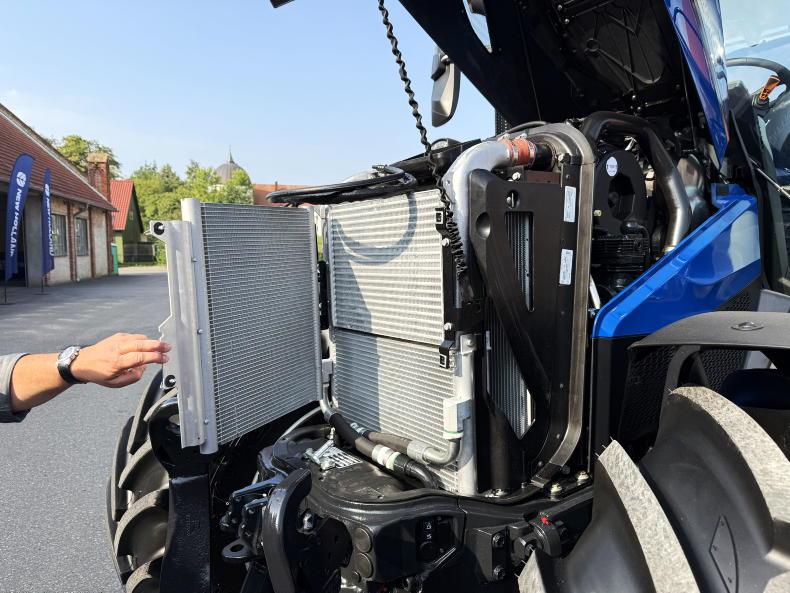
The new, more sloped bonnet is easier to open and the space between the main radiator and intercooler has increased to improve cleaning.
Transmission
One of the more major updates is the option of the 24x24 dual-clutch Dynamic Command transmission, replacing the Power Command unit.
To better cope with the additional power and torque the Dynamic and Range Command units have been reinforced.
The Auto Command unit has also been fettled with, with an additional clutch added taking it from 2x1 to 3x1. Previously, ranges would automatically switch at circa 12km/h, once maximum mechanical drive had been reached. As result, at certain applications, the transmission would find itself switching between the two ranges and effecting performance. The additional range prevents this by extending the mechanical ratio. A ‘High Performance’ mode now allows the transmission to be locked from 0.05km/h to 26km/h for maximum mechanical drive efficiency.
The result of the third clutch is increased acceleration and 33% more pulling force in draft applications and 11% more in transport applications. Draft power permissible to the ground is up from 180hp in the current models to 200hp. To better deal with the additional power, rear hubs from the LWB models have been passed down.
Forward speed has been marginally increased to 55km/h , a slight speed increase made possible as result of power assisted braking. Based on customer feedback, the pedal effort has been reduced thanks to hydraulic assistance, like on LWB models.
Hydraulics and backend
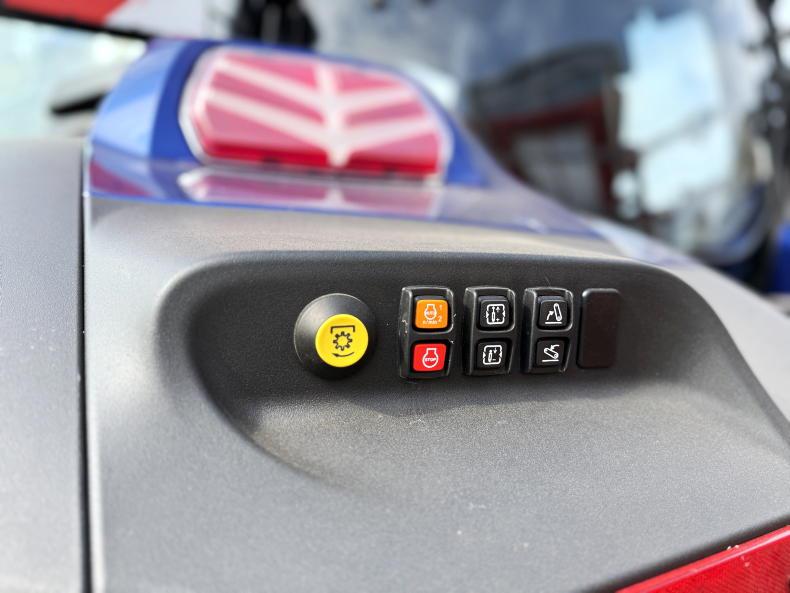
As part of the redesign, the back end features brand-new fenders and rear leaf emblem taillights. There are now more fender-mounted switches/rear linkage controls, including programmable engine speeds and a stop button to cut off the engine.
The rear link arms are heavier and their mounts are further distanced to improve stability. There is also a quick stabiliser adjustment feature for switching between Cat III and Cat III-N implements. However, three PTO speeds remain offered and are selected via the terminal.
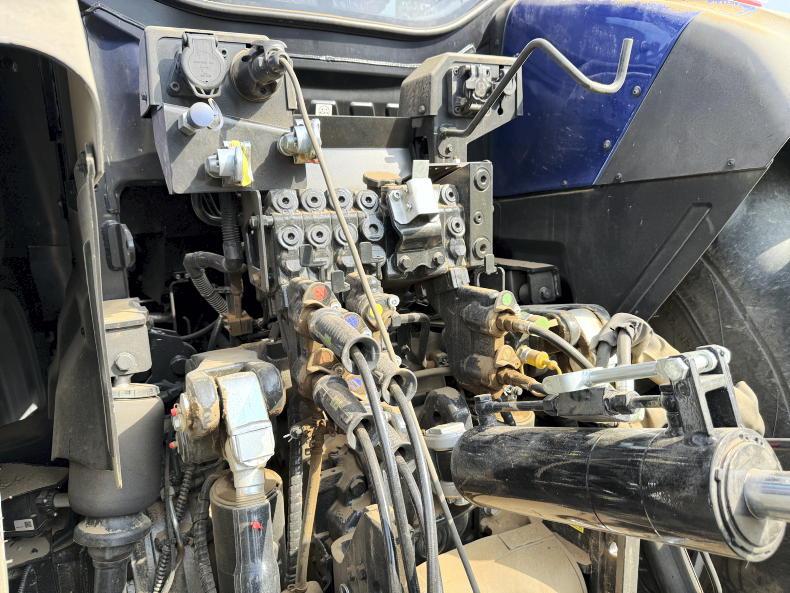
A new independent pickup hitch without lift rods has been fitted, thus providing a cleaner layout. Hydraulic couplings and connections are now focused to the left-hand side for improved access. A new pressure-release lever has been fitted, allowing hydraulic couplings to be removed and connected under pressure.
In terms of pump capacities, flowrates have gone unchanged at 130l/min, 150l/min and 170l/min. There is now an option for an extra fourth mid-mount valve. Rear lift capacity maxes out at 8,400kg, similar to before.
The arrival of the new-generation T7 short wheel base has been long-awaited and it’s clear that customer feedback has been taken on board. The good points have gotten better and the shortcomings have been addressed.
Comfort is one area in particular which has been addressed with the new front axle and suite of cab suspension options. On the topic of the front axle, the steering lock is massively improved.
Inside the cab, the new-yet-familiar fit and finish is welcome and a nice place to be. But, a little more space wouldn’t go amiss.
The move to now offer the Dynamic Command dual-clutch transmission with its brake-to-neutral functionality will be warmly welcomed. Although we didn’t have the opportunity to work the tractor hard, the additional range in the Auto Command transmission was noticeable.
The increased gross vehicle weight of 13,500kg is another positive. Meanwhile, the back end refinements are all welcomed. However, it felt as though the rear mudguards looked a little on the short side.
In terms of colour scheme and styling, the new ‘dynamic blue’ does look smart but is it too close of a match to the rich metallic ‘blue power’ colour to justify the price difference, leaving aside all the other ‘blue power’ add-ons?
While we hope to work the new T7 a little harder in due course and discover its true potential, it has all the credentials to further strengthen New Holland’s market position, providing pricing remains competitive, once set.


SHARING OPTIONS