During the 1980s, I visited Terry Clancy, who was then an active importer for the Belarus range, following the demise of the previous importer, the PMPA Insurance group.
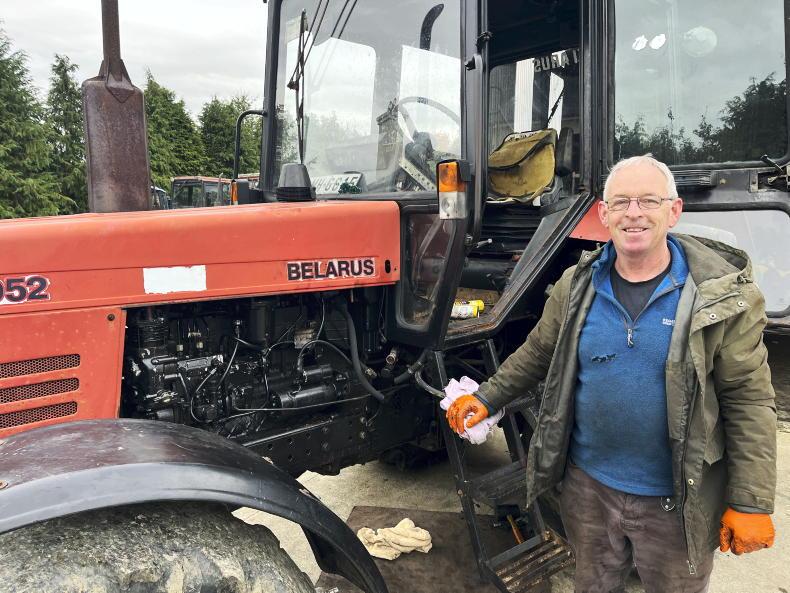
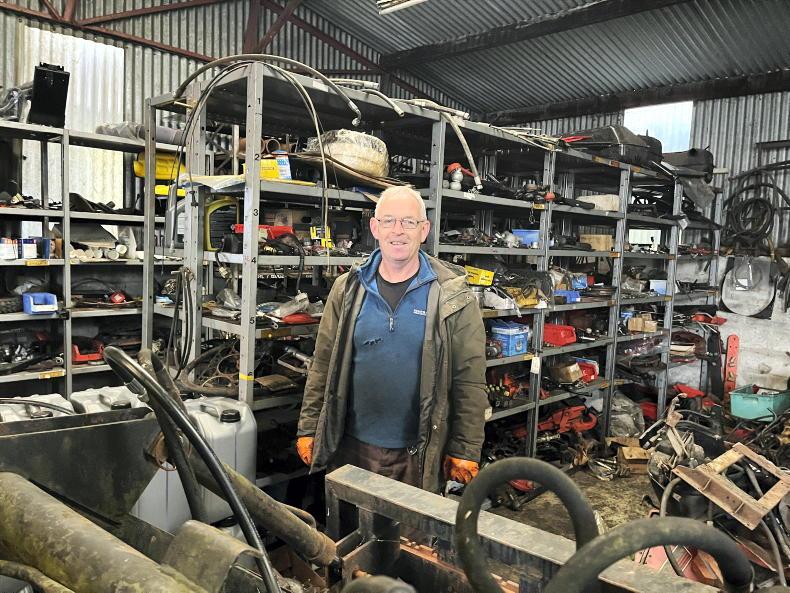
In recent weeks, I called to Clancy’s yard after a gap of almost four decades and met with Noel Clancy, Terry’s son. Noel has years of experience with the Belarus range and continues to provide a parts and service for Belarus tractors across Ireland. He still has some used Belarus tractors in the yard to satisfy the demands of Belarus enthusiasts and maintains an impressive stock of replacement parts for all models that were sold in Ireland over that 50-year period.
Noel’s obvious passion for the Belarus tractor range shines through during our conversation, as we chatted about the history and the part that he and his father, now retired, have played in keeping the brand alive. The Clancys have observed the brand’s transition from the PMPA days in the 1970s, through a period with Pat O’Donnell & Co and onto Minsk Tractors in Waterford. During all of that time, Noel and Terry Clancy have been the one constant in meeting the servicing needs of Irish Belarus owners.
Noel gave me an insight into their experiences with Belarus tractors when I caught up with him.
What year did Noel’s father Terry Clancy take on Belarus for Ireland? Terry Clancy starting selling Belarus tractors in the 1970s, buying tractors from PMPA, which was then the Irish importer. PMPA tried to sell the tractors through its own dealer network without much success, so Terry and his son Noel took many of them and sold them across the country.
How many Belarus tractors are now in Ireland? There were in the region of 74 Belarus tractors listed in the 2020 Irish Bulletin of Vehicle and Driver Statistics, where the Belarus brand was listed separately. Noel Clancy reckons that there are close to 500 Belarus tractors still working or parked idle on farms around the country. During the period from 2006 to 2008, a significant number of Belarus tractors were exported from Ireland, many going to Eastern Europe for refurbishment.
What do owners like most about them? Noel Clancy said that farmers like the simplicity, good pulling power and reliability of the Belarus tractors, despite the cluttered design of the controls and cabs. They are relatively economical and if looked after with regular servicing, are totally reliable, despite being older in design.
The Belarus tractors came with a novel four-wheel-drive system that operated automatically when the wheel-slip of the rear wheels of the tractor exceeded 6%. Some models were fitted with Dromone Engineering pick-up hitches, which are still available from Dromone to order.
Where do owners go for regular stuff like filters, are they available to fit from generic suppliers? Noel Clancy said that the Belarus engine oil filters are simple to maintain by cleaning them and, unless damaged, these mesh filters never need to be replaced. The hydraulic oil filters are paper filters and while they can be replaced, they can more typically be cleaned and returned to the tractor. Noel said that some owners have failed to carry out the simple and regular servicing, or used inferior or even recycled engine oil, because they simply didn’t value the Belarus tractor, with disastrous consequences.
What parts are more likely to give problems? The tractors are solid workhorses, said Noel, with few mechanical problems. Noel has never opened a gearbox or backend to be repaired, they are solid and simple. The backend hydraulic system has external pumps and filters, so repairs and replacement is easy, without taking the tractor apart.
Can Noel get most of the Belarus replacement parts and has it become more difficult to get them since Ukraine war? Noel has a large stock of replacement parts for Belarus tractors and can supply almost 90% of most parts, including replacement filters, if needed. Sourcing parts now is becoming more difficult and he finds that replacement parts from other sources, such as China or India, are not as good and are not of the standard of the original Belarus parts.
Are the Belarus tractors relatively easy to fix? Noel said that Belarus tractors are easy to fix and repair and he has more than 40 years of experience working with them, having worked with his father since childhood.
Have they been a relatively cheap tractor to own?
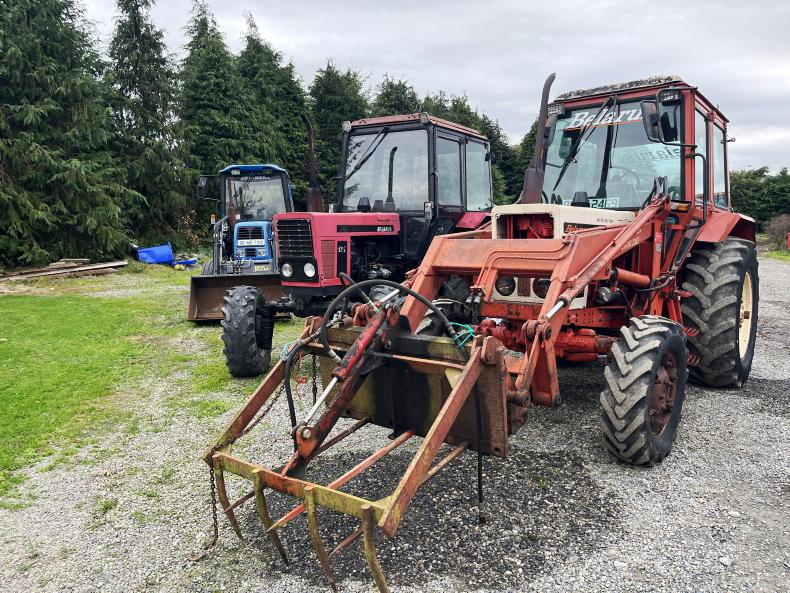
Noel said that the Belarus tractors are cheap to own and run due to the lack of need to replace filters and low repair costs due to the simplicity of design.
The fact that many of the hydraulic system features are external, means that splitting a tractor is only ever needed for clutch replacement.
Terry Clancy was listed as the Irish agent for Belarus Tractors in the Irish Farmers Journal Tractor Supplement in 1986. On the right is the specification and price in punts, from the table published that year.
Ten years previously, in 1976, the first Belarus MTZ 50 Super model, imported by PMPA, based then on Dublin’s Long Mile Road, and with similar engine power, carried a price tag of £2,877, including a cab.
Belarus – history
The Belarus began tractor production in 1946 after World War II, at the site of a former aircraft maintenance works on the outskirts of Minsk in the Belarussian state. The first plan was to produce tracked-type tractors and this was replaced with rubber tyre tractors in the mid-1950s.
By 1956, Belarus tractors was producing 10 tractor models. By 1958 it had produced its 100,000th tractor. The big step forward came in 1961 with the introduction of the MTZ50 model, which was rated at 55hp.
By 1972 the Minsk tractor factory had produced 1m tractors, some of which were finally assembled at factories in Poland, Pakistan, Russia and Azerbaijan, in addition to Minsk. This impressive output continued until 1984, when it had reached a 2m tractor milestone.
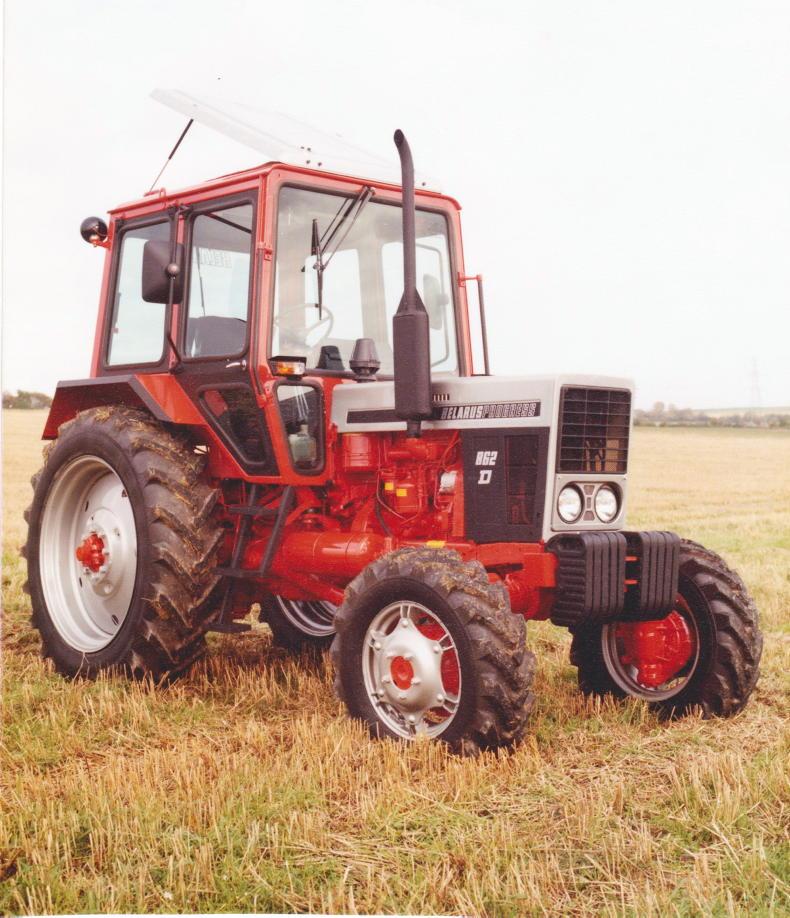
During the cold war, Belarus tractors, sold in western markets, were infamous for their low quality compared to western manufacturers.
After the fall of the Berlin Wall in 1989, the inability to build tractors in Eastern Europe came to symbolise the failure of communism.
Many tractor factories could not obtain quality materials and used inferior components. The quality of rubber seals, gaskets and paint was particularly poor in the early 1990s. The Belarus name suffered much during this time.
For a period since 2000 there has been more investment in the Belarus business and the name has bounced back with larger tractors and more technology.
Belarus tractors are still in business, manufactured by Minsk Tractor Works (MTZ) in Belarus. The MTZ Company continues full tractor manufacturing in Minsk, with output claims of 80,000 tractors per year, and is expanding assembly partnerships, including in Vietnam and planned agreements in Mongolia. Western sanctions tied to Belarusian political events and the war in Ukraine have restricted access for the tractors and parts on many markets.