


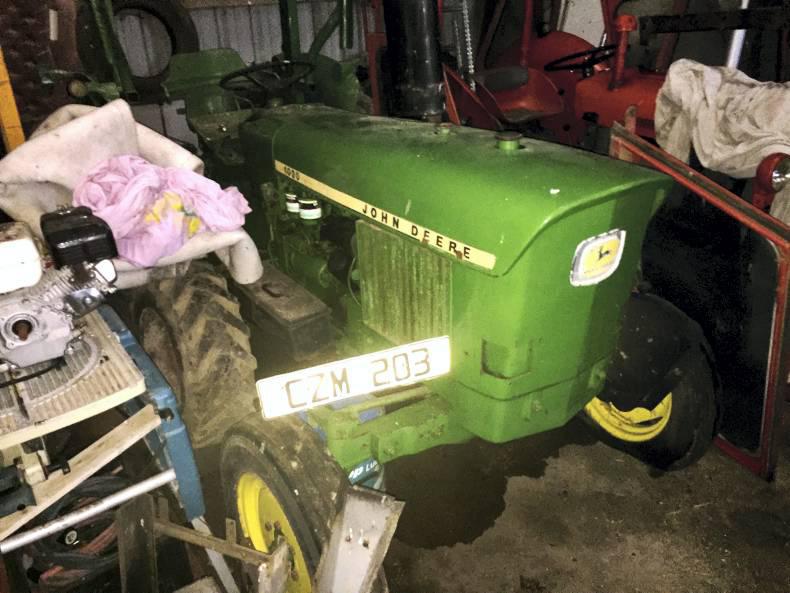
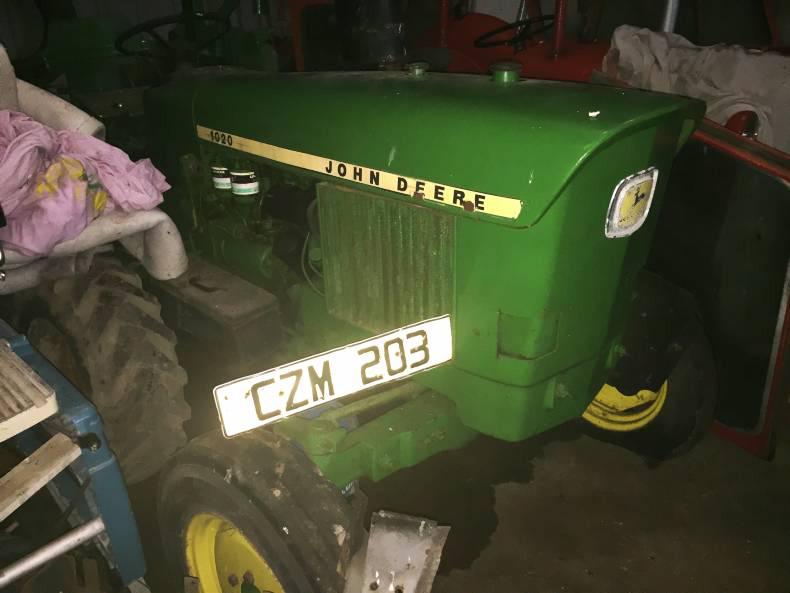
Last week I had a most pleasant and somewhat amazing experience when a tractor from my youth, one that I had made many enquiries about, was found. The tractor in question is a John Deere 1020 model that I had driven as a student when I worked with the late Paddy ‘Bushy’ Moloney, a contractor based in Gort, Co Galway, back in the mid-1970s.
Back then, in an era dominated by Massey Ferguson, Ford, David Brown and International tractors, the small and compact John Deere 1020 was a rare tractor. It was certainly rare in Galway and Clare where I worked.
While it was probably the smallest tractor in Paddy Moloney’s fleet, it was one that everyone seemed to want to drive. It was capable and compact, yet its engine was rated to deliver 39hp on the PTO. It worked at buck-raking silage in the summer and was always on duty for a variety of jobs for the rest of the year.
The three-cylinder engine on this 1966-built Mannheim tractor was sweet to listen to. Because of its size, it was reserved for smaller and lighter jobs.
I worked each summer at Moloney’s from 1975 until 1979, the year that I started work at the Irish Farmers Journal. I also worked during most of the month of April each year, when we had over three weeks off as study leave from UCD during my final two years. My study leave was from the John Deere 1020 tractor seat.
It was during that period that I spent most of my time on the John Deere 1020. I drove it on a range of tillage duties, ploughing the stony fields of south Galway with a three-furrow Overum plough that tested its stability on the road but not its pulling power in the field.
The tractor’s serial number shows that it was manufactured in 1966. Paddy Moloney told me, when I worked for him, that he had taken the John Deere 1020 as demonstration model from Sherrards in the 1960s on a year’s trial. He liked the tractor and went to Cork to get some filters only to realise that the team at Sherrards had forgotten about the tractor. He then bought the tractor and it remained in Moloney’s yard for more than 30 years, where it gave loyal service.
His son Adrian recently reminded me that in its early years they damaged the exhaust pipe and had to order a new one from Sherrards. While waiting, they welded it up and it outlasted the new one, which remained unused in the shed for many years.
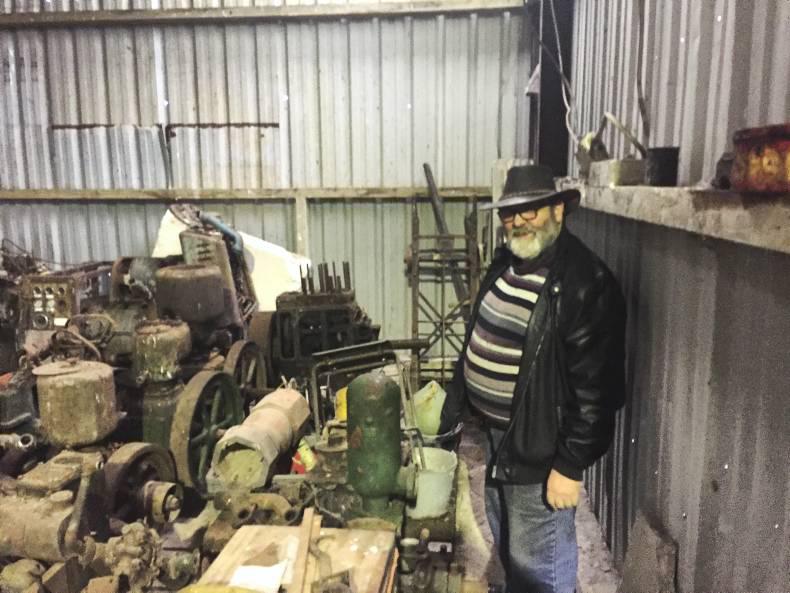
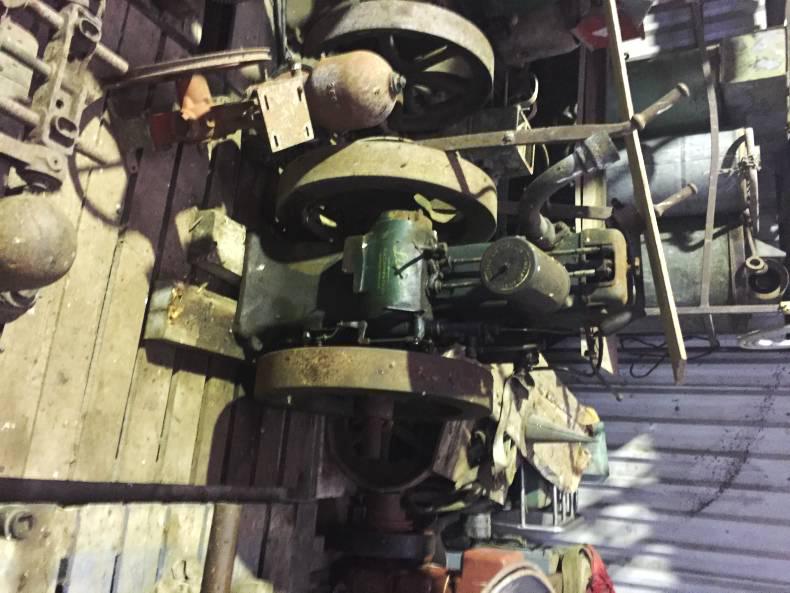
The tractor is now in the careful ownership of collector Tony Harty from Kiltulla, Co Galway. Tony is primarily an oil engine enthusiast who also has a vintage/classic tractor collection.
Tony bought the John Deere 1020 from the Moloney family in 2007. Its first outing while in his possession was the now world-famous Cooley Tractor World Record Challenge when more than 4,000 pre-1977 working tractors took part in a record-breaking event. And again the 1020 played its part in achieving that world record.
The tractor has done little in terms of public appearances since then. It has been safely parked in Tony’s shed, where the covering has preserved it intact.
Reunited
When I called to Tony, he worked me up to its introduction with a history of some of his very old oil engines. I patiently held my enthusiasm until the last shed, where he unveiled the small John Deere.
You can only imagine how sentimental I felt when Tony unveiled the tractor from beneath a covering of old protective sheets. I instantly felt a desire to get on the seat and the temptation to start that sweet engine once again, some 40 years later.
The tractor is in good shape, with original mudguards and bonnet. There were some attempts at changing the position of the headlamps, a job that can be reversed.
This John Deere 1020 was manufactured in Mannheim, Germany, while a similar tractor with a diesel or petrol engine option was also built in Dubuque, Iowa, USA.
It was the second phase of a new generation of tractors after John Deere changed from large two-cylinder engines to three, four and six-cylinder engines in the early 1960s.
The Sherrard Group, based in Cork, were the John Deere distributors in Ireland at the time, through a company called Power Farming, based at Farrenlea Road, Victoria Cross in Cork. Only a relatively small number of these tractors were sold in Ireland, due mainly to high pricing. And this was one of the early ones.


SHARING OPTIONS