The deadline for erecting bird and bat boxes under the first tranche of the Green Low-Carbon Agri-Environment Scheme (Glas) is fast approaching.
Farmers who chose this action in Glas have to erect the boxes by 31 March 2016 if they are in tranche one and by 31 July 2016 if in tranche two. The deadline has focused a lot of farmers’ minds on the task with many wondering how to get their hands on the wildlife boxes. According to Teagasc advisers and BirdWatch Ireland, there are three main ways:
Buying a box from the BirdWatch Ireland website. Buying from private manufacturers featured on classifieds websites. Building them yourself. Recently, the Irish Farmers Journal spoke to Donal Kilcullen, a DCU engineering student who builds boxes in his spare time for farmers in Sligo. Donal shared his pointers to meet the Department’s specifications for anyone considering building the boxes
Picture one
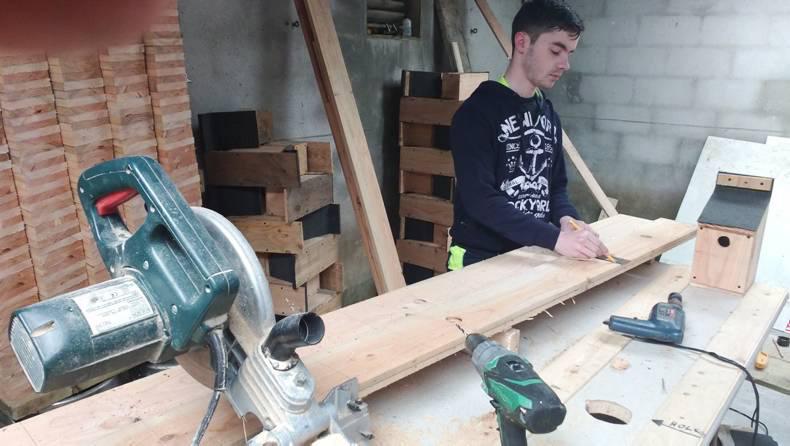
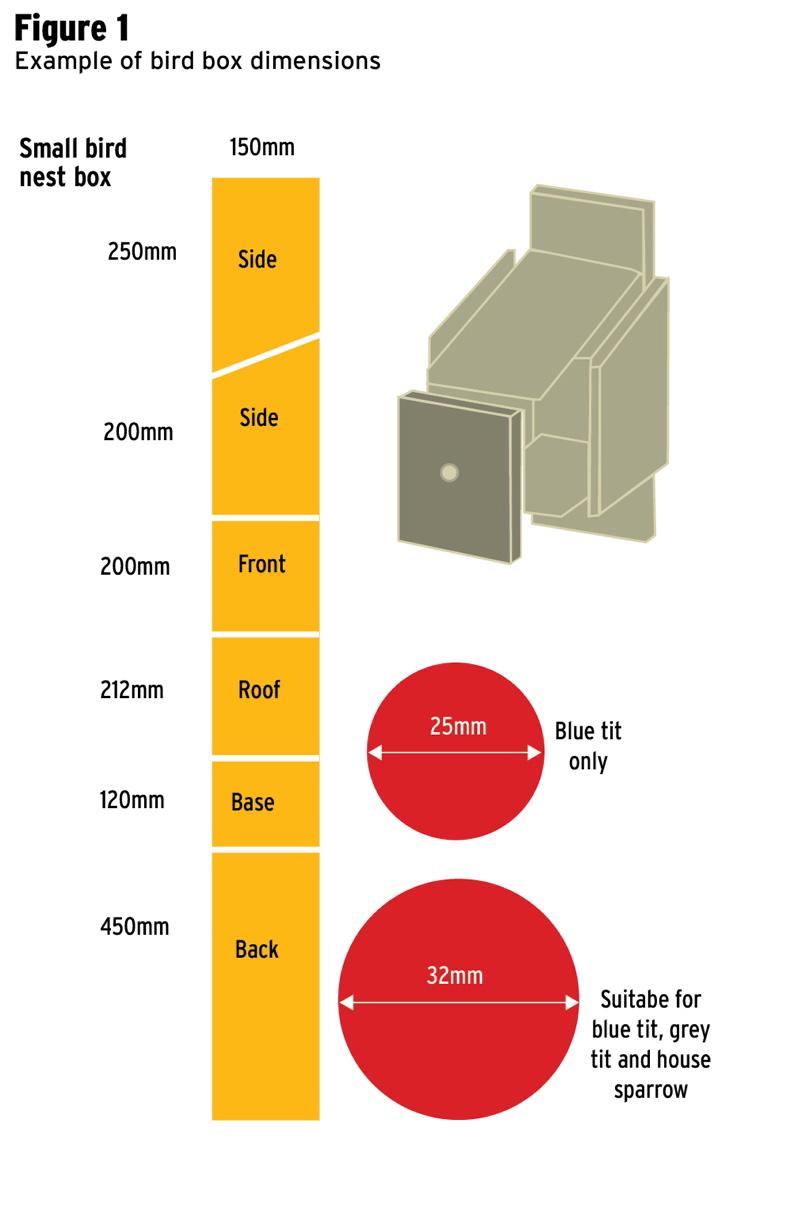
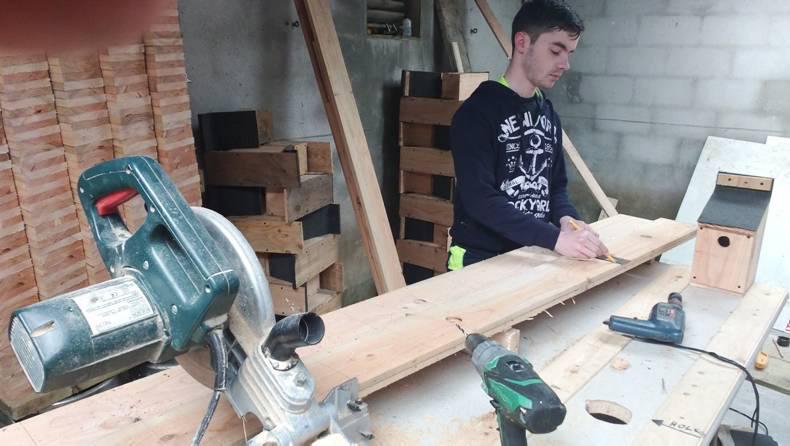
Donal (pictured) says the timber should be a durable weather and pest resistant type. He is using Douglas fir because of its availability, but says there are other timbers suitable for the job such as larch. Ideally, the wood should not be treated or painted, with the emphasis on a naturally durable wood. The bird and bat boxes should be made similar to the design set out by the Department (Figure 1 shows the dimensions of a bird box).
Picture two
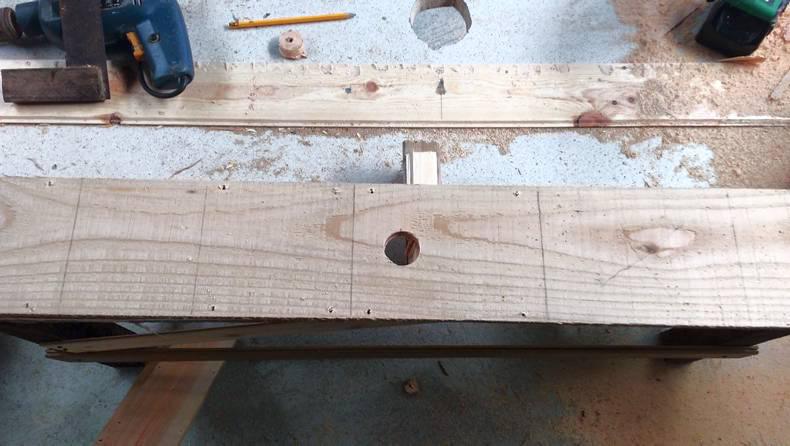
To make the boxes, Donal uses either 6in x 0.5in or 6in x 1in boards. The quickest method to make all the parts is to mark the dimensions out on one individual board.
Donal recommends pre-drilling the board before cutting up the parts into separate pieces as it is quicker to clamp down one long board as opposed to many small parts. The boxes should be screwed or nailed together as opposed to glued. He says some adhesives may not be weather proof or may be toxic to wildlife.
Pictures three and four
For bird boxes, the hole sizes can vary from approximately 25mm to 32mm to accommodate different breeds of birds. According to BirdWatch Ireland, the most suitable target species would be the house sparrow, which has a close association with farming and uses the simple, standard, hole-fronted nesting box with a large 32mm hole. Other common species, such as blue tits, will use these boxes as well even with the larger hole.
Bird boxes can also have a large opening at the front, which attracts birds such as the robin. However, the emphasis should be on attracting rarer birds to give them the best chance in life and to ensure their future in the Irish countryside. Bird boxes should have a lid that can be open during non-nesting periods to allow cleaning.
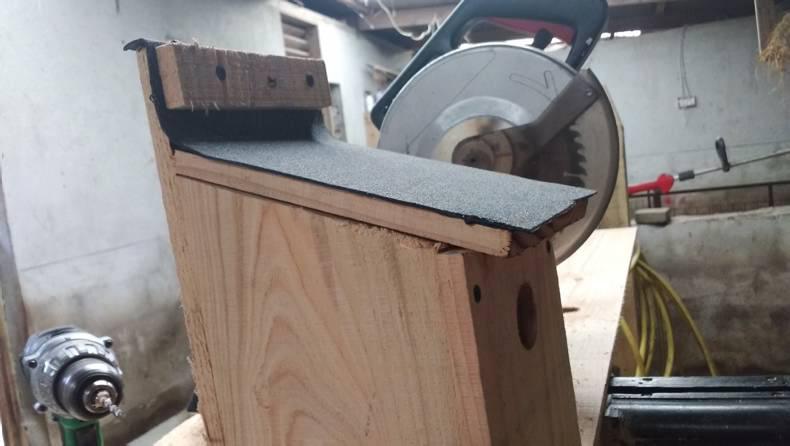
Donal used roofing felt which he already had to hinge the roof. This can be tacked on or melted on as shown in picture four. The felt ensures that there are no leaks from above. Felt can be difficult to find in small quantities so a normal hinge may be more useful. In order to ensure that the felt is never pulled off the back plate, he screwed on a small piece of timber above the lid.
Pictures five and six
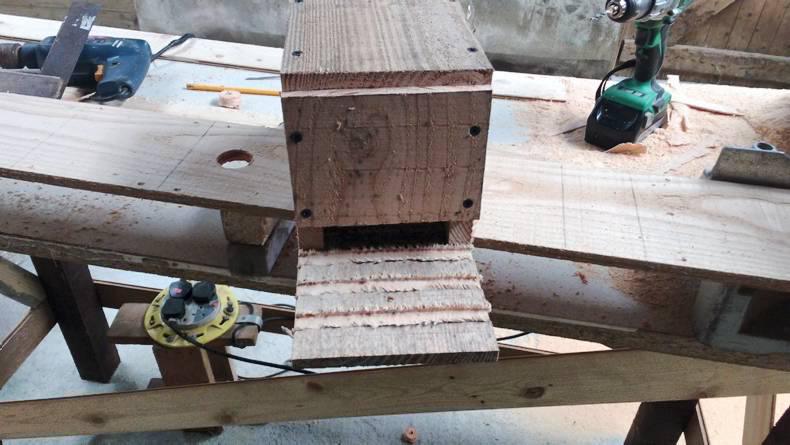
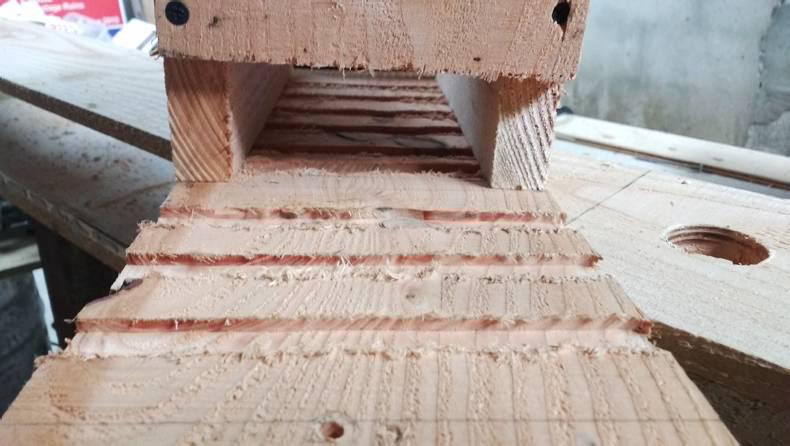
The main considerations for a bat box are the entrance and the inner walls of the box. The bats enter from the bottom. The floor of the box should be cut short by 20mm to 25mm to allow the bats to climb into the box as shown in picture five. The back plate and the inside of the front of the bat box should be grooved to allow the bats to climb inside the box. This can be done using a router or even with saw cuts at regular intervals. The back plate should be grooved to the bottom. The roof of the bat box should be sealed and not hinged like bird boxes.
Dr Alex Copland, senior conservation officer with BirdWatch Ireland, welcomes the bird box action under Glas. He explained that bird boxes are particularly useful for species that naturally nest in holes.
“In the wild, such birds would have nested primarily in old, rotting trees where there was a hole entrance and a cavity inside. With such trees posing a risk to whatever is below them they are often felled, resulting in a lack of natural nesting sites that the boxes can replace,” he said.
Birds can use boxes throughout the winter for roosting, but the nesting season generally starts around mid-February (traditionally St Valentine’s Day) when the birds pair up, start looking for nesting sites and defending territories.
The first eggs usually start to appear in March, and the boxes are in full use in April to June. Chicks are fledging from May to June, and boxes are often vacated by July, with a few late nesters hanging on into August or, occasionally, September.
Bird boxes should be around two metres off the ground and facing north/northeast (away from the prevailing wind and strong sunlight).
“The hole for the box should be towards the top of the front, not in the middle, and avoid putting a perch under the hole, which only facilitates predators,” Alex explains.
The conservation of bats is also important. Bats only have a single baby, giving birth once a year and they suckle their young in small crevices.
Bats are not harmful, but are beneficial for consuming thousands of midges per night. Bat boxes should be placed four metres off the ground and grouped in threes beside each other – one southeast facing, one south facing and one southwest facing to suit the flight path of bats. The bat boxes tend to be in use from April to October.
If farmers cannot make boxes themselves, BirdWatch Ireland sells GLAS-appropriate nesting boxes, including bat and bee boxes, on its website. The basic box costs €10/box for orders of 10 or more. Farmers in the Sligo region can also contact Donal Kilcullen, through Teagasc, for suitable boxes.
The deadline for erecting bird and bat boxes under the first tranche of the Green Low-Carbon Agri-Environment Scheme (Glas) is fast approaching.
Farmers who chose this action in Glas have to erect the boxes by 31 March 2016 if they are in tranche one and by 31 July 2016 if in tranche two. The deadline has focused a lot of farmers’ minds on the task with many wondering how to get their hands on the wildlife boxes. According to Teagasc advisers and BirdWatch Ireland, there are three main ways:
Buying a box from the BirdWatch Ireland website. Buying from private manufacturers featured on classifieds websites. Building them yourself. Recently, the Irish Farmers Journal spoke to Donal Kilcullen, a DCU engineering student who builds boxes in his spare time for farmers in Sligo. Donal shared his pointers to meet the Department’s specifications for anyone considering building the boxes
Picture one
Donal (pictured) says the timber should be a durable weather and pest resistant type. He is using Douglas fir because of its availability, but says there are other timbers suitable for the job such as larch. Ideally, the wood should not be treated or painted, with the emphasis on a naturally durable wood. The bird and bat boxes should be made similar to the design set out by the Department (Figure 1 shows the dimensions of a bird box).
Picture two
To make the boxes, Donal uses either 6in x 0.5in or 6in x 1in boards. The quickest method to make all the parts is to mark the dimensions out on one individual board.
Donal recommends pre-drilling the board before cutting up the parts into separate pieces as it is quicker to clamp down one long board as opposed to many small parts. The boxes should be screwed or nailed together as opposed to glued. He says some adhesives may not be weather proof or may be toxic to wildlife.
Pictures three and four
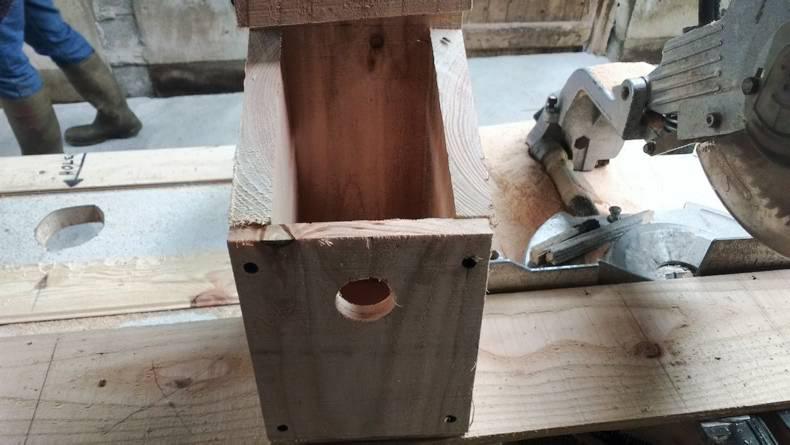
For bird boxes, the hole sizes can vary from approximately 25mm to 32mm to accommodate different breeds of birds. According to BirdWatch Ireland, the most suitable target species would be the house sparrow, which has a close association with farming and uses the simple, standard, hole-fronted nesting box with a large 32mm hole. Other common species, such as blue tits, will use these boxes as well even with the larger hole.
Bird boxes can also have a large opening at the front, which attracts birds such as the robin. However, the emphasis should be on attracting rarer birds to give them the best chance in life and to ensure their future in the Irish countryside. Bird boxes should have a lid that can be open during non-nesting periods to allow cleaning.
Donal used roofing felt which he already had to hinge the roof. This can be tacked on or melted on as shown in picture four. The felt ensures that there are no leaks from above. Felt can be difficult to find in small quantities so a normal hinge may be more useful. In order to ensure that the felt is never pulled off the back plate, he screwed on a small piece of timber above the lid.
Pictures five and six
The main considerations for a bat box are the entrance and the inner walls of the box. The bats enter from the bottom. The floor of the box should be cut short by 20mm to 25mm to allow the bats to climb into the box as shown in picture five. The back plate and the inside of the front of the bat box should be grooved to allow the bats to climb inside the box. This can be done using a router or even with saw cuts at regular intervals. The back plate should be grooved to the bottom. The roof of the bat box should be sealed and not hinged like bird boxes.
Dr Alex Copland, senior conservation officer with BirdWatch Ireland, welcomes the bird box action under Glas. He explained that bird boxes are particularly useful for species that naturally nest in holes.
“In the wild, such birds would have nested primarily in old, rotting trees where there was a hole entrance and a cavity inside. With such trees posing a risk to whatever is below them they are often felled, resulting in a lack of natural nesting sites that the boxes can replace,” he said.
Birds can use boxes throughout the winter for roosting, but the nesting season generally starts around mid-February (traditionally St Valentine’s Day) when the birds pair up, start looking for nesting sites and defending territories.
The first eggs usually start to appear in March, and the boxes are in full use in April to June. Chicks are fledging from May to June, and boxes are often vacated by July, with a few late nesters hanging on into August or, occasionally, September.
Bird boxes should be around two metres off the ground and facing north/northeast (away from the prevailing wind and strong sunlight).
“The hole for the box should be towards the top of the front, not in the middle, and avoid putting a perch under the hole, which only facilitates predators,” Alex explains.
The conservation of bats is also important. Bats only have a single baby, giving birth once a year and they suckle their young in small crevices.
Bats are not harmful, but are beneficial for consuming thousands of midges per night. Bat boxes should be placed four metres off the ground and grouped in threes beside each other – one southeast facing, one south facing and one southwest facing to suit the flight path of bats. The bat boxes tend to be in use from April to October.
If farmers cannot make boxes themselves, BirdWatch Ireland sells GLAS-appropriate nesting boxes, including bat and bee boxes, on its website. The basic box costs €10/box for orders of 10 or more. Farmers in the Sligo region can also contact Donal Kilcullen, through Teagasc, for suitable boxes.





SHARING OPTIONS